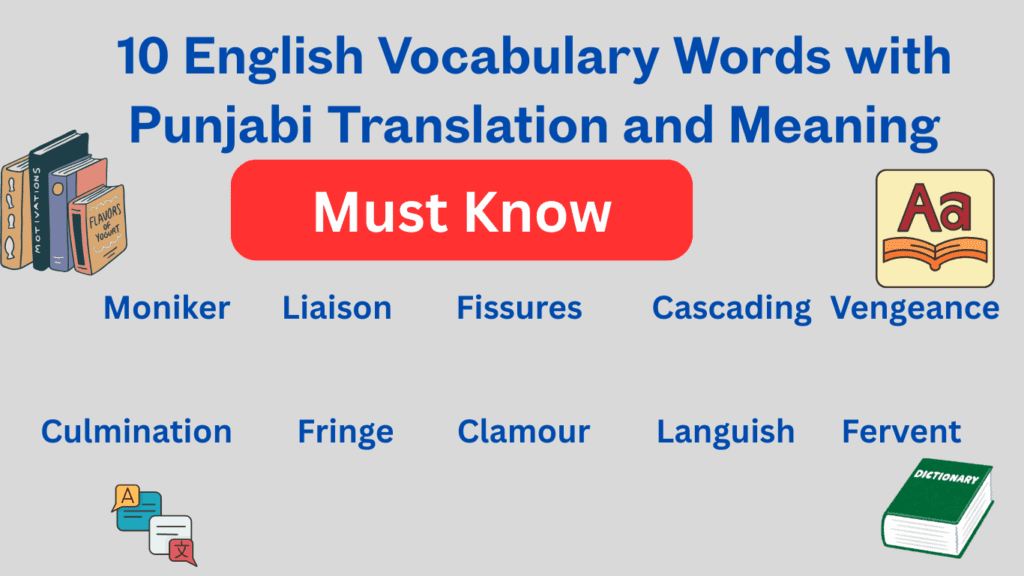
For the aspirants who are preparing for competitive exams like PSSSB, Excise Inspector, Punjab Patwari, Punjab Police, SSC, CGL, CPO, PPSC, and UPSC, the importance of knowing important English vocabulary words becomes essential. Knowing their contextual meaning—understanding when to use a particular word and in which context—has become important for aspirants and also in daily life. In this article, you will learn another 10 important English vocabulary words which are very important for your competitive exam preparation journey. The words are: Habitat, Noxious, Oblivious, Loathsome, Quaint, Zenith, Tyrant, Trespasser, Raucous, and Queer.
In the previous article, you learned another 10 important English vocabulary words which are again important for aspirants: Slit, Ascertain, Inertia, Fabricated, Scrutiny, Infiltrate, Slam, Flux, Respite, and Elite. If you do not know the meaning of these words, make sure to read that article after completing this one.
10 Essential English Vocabulary Words with Punjabi Meanings and Contextual Usage
1. Habitat (ਆਵਾਸ, ਰਹਿਣ ਦੀ ਥਾਂ, ਕੁਦਰਤੀ ਨਿਵਾਸ ਸਥਾਨ)
The new vocabulary word ‘Habitat’ literally means “the natural home or environment where a person, animal, plant, or other living organism lives and grows.” It refers to the specific place and conditions in which living beings survive, develop, and reproduce.
In Punjabi, habitat meaning is: ਆਵਾਸ, ਰਹਿਣ ਦੀ ਥਾਂ, ਕੁਦਰਤੀ ਨਿਵਾਸ ਸਥਾਨ
Now, understand the vocabulary word “Habitat” with the sentence:
e.g. The river is the natural habitat of many fish species.
ਨਦੀ ਕਈ ਮੱਛੀਆਂ ਦੀਆਂ ਕਿਸਮਾਂ ਦਾ ਕੁਦਰਤੀ ਆਵਾਸ ਹੁੰਦੀ ਹੈ।
Now in the above shared sentence with the new vocabulary word Habitat the contextual meaning of the vocabulary word ‘Habitat’ that:
Habitat which literally means a natural living place, is often used in environmental, biological, or geographical contexts. In this case, it highlights the place where many fish species naturally live and survive. The new vocabulary word Habitat refers to the natural surroundings and conditions essential for the life of living beings rather than just a physical place. It suggests environment, shelter, and natural living conditions.
ਉਪਰੋਕਤ ਵਾਕ ਵਿੱਚ ‘Habitat’ ਸ਼ਬਦ ਦਾ ਸੰਦਰਭਗਤ ਅਰਥ ਇਹ ਹੈ ਕਿ ਇਹ “ਕੁਦਰਤੀ ਰਹਿਣ ਦੀ ਥਾਂ ਜਾਂ ਆਵਾਸ” ਨੂੰ ਦਰਸਾਉਂਦਾ ਹੈ। ਇਸ ਵਾਕ ਵਿੱਚ ਇਹ ਮੱਛੀਆਂ ਦੇ ਕੁਦਰਤੀ ਨਿਵਾਸ ਸਥਾਨ ਦੀ ਗੱਲ ਕਰਦਾ ਹੈ। ‘Habitat’ ਸ਼ਬਦ ਇੱਥੇ ਜੀਵਾਂ ਦੇ ਕੁਦਰਤੀ ਵਾਤਾਵਰਣ, ਆਸਰੇ ਅਤੇ ਜੀਵਨ ਲਈ ਲੋੜੀਂਦੀਆਂ ਸਥਿਤੀਆਂ ਨੂੰ ਦਰਸਾਉਂਦਾ ਹੈ।
ਜਦੋਂ ਵੀ habitat ਸ਼ਬਦ ਕਿਸੇ passage ਵਿੱਚ ਆਵੇ:
ਤਾਂ ਉਸਨੂੰ “ਕਿਸੇ ਜੀਵ ਜਾਂ ਪੌਦੇ ਦੇ ਕੁਦਰਤੀ ਰਹਿਣ ਵਾਲੇ ਸਥਾਨ” ਨਾਲ ਜੋੜ ਕੇ ਸਮਝੋ। ਇਹ ਅਕਸਰ ਉਹਨਾਂ ਸੰਦਰਭਾਂ ਵਿੱਚ ਵਰਤਿਆ ਜਾਂਦਾ ਹੈ—ਜਿੱਥੇ wildlife, environment, ecosystem, plants ਜਾਂ living conditions ਦੀ ਗੱਲ ਹੁੰਦੀ ਹੈ।
Synonyms: Environment (ਵਾਤਾਵਰਣ), Surroundings (ਆਲੇ-ਦੁਆਲੇ ਦਾ ਮਾਹੌਲ), Home (ਨਿਵਾਸ), Ecosystem (ਪਰਿਸਥਿਤਕੀ ਤੰਤਰ), Shelter (ਆਸਰਾ)
Antonyms: Displacement (ਬੇਘਰਤਾ), Homelessness (ਬੇਆਵਾਸਤਾ), Exile (ਨਿਕਾਲਾ), Loss of shelter (ਆਸਰੇ ਦੀ ਘਾਟ), Migration (ਪਲਾਇਨ)
2. Noxious (ਹਾਨੀਕਾਰਕ, ਵਿਸ਼ੈਲਾ, ਨੁਕਸਾਨਦੇਹ)
The new vocabulary word ‘Noxious’ literally means “something that is harmful, poisonous, or unpleasant, especially to health, the environment, or living beings.” It refers to anything that causes damage, danger, or serious discomfort.
In Punjabi, noxious meaning is: ਹਾਨੀਕਾਰਕ, ਵਿਸ਼ੈਲਾ, ਨੁਕਸਾਨਦੇਹ
Now, understand the vocabulary word “Noxious” with the sentence:
e.g. The factory released noxious gases into the air.
ਫੈਕਟਰੀ ਨੇ ਹਵਾ ਵਿੱਚ ਹਾਨੀਕਾਰਕ ਗੈਸਾਂ ਛੱਡੀਆਂ।
Now in the above shared sentence with the new vocabulary word Noxious the contextual meaning of the vocabulary word ‘Noxious’ that:
Noxious which literally means harmful or poisonous, is often used in environmental, scientific, and health-related contexts. In this case, it highlights that the gases released by the factory are dangerous and harmful to human health and the environment. The new vocabulary word Noxious refers to something toxic, damaging, and unsafe rather than harmless. It suggests danger, poison, and harmful effects.
ਉਪਰੋਕਤ ਵਾਕ ਵਿੱਚ ‘Noxious’ ਸ਼ਬਦ ਦਾ ਸੰਦਰਭਗਤ ਅਰਥ ਇਹ ਹੈ ਕਿ ਇਹ “ਹਾਨੀਕਾਰਕ ਜਾਂ ਵਿਸ਼ੈਲੀ” ਚੀਜ਼ ਨੂੰ ਦਰਸਾਉਂਦਾ ਹੈ। ਇਸ ਵਾਕ ਵਿੱਚ ਇਹ ਫੈਕਟਰੀ ਵੱਲੋਂ ਛੱਡੀਆਂ ਗਈਆਂ ਗੈਸਾਂ ਦੀ ਖ਼ਤਰਨਾਕ ਪ੍ਰਕਿਰਤੀ ਨੂੰ ਦਰਸਾਉਂਦਾ ਹੈ। ‘Noxious’ ਸ਼ਬਦ ਇੱਥੇ ਸਿਹਤ ਅਤੇ ਵਾਤਾਵਰਣ ਲਈ ਨੁਕਸਾਨਦੇਹ ਪ੍ਰਭਾਵਾਂ ਨੂੰ ਦਰਸਾਉਂਦਾ ਹੈ।
ਜਦੋਂ ਵੀ noxious ਸ਼ਬਦ ਕਿਸੇ passage ਵਿੱਚ ਆਵੇ:
ਤਾਂ ਉਸਨੂੰ “ਕਿਸੇ ਅਜਿਹੀ ਚੀਜ਼ ਜੋ ਨੁਕਸਾਨ, ਜ਼ਹਿਰ ਜਾਂ ਖ਼ਤਰਾ ਪੈਦਾ ਕਰੇ” ਨਾਲ ਜੋੜ ਕੇ ਸਮਝੋ। ਇਹ ਅਕਸਰ ਉਹਨਾਂ ਸੰਦਰਭਾਂ ਵਿੱਚ ਵਰਤਿਆ ਜਾਂਦਾ ਹੈ—ਜਿੱਥੇ gases, chemicals, pollution, toxic substances ਜਾਂ harmful effects ਦੀ ਗੱਲ ਹੁੰਦੀ ਹੈ।
Synonyms: Harmful (ਹਾਨੀਕਾਰਕ), Toxic (ਜ਼ਹਿਰੀਲਾ), Poisonous (ਵਿਸ਼ੈਲਾ), Dangerous (ਖ਼ਤਰਨਾਕ), Injurious (ਨੁਕਸਾਨਦੇਹ)
Antonyms: Harmless (ਬੇਹਾਨੀਕਾਰਕ), Safe (ਸੁਰੱਖਿਅਤ), Beneficial (ਲਾਭਕਾਰੀ), Healthy (ਤੰਦਰੁਸਤ), Innocuous (ਬੇਨੁਕਸਾਨ)
3. Oblivious (ਅਣਜਾਣ, ਬੇਖ਼ਬਰ, ਅਗਿਆਨ)
The new vocabulary word ‘Oblivious’ literally means “not aware of or not noticing what is happening around.” It refers to a person who is completely unaware, unconscious, or ignorant of a situation, fact, or surrounding event.
In Punjabi, oblivious meaning is: ਅਣਜਾਣ, ਬੇਖ਼ਬਰ, ਅਗਿਆਨ
Now, understand the vocabulary word “Oblivious” with the sentence:
e.g. He was oblivious to the noise outside and kept studying.
ਉਹ ਬਾਹਰ ਦੇ ਸ਼ੋਰ ਤੋਂ ਬੇਖ਼ਬਰ ਸੀ ਅਤੇ ਪੜ੍ਹਾਈ ਕਰਦਾ ਰਿਹਾ।
Now in the above shared sentence with the new vocabulary word Oblivious the contextual meaning of the vocabulary word ‘Oblivious’ that:
Oblivious which literally means unaware or not noticing, is often used in daily life, academic, and descriptive contexts. In this case, it highlights that the person did not notice the noise outside and remained fully focused on studying. The new vocabulary word Oblivious refers to lack of awareness or attention rather than active observation. It suggests unawareness, ignorance, and being unaffected by surrounding events.
ਉਪਰੋਕਤ ਵਾਕ ਵਿੱਚ ‘Oblivious’ ਸ਼ਬਦ ਦਾ ਸੰਦਰਭਗਤ ਅਰਥ ਇਹ ਹੈ ਕਿ ਇਹ “ਬੇਖ਼ਬਰ ਜਾਂ ਅਣਜਾਣ ਹੋਣਾ” ਨੂੰ ਦਰਸਾਉਂਦਾ ਹੈ। ਇਸ ਵਾਕ ਵਿੱਚ ਇਹ ਦਰਸਾਇਆ ਗਿਆ ਹੈ ਕਿ ਵਿਅਕਤੀ ਬਾਹਰ ਦੇ ਸ਼ੋਰ ਨੂੰ ਮਹਿਸੂਸ ਨਹੀਂ ਕਰ ਰਿਹਾ ਸੀ ਅਤੇ ਆਪਣੀ ਪੜ੍ਹਾਈ ਵਿੱਚ ਲੱਗਾ ਹੋਇਆ ਸੀ। ‘Oblivious’ ਸ਼ਬਦ ਇੱਥੇ ਆਸ-ਪਾਸ ਦੀ ਘਟਨਾ ਪ੍ਰਤੀ ਧਿਆਨ ਨਾ ਹੋਣ ਨੂੰ ਦਰਸਾਉਂਦਾ ਹੈ।
ਜਦੋਂ ਵੀ oblivious ਸ਼ਬਦ ਕਿਸੇ passage ਵਿੱਚ ਆਵੇ:
ਤਾਂ ਉਸਨੂੰ “ਕਿਸੇ ਘਟਨਾ ਜਾਂ ਸਥਿਤੀ ਤੋਂ ਪੂਰੀ ਤਰ੍ਹਾਂ ਬੇਖ਼ਬਰ ਹੋਣਾ” ਨਾਲ ਜੋੜ ਕੇ ਸਮਝੋ। ਇਹ ਅਕਸਰ ਉਹਨਾਂ ਸੰਦਰਭਾਂ ਵਿੱਚ ਵਰਤਿਆ ਜਾਂਦਾ ਹੈ—ਜਿੱਥੇ attention, awareness, focus ਜਾਂ surrounding events ਦੀ ਗੱਲ ਹੁੰਦੀ ਹੈ।
Synonyms: Unaware (ਬੇਖ਼ਬਰ), Ignorant (ਅਗਿਆਨ), Unmindful (ਬਿਨਾ ਧਿਆਨ ਵਾਲਾ), Unconscious (ਅਣਸੁਚੇਤ), Heedless (ਬੇਪਰਵਾਹ)
Antonyms: Aware (ਸਚੇਤ), Conscious (ਸੁਚੇਤ), Alert (ਚੌਕਸ), Mindful (ਧਿਆਨਸ਼ੀਲ), Attentive (ਧਿਆਨ ਦੇਣ ਵਾਲਾ)
4. Loathsome (ਘਿਨਾਉਣਾ, ਨਫ਼ਰਤਜਨਕ, ਬਹੁਤ ਹੀ ਅਪ੍ਰਿਆ)
The new vocabulary word ‘Loathsome’ literally means “something extremely unpleasant, disgusting, or hateful.” It refers to a person, thing, behavior, or situation that causes strong dislike, disgust, or hatred.
In Punjabi, loathsome meaning is: ਘਿਨਾਉਣਾ, ਨਫ਼ਰਤਜਨਕ, ਬਹੁਤ ਹੀ ਅਪ੍ਰਿਆ
Now, understand the vocabulary word “Loathsome” with the sentence:
e.g. His loathsome behavior made everyone uncomfortable.
ਉਸਦਾ ਘਿਨਾਉਣਾ ਵਰਤਾਓ ਹਰ ਕਿਸੇ ਨੂੰ ਅਸੁਖਾਵਾਂ ਮਹਿਸੂਸ ਕਰਵਾਉਂਦਾ ਸੀ।
Now in the above shared sentence with the new vocabulary word Loathsome the contextual meaning of the vocabulary word ‘Loathsome’ that:
Loathsome which literally means disgusting or hateful, is often used in descriptive, social, and emotional contexts. In this case, it highlights that the person’s behavior was so unpleasant that it made others feel uncomfortable. The new vocabulary word Loathsome refers to strong dislike, disgust, and emotional rejection rather than simple disapproval. It suggests hatred, repulsiveness, and unpleasantness.
ਉਪਰੋਕਤ ਵਾਕ ਵਿੱਚ ‘Loathsome’ ਸ਼ਬਦ ਦਾ ਸੰਦਰਭਗਤ ਅਰਥ ਇਹ ਹੈ ਕਿ ਇਹ “ਘਿਨਾਉਣਾ ਜਾਂ ਨਫ਼ਰਤ ਪੈਦਾ ਕਰਨ ਵਾਲਾ” ਵਰਤਾਓ ਦਰਸਾਉਂਦਾ ਹੈ। ਇਸ ਵਾਕ ਵਿੱਚ ਇਹ ਵਿਅਕਤੀ ਦੇ ਅਜਿਹੇ ਵਿਵਹਾਰ ਨੂੰ ਦਰਸਾਉਂਦਾ ਹੈ ਜੋ ਹੋਰਨਾਂ ਲਈ ਬਹੁਤ ਅਪ੍ਰਿਆ ਅਤੇ ਅਸਹਿਣਸ਼ੀਲ ਸੀ। ‘Loathsome’ ਸ਼ਬਦ ਇੱਥੇ ਘਿਨ, ਨਫ਼ਰਤ ਅਤੇ ਤੀਖ਼ੀ ਅਪਸੰਦ ਨੂੰ ਦਰਸਾਉਂਦਾ ਹੈ।
ਜਦੋਂ ਵੀ loathsome ਸ਼ਬਦ ਕਿਸੇ passage ਵਿੱਚ ਆਵੇ:
ਤਾਂ ਉਸਨੂੰ “ਕਿਸੇ ਅਜਿਹੀ ਚੀਜ਼ ਜਾਂ ਵਿਵਹਾਰ ਨਾਲ ਜੋੜ ਕੇ ਸਮਝੋ ਜੋ ਬਹੁਤ ਘਿਨ ਜਾਂ ਨਫ਼ਰਤ ਪੈਦਾ ਕਰੇ।” ਇਹ ਅਕਸਰ ਉਹਨਾਂ ਸੰਦਰਭਾਂ ਵਿੱਚ ਵਰਤਿਆ ਜਾਂਦਾ ਹੈ—ਜਿੱਥੇ behavior, actions, habits, appearance ਜਾਂ unpleasant feelings ਦੀ ਗੱਲ ਹੁੰਦੀ ਹੈ।
Synonyms: Disgusting (ਘਿਨਾਉਣਾ), Hateful (ਨਫ਼ਰਤਜਨਕ), Repulsive (ਵਿਕਾਰਕ), Detestable (ਘੋਰ ਨਾਪਸੰਦ), Revolting (ਬਹੁਤ ਅਪ੍ਰਿਆ)
Antonyms: Pleasant (ਸੁਖਾਵਾਂ), Likeable (ਪਸੰਦਯੋਗ), Attractive (ਆਕਰਸ਼ਕ), Agreeable (ਮਨਭਾਉਂਦਾ), Delightful (ਆਨੰਦਮਈ)
5. Quaint (ਮਨਮੋਹਕ ਪੁਰਾਤਨ, ਅਜੀਬ ਪਰ ਸੁਹਾਵਣਾ, ਰਵਾਇਤੀ ਸੁੰਦਰ)
The new vocabulary word ‘Quaint’ literally means “attractively unusual, old-fashioned, or charming in an interesting way.” It refers to something that looks pleasantly old, unique, or traditional and therefore seems charming.
In Punjabi, quaint meaning is: ਮਨਮੋਹਕ ਪੁਰਾਤਨ, ਅਜੀਬ ਪਰ ਸੁਹਾਵਣਾ, ਰਵਾਇਤੀ ਸੁੰਦਰ
Now, understand the vocabulary word “Quaint” with the sentence:
e.g. We stayed in a quaint little cottage in the village.
ਅਸੀਂ ਪਿੰਡ ਵਿੱਚ ਇੱਕ ਮਨਮੋਹਕ ਪੁਰਾਤਨ ਛੋਟੇ ਕਾਟੇਜ ਵਿੱਚ ਰਹੇ।
Now in the above shared sentence with the new vocabulary word Quaint the contextual meaning of the vocabulary word ‘Quaint’ that:
Quaint which literally means charmingly old-fashioned or attractively unusual, is often used in descriptive, literary, and travel-related contexts. In this case, it highlights that the cottage had an old-fashioned and pleasant charm that made it special. The new vocabulary word Quaint refers to beauty in uniqueness and traditional style rather than modern appearance. It suggests charm, simplicity, and pleasant old-world beauty.
ਉਪਰੋਕਤ ਵਾਕ ਵਿੱਚ ‘Quaint’ ਸ਼ਬਦ ਦਾ ਸੰਦਰਭਗਤ ਅਰਥ ਇਹ ਹੈ ਕਿ ਇਹ “ਪੁਰਾਣੇ ਪਰ ਸੁਹਾਵਣੇ ਅਤੇ ਮਨਮੋਹਕ ਰੂਪ” ਨੂੰ ਦਰਸਾਉਂਦਾ ਹੈ। ਇਸ ਵਾਕ ਵਿੱਚ ਇਹ ਕਾਟੇਜ ਦੀ ਰਵਾਇਤੀ ਸੁੰਦਰਤਾ ਅਤੇ ਵਿਲੱਖਣ ਆਕਰਸ਼ਣ ਨੂੰ ਦਰਸਾਉਂਦਾ ਹੈ। ‘Quaint’ ਸ਼ਬਦ ਇੱਥੇ ਸਾਦਗੀ, ਪੁਰਾਤਨ ਸੁੰਦਰਤਾ ਅਤੇ ਵਿਸ਼ੇਸ਼ ਮਨਮੋਹਕਤਾ ਨੂੰ ਦਰਸਾਉਂਦਾ ਹੈ।
ਜਦੋਂ ਵੀ quaint ਸ਼ਬਦ ਕਿਸੇ passage ਵਿੱਚ ਆਵੇ:
ਤਾਂ ਉਸਨੂੰ “ਕਿਸੇ ਅਜਿਹੀ ਚੀਜ਼ ਨਾਲ ਜੋੜ ਕੇ ਸਮਝੋ ਜੋ ਪੁਰਾਣੀ ਹੋਣ ਦੇ ਬਾਵਜੂਦ ਬਹੁਤ ਸੁਹਾਵਣੀ ਅਤੇ ਆਕਰਸ਼ਕ ਲੱਗੇ।” ਇਹ ਅਕਸਰ ਉਹਨਾਂ ਸੰਦਰਭਾਂ ਵਿੱਚ ਵਰਤਿਆ ਜਾਂਦਾ ਹੈ—ਜਿੱਥੇ houses, villages, streets, traditions ਜਾਂ old-fashioned beauty ਦੀ ਗੱਲ ਹੁੰਦੀ ਹੈ।
Synonyms: Charming (ਮਨਮੋਹਕ), Old-fashioned (ਪੁਰਾਤਨ), Picturesque (ਦ੍ਰਿਸ਼ਯਮਾਨ ਸੁੰਦਰ), Traditional (ਰਵਾਇਤੀ), Unique (ਵਿਲੱਖਣ)
Antonyms: Modern (ਆਧੁਨਿਕ), Ordinary (ਸਧਾਰਣ), Plain (ਸਾਦਾ), Unattractive (ਗੈਰ-ਆਕਰਸ਼ਕ), Commonplace (ਆਮ)
6. Zenith (ਚਰਮ ਬਿੰਦੂ, ਸਭ ਤੋਂ ਉੱਚਾ ਦਰਜਾ, ਸਿਖਰ)
The new vocabulary word ‘Zenith’ literally means “the highest point or the peak of something.” It refers to the moment, stage, or position at which something reaches its greatest success, power, or height.
In Punjabi, zenith meaning is: ਚਰਮ ਬਿੰਦੂ, ਸਭ ਤੋਂ ਉੱਚਾ ਦਰਜਾ, ਸਿਖਰ
Now, understand the vocabulary word “Zenith” with the sentence:
e.g. Her career reached its zenith after winning the national award.
ਰਾਸ਼ਟਰੀ ਇਨਾਮ ਜਿੱਤਣ ਤੋਂ ਬਾਅਦ ਉਸਦਾ ਕਰੀਅਰ ਆਪਣੇ ਚਰਮ ਬਿੰਦੂ ‘ਤੇ ਪਹੁੰਚ ਗਿਆ।
Now in the above shared sentence with the new vocabulary word Zenith the contextual meaning of the vocabulary word ‘Zenith’ that:
Zenith which literally means the highest point or peak, is often used in academic, professional, and descriptive contexts. In this case, it highlights that her career achieved its greatest level of success after receiving the national award. The new vocabulary word Zenith refers to the topmost stage of achievement rather than an average level. It suggests success, peak performance, and the highest position.
ਉਪਰੋਕਤ ਵਾਕ ਵਿੱਚ ‘Zenith’ ਸ਼ਬਦ ਦਾ ਸੰਦਰਭਗਤ ਅਰਥ ਇਹ ਹੈ ਕਿ ਇਹ “ਸਭ ਤੋਂ ਉੱਚੇ ਦਰਜੇ ਜਾਂ ਸਫਲਤਾ ਦੇ ਸਿਖਰ” ਨੂੰ ਦਰਸਾਉਂਦਾ ਹੈ। ਇਸ ਵਾਕ ਵਿੱਚ ਇਹ ਉਸਦੇ ਕਰੀਅਰ ਦੀ ਸਭ ਤੋਂ ਵੱਡੀ ਉਪਲਬਧੀ ਅਤੇ ਚਰਮ ਸਫਲਤਾ ਨੂੰ ਦਰਸਾਉਂਦਾ ਹੈ। ‘Zenith’ ਸ਼ਬਦ ਇੱਥੇ ਉਤਕ੍ਰਿਸ਼ਟਤਾ, ਉੱਚਾਈ ਅਤੇ ਸਿਖਰਲੇ ਦਰਜੇ ਨੂੰ ਦਰਸਾਉਂਦਾ ਹੈ।
ਜਦੋਂ ਵੀ zenith ਸ਼ਬਦ ਕਿਸੇ passage ਵਿੱਚ ਆਵੇ:
ਤਾਂ ਉਸਨੂੰ “ਕਿਸੇ ਚੀਜ਼ ਦੇ ਸਭ ਤੋਂ ਉੱਚੇ ਪੱਧਰ ਜਾਂ ਸਿਖਰ” ਨਾਲ ਜੋੜ ਕੇ ਸਮਝੋ। ਇਹ ਅਕਸਰ ਉਹਨਾਂ ਸੰਦਰਭਾਂ ਵਿੱਚ ਵਰਤਿਆ ਜਾਂਦਾ ਹੈ—ਜਿੱਥੇ career, success, power, performance ਜਾਂ growth ਦੀ ਗੱਲ ਹੁੰਦੀ ਹੈ।
Synonyms: Peak (ਸਿਖਰ), Summit (ਚੋਟੀ), Apex (ਚਰਮ ਬਿੰਦੂ), Height (ਉੱਚਾਈ), Pinnacle (ਸਭ ਤੋਂ ਉੱਚਾ ਦਰਜਾ)
Antonyms: Nadir (ਸਭ ਤੋਂ ਹੇਠਲਾ ਬਿੰਦੂ), Bottom (ਤਲ), Lowest point (ਸਭ ਤੋਂ ਹੇਠਲਾ ਦਰਜਾ), Decline (ਗਿਰਾਵਟ), Downfall (ਪਤਨ)
7. Tyrant (ਜਾਲਮ ਸ਼ਾਸਕ, ਤਾਨਾਸ਼ਾਹ, ਜ਼ੁਲਮ ਕਰਨ ਵਾਲਾ)
The new vocabulary word ‘Tyrant’ literally means “a cruel and oppressive ruler or a person who uses power in an unfair and harsh way.” It refers to someone who rules with absolute authority and treats others with injustice, force, or cruelty.
In Punjabi, tyrant meaning is: ਜਾਲਮ ਸ਼ਾਸਕ, ਤਾਨਾਸ਼ਾਹ, ਜ਼ੁਲਮ ਕਰਨ ਵਾਲਾ
Now, understand the vocabulary word “Tyrant” with the sentence:
e.g. The people revolted against the tyrant king.
ਲੋਕਾਂ ਨੇ ਜਾਲਮ ਰਾਜੇ ਦੇ ਖ਼ਿਲਾਫ਼ ਬਗਾਵਤ ਕਰ ਦਿੱਤੀ।
Now in the above shared sentence with the new vocabulary word Tyrant the contextual meaning of the vocabulary word ‘Tyrant’ that:
Tyrant which literally means a cruel and oppressive ruler, is often used in historical, political, and descriptive contexts. In this case, it highlights that the king was ruling in a harsh and unjust manner, which led the people to rebel against him. The new vocabulary word Tyrant refers to misuse of authority, cruelty, and oppression rather than fair leadership. It suggests injustice, dictatorship, and harsh control.
ਉਪਰੋਕਤ ਵਾਕ ਵਿੱਚ ‘Tyrant’ ਸ਼ਬਦ ਦਾ ਸੰਦਰਭਗਤ ਅਰਥ ਇਹ ਹੈ ਕਿ ਇਹ “ਜਾਲਮ ਅਤੇ ਤਾਨਾਸ਼ਾਹ ਸ਼ਾਸਕ” ਨੂੰ ਦਰਸਾਉਂਦਾ ਹੈ। ਇਸ ਵਾਕ ਵਿੱਚ ਇਹ ਅਜਿਹੇ ਰਾਜੇ ਦੀ ਗੱਲ ਕਰਦਾ ਹੈ ਜੋ ਲੋਕਾਂ ‘ਤੇ ਜ਼ੁਲਮ ਕਰਦਾ ਸੀ ਅਤੇ ਨਿਆਂਪੂਰਨ ਤਰੀਕੇ ਨਾਲ ਸ਼ਾਸਨ ਨਹੀਂ ਕਰਦਾ ਸੀ। ‘Tyrant’ ਸ਼ਬਦ ਇੱਥੇ ਜ਼ਬਰਦਸਤੀ, ਅਨਿਆਂ ਅਤੇ ਕਠੋਰ ਨਿਯੰਤਰਣ ਨੂੰ ਦਰਸਾਉਂਦਾ ਹੈ।
ਜਦੋਂ ਵੀ tyrant ਸ਼ਬਦ ਕਿਸੇ passage ਵਿੱਚ ਆਵੇ:
ਤਾਂ ਉਸਨੂੰ “ਕਿਸੇ ਅਜਿਹੇ ਵਿਅਕਤੀ ਨਾਲ ਜੋੜ ਕੇ ਸਮਝੋ ਜੋ ਆਪਣੀ ਤਾਕਤ ਦਾ ਗਲਤ ਇਸਤੇਮਾਲ ਕਰਕੇ ਦੂਜਿਆਂ ‘ਤੇ ਜ਼ੁਲਮ ਕਰੇ।” ਇਹ ਅਕਸਰ ਉਹਨਾਂ ਸੰਦਰਭਾਂ ਵਿੱਚ ਵਰਤਿਆ ਜਾਂਦਾ ਹੈ—ਜਿੱਥੇ ruler, king, dictator, power misuse ਜਾਂ oppression ਦੀ ਗੱਲ ਹੁੰਦੀ ਹੈ।
Synonyms: Dictator (ਤਾਨਾਸ਼ਾਹ), Oppressor (ਜ਼ਾਲਮ), Despot (ਨਿਰੰਕੁਸ਼ ਸ਼ਾਸਕ), Autocrat (ਸਰਵਸੱਤਾ ਵਾਲਾ), Cruel ruler (ਕਠੋਰ ਸ਼ਾਸਕ)
Antonyms: Democrat (ਲੋਕਤੰਤਰਿਕ ਨੇਤਾ), Just ruler (ਨਿਆਂਪ੍ਰਿਆ ਸ਼ਾਸਕ), Leader (ਨੇਤਾ), Protector (ਰੱਖਿਆਕਰਤਾ), Benefactor (ਹਿਤੈਸ਼ੀ)
8. Trespasser (ਘੁਸਪੈਠੀ, ਬਿਨਾਂ ਇਜਾਜ਼ਤ ਦਾਖਲ ਹੋਣ ਵਾਲਾ, ਉਲੰਘਣਾ ਕਰਨ ਵਾਲਾ)
The new vocabulary word ‘Trespasser’ literally means “a person who enters someone’s property, land, or restricted area without permission.” It refers to an individual who crosses boundaries or rules unlawfully.
In Punjabi, trespasser meaning is: ਘੁਸਪੈਠੀ, ਬਿਨਾਂ ਇਜਾਜ਼ਤ ਦਾਖਲ ਹੋਣ ਵਾਲਾ, ਉਲੰਘਣਾ ਕਰਨ ਵਾਲਾ
Now, understand the vocabulary word “Trespasser” with the sentence:
e.g. The security guard caught the trespasser near the gate.
ਸੁਰੱਖਿਆ ਕਰਮੀ ਨੇ ਗੇਟ ਦੇ ਨੇੜੇ ਘੁਸਪੈਠੀ ਨੂੰ ਫੜ ਲਿਆ।
Now in the above shared sentence with the new vocabulary word Trespasser the contextual meaning of the vocabulary word ‘Trespasser’ that:
Trespasser which literally means a person entering without permission, is often used in legal, security, and daily-life contexts. In this case, it highlights that the person had entered a restricted or private area unlawfully and was caught by the guard. The new vocabulary word Trespasser refers to unauthorized entry and violation of boundaries rather than lawful access. It suggests intrusion, illegal entry, and rule violation.
ਉਪਰੋਕਤ ਵਾਕ ਵਿੱਚ ‘Trespasser’ ਸ਼ਬਦ ਦਾ ਸੰਦਰਭਗਤ ਅਰਥ ਇਹ ਹੈ ਕਿ ਇਹ “ਬਿਨਾਂ ਇਜਾਜ਼ਤ ਦਾਖਲ ਹੋਣ ਵਾਲੇ ਵਿਅਕਤੀ” ਨੂੰ ਦਰਸਾਉਂਦਾ ਹੈ। ਇਸ ਵਾਕ ਵਿੱਚ ਇਹ ਅਜਿਹੇ ਵਿਅਕਤੀ ਦੀ ਗੱਲ ਕਰਦਾ ਹੈ ਜੋ ਗੈਰਕਾਨੂੰਨੀ ਤਰੀਕੇ ਨਾਲ ਕਿਸੇ ਨਿੱਜੀ ਜਾਂ ਸੀਮਿਤ ਖੇਤਰ ਵਿੱਚ ਦਾਖਲ ਹੋਇਆ ਸੀ। ‘Trespasser’ ਸ਼ਬਦ ਇੱਥੇ ਹੱਦਾਂ ਦੀ ਉਲੰਘਣਾ, ਘੁਸਪੈਠ ਅਤੇ ਬਿਨਾਂ ਮਨਜ਼ੂਰੀ ਦਾਖਲੇ ਨੂੰ ਦਰਸਾਉਂਦਾ ਹੈ।
ਜਦੋਂ ਵੀ trespasser ਸ਼ਬਦ ਕਿਸੇ passage ਵਿੱਚ ਆਵੇ:
ਤਾਂ ਉਸਨੂੰ “ਕਿਸੇ ਅਜਿਹੇ ਵਿਅਕਤੀ ਨਾਲ ਜੋੜ ਕੇ ਸਮਝੋ ਜੋ ਬਿਨਾਂ ਆਗਿਆ ਕਿਸੇ ਜਗ੍ਹਾ ਵਿੱਚ ਦਾਖਲ ਹੋਵੇ।” ਇਹ ਅਕਸਰ ਉਹਨਾਂ ਸੰਦਰਭਾਂ ਵਿੱਚ ਵਰਤਿਆ ਜਾਂਦਾ ਹੈ—ਜਿੱਥੇ property, land, security, private area ਜਾਂ legal violation ਦੀ ਗੱਲ ਹੁੰਦੀ ਹੈ।
Synonyms: Intruder (ਘੁਸਪੈਠੀ), Invader (ਦਾਖਲ ਹੋਣ ਵਾਲਾ), Encroacher (ਕਬਜ਼ਾ ਕਰਨ ਵਾਲਾ), Violator (ਉਲੰਘਣਾ ਕਰਨ ਵਾਲਾ), Unauthorized entrant (ਬਿਨਾਂ ਆਗਿਆ ਦਾਖਲ ਹੋਣ ਵਾਲਾ)
Antonyms: Guest (ਮੇਹਮਾਨ), Visitor (ਮੁਲਾਕਾਤੀ), Authorized person (ਅਧਿਕ੍ਰਿਤ ਵਿਅਕਤੀ), Resident (ਰਿਹਾਇਸ਼ੀ), Lawful entrant (ਕਾਨੂੰਨੀ ਤੌਰ ‘ਤੇ ਦਾਖਲ ਹੋਣ ਵਾਲਾ)
9. Raucous (ਸ਼ੋਰਗੁਲ ਵਾਲਾ, ਕੜਕ ਤੇ ਉੱਚੀ ਆਵਾਜ਼ ਵਾਲਾ, ਹੰਗਾਮੇਦਾਰ)
The new vocabulary word ‘Raucous’ literally means “making a loud, harsh, and unpleasant noise or causing a noisy disturbance.” It refers to sounds, voices, or situations that are extremely loud, rough, and disorderly.
In Punjabi, raucous meaning is: ਸ਼ੋਰਗੁਲ ਵਾਲਾ, ਕੜਕ ਤੇ ਉੱਚੀ ਆਵਾਜ਼ ਵਾਲਾ, ਹੰਗਾਮੇਦਾਰ
Now, understand the vocabulary word “Raucous” with the sentence:
e.g. The crowd became raucous after the team scored a goal.
ਟੀਮ ਵੱਲੋਂ ਗੋਲ ਕਰਨ ਤੋਂ ਬਾਅਦ ਭੀੜ ਬਹੁਤ ਸ਼ੋਰਗੁਲ ਵਾਲੀ ਹੋ ਗਈ।
Now in the above shared sentence with the new vocabulary word Raucous the contextual meaning of the vocabulary word ‘Raucous’ that:
Raucous which literally means loud, harsh, and disorderly, is often used in social, event, and descriptive contexts. In this case, it highlights that the crowd started making very loud and excited noise after the goal was scored. The new vocabulary word Raucous refers to intense noise, excitement, and disturbance rather than calmness. It suggests uproar, loudness, and disorderly excitement.
ਉਪਰੋਕਤ ਵਾਕ ਵਿੱਚ ‘Raucous’ ਸ਼ਬਦ ਦਾ ਸੰਦਰਭਗਤ ਅਰਥ ਇਹ ਹੈ ਕਿ ਇਹ “ਬਹੁਤ ਸ਼ੋਰਗੁਲ ਅਤੇ ਹੰਗਾਮੇ ਵਾਲੀ ਸਥਿਤੀ” ਨੂੰ ਦਰਸਾਉਂਦਾ ਹੈ। ਇਸ ਵਾਕ ਵਿੱਚ ਇਹ ਭੀੜ ਦੀ ਉੱਚੀ ਅਤੇ ਉਤਸ਼ਾਹ ਭਰੀ ਆਵਾਜ਼ ਨੂੰ ਦਰਸਾਉਂਦਾ ਹੈ। ‘Raucous’ ਸ਼ਬਦ ਇੱਥੇ ਸ਼ੋਰ, ਉਤਸ਼ਾਹ ਅਤੇ ਬੇਤਰਤੀਬ ਹੰਗਾਮੇ ਨੂੰ ਦਰਸਾਉਂਦਾ ਹੈ।
ਜਦੋਂ ਵੀ raucous ਸ਼ਬਦ ਕਿਸੇ passage ਵਿੱਚ ਆਵੇ:
ਤਾਂ ਉਸਨੂੰ “ਕਿਸੇ ਅਜਿਹੀ ਸਥਿਤੀ ਜਾਂ ਆਵਾਜ਼ ਨਾਲ ਜੋੜ ਕੇ ਸਮਝੋ ਜੋ ਬਹੁਤ ਉੱਚੀ, ਕਰੜੀ ਅਤੇ ਸ਼ੋਰਗੁਲ ਵਾਲੀ ਹੋਵੇ।” ਇਹ ਅਕਸਰ ਉਹਨਾਂ ਸੰਦਰਭਾਂ ਵਿੱਚ ਵਰਤਿਆ ਜਾਂਦਾ ਹੈ—ਜਿੱਥੇ crowd, celebrations, arguments, public events ਜਾਂ noisy atmosphere ਦੀ ਗੱਲ ਹੁੰਦੀ ਹੈ।
Synonyms: Noisy (ਸ਼ੋਰਗੁਲ ਵਾਲਾ), Boisterous (ਹੰਗਾਮੇਦਾਰ), Loud (ਉੱਚੀ ਆਵਾਜ਼ ਵਾਲਾ), Uproarious (ਕੋਲਾਹਲਪੂਰਨ), Clamorous (ਰੌਲਾ ਪਾਉਣ ਵਾਲਾ)
Antonyms: Quiet (ਸ਼ਾਂਤ), Calm (ਸੰਤੁਲਿਤ), Silent (ਚੁੱਪ), Peaceful (ਸਕੂਨਭਰਾ), Soft (ਹੌਲੀ ਆਵਾਜ਼ ਵਾਲਾ)
10. Queer (ਅਜੀਬ, ਅਸਾਧਾਰਣ, ਵਿਲੱਖਣ)
The new vocabulary word ‘Queer’ literally means “strange, unusual, or different from what is normal or expected.” It refers to something or someone that appears odd, peculiar, or out of the ordinary.
In Punjabi, queer meaning is: ਅਜੀਬ, ਅਸਾਧਾਰਣ, ਵਿਲੱਖਣ
Now, understand the vocabulary word “Queer” with the sentence:
e.g. There was a queer sound coming from the old house.
ਪੁਰਾਣੇ ਘਰ ਵਿਚੋਂ ਇੱਕ ਅਜੀਬ ਆਵਾਜ਼ ਆ ਰਹੀ ਸੀ।
Now in the above shared sentence with the new vocabulary word Queer the contextual meaning of the vocabulary word ‘Queer’ that:
Queer which literally means strange or unusual, is often used in descriptive and literary contexts. In this case, it highlights that the sound coming from the old house was unusual and not normal. The new vocabulary word Queer refers to oddness, peculiarity, and something unexpected rather than something ordinary. It suggests strangeness, uniqueness, and mystery.
ਉਪਰੋਕਤ ਵਾਕ ਵਿੱਚ ‘Queer’ ਸ਼ਬਦ ਦਾ ਸੰਦਰਭਗਤ ਅਰਥ ਇਹ ਹੈ ਕਿ ਇਹ “ਅਜੀਬ ਜਾਂ ਅਸਾਧਾਰਣ” ਚੀਜ਼ ਨੂੰ ਦਰਸਾਉਂਦਾ ਹੈ। ਇਸ ਵਾਕ ਵਿੱਚ ਇਹ ਘਰ ਵਿਚੋਂ ਆ ਰਹੀ ਅਨੋਖੀ ਆਵਾਜ਼ ਦੀ ਵਿਲੱਖਣਤਾ ਨੂੰ ਦਰਸਾਉਂਦਾ ਹੈ। ‘Queer’ ਸ਼ਬਦ ਇੱਥੇ ਅਸਾਧਾਰਣਤਾ, ਅਨੋਖਾਪਣ ਅਤੇ ਰਹੱਸਮਈ ਭਾਵਨਾ ਨੂੰ ਦਰਸਾਉਂਦਾ ਹੈ।
ਜਦੋਂ ਵੀ queer ਸ਼ਬਦ ਕਿਸੇ passage ਵਿੱਚ ਆਵੇ:
ਤਾਂ ਉਸਨੂੰ “ਕਿਸੇ ਅਜਿਹੀ ਚੀਜ਼ ਨਾਲ ਜੋੜ ਕੇ ਸਮਝੋ ਜੋ ਆਮ ਤੋਂ ਵੱਖਰੀ, ਅਜੀਬ ਜਾਂ ਅਨੋਖੀ ਲੱਗੇ।” ਇਹ ਅਕਸਰ ਉਹਨਾਂ ਸੰਦਰਭਾਂ ਵਿੱਚ ਵਰਤਿਆ ਜਾਂਦਾ ਹੈ—ਜਿੱਥੇ sound, behavior, situation, appearance ਜਾਂ unusual events ਦੀ ਗੱਲ ਹੁੰਦੀ ਹੈ।
Synonyms: Strange (ਅਜੀਬ), Odd (ਵਿਚਿੱਤਰ), Unusual (ਅਸਾਧਾਰਣ), Peculiar (ਵਿਲੱਖਣ), Bizarre (ਅਨੋਖਾ)
Antonyms: Normal (ਸਧਾਰਣ), Usual (ਆਮ), Ordinary (ਰੋਜ਼ਮਰਾ), Common (ਸਧਾਰਣ), Familiar (ਜਾਣ-ਪਛਾਣ ਵਾਲਾ)
Note: Modern English ਵਿੱਚ “queer” ਸ਼ਬਦ ਇੱਕ identity-related context ਵਿੱਚ ਵੀ ਵਰਤਿਆ ਜਾਂਦਾ ਹੈ, especially LGBTQ+ community ਲਈ, ਜਿੱਥੇ ਇਸਦਾ ਅਰਥ ਵੱਖਰਾ ਅਤੇ ਸਤਿਕਾਰਯੋਗ ਹੁੰਦਾ ਹੈ।
In this article, you have learned another set of 10 important English vocabulary words. In the next article, you will explore 10 new English vocabulary words that are equally important for your competitive exam journey. These words are:
Consensus, Wrath, Stinging, Impugned, Facilitated, Obeisance, Strives, Stressed, Convened, and Convergence.
Continue this learning streak by mastering these words as well, and take one more step closer to success.
| Word | English Meaning | Punjabi Meaning (ਪੰਜਾਬੀ ਅਰਥ) |
|---|---|---|
| Habitat | The natural home or environment of an organism | ਆਵਾਸ / ਰਹਿਣ ਦੀ ਥਾਂ |
| Noxious | Harmful, poisonous, or very unpleasant | ਹਾਨੀਕਾਰਕ / ਜ਼ਹਿਰੀਲਾ |
| Oblivious | Not aware of or not concerned about what is happening | ਬੇਖ਼ਬਰ / ਅਣਜਾਣ |
| Loathsome | Causing hatred or disgust; repulsive | ਘਿਨਾਉਣਾ / ਨਫ਼ਰਤਜਨਕ |
| Quaint | Attractively unusual or old‑fashioned | ਅਜੀਬ ਪਰ ਮਨਮੋਹਕ / ਪੁਰਾਣੇ ਰੰਗ ਦਾ |
| Zenith | The highest point or peak | ਚਰਮ ਬਿੰਦੂ / ਸਿਖਰ |
| Tyrant | A cruel and oppressive ruler | ਜ਼ਾਲਮ / ਤਾਨਾਸ਼ਾਹ |
| Trespasser | A person entering without permission | ਘੁਸਪੈਠੀ / ਬਿਨਾ ਇਜਾਜ਼ਤ ਦਾਖ਼ਲ ਹੋਣ ਵਾਲਾ |
| Raucous | Making a disturbingly harsh and loud noise | ਸ਼ੋਰਗੁਲ ਵਾਲਾ / ਕੜਕੜਾਹਟ ਭਰਿਆ |
| Queer | Strange, odd, or unusual | ਅਜੀਬ / ਵਿਲੱਖਣ |