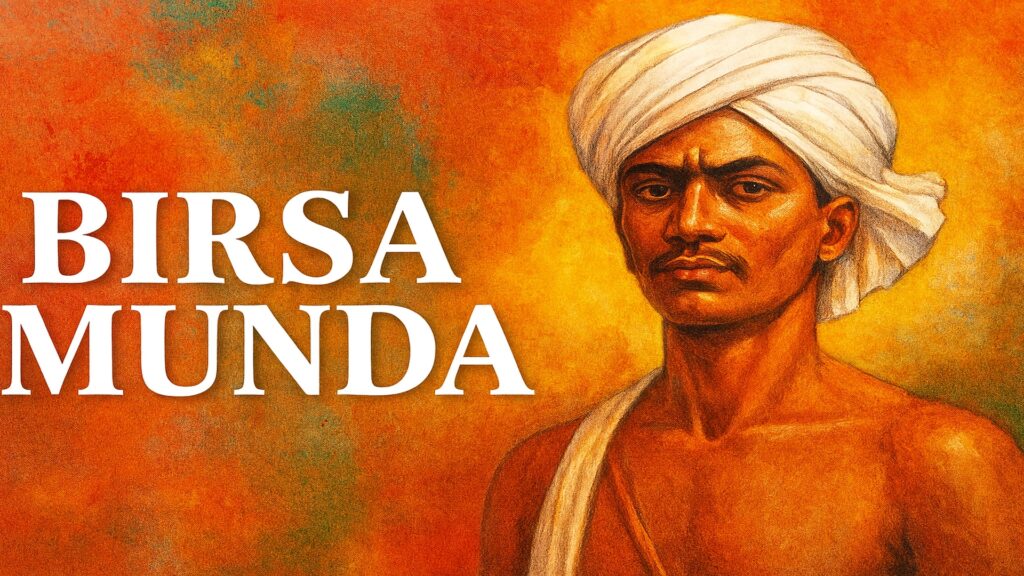
On 15 November, the nation bows its head in reverence to a young warrior who lived only 25 years, yet carved his name forever in the soil of India—Bhagwan Birsa Munda, our Dharti Aba (Father of the Earth). His story is not just history; it is a heartbeat of courage, sacrifice, and unyielding love for his people.
For aspirants walking the long path of preparation, Birsa Munda’s life is a reminder that age, hardship, or circumstance can never limit the power of determination. At a time when the British Empire seemed invincible, a tribal youth from Ulihatu village rose with nothing but faith and fire in his heart, leading the Ulgulan (Great Tumult) against injustice. His voice became the echo of millions who longed for dignity, freedom, and the right to live on their own land.
Birsa Munda Jayanti is not just a day of remembrance—it is a call to awaken the same spirit of resilience within ourselves. Just as Birsa fought for his people, aspirants today fight daily battles of discipline, patience, and perseverance. His legacy whispers to every student: “Your struggle has meaning, your effort has power, and your dream can change the world.”
Table of Contents
🌿 Birsa Munda Jayanti – Honouring Dharti Aba
Every year on 15 November, India celebrates Birsa Munda Jayanti to honour the birth of Bhagwan Birsa Munda (1875–1900), the legendary tribal freedom fighter and social reformer. In 2025, the day carries special weight as it marks his 150th birth anniversary, observed nationwide as Janjatiya Gaurav Diwas (Tribal Pride Day).
Birsa Munda is remembered as “Dharti Aba” (Father of the Earth), a title that reflects his deep bond with the land and his people. His life was short—only 25 years—but his courage and leadership ignited the Ulgulan (Great Tumult), a mass tribal uprising against British exploitation.
📜 Why the Jayanti Matters
- National Recognition: Since 2021, the Government of India has declared Birsa Munda Jayanti as Janjatiya Gaurav Diwas, ensuring his legacy is celebrated across the country.
- Cultural Pride: The day highlights the contributions of tribal communities to India’s freedom struggle and honours their traditions, resilience, and identity.
- Educational Importance: Schools, colleges, and universities organize lectures, essay competitions, and cultural programmes to inspire students with Birsa’s story.
- Policy Initiatives: The government uses this occasion to announce welfare schemes for tribal empowerment, reinforcing Birsa’s vision of dignity and justice.
🌍 How It Is Celebrated
- Jharkhand, Madhya Pradesh, West Bengal, and Odisha observe the day as a public holiday, with cultural events and tributes.
- Tribal art, folk dances, and exhibitions showcase the richness of indigenous heritage.
- Seminars and conferences discuss tribal rights, social justice, and Birsa’s role in India’s freedom struggle.
- Leaders across India pay homage, reminding citizens of Birsa’s enduring message of courage and unity.
🌿 Who is Birsa Munda?
Birsa Munda is celebrated as one of India’s most revered tribal freedom fighters—a youthful and fearless leader whose resistance significantly challenged British authority in the late 19th century. Revered as “Dharti Aba” (Father of the Earth), he emerged as a powerful advocate for the tribal communities of Chhotanagpur, standing up against land dispossession, systemic exploitation, and the threat to their cultural heritage. Despite his life being cut short at the age of 25, his enduring legacy continues to galvanize struggles for justice, dignity, and autonomy.
🌱 Early Life and Education
👶 Childhood in Forests and Villages
Birsa Munda was born on 15 November 1875 in Ulihatu village, Jharkhand, to Sugna Munda and Karmi Hatu. His family lived in poverty, surviving as cultivators and sharecroppers. Despite hardships, Birsa’s childhood was rich in the traditions of the Munda tribe.
- He grew up amidst forests, hills, and rivers, learning to value nature as sacred.
- Folk songs, tribal dances, and oral stories shaped his imagination and gave him a sense of belonging.
- These experiences instilled in him a deep connection to his people’s customs, faith, and community life.
This grounding in tribal culture became the foundation of his later struggle against colonial oppression.
📖 Education at Missionary School
As a young boy, Birsa showed sharp intelligence and curiosity. His family sent him to study at a German Mission School in Chaibasa, where he was introduced to formal education.
- At the school, Birsa was exposed to Christian teachings, discipline, and Western ideas.
- He even adopted the name Daud Munda, reflecting the influence of missionaries during this period.
- Initially, he was fascinated by the new world of books and structured learning.
However, this experience soon revealed a painful reality. Birsa noticed how missionaries looked down upon tribal customs, traditions, and faith. Their hidden agenda of conversion disturbed him deeply.
🔥 The Turning Point
This realization became a turning point in Birsa’s life:
- He understood that education should empower, not erase identity.
- He saw how the British and missionaries were exploiting tribal communities—taking their lands, forcing them into bonded labour, and undermining their culture.
- Birsa rejected conversion, left the missionary influence, and returned to his people with a new vision of resistance and pride.
🌟 Vision for His People
After leaving the missionary school, Birsa began to preach a path of revival and reform:
- He urged tribals to abandon superstitions and alcoholism, which weakened their unity.
- He called for Munda Raj (self‑rule), where tribals could live with dignity and freedom.
- He inspired his people to protect their identity, reclaim their lands, and resist injustice.
This marked the beginning of Birsa’s transformation from a curious student into a messiah of tribal freedom.
⚔️ Struggle Against the British
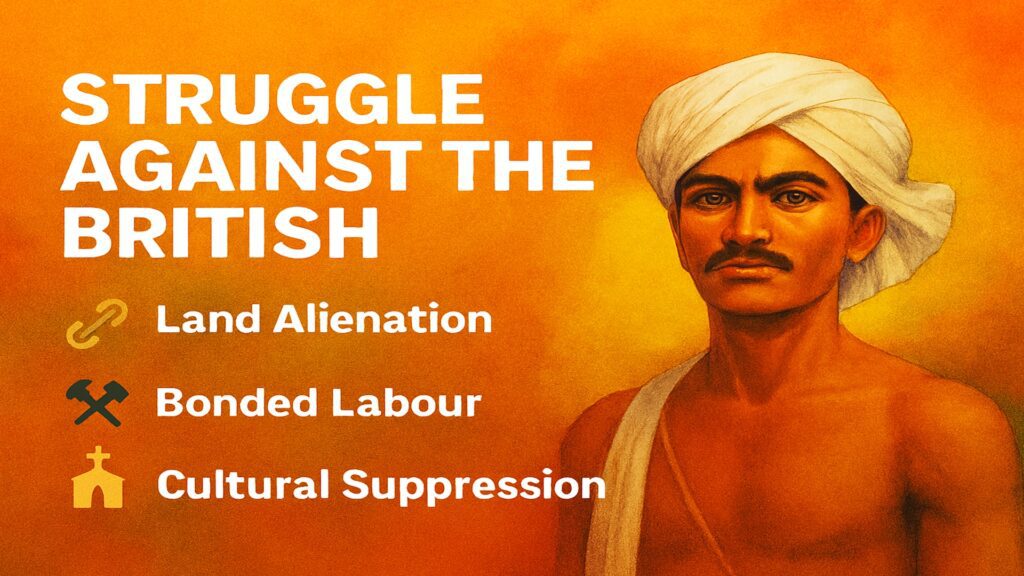
Birsa Munda’s struggle was not born in isolation—it was the cry of an oppressed people. The tribal communities of Chhotanagpur faced relentless exploitation under British colonial rule, and Birsa emerged as their fearless leader.
🌍 Land Alienation
- The British introduced zamindari and tenancy systems that allowed landlords and moneylenders to seize tribal lands.
- Tribals, who had lived on their ancestral lands for generations, suddenly found themselves dispossessed.
- Families were forced to work as tenants on what was once their own land, paying heavy rents and taxes.
- This loss of land was not just economic—it was a loss of identity and dignity, as land was sacred to tribal life.
🔗 Bonded Labour
- The British imposed exploitative labour systems, forcing tribals into begar (bonded labour).
- They worked without fair wages, often under harsh conditions, treated as second‑class citizens in their own homeland.
- This system stripped them of dignity and reduced them to mere tools of colonial profit.
✝️ Cultural Suppression
- Missionaries, supported by colonial authorities, tried to convert tribals to Christianity, undermining their customs and faith.
- Tribal traditions, festivals, and spiritual practices were dismissed as “primitive.”
- This cultural assault created a deep wound, as it threatened the very soul of tribal identity.
🌿 Birsa’s Response – The Birth of Birsait
In the face of this exploitation, Birsa Munda rose as a messiah of freedom. He began preaching a new spiritual and social path called Birsait, which combined tribal traditions with reformist ideas.
Through Birsait, Birsa urged his people to:
- Unite under Munda Raj (self‑rule): He envisioned a society where tribals governed themselves, free from British interference.
- Abandon superstitions and alcoholism: He encouraged discipline and reform, knowing that unity and strength required moral clarity.
- Resist British exploitation and reclaim their lands: He inspired tribals to refuse taxes, reject bonded labour, and fight for their ancestral rights.
🔥 The Ulgulan (Great Tumult)
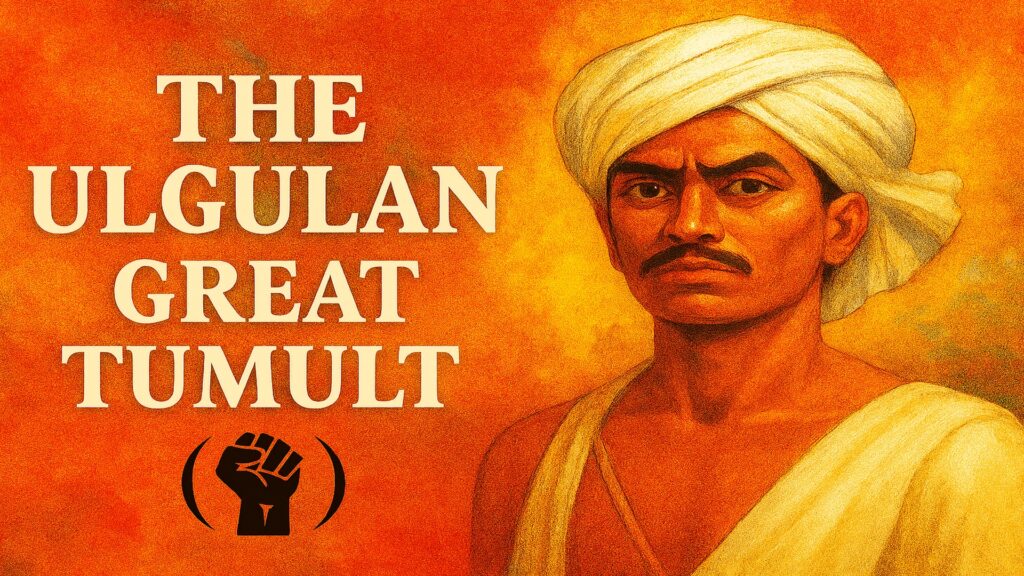
Birsa’s teachings ignited the Ulgulan movement (1899–1900), a mass tribal uprising against the British. Thousands rallied under his banner, refusing to bow to colonial authority. Though the rebellion was eventually suppressed, it shook the British administration and proved that even marginalized communities could rise against injustice.
⚰️ Birsa Munda: His Last Days, Arrest, and Death
🌿 The Final Phase of His Struggle
By the end of the Ulgulan (Great Tumult) of 1899–1900, Birsa Munda had become a symbol of resistance for thousands of tribals across Chhotanagpur. His call for Munda Raj (self‑rule) and his fight against British exploitation had shaken colonial authority. The British, alarmed by his growing influence, launched a massive crackdown to suppress the movement.
🔗 Arrest of Birsa Munda
- In March 1900, Birsa was captured by the British at Jamkopai forest near Chakradharpur.
- He was betrayed by informers who revealed his location, as the British feared his growing popularity and the unity he had created among tribals.
- His arrest marked the end of the Ulgulan, but it also highlighted the fear the British had of a 25‑year‑old tribal leader who had mobilized thousands without weapons, relying only on courage and conviction.
⚰️ Death in Ranchi Jail
- After his arrest, Birsa was imprisoned in Ranchi Jail.
- On 9 June 1900, he died under mysterious circumstances at the young age of 25 years.
- The official British records claimed he died of cholera, but many historians and tribal narratives believe his death was due to mistreatment and neglect in prison.
- His sudden death shocked his followers, but it also immortalized him as a martyr of tribal freedom.
🌿 After the Death of Birsa Munda
⚰️ The Shock Among His People
When Birsa Munda died in Ranchi Jail on 9 June 1900, at the age of just 25 years, it sent waves of grief across the tribal communities of Chhotanagpur. For his followers, it was not merely the death of a leader—it was the silencing of a voice that had awakened their pride, dignity, and resistance. The British claimed he died of cholera, but many believed his death was the result of neglect and mistreatment in prison.
🌍 Immediate Aftermath
- Suppression of the Ulgulan: With Birsa’s arrest and death, the British declared the Ulgulan (Great Tumult) crushed. Many of his followers were imprisoned, and the rebellion was forcefully subdued.
- Fear Among the British: Despite suppressing the movement, the British realized the power of tribal unity and the danger of ignoring their grievances.
- Hope Among Tribals: Though leaderless, the tribal communities carried Birsa’s teachings in their hearts, continuing to resist exploitation in smaller, localized struggles.
📜 Long‑Term Impact
Birsa’s martyrdom gave birth to a lasting legacy of resistance:
- Symbol of Tribal Pride: He became immortalized as Dharti Aba (Father of the Earth), a spiritual guardian of tribal rights.
- Policy Changes: The British, shaken by the rebellion, introduced reforms in tenancy laws to prevent further uprisings. These changes acknowledged tribal land rights to some extent.
- Inspiration for Movements: Birsa’s vision of Munda Raj (self‑rule) inspired later tribal and peasant movements across India, reinforcing the idea that even marginalized communities could challenge colonial authority.
Birsa Munda’s life was a flame that burned brightly, even if only for 25 years. Born in poverty, raised amidst forests, and armed with nothing but conviction, he rose to become the voice of millions of tribals who longed for dignity and freedom. His struggle against land alienation, bonded labour, and cultural suppression was not just a fight against the British—it was a fight to protect identity, heritage, and the soul of his people.
Even in his last days, imprisoned in Ranchi Jail, Birsa’s spirit remained unbroken. His death at such a young age did not silence him—it transformed him into a martyr, Dharti Aba (Father of the Earth), whose vision continues to inspire generations. Today, his legacy lives on in every movement for justice, in every call for dignity, and in every aspirant who dares to dream of changing the world.
For students and aspirants, Birsa Munda’s journey is more than history—it is a lesson in resilience. He teaches us that greatness is not born in palaces but in the courage to stand against injustice. His life whispers to every learner: “Your struggles are not chains—they are sparks that can ignite your destiny.”
🌿 Let us honour Birsa Munda not just by remembering him, but by carrying forward his spirit of courage and conviction in our own lives.
👉 To stay connected with such inspiring stories and regular updates, join our WhatsApp channel today.
📘 For more related articles and detailed current affairs, please visit our Current Affairs & Articles section.