Every word you’ve learned… every rule you’ve understood… is not just English Grammar Rules—it’s your strength. It’s the language of your dreams, the foundation of your answers, and the voice of your success.
In our previous articles, we’ve explored 55-60 essential grammar rules—each one crafted to empower you for UPSC, SSC, PCS, Patwari, and other competitive exams. If you haven’t read those yet, please scroll down and click the links below to begin your journey from the start. Each rule is explained with simple vocabulary, bilingual clarity, and aspirant-friendly examples.
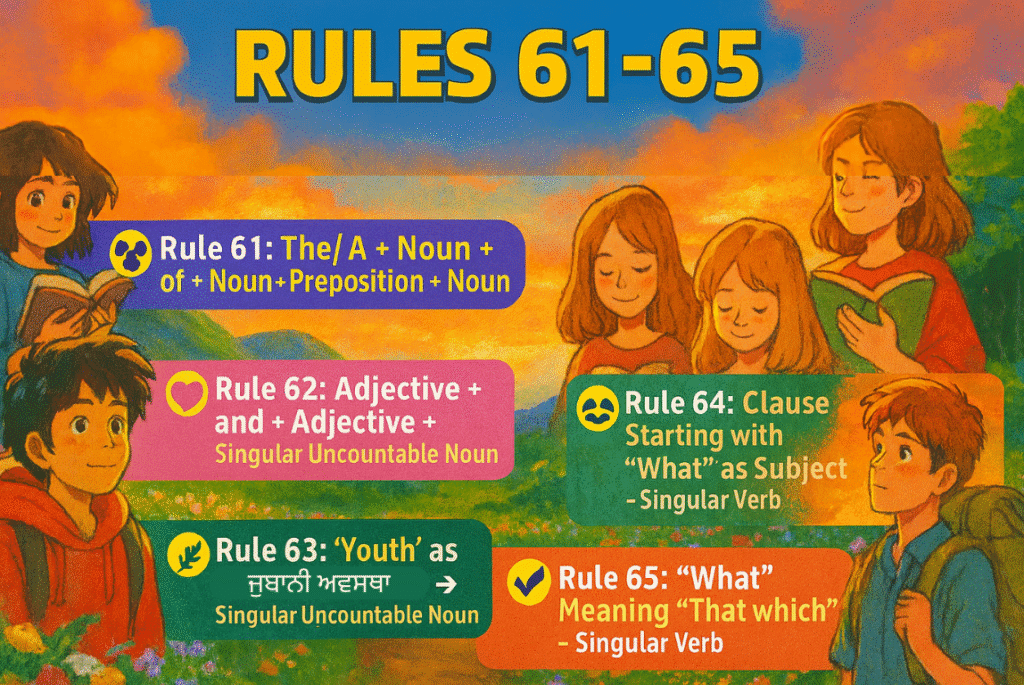
Today, we continue this journey with Rules 61 to 65—each one unlocking deeper mastery of sentence structure and subject–verb agreement. Let’s walk together, one rule at a time… because your success is written in grammar.
Table of Contents
🧩 Rule 61: The/ A + Noun + of + Noun + Preposition + Noun
ਇਹਨਾਂ rules ਦਾ ਪ੍ਰਯੋਗ ਜਦੋਂ sentence ਦੇ subject ਦੇ ਰੂਪ ਵਿੱਚ ਹੋਵੇ, ਤਾਂ first ‘of’ ਤੋਂ ਪਹਿਲਾਂ ਆਉਣ ਵਾਲੇ noun ਦੇ number ਅਤੇ person ਦੇ ਅਨੁਸਾਰ ਹੀ verb ਦੀ ਚੋਣ ਕੀਤੀ ਜਾਂਦੀ ਹੈ। ਜਿਵੇਂ:
The boys of all the colleges of Bihar are careless.
👉 ਇਹ sentence grammatically ਬਿਲਕੁਲ ਸਹੀ ਹੈ।
ਇਸ ਵਿੱਚ “boys” ਇੱਕ plural noun ਹੈ, ਜਿਸ ਤੋਂ ਪਹਿਲਾਂ “the” ਆ ਰਿਹਾ ਹੈ। ਇਸ ਤੋਂ ਬਾਅਦ “of” + “colleges” noun + “of” preposition + “Bihar” noun ਆ ਰਹੇ ਹਨ।
Verb “are” ਇੱਕ plural verb ਹੈ ਜੋ “the boys” plural noun ਨੂੰ follow ਕਰ ਰਹੀ ਹੈ।
The boys of all the colleges of Bihar is careless.
👉 ਇਹ sentence grammatically ਗਲਤ ਹੈ।
ਇਸ ਵਿੱਚ verb “is” ਇੱਕ singular verb ਹੈ ਜੋ “boys” plural noun ਨੂੰ follow ਨਹੀਂ ਕਰਦੀ।
The book of stories on childhood is inspiring.
👉 ਇਹ sentence grammatically ਸਹੀ ਹੈ ।
ਇਸ ਵਿੱਚ “The book” ਇੱਕ singular noun ਹੈ ਜੋ subject ਦੇ ਰੂਪ ਵਿੱਚ ਵਰਤਿਆ ਗਿਆ ਹੈ। “of stories on childhood” noun phrase ਹੈ ਜੋ “book” ਦੀ detail show ਕਰ ਰਹੀ ਹੈ।
Verb “is” ਇੱਕ singular verb ਹੈ ਜੋ “book” ਨੂੰ follow ਕਰ ਰਿਹੀ ਹੈ।
👉 Structure: The + Noun (book) + of + Noun (stories) + Preposition (on) + Noun (childhood)
👉 Verb Agreement: “book” singular noun → “is” singular verb
A collection of poems about nature has won awards.
ਇਹ sentence ਵੀ grammatically ਸਹੀ ਹੈ।
“collection” ਇੱਕ singular noun ਹੈ ਜੋ subject ਹੈ। “of poems about nature” noun phrase ਹੈ ਜੋ “collection” ਨੂੰ explain ਕਰ ਰਿਹਾ ਹੈ।
Verb “has” ਇੱਕ singular verb ਹੈ ਜੋ “collection” ਨੂੰ follow ਕਰ ਰਿਹਾ ਹੈ।
👉 Structure: A + Noun (collection) + of + Noun (poems) + Preposition (about) + Noun (nature)
👉 Verb Agreement: “collection” singular noun → “has” singular verb
📌 Rule Summary: ਇਸ ਰੂਲ ਵਿੱਚ noun phrase ਦੀ ਬਣਤਰ ‘The/ A + Noun + of + Noun + Preposition + Noun’ ਹੁੰਦੀ ਹੈ। Verb ਉਸ noun ਦੇ ਨਾਲ ਮਿਲਦੀ ਹੈ ਜੋ ਮੁੱਖ subject ਹੈ।
🎨 Rule 62: Adjective + and + Adjective + Singular Uncountable Noun
ਇਸ rule ਵਿੱਚ ਜਦੋਂ sentence ਦਾ subject “Adjective + and + Adjective + Singular Uncountable Noun” ਦੇ ਰੂਪ ਵਿੱਚ ਹੋਵੇ ਅਤੇ ਇਹ subject ਦੋ ਵੱਖ-ਵੱਖ concepts ਜਾਂ cheezan ਦਾ ਬੋਧ ਕਰਾਉਂਦਾ ਹੋਵੇ, ਤਾਂ ਇਸਨੂੰ plural subject ਮੰਨਿਆ ਜਾਂਦਾ ਹੈ ਅਤੇ plural verb ਦੀ ਵਰਤੋਂ ਕੀਤੀ ਜਾਂਦੀ ਹੈ।
Social and Political freedom are necessary.
👉 ਉਪਰੋਕਤ example ਵਿੱਚ “social” ਅਤੇ “political” ਦੋ ਵੱਖ-ਵੱਖ freedom ਦੀ ਗੱਲ ਕਰ ਰਹੇ ਹਨ।
ਇਸ ਲਈ “freedom” ਨੂੰ plural sense ਵਿੱਚ ਲਿਆ ਗਿਆ ਹੈ ਅਤੇ verb “are” (plural) ਦੀ ਵਰਤੋਂ ਕੀਤੀ ਗਈ ਹੈ ਜੋ sentence ਨੂੰ grammatically ਸਹੀ ਬਣਾਉਂਦੀ ਹੈ।
Social and Political freedom is necessary.
👉 ਇਸ sentence ਵਿੱਚ verb “is” singular ਹੈ, ਜੋ “social and political freedom” ਦੇ plural sense ਨੂੰ match ਨਹੀਂ ਕਰਦੀ।
“Social” ਅਤੇ “Political” ਦੋ ਅਲੱਗ-ਅਲੱਗ freedom ਦਾ ਬੋਧ ਕਰ ਰਹੇ ਹਨ, ਇਸ ਲਈ plural verb ‘are’ ਦੀ ਵਰਤੋਂ ਹੀ ਸਹੀ ਮੰਨੀ ਜਾਂਦੀ ਹੈ।
Honesty and integrity is essential in leadership.
👉 ਇਹ sentence grammatically ਗਲਤ ਹੈ।
“Honesty” ਅਤੇ “Integrity” ਦੋ ਵੱਖ-ਵੱਖ values ਹਨ ਜੋ leadership ਵਿੱਚ essential ਹਨ।
ਇਸ ਲਈ subject plural ਹੋ ਜਾਂਦਾ ਹੈ ਅਤੇ plural verb ‘are’ ਦੀ ਵਰਤੋਂ ਹੋਣੀ ਚਾਹੀਦੀ ਹੈ।
Correct Sentence: Honesty and integrity are essential in leadership.
Poverty and hunger is a global concern.
👉 ਇਹ sentence ਵੀ grammatically ਗਲਤ ਹੈ।
“Poverty” ਅਤੇ “Hunger” ਦੋ ਵੱਖ-ਵੱਖ global issues ਹਨ। ਇਸ ਲਈ subject plural ਹੈ ਅਤੇ plural verb ‘are’ ਦੀ ਵਰਤੋਂ ਹੋਣੀ ਚਾਹੀਦੀ ਹੈ।
Correct Sentence: Poverty and hunger are a global concern.
📌 Rule Summary: ਜੇ “Adjective + and + Adjective + Singular Uncountable Noun” sentence ਵਿੱਚ ਦੋ ਵੱਖ-ਵੱਖ concepts ਨੂੰ ਦਰਸਾਉਂਦਾ ਹੈ, ਤਾਂ subject plural ਮੰਨਿਆ ਜਾਂਦਾ ਹੈ ਅਤੇ plural verb ਵਰਤੀ ਜਾਂਦੀ ਹੈ।
🌱 Rule 63: ‘Youth’ as ‘ਜੁਬਾਨੀ ਅਵਸਥਾ’ → Singular Uncountable Noun
ਜਦੋਂ ‘Youth’ ਦਾ ਅਰਥ ‘ਜੁਬਾਨੀ ਅਵਸਥਾ’ ਜਾਂ ਜਵਾਨੀ ਦੀ ਹਾਲਤ ਦੇ ਤੌਰ ‘ਤੇ ਹੋਵੇ, ਤਾਂ ਇਹ Singular Uncountable Noun ਮੰਨਿਆ ਜਾਂਦਾ ਹੈ ਅਤੇ ਇਸਦੇ ਨਾਲ Singular Verb ਦੀ ਵਰਤੋਂ ਕੀਤੀ ਜਾਂਦੀ ਹੈ।
His youth was full of pleasures.
👉 ਇਸ sentence ਵਿੱਚ “Youth” ‘ਜੁਬਾਨੀ ਅਵਸਥਾ’ ਨੂੰ ਦਰਸਾ ਰਿਹਾ ਹੈ। ਇਸ ਲਈ ਇਹ Singular Uncountable Noun ਮੰਨਿਆ ਗਿਆ ਹੈ ਅਤੇ Verb “was” (Singular) ਦੀ ਵਰਤੋਂ sentence ਨੂੰ grammatically ਸਹੀ ਬਣਾਉਂਦੀ ਹੈ।
His youth were full of pleasures.
👉 ਇਸ sentence ਵਿੱਚ “Youth” ਦਾ ਅਰਥ same ‘ਜੁਬਾਨੀ ਅਵਸਥਾ’ ਹੀ ਹੈ, ਪਰ Verb “were” (Plural) ਦੀ ਵਰਤੋਂ ਹੋਈ ਹੈ ਜੋ grammatically ਗਲਤ ਹੈ। ਇਸ sentence ਵਿੱਚ “was” ਦੀ ਵਰਤੋਂ ਹੋਣੀ ਚਾਹੀਦੀ ਸੀ ਜੋ ਇਸਨੂੰ ਸਹੀ ਬਣਾਉਂਦੀ।
Correct Sentence: His youth was full of pleasures.
Youth is full of dreams.
👉 ਇਸ sentence ਵਿੱਚ “Youth” ‘ਜੁਬਾਨੀ ਅਵਸਥਾ’ ਨੂੰ ਦਰਸਾ ਰਿਹਾ ਹੈ। ਇਸ ਲਈ ਇਹ Singular Uncountable Noun ਮੰਨਿਆ ਗਿਆ ਹੈ ਅਤੇ Verb “is” (Singular) ਦੀ ਵਰਤੋਂ sentence ਨੂੰ grammatically ਸਹੀ ਬਣਾਉਂਦੀ ਹੈ।
Youth represents energy and hope.
👉 ਇਸ sentence ਵਿੱਚ ਵੀ “Youth” ‘ਜਵਾਨੀ ਦੀ ਹਾਲਤ’ ਨੂੰ ਦਰਸਾ ਰਿਹਾ ਹੈ। ਇਸ ਲਈ Verb “represents” (Singular) ਦੀ ਵਰਤੋਂ ਕੀਤੀ ਗਈ ਹੈ ਜੋ “Youth” ਨੂੰ follow ਕਰਦੀ ਹੈ। ਇਹ sentence grammatically ਬਿਲਕੁਲ ਸਹੀ ਹੈ।
📌 ਇੱਕ ਲਾਜਮੀ fact:
ਜਦੋਂ ‘Youth’ ਦਾ ਅਰਥ ‘ਜੁਬਕ’ ਜਾਂ young person ਦੇ ਤੌਰ ‘ਤੇ ਹੋਵੇ, ਤਾਂ ਇਹ Countable Noun ਮੰਨਿਆ ਜਾਂਦਾ ਹੈ। ਇਸ ਸਥਿਤੀ ਵਿੱਚ ‘Youth’ ਦੀ Plural form ‘Youths’ ਵਰਤੀ ਜਾਂਦੀ ਹੈ ਅਤੇ Verb ਦੀ ਚੋਣ Singular ਜਾਂ Plural subject ਦੇ ਅਨੁਸਾਰ ਕੀਤੀ ਜਾਂਦੀ ਹੈ।
A youth was playing in the playground.
👉 “A youth” ਇੱਕ singular subject ਹੈ ਜੋ ਇੱਕ ਜੁਬਕ ਨੂੰ ਦਰਸਾ ਰਿਹਾ ਹੈ। ਇਸ ਲਈ Verb “was” (Singular) ਦੀ ਵਰਤੋਂ sentence ਨੂੰ grammatically ਸਹੀ ਬਣਾਉਂਦੀ ਹੈ।
Two youths were playing in the playground.
👉 “Two youths” ਇੱਕ plural subject ਹੈ ਜੋ ਦੋ ਜੁਬਕਾਂ ਨੂੰ ਦਰਸਾ ਰਿਹਾ ਹੈ। ਇਸ ਲਈ Verb “were” (Plural) ਦੀ ਵਰਤੋਂ sentence ਨੂੰ grammatically ਸਹੀ ਬਣਾਉਂਦੀ ਹੈ।
📌 Rule Summary:
- ‘Youth’ as ‘ਜੁਬਾਨੀ ਅਵਸਥਾ’ → Singular Uncountable Noun → Singular Verb
- ‘Youth’ as ‘ਜੁਬਕ’ → Countable Noun → Singular or Plural Verb depending on subject
🧠 Rule 64: Clause Starting with “What” as Subject → Singular Verb
ਜਦੋਂ sentence ਦਾ subject “What” ਨਾਲ ਸ਼ੁਰੂ ਹੋਣ ਵਾਲੀ clause ਹੋਵੇ, ਤਾਂ ਇਹ clause Singular ਮੰਨੀ ਜਾਂਦੀ ਹੈ ਅਤੇ ਇਸਦੇ ਨਾਲ Singular Verb ਦੀ ਵਰਤੋਂ ਕੀਤੀ ਜਾਂਦੀ ਹੈ।
What I want to buy is a motor cycle.
👉 ਇਸ sentence ਵਿੱਚ “What I want to buy” clause subject ਦੇ ਰੂਪ ਵਿੱਚ ਵਰਤੀ ਗਈ ਹੈ। ਇਹ clause Singular ਮੰਨੀ ਜਾਂਦੀ ਹੈ, ਇਸ ਲਈ Verb “is” (Singular) ਦੀ ਵਰਤੋਂ sentence ਨੂੰ grammatically ਸਹੀ ਬਣਾਉਂਦੀ ਹੈ।
What I want to buy are a motor cycle.
👉 ਇੱਥੇ “are” ਇੱਕ Plural Verb ਹੈ ਜੋ “What I want to buy” clause ਨੂੰ match ਨਹੀਂ ਕਰਦੀ। ਇਸ ਲਈ ਇਹ sentence grammatically ਗਲਤ ਹੈ।
What he likes most is this book.
👉 “What he likes most” clause subject ਹੈ। ਇਹ Singular clause ਹੈ, ਇਸ ਲਈ Verb “is” (Singular) ਦੀ ਵਰਤੋਂ sentence ਨੂੰ grammatically ਸਹੀ ਬਣਾਉਂਦੀ ਹੈ।
What he like most are this book.
👉 ਇੱਥੇ “are” Plural Verb ਦੀ ਵਰਤੋਂ ਹੋਈ ਹੈ ਜੋ Singular clause “What he likes most” ਨੂੰ match ਨਹੀਂ ਕਰਦੀ। ਇਸ sentence ਵਿੱਚ “is” ਦੀ ਵਰਤੋਂ ਹੋਣੀ ਚਾਹੀਦੀ ਸੀ।
What you said is true.
👉 “What you said” clause subject ਦੇ ਰੂਪ ਵਿੱਚ ਵਰਤੀ ਗਈ ਹੈ। ਇਹ clause Singular ਮੰਨੀ ਜਾਂਦੀ ਹੈ, ਇਸ ਲਈ Verb “is” (Singular) ਦੀ ਵਰਤੋਂ sentence ਨੂੰ grammatically ਸਹੀ ਬਣਾਉਂਦੀ ਹੈ।
What matters most is honesty.
👉 “What matters most” clause ਵੀ subject ਹੈ। ਇਹ Singular clause ਹੈ, ਇਸ ਲਈ Verb “is” (Singular) ਦੀ ਵਰਤੋਂ sentence ਨੂੰ grammatically ਸਹੀ ਬਣਾਉਂਦੀ ਹੈ।
📌 Rule Summary: “What ਨਾਲ ਸ਼ੁਰੂ ਹੋਣ ਵਾਲੀ clause” ਜਦੋਂ sentence ਦਾ subject ਬਣੇ, ਤਾਂ ਇਹ clause Singular ਮੰਨੀ ਜਾਂਦੀ ਹੈ ਅਤੇ Verb ਵੀ Singular ਹੀ ਵਰਤੀ ਜਾਂਦੀ ਹੈ।
🎯 Rule 65: “What” Meaning “That which” → Singular Verb
ਜਦੋਂ sentence ਵਿੱਚ “What” ਦਾ ਅਰਥ “that which” ਜਾਂ “the thing which” ਹੋਵੇ, ਤਾਂ ਇਹ clause Singular ਮੰਨੀ ਜਾਂਦੀ ਹੈ ਅਤੇ ਇਸਦੇ ਨਾਲ Singular Verb ਦੀ ਵਰਤੋਂ ਕੀਤੀ ਜਾਂਦੀ ਹੈ।
I shall not need any more bread, what I have is quite sufficient.
👉 ਇੱਥੇ “What I have” ਦਾ ਅਰਥ “That which I have” ਹੈ। ਇਹ clause Singular ਮੰਨੀ ਜਾਂਦੀ ਹੈ, ਇਸ ਲਈ Verb “is” (Singular) ਦੀ ਵਰਤੋਂ sentence ਨੂੰ grammatically ਸਹੀ ਬਣਾਉਂਦੀ ਹੈ।
I shall not need any more bread, what I have are quite sufficient.
👉 ਇੱਥੇ “are” Plural Verb ਦੀ ਵਰਤੋਂ ਹੋਈ ਹੈ ਜੋ “What I have” clause ਨੂੰ match ਨਹੀਂ ਕਰਦੀ। ਇਸ ਲਈ ਇਹ sentence grammatically ਗਲਤ ਹੈ। Verb “is” ਦੀ ਵਰਤੋਂ ਹੋਣੀ ਚਾਹੀਦੀ ਸੀ।
What pleases you is my goal.
👉 “What pleases you” ਦਾ ਅਰਥ “That which pleases you” ਹੈ। ਇਹ clause Singular subject ਹੈ, ਇਸ ਲਈ Verb “is” (Singular) ਦੀ ਵਰਤੋਂ sentence ਨੂੰ grammatically ਸਹੀ ਬਣਾਉਂਦੀ ਹੈ।
What drives success is hard work.
📌 Rule Summary: ਜਦੋਂ “What” ਦਾ ਅਰਥ “that which” ਜਾਂ “the thing which” ਹੋਵੇ, ਤਾਂ ਇਹ clause Singular ਮੰਨੀ ਜਾਂਦੀ ਹੈ ਅਤੇ Verb ਵੀ Singular ਹੀ ਵਰਤੀ ਜਾਂਦੀ ਹੈ।
🔚ਅਸਲ Grammar ਦੀ ਪਹਚਾਨ
ਹੁਣ ਤੁਸੀਂ ਇਹ ਪੰਜੇ rules—Rule 61 ਤੋਂ 65—ਦੀ ਗਹਿਰੀ ਸਮਝ ਹਾਸਲ ਕਰ ਚੁਕੇ ਹੋ। ਇਹ rules ਸਿਰਫ਼ grammar ਦੇ technical concepts ਨਹੀਂ, ਸਗੋਂ ਉਹ ਸੰਵੇਦਨਸ਼ੀਲ ਨਿਯਮ ਹਨ ਜੋ ਤੁਹਾਡੀ writing, speaking ਅਤੇ MCQ solving skills ਨੂੰ next level ‘ਤੇ ਲੈ ਜਾਂਦੇ ਹਨ।
ਅਸੀਂ ਉਮੀਦ ਕਰਦੇ ਹਾਂ ਕਿ ਤੁਸੀਂ ਇਹ rules ਇੱਕ ਵਾਰ ਫਿਰ ਦੋਹਰਾਉਗੇ, ਇਹਨਾਂ ਨੂੰ ਆਪਣੀ ਕਾਪੀ ਵਿੱਚ ਲਿਖ ਕੇ, ਵੱਖ-ਵੱਖ sentence ਬਣਾਉਣ ਦੀ practice ਕਰੋਗੇ— ਤੇ ਉਹ practice sentences ਸਾਡੇ Facebook Page ਜਾਂ WhatsApp Channel ‘ਤੇ share ਵੀ ਕਰੋਗੇ ਤਾਂ ਜੋ ਹੋਰ aspirants ਨੂੰ ਵੀ inspiration ਮਿਲੇ।
📲 Join Our WhatsApp Channel for Daily Grammar Updates, Practice PDFs & Motivational Content:
🎯 Remember: Grammar is not just about rules—it’s about clarity, confidence, and connection. ਅਸੀਂ ਤੁਹਾਡੇ ਨਾਲ ਹਰ ਪੈਰਾਵੇ ਵਿੱਚ ਹਾਂ। Let’s keep learning, practicing, and growing—because your success is our mission.
📘 Want to Master Rules 55 to 60? English Grammar Rules
👉 Click here to Learn the Previous Article of English Grammar (Rules 55–60)
These rules cover essential concepts like plural forms, apostrophe usage, and subject–verb agreement—perfect for SSC, UPSC, PCS, Patwari aspirants.