Each year, as the calendar turns to November 2, the world doesn’t rejoice—it reflects. This is the International Day to End Impunity for Crimes Against Journalists. A day not born of festivity, but of mourning. A day that stands as a solemn tribute to those who dared to uncover the truth—and paid the ultimate price.
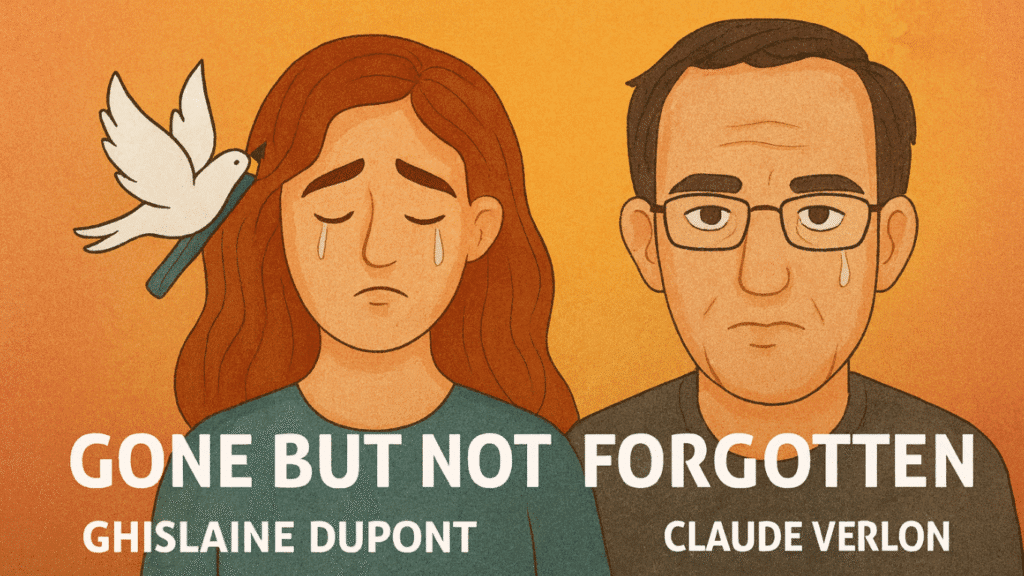
In 2013, two fearless French journalists, Ghislaine Dupont and Claude Verlon, journeyed to Mali to report on a region torn by conflict. They weren’t armed with weapons. They didn’t wear armor. Instead, they carried microphones, cameras, and the conviction that every voice deserves to be heard. But that pursuit of truth cost them their lives. Abducted and executed in cold blood, their story became a symbol of the dangers journalists face—and the silence that often follows their deaths.
For those preparing for competitive exams, this day is more than a line in your current affairs notebook. It’s a powerful reminder of the values that underpin democracy: freedom of expression, accountability, and justice. Behind every news report lies a human being—someone who risks their safety to ensure the world stays informed. When such voices are extinguished, it’s not just journalism that suffers—it’s the conscience of society itself.
The 2025 theme, “Chat GBV: Raising Awareness on AI-facilitated Gender-Based Violence against Women Journalists,” brings a new urgency. In today’s digital age, the threats have evolved. Women journalists now face a relentless wave of online abuse—deepfakes, cyberstalking, and algorithm-driven harassment. The battlefield may be virtual, but the trauma is painfully real. Yet, their resilience remains unshaken.
Let this article serve as more than information. Let it be a tribute to those who stood tall in the face of fear. Let it ignite your understanding—not just of the facts, but of the fierce fight for truth that continues every day.
Table of Contents
🕊️ The Final Assignment: A Story That Became a Symbol
Ghislaine Dupont was a seasoned journalist. Claude Verlon, a dedicated sound technician. Both worked for Radio France Internationale (RFI), one of France’s most respected international broadcasters. They had traveled to Kidal, a remote and volatile town in northern Mali, to report on the fragile peace process and interview leaders of the Tuareg separatist movement—the National Movement for the Liberation of Azawad (MNLA).
On that fateful day, they had just finished an interview with Ambery Ag Rissa, a senior MNLA figure. It was a routine assignment—one of many in their careers. But as they stepped outside, they were abducted in broad daylight by armed men. Within hours, both were found dead. Shot. Abandoned. Silenced.
No group claimed responsibility. No one was held accountable. And no justice was served.
Their deaths shocked the world—not just because of the brutality, but because of what it represented: even journalists, protected by international law and driven by truth, could be hunted and killed without consequence. The town of Kidal, already a symbol of unrest, became a graveyard for press freedom.
🎙️ Why Were They There? Why Did It Matter?
Ghislaine and Claude weren’t thrill-seekers. They were truth-seekers. Mali was in the midst of a complex conflict—ethnic tensions, separatist ambitions, and fragile ceasefires. The world needed clarity. And RFI sent its best.
They believed that stories from the margins mattered. That voices from conflict zones deserved to be heard. That journalism wasn’t just about headlines—it was about humanity.
Their mission was simple: to listen, to document, and to share. But their courage cost them their lives.
🕯️ A Global Outcry, But No Closure
When Ghislaine and Claude were kidnapped and executed in Mali on November 2, 2013, the world responded with shock and condemnation. France Médias Monde, the parent company of Radio France Internationale (RFI), called the killings “craven” and demanded answers. French soldiers quickly recovered their bodies, but the perpetrators vanished into the desert—and into impunity.
Despite international pressure, the investigation has remained “particularly complex”. The French government classified key documents as “defence secrets,” limiting their use in court. Meanwhile, Mali’s unstable security situation has prevented judicial teams from accessing the crime scene or interviewing witnesses.
Reporters Without Borders (RSF) and other press freedom organizations have repeatedly urged both governments to cooperate. But ten years on, the families of Ghislaine and Claude still wait. No arrests. No trials. No justice.
⚖️ Unanswered Questions and Official Silence
A 2017 investigative report by France2’s “Envoyé Spécial” challenged the official narrative. It suggested that the journalists may have been targeted deliberately—not just by random militants, but possibly by actors with deeper political motives. Yet, these claims remain unverified, and the case has not moved forward.
The lack of transparency has fueled frustration. RSF has called the situation “a mystery protected by silence,” and the families have expressed anguish over the absence of accountability
🕊️ A Day Born from Silence, Marked by Action
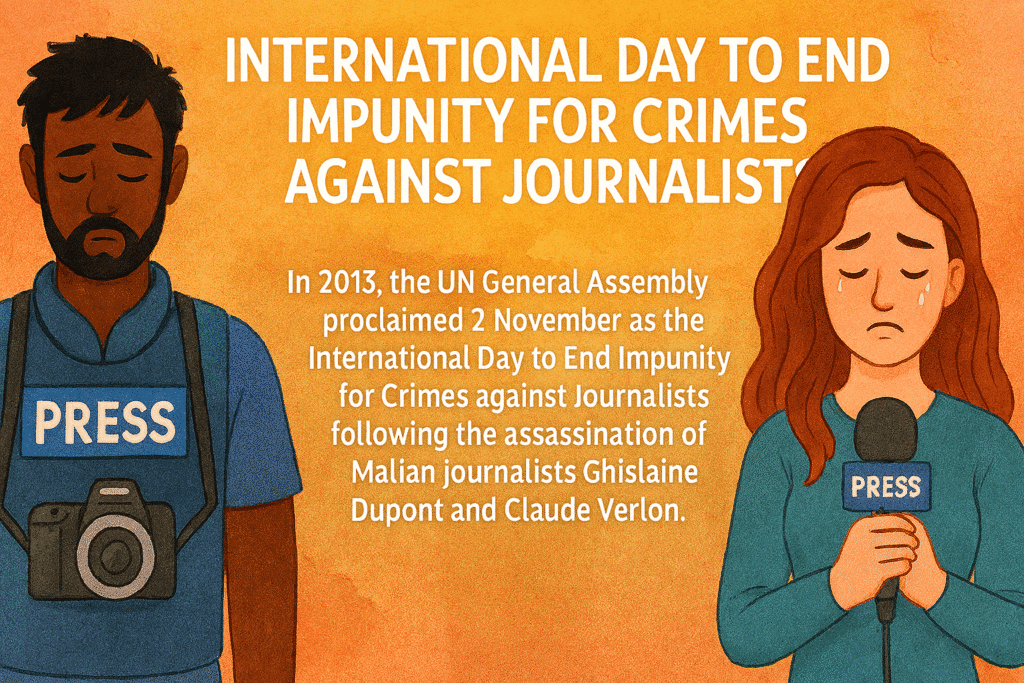
The United Nations General Assembly officially proclaimed November 2nd as the International Day to End Impunity for Crimes Against Journalists in 2013, following the assassination of French journalists Ghislaine Dupont and Claude Verlon in Mali. Their deaths were not just tragic—they were symbolic of a global crisis: journalists being killed for doing their job, and their killers walking free.
Since then, the UN has used this day to spotlight the urgent need to protect journalists and end the culture of impunity that surrounds their murders. It’s not just a commemoration—it’s a call to action.
📢 How the UN Observes the Day
- Global Campaigns: The UN, through UNESCO and other agencies, launches awareness campaigns across countries, highlighting cases of murdered journalists and the lack of justice.
- Secretary-General’s Message: Each year, the UN Secretary-General delivers a powerful message urging governments to investigate crimes against journalists and uphold press freedom.
- Thematic Focus: Every observance is centered around a pressing issue. In 2025, the theme is “Chat GBV: Raising Awareness on AI-facilitated Gender-Based Violence against Women Journalists”, spotlighting the rise of digital abuse and algorithmic threats.
- UNESCO Reports: The day often coincides with the release of the UNESCO Director-General’s Report, which outlines global statistics on journalist killings and impunity rates.
- Events & Dialogues: Panels, webinars, and memorials are held worldwide, featuring journalists, human rights defenders, and policymakers discussing solutions and sharing stories.
🇮🇳 India’s Echoes of Silence: When Journalism Meets Danger
While the International Day to End Impunity for Crimes Against Journalists was born from a tragedy in Mali, its relevance in India is painfully real. Here too, journalists have been silenced—not by censorship alone, but by bullets, threats, and the chilling absence of justice.
India, with its vibrant democracy and diverse media landscape, should be a haven for press freedom. Yet, several journalists have paid the price for exposing uncomfortable truths. Their stories are not just headlines—they are warnings.
🕯️ Stories That Still Demand Justice
- Gauri Lankesh (2017) A fearless journalist and editor of Lankesh Patrike, Gauri was known for her outspoken views against communalism and caste injustice. She was shot dead outside her Bengaluru home. Her murder sparked nationwide protests, but the investigation remains slow and fragmented.
- Shujaat Bukhari (2018) Editor of Rising Kashmir, Shujaat was gunned down in Srinagar just hours after defending press freedom on social media. His assassination sent shockwaves through the valley, yet the case remains unresolved, with no convictions.
- Sandeep Sharma (2018) A reporter from Madhya Pradesh investigating illegal sand mining, Sandeep was run over by a truck in what many believe was a deliberate act. Despite video evidence and public outcry, justice has been elusive.
- Ram Chander Chhatrapati (2002) He exposed crimes committed by a powerful religious leader. He was shot and later died of his injuries. It took 16 years for the courts to convict the accused, highlighting the long road to justice.
⚖️ Impunity in India: A Pattern, Not an Exception
These cases reflect a disturbing pattern: journalists investigating corruption, extremism, or abuse of power often face deadly consequences. And more often than not, their killers walk free—or are shielded by delay, denial, or political silence.
India ranks poorly on global press freedom indices, not just because of censorship, but because of impunity. Legal harassment, online abuse, and physical threats are common, especially for rural and freelance reporters.
📚 Explore More Educational Resources
🧳 Jobs
Latest government and private job updates with eligibility, syllabus, and exam tips for aspirants.
🗞️ Current Affairs and Articles
Daily, weekly, and monthly current affairs with exam-focused analysis and downloadable GK notes.
🏞️ Punjab History and Culture
Explore Punjab’s rich heritage, freedom movements, and cultural legacy for PCS and PSSSB exams.
📘 English
Master reading comprehension, writing skills, and exam-level English practice for competitive success.
✍️ English Grammar
Learn essential grammar rules, error spotting, and sentence correction with aspirant-friendly notes.
📚 English Vocabulary
Boost your vocabulary with daily words, idioms, synonyms, and usage tips for exams.
📖 Punjabi Grammar
Structured Punjabi vyakaran lessons with Gurmukhi support for teaching and state-level exams.
📄 Previous Year Question Papers (PYQ)
Access solved PYQs with answer keys and topic-wise analysis to sharpen your exam strategy.