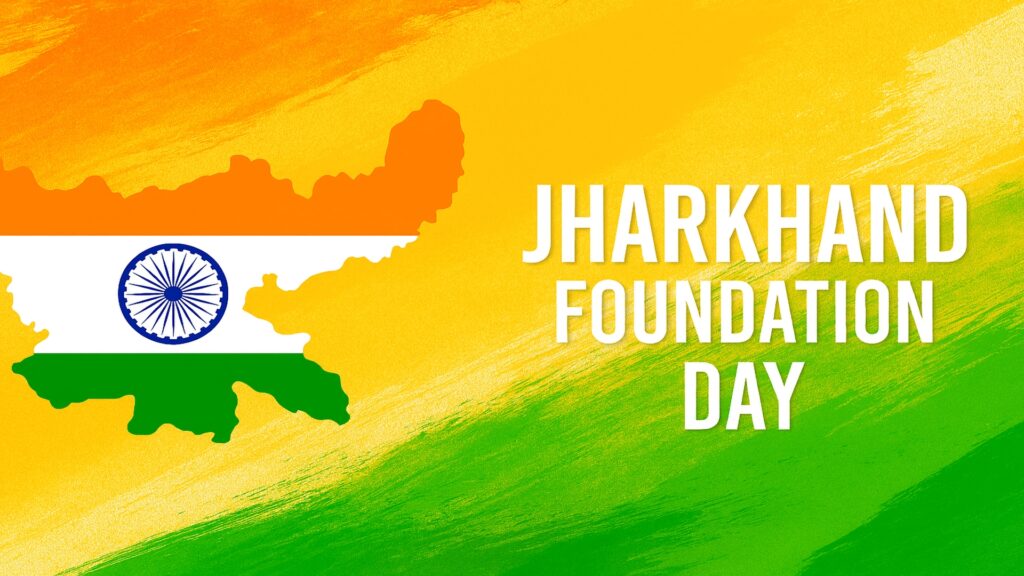
“Some states are born out of geography. Jharkhand was born out of a dream.” A dream nurtured in the hearts of tribal warriors, forest dwellers, and freedom fighters who longed for dignity, identity, and justice. On 15 November 2000, that dream took shape—Jharkhand was born, not just as a state, but as a symbol of resilience, heritage, and hope.
This day is more than a date on the calendar. It’s a tribute to Birsa Munda, the fearless tribal icon whose legacy echoes through the hills and forests of Jharkhand. It’s a celebration of a land rich in minerals, culture, and courage. And for every aspirant preparing for UPSC, SSC, PCS, or Patwari exams, it’s a reminder that history isn’t just studied—it’s lived, honored, and carried forward.
In this article, we’ll explore the historical significance, cultural pride, and exam-relevant facts surrounding Jharkhand Foundation Day—so that you not only remember the date, but feel the story.
Table of Contents
🏞️ Historical Background: Jharkhand – A State Born from Struggle, Spirit, and Soil
Every aspirant knows that history isn’t just about dates—it’s about dreams, revolutions, and the courage to demand change. The story of Jharkhand is one such chapter that deserves not just to be remembered, but felt.
On 15 November 2000, Jharkhand was carved out of Bihar—not by chance, but by the relentless voice of its people who fought for recognition, justice, and identity. The passage of the Bihar Reorganisation Act, 2000 was the final step in a journey that began decades earlier, rooted in the region’s tribal pride, cultural uniqueness, and socio-economic struggles.
But this date holds deeper meaning. It’s the birth anniversary of Birsa Munda (1875–1900)—a name every aspirant must know. Revered as Dharti Aaba (Father of the Earth), Birsa Munda wasn’t just a freedom fighter; he was a symbol of tribal resistance against British rule, a leader who awakened the spirit of self-respect among indigenous communities.
For aspirants, Jharkhand’s formation is a powerful example of:
- Federalism in action
- Grassroots movements shaping national policy
- The role of tribal leaders in India’s freedom struggle
So when you study Jharkhand, don’t just memorize facts—feel the fire of its formation, and let it inspire your own journey toward success.
🧭 Leaders Behind Jharkhand’s Formation: A Century of Struggle
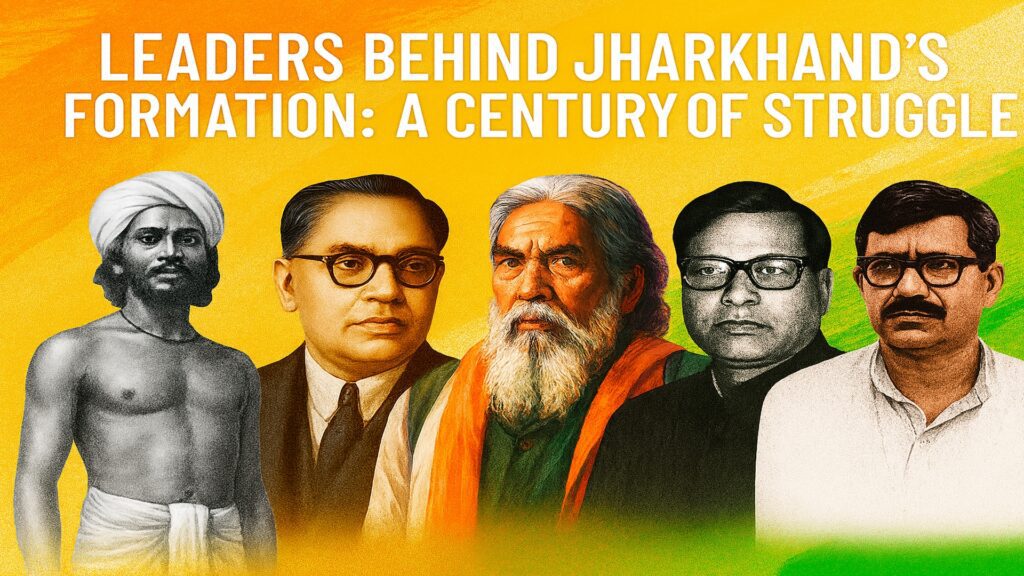
The story of Jharkhand’s birth is not just about political boundaries—it is about voices that refused to be silenced, struggles that spanned generations, and leaders who carried the torch of identity and justice. Each leader added a unique dimension to the movement, making Jharkhand’s statehood a living example of resilience and federalism.
🔥 1. Birsa Munda (1875–1900) – The Soul of the Movement
- Birsa Munda remains the emotional heartbeat of Jharkhand’s identity.
- He led the Ulgulan (Great Tumult) in 1899–1900, a tribal uprising against British exploitation, unfair land policies, bonded labor, and missionary influence.
- His vision of “Abua Dishum, Abua Raj” (Our land, our rule) gave the tribal community a sense of ownership and dignity.
- Revered as Dharti Aaba (Father of the Earth), Birsa’s sacrifice laid the spiritual and cultural foundation for Jharkhand’s demand for autonomy.
🧠 2. Jaipal Singh Munda – The Intellectual Architect
- A charismatic leader, Jaipal Singh Munda combined global education with local identity.
- Educated at Oxford, he captained India’s hockey team to its first Olympic gold in 1928, symbolizing tribal excellence on the world stage.
- In 1949, he founded the Jharkhand Party, the first organized political voice demanding a separate tribal state.
- He championed Adivasi autonomy, language rights, and constitutional safeguards, ensuring that tribal aspirations were heard in India’s democratic framework.
✊ 3. Shibu Soren – The Mass Mobilizer
- Known as Guruji, Shibu Soren brought the movement to the grassroots level.
- In the 1970s, he founded the Jharkhand Mukti Morcha (JMM), which became the most powerful political force advocating for Jharkhand.
- He led mass agitations against land alienation, exploitation of tribal workers, and displacement caused by mining projects.
- His leadership transformed the movement from cultural assertion to political reality, eventually serving as Chief Minister of Jharkhand.
- We deeply mourn the loss of Shibu Soren, who passed away on August 8, 2025. His departure is not just a state’s sorrow, but the nation’s. A visionary leader rooted in justice and compassion, he remains irreplaceable—his legacy etched in the hearts of millions and in the soil that rarely births such greatness.
📚 4. Binod Bihari Mahato – The Socialist Strategist
- A visionary leader who believed in bridging tribal and non-tribal communities under a common Jharkhand identity.
- He emphasized education, land reforms, and social justice, ensuring that the movement was not limited to tribal concerns but included industrial workers and peasants.
- His socialist approach gave the Jharkhand movement a broad-based character, strengthening its legitimacy in national politics.
🛡️ 5. Pushkar Mahato – The Unyielding Activist
- Founder of the Jharkhand Andolankari Sangharsh Morcha, Pushkar Mahato kept the flame of the movement alive during its most difficult years.
- In the 1980s and 1990s, when statehood demands faced political neglect, he organized protests, rallies, and demonstrations, often facing police brutality, arrests, and lathicharge.
- His courage ensured that the movement did not fade, sustaining momentum until Jharkhand was finally recognized as a separate state in 2000.
🎉 Silver Jubilee of Jharkhand Foundation Day (2025)
The year 2025 marks a historic milestone—25 years since Jharkhand was carved out of Bihar on 15 November 2000. This Silver Jubilee celebration is not just a commemoration of statehood, but a tribute to tribal resilience, cultural pride, and developmental aspirations.
The theme for this year’s celebration is “Jharkhand @ 25”, highlighting the state’s journey through tribal empowerment, infrastructure growth, and socio-economic transformation.
🌟 Statewide Celebrations
- The main event was held at Morhabadi Ground, Ranchi, on 15 and 16 November, presided over by Chief Minister Hemant Soren, with Governor Santosh Gangwar as the chief guest.
- Over 4,000 folk artists, 10 cultural tableaux, and traditional dance troupes showcased state’s rich heritage.
- On November 16, vibrant ‘Jatra’ processions were organized across districts, celebrating tribal traditions and community pride.
- The Jharkhand State Livelihood Promotion Society (JSLPS) hosted events in 21,000+ village organizations, where rural women leaders discussed food security, health, and future development goals.
- President Droupadi Murmu and Prime Minister Narendra Modi extended greetings, praising state’s contribution to national development and honoring Birsa Munda’s legacy.
🧑⚖️ Current Leadership (2025)
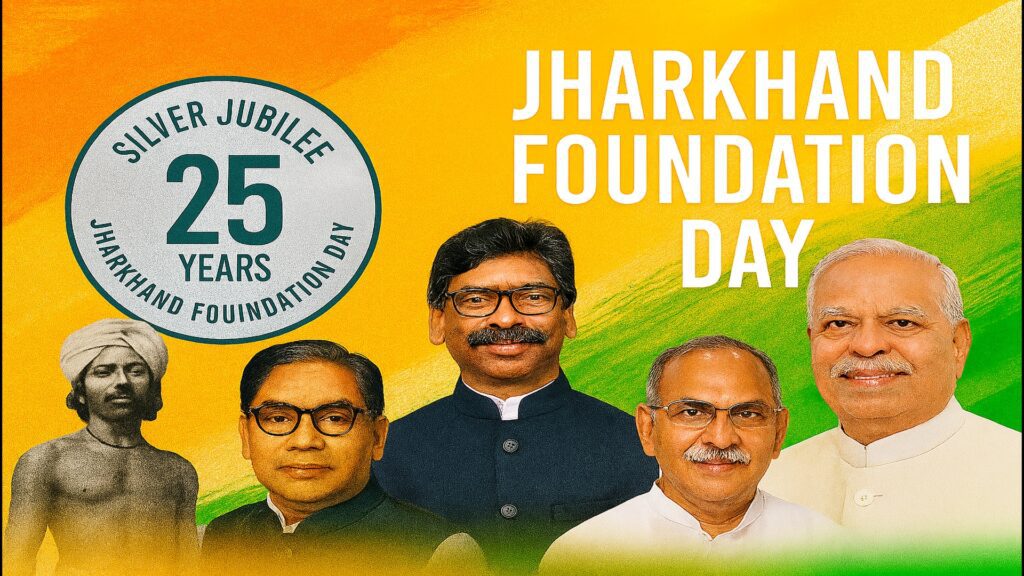
- Chief Minister:Hemant Soren
- Serving his fourth term since November 28, 2024, Soren continues to focus on tribal welfare, education, and rural development.
- Governor:Santosh Gangwar
- Appointed in 2023, Gangwar has emphasized inclusive governance and cultural preservation during his tenure.
🕰️ First Leadership of Jharkhand (2000)
- First Chief Minister:Babulal Marandi (BJP)
- Took oath on 15 November 2000, after being called by then PM Atal Bihari Vajpayee to lead the newly formed state.
- Focused on administrative setup, tribal inclusion, and infrastructure development in the formative years.
- First Governor:Prabhat Kumar
- Oversaw the constitutional and administrative transition during state’s birth as India’s 28th state
As the sun sets on Jharkhand’s Silver Jubilee celebrations, what remains is not just the echo of tribal drums or the shimmer of cultural tableaux—it’s the heartbeat of a people who dared to dream, fought to be heard, and built a state from the soil of their ancestors. Jharkhand is more than a name on the map. It is a living testament to resilience, identity, and the power of collective voice.
From the fearless roar of Birsa Munda’s Ulgulan, to the intellectual fire of Jaipal Singh Munda, and the grassroots mobilization led by Shibu Soren, state’s journey is stitched together by courage and conviction. These leaders didn’t just demand a state—they demanded dignity. And today, every forest, every village, every classroom in Jharkhand carries that legacy forward.
For aspirants preparing for UPSC, SSC, PCS, and other competitive exams, Jharkhand’s story is not just a chapter in modern history—it’s a mirror reflecting the soul of India’s federalism. It teaches us that governance is not just about policies, but about people. That development is not just about infrastructure, but about inclusion. And that every movement, no matter how small, can shape the destiny of a nation.
As we honor 25 years of Jharkhand’s formation, let this be more than a celebration—let it be a call to action. A call to understand, to remember, and to carry forward the values of justice, identity, and unity. Whether you’re revising for your next exam or reflecting on India’s diversity, Jharkhand’s journey offers lessons that go far beyond the classroom.
To stay updated with more such resonant and exam-relevant articles, we invite you to join our WhatsApp group—get notifications directly to your mobile phone and never miss a moment of inspiration or insight.
👉 Join our WhatsApp group now for instant updates
👉 For more relevant articles, click here to visit our Current Affairs & Article Section