Every great story has a beginning and so does Nakkai Misl. People in Bahrwal believe that around 1595, Sri Guru Arjan Dev visited their town. The locals did not give him proper respect. The Guru moved to the next village, Jambar, and rested under a tree.
The headman of Bahrwal, a Sandhu Jat named Hem Raj, felt very ashamed. He went to Jambar and brought the Guru back with full respect. Sri Guru Arjan Dev blessed Hem Raj and said his son would become a great chief. (Note: Historically, this blessing was likely for his grandson, as the timelines match later).
Hira Singh: The Founder of Nakkai Misl
Hira Singh Nakkai was born in 1706 in Bahrwal. He became a Khalsa in 1731 and joined the Sikh movement in 1748. Very soon, 200 Sikhs started following him.
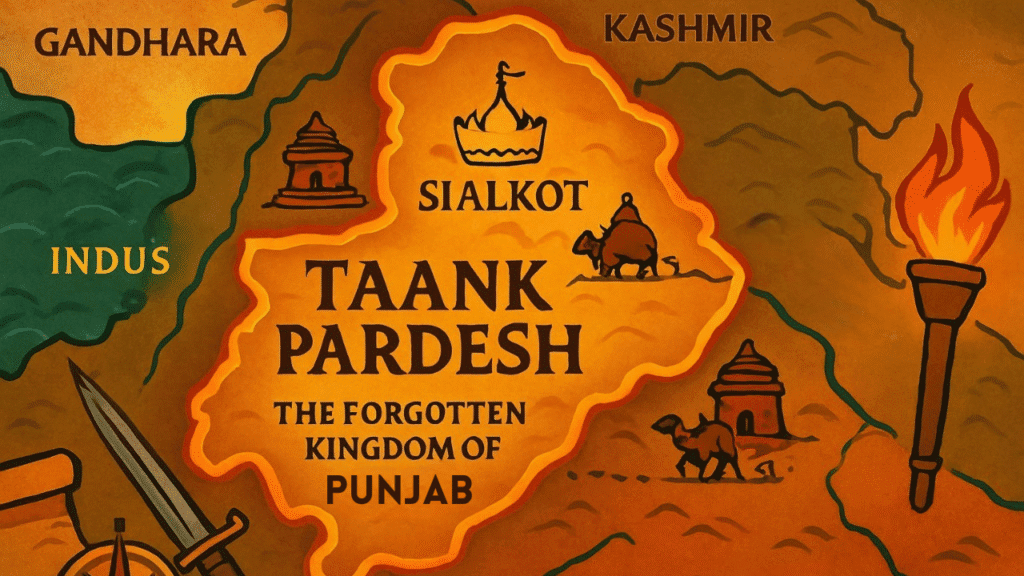
Hira Singh took control of the area between the Satluj and Ravi rivers. This area was called “Nakka,” and that is how the Nakkai Misl got its name. By 1749, he captured Satghara and Chunian from the Afghans. His army grew to 3,000 brave men.
How did Hira Singh die?
The head of Pak Pattan, Sheikh Subhan, allowed cows to be slaughtered in large numbers. The local Hindus were very hurt and asked Hira Singh (chief of Nakkai Misl) for help. When Sheikh Subhan did not listen, Hira Singh attacked him. In this battle, Hira Singh was shot in the forehead and died. His body was brought back to Bahrwal.
Nahar Singh and Ran Singh: Making the Misl Strong
Hira Singh left behind a baby son, Dal Singh. The Sikhs chose Hira Singh’s nephew, Nahar Singh, as the new leader. But Nahar Singh died in a fight just nine months later in 1768.
Then, his younger brother Ran Singh took charge. Under Ran Singh, the Nakkai Misl became very strong. The Jat boys of the Nakka area were known for their bravery. Ran Singh had 1,000 horsemen. He made a pact with three other leaders—Kamar Singh, Ganga Singh Gill, and Lal Singh. They agreed to pool their men, conquer new lands, and share the wealth equally.
Internal Fights and the Rise of Wazir Singh
But you know, where there is power, there is fighting. Kamar Singh wanted his son-in-law, Dal Singh (Hira Singh’s son), to be the main leader. This caused a big fight between Kamar Singh and Ran Singh.
In 1776, Kamar Singh went to a rival leader, Sardar Amir, to ask for help. But Sardar Amir betrayed him and cut off his head while he was sleeping. After this, a smart man named Wazir Singh took control of the estate. Wazir Singh fought Sardar Amir, killed him, and then turned his attention to Ran Singh, who died in 1781.
Bhagwan Singh and the Sukarchakia Connection
Ran Singh’s eldest son, Bhagwan Singh, became the leader, but he was not strong enough. Wazir Singh took over most of the land.
During this time, Bhagwan Singh’s mother, Sardarni Karmo, fixed her daughter Raj Kaur’s (popularly known as Mai Nakkain) marriage with the son of Mahan Singh, the Sukarchakia Misl chief. Wazir Singh did not like this and tried to stop it, but Sardarni Karmo refused to break the match. This marriage was a turning point in Sikh Empire history because it connected the Nakkais to the Sukarchakias.
Later, Wazir Singh and Mahan Singh became friends and fought together against Jai Singh Kanaihya. But Bhagwan Singh felt ignored in this alliance and died in a battle against Wazir Singh.
Gian Singh and Dal Singh’s Revenge
Since Bhagwan Singh had no son, his younger brother Gian Singh became the leader in 1789.
Now, Dal Singh (Hira Singh’s son) had grown up. He was living with Wazir Singh. One night, Dal Singh took revenge for his father’s lost legacy and cut off Wazir Singh’s head while he slept. But Dal Singh could not escape and was killed by Wazir Singh’s servants.
The Direct Link to Maharaja Ranjit Singh
Time passed, and the Nakkai Misl became closely tied to the royal family.
- Gian Singh married his sister, Raj Kaur (Mai Nakkain), to Maharaja Ranjit Singh. She became the mother of Kharak Singh.
- Later, Mehar Singh (Wazir Singh’s son) tried to marry his daughter to Ranjit Singh’s young son, but the prince died very early.
The End of the Nakkai Misl
When Maharaja Ranjit Singh was building his Sikh Empire, he started absorbing the Misl territories. In 1811, when the Nakkai misl chief Kahan Singh was away in Multan for work, Ranjit Singh’s army took over his forts. Because Kharak Singh (Ranjit Singh’s son) was the maternal grandson of the Nakkais, the takeover was mostly peaceful.
Kahan Singh was given a yearly pension (jagir) of 20,000 rupees. He lived quietly in Bahrwal and stayed loyal to the Maharaja. Even after the Maharaja’s death, Kahan Singh stayed out of politics. The British later made him a magistrate. He lived a long life and died in 1874. After his death, his family lived on small pensions, and the Nakkai Misl officially became a part of history.