This article is tailored for aspirants preparing for Punjab’s competitive exams like PSSSB, PCS, Punjab Police, Patwari, Excise Inspector, and many others. It’s packed with information to help you ace general knowledge sections and stand out in the exams. From quirky facts to essential details, we’ve got you covered with latest updated facts!
Welcome to Punjab: Where Culture Meets Charm!
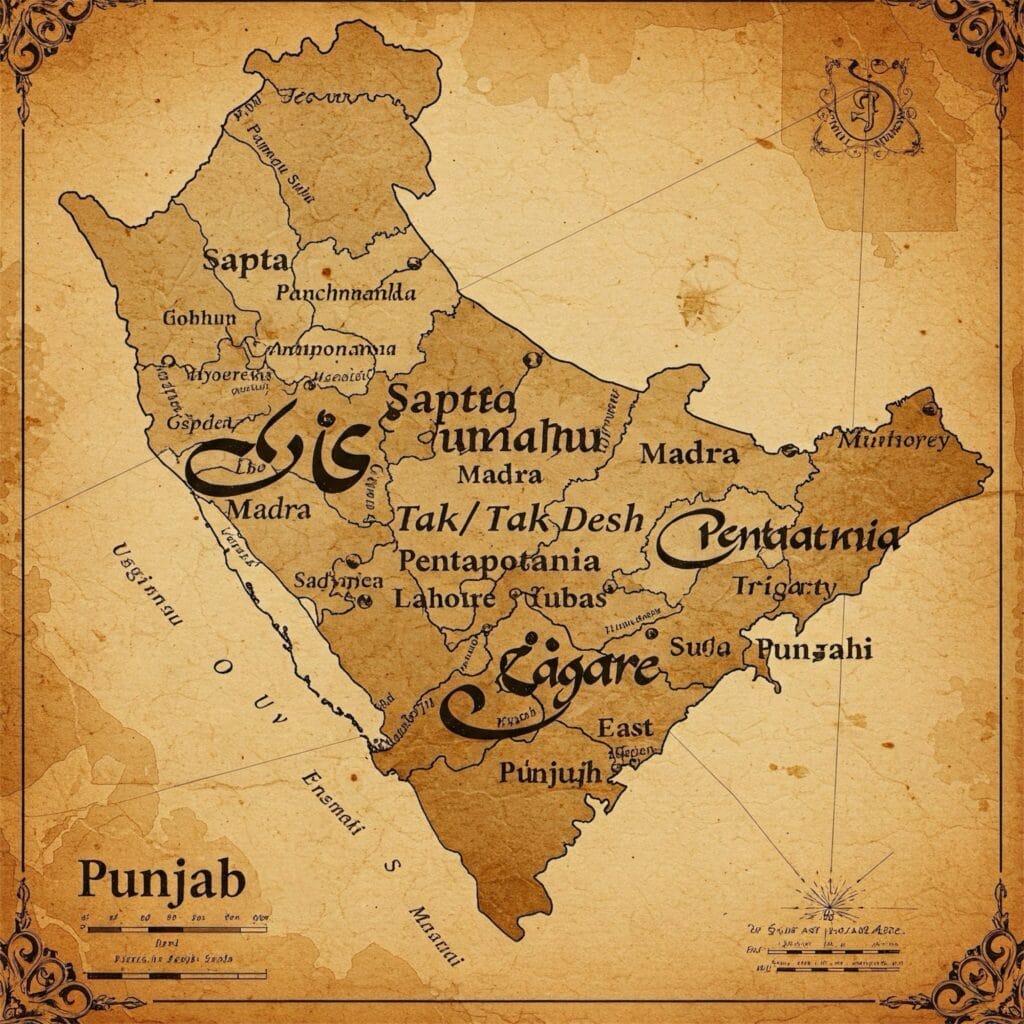
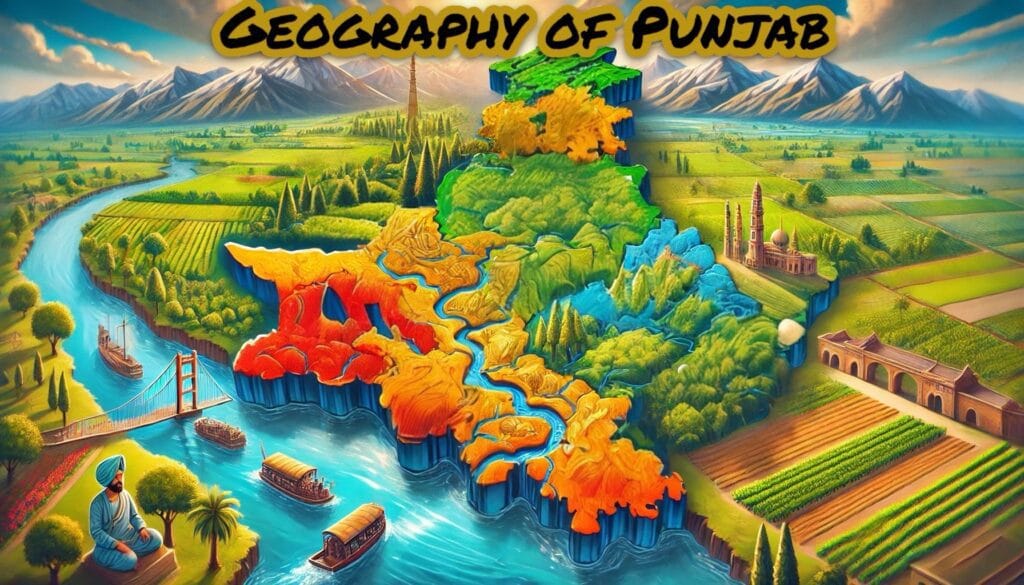
Punjab, lovingly called the “Land of Five Rivers,” was created on November 1, 1966. This happened after the Shah Commission recommended splitting Punjab on the language bases into three parts: Punjab (as we know it), Haryana, and some areas that were added to Himachal Pradesh which was a union territory at that time. Historically, Punjab was known by many names, such as Panchnanda during ancient Indian epics and Puranas , Pentapotamia by the Greeks, both of which refer to the region of five rivers. Let’s just say, Punjab wasn’t just born; it was designed to be iconic!
The Capital That Dreams Built
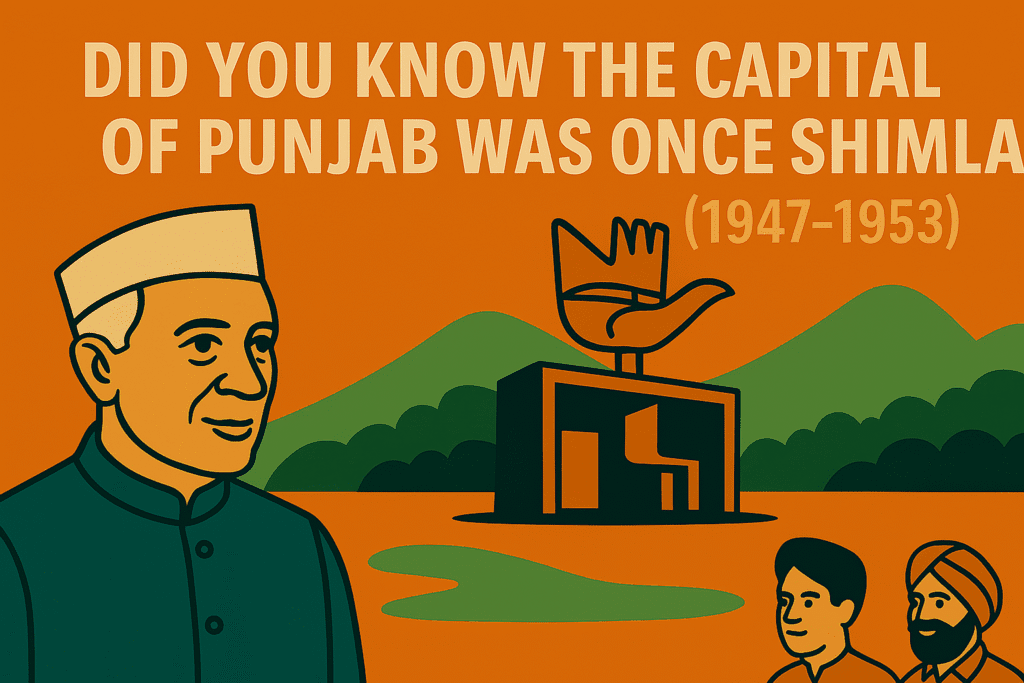
Did you know the capital of Punjab was once Shimla (1947-1953)? But then, India’s first Prime Minister, Jawaharlal Nehru, envisioned a city that would stand out. Enter Chandigarh, a masterpiece by Swiss-French architect Le Corbusier, nestled in the foothills of the Siwaliks.
Fun fact: Chandigarh gets its name from the nearby temple, Chandi Mandir, dedicated to Goddess Chandi.
Punjab’s “Boundaries Unlimited”
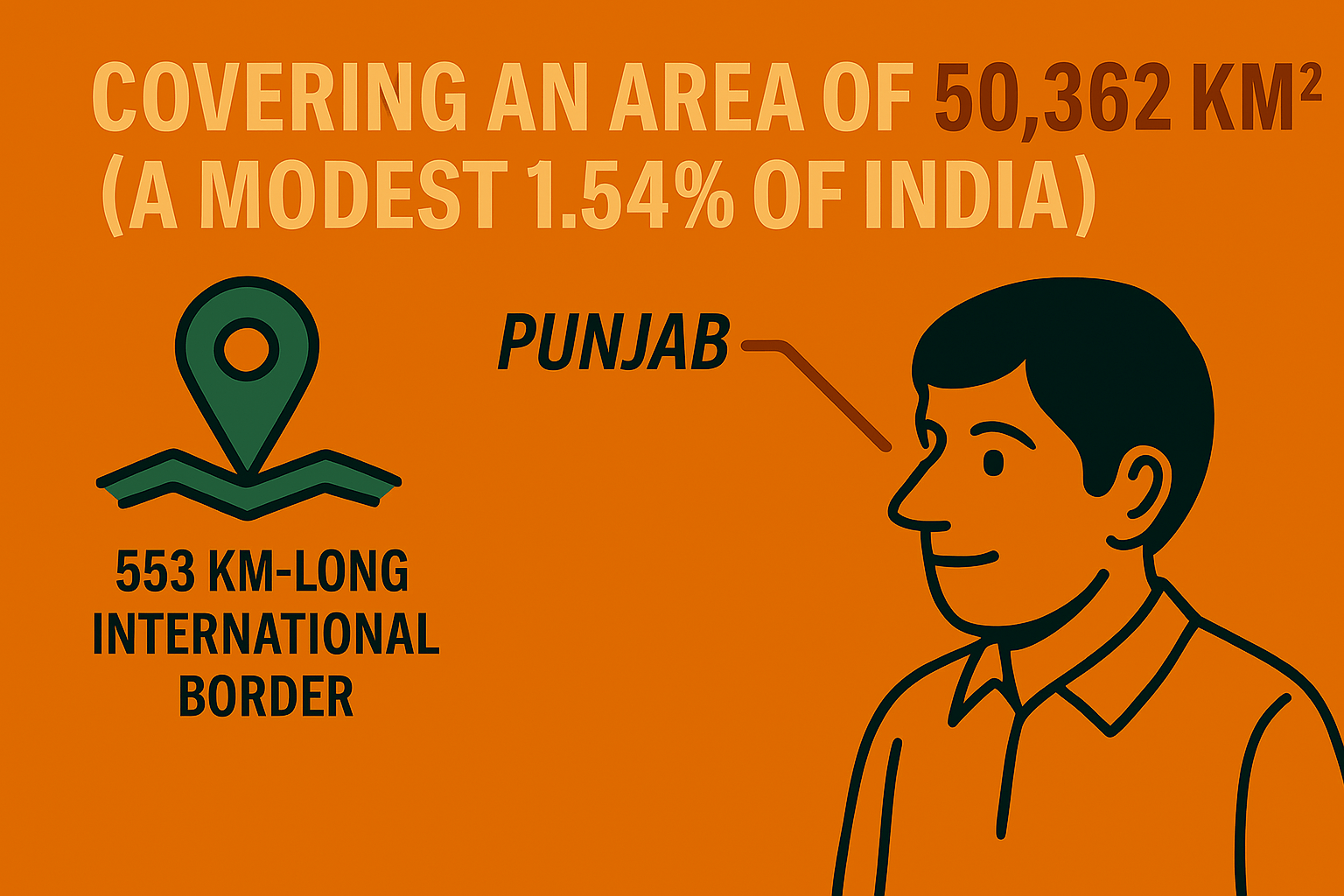
Covering an area of 50,362 km² (a modest 1.54% of India), Punjab shares a 553 km-long international border with Pakistan, running through 6 districts: Pathankot, Gurdaspur, Amritsar, Tarn Taran, Firozpur, and Fazilka. If you’re not tired yet, Punjab also borders Haryana, Rajasthan, Himachal Pradesh, and the union territories of Jammu & Kashmir and Chandigarh.
It’s safe to say Punjab is all about neighbors!
State Symbols
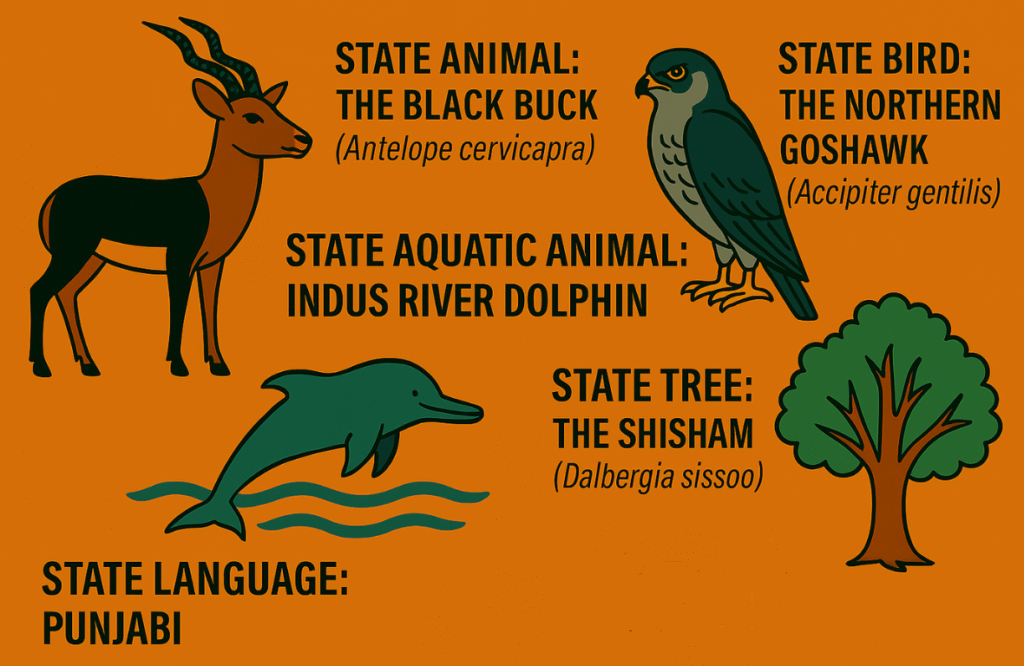
- State Animal: The Black Buck (Scientific name Antelope cervicapra). It’s like the royal sprinter of the animal world.
- State Bird: The Northern Goshawk (Scientific name Accipiter gentilis), living up to 10-15 years with a gaze so fierce it can spot your secrets.
- State Aquatic Animal: The elegant Indus River Dolphin, a swimmer like no other.
- State Tree: The mighty Shisham (Scientific name Dalbergia juvenile sissoo). It’s strong, just like Punjabis!
- State Language: Punjabi, which became official in 1966 and is one of India’s 22 scheduled languages.
Judicial, Political, and Fun Facts Galore!
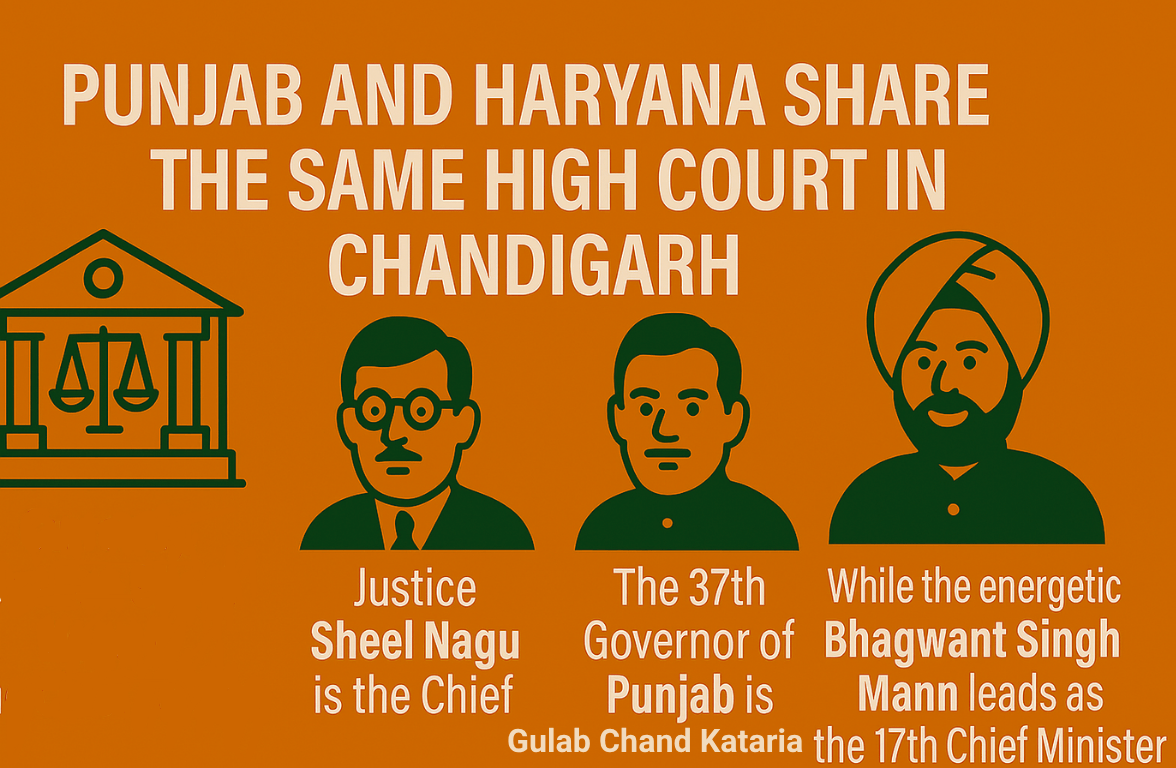
Punjab and Haryana both states share the same High Court in Chandigarh. Currently, Justice Sheel Nagu is the chief Justice of the court, but the first-ever Chief Justice was Justice Ram Lal.
The 37th Governor of Punjab is Gulab Chand Kataria (from Rajasthan), while the energetic Bhagwant Singh Mann, from Satoj village in the Sunam Tehsil and Sangrur District, leads as the 17th Chief Minister.
Geographical of Punjab
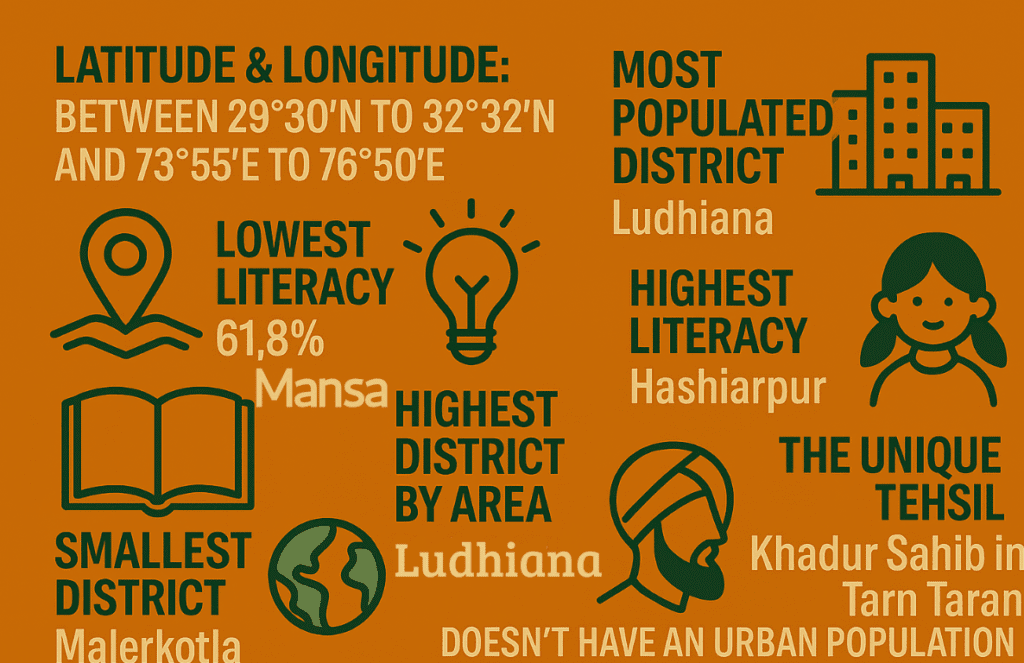
- Latitude & Longitude: Between 29°30’N to 32°32’N and 73°55’E to 76°50’E. Sounds technical but hey, it’s the state’s GPS!
- Highest Literacy: Hoshiarpur with 84.6%, also scoring highest in the sex ratio (961 females per 1000 males). Way to go!
- Lowest Literacy: Mansa at 61.8%. Don’t worry, Mansa, we still love you.
- Most Populated District: Ludhiana (34.99 lakh). It’s Punjab’s powerhouse of people and commerce.
- Least Populated District: Barnala (5.96 lakh). Small but mighty.
- Largest District by Area: Ludhiana again. It’s clearly showing off.
- Smallest District by Area: Malerkotla.
- Lowest Sex Ratio: Bathinda with 868 females per 1000 males. Let’s work on this, Bathinda!
- Highest Child Sex Ratio: SBS Nagar (Nawanshahr) at 885. Future-ready!
- Lowest Child Sex Ratio: Tarn Taran with 820. Time for improvement.
- Lowest Population Density: Sri Muktsar Sahib (348 people/km²). There’s plenty of room to breathe here.
- The Unique Tehsil: Khadur Sahib in Tarn Taran doesn’t have an urban population. Imagine a life that’s all countryside!
Now Punjab isn’t just about its paranthas and bhangra as others know it. This is a state packed with history, culture, and stories of valor. From its beautifully planned capital to its diverse districts and state symbols, Punjab’s story is one to remember and celebrate.
FAQs About Punjab General Information
Q1: When was Punjab created, and why?
Punjab was created on November 1, 1966, following the Shah Commission’s recommendations to reorganize the state into Punjab, Haryana, and parts of Himachal Pradesh. At that time, Himachal Pradesh was a Union Territory and became the 18th full-fledged state of India in 1971.
Q2: What is the capital of Punjab, and how did it get its name?
Chandigarh is the capital of Punjab. Interestingly, Chandigarh is also the capital of Haryana. It was planned by architect Le Corbusier, and Chandigarh was named after the Chandi Mandir temple located in Chandigarh.
Q3: The least populated district of Punjab is?
In Punjab, the Sri Muktsar Sahib district has the lowest population density among the districts of Punjab, with just about 348 people per square kilometer living there.
Q4: What is special about Khadur Sahib tehsil in Punjab?
Khadur Sahib tehsil in Tarn Taran district is the only tehsil in Punjab that doesn’t have an urban population, as the entire population lives in rural areas.