In the quiet corners of Punjab’s soil, where every breeze carries the echo of valor and sacrifice, a storm was once brewing—not of nature, but of conviction. It was a time when faith was tested, when swords clashed not for conquest, but for dignity. The throne of Delhi had changed hands, and so Sikh-Mughal Relations, the winds of intolerance began to blow harder.
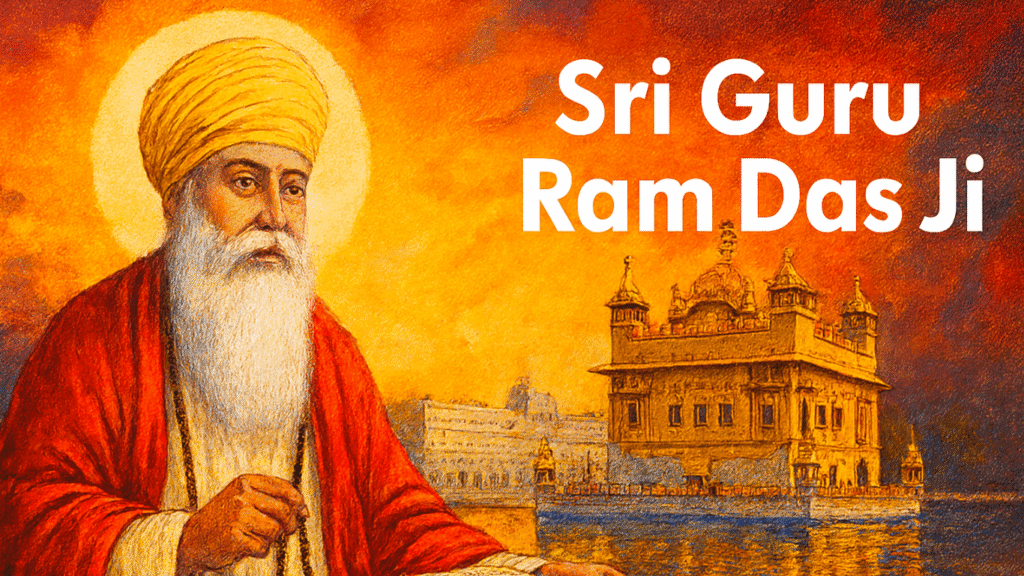
As Shah Jahan rose to power, so did his fanaticism. Temples fell, hymns were silenced, and the sacred spaces of the Sikhs were desecrated. But in the heart of this darkness stood a radiant figure—Sri Guru Hargobind Sahib Ji, the embodiment of Miri-Piri, who refused to bow, who chose the path of resistance over retreat.
This is not just history. This is the story of a Guru who rode into battle not for land, but for truth. A story of Kaulan’s courage, of Bidhi Chand’s daring, of a community that chose sovereignty over silence.
Dear aspirants, as you prepare to serve with honor, let this chapter remind you: when injustice rises, even a handful of the brave can shake an empire.
Table of Contents
🔥 Strained Sikh-Mughal Relations Under Shah Jahan (Post-1628 A.D.)
When Emperor Jahangir passed away in 1627 A.D., the Mughal throne was inherited by his son Shah Jahan in 1628 A.D.. This transition marked a dramatic shift in the empire’s attitude toward the Sikhs. Jahangir, despite his flaws, had moments of reconciliation with Sri Guru Hargobind Sahib Ji. But Shah Jahan’s reign ushered in an era of religious intolerance, political hostility, and cultural suppression.
Understanding the four key causes behind this strained relationship is crucial:
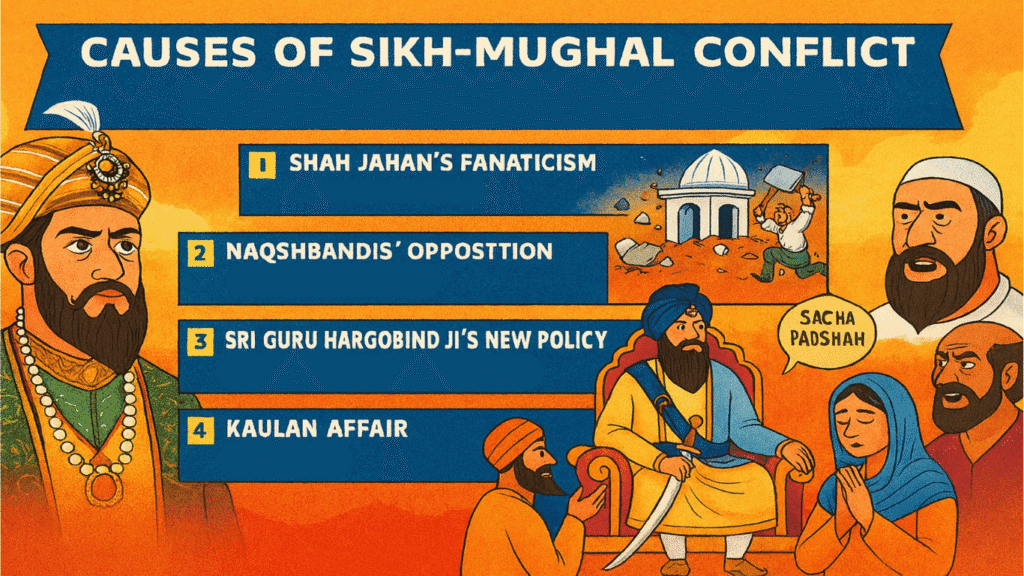
🔥 Shah Jahan’s Fanaticism: The First Spark of Sikh–Mughal Conflict
When Shah Jahan ascended the Mughal throne in 1628 A.D., the Sikh community faced a new wave of hostility. Unlike his father Jahangir, who had moments of reconciliation with Sri Guru Hargobind Sahib Ji, Shah Jahan was a staunch Sunni orthodox ruler. His reign marked a sharp turn toward religious intolerance, and his policies directly targeted the growing influence of Sikhism.
🕌 Destruction of Temples and Suppression of Faith
- Shah Jahan ordered the demolition of many prominent Hindu temples across the empire.
- He banned the construction of new temples, aiming to suppress non-Islamic religious expression.
- A royal decree was issued: no Muslim could convert to another religion. This was a direct blow to Sikhism, which had begun attracting Muslim followers due to its inclusive teachings and emphasis on equality.
🕊️ Attack on Sikh Sacred Spaces
- One of the most provocative acts was the desecration of Sikh religious sites in Lahore.
- The baoli (sacred well) built by Sri Guru Arjan Dev Ji—a symbol of spiritual service and community—was filled with debris under imperial orders.
- The Langar hall, where free meals were served to all regardless of caste or creed, was converted into a mosque, erasing its spiritual and social significance.
- These actions were not just symbolic—they were strategic attempts to undermine Sikh identity and disrupt its growth.
💥 Impact on the Sikh Community
- These aggressive policies sent shockwaves of resentment through the Sikh community.
- The desecration of sacred spaces and suppression of conversions were seen as direct attacks on Sikh sovereignty and dignity.
- Guru Hargobind Sahib Ji, who had already begun preparing the community for self-defense through the doctrine of Miri-Piri (spiritual and temporal leadership), now faced the first real confrontation with Mughal authority.
⚔️ Opposition of the Naqshbandis
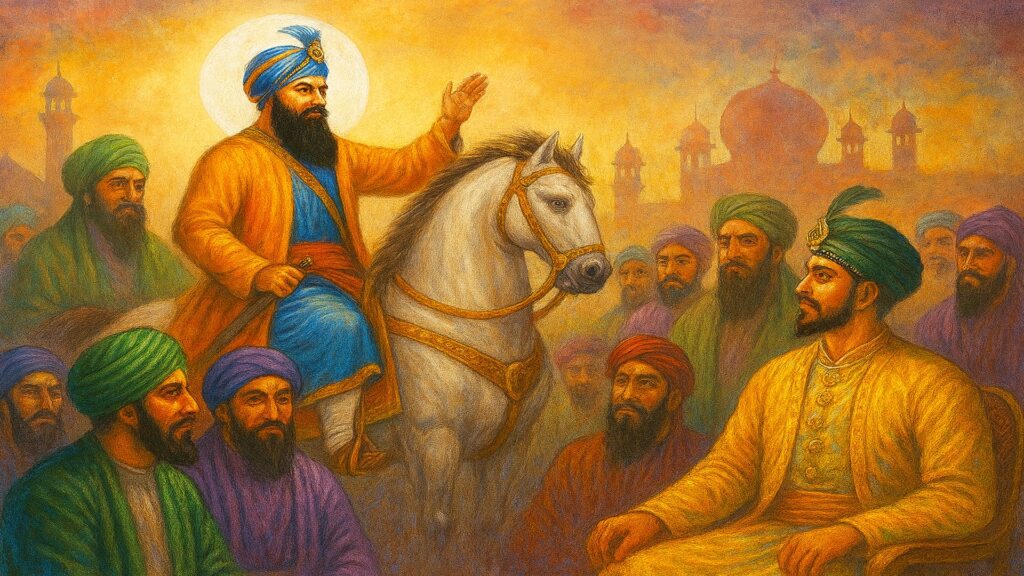
The Naqshbandis were an orthodox Sufi order that strictly upheld Islamic law and opposed religious pluralism. In Punjab, they saw Sikhism’s growing popularity—especially its appeal to Muslims—as a direct threat to their authority. Under Shah Jahan, they regained influence and instigated the emperor against Guru Hargobind Sahib Ji, portraying him as a rebel and fueling Mughal hostility.
🌙 Historical Background of the Naqshbandi Order
- The Naqshbandi order was a major Sufi movement founded in Central Asia in the 14th century by Baha-ud-Din Naqshband of Bukhara.
- Unlike other Sufi orders such as the Chishtis, who emphasized tolerance, mysticism, and inclusivity, the Naqshbandis were strictly orthodox.
- They aligned closely with Sunni Islamic law (Sharia) and rejected practices they considered innovations (bid‘ah).
- Their ideology was deeply conservative, focusing on purity of faith, strict discipline, and opposition to religious pluralism.
🕌 Rise in Mughal India
- The Naqshbandis entered India during the Delhi Sultanate and Mughal period, gaining influence under Akbar and Jahangir.
- While Akbar promoted religious tolerance (Din-i-Ilahi), the Naqshbandis opposed it, advocating for a return to strict Islamic orthodoxy.
- Their most famous leader in India was Shaikh Ahmad Sirhindi (1564–1624), also known as the Mujaddid Alf Sani (Renewer of the Second Millennium).
- He strongly criticized Akbar’s liberal policies.
- He emphasized Islam’s supremacy and rejected interfaith harmony.
- His writings inspired later Mughal rulers to adopt stricter religious policies.
⚔️ Naqshbandis in Punjab
- In Punjab, the Naqshbandis became political influencers and religious hardliners.
- They viewed the growing popularity of Sikhism—with its emphasis on equality, community service, and openness—as a direct threat to Islam.
- Many Muslims were embracing Sikh teachings, which alarmed the Naqshbandis.
- They began instigating Mughal emperors against the Sikh Gurus, portraying them as rebels and heretics.
📉 Decline Under Jahangir
- During Jahangir’s reign, relations between the Sikhs and Mughals briefly improved.
- After Guru Arjan Dev Ji’s martyrdom, Jahangir allowed Guru Hargobind Sahib Ji some freedom, and cordial relations developed.
- As a result, the Naqshbandis’ influence temporarily declined.
🔥 Revival Under Shah Jahan
- When Shah Jahan ascended the throne in 1628 A.D., the Naqshbandis regained their power.
- Shah Jahan was deeply orthodox and easily swayed by their arguments.
- They instigated him against Guru Hargobind Sahib Ji, warning that the Guru’s new policy of sovereignty (Miri-Piri, royal symbols, armed Sikhs) was a danger to Mughal authority.
- This opposition became one of the four major causes of strained Sikh–Mughal relations in Shah Jahan’s reign.
🌟 Impact on Sikh–Mughal Relations
- The Naqshbandis acted as religious advisors and agitators, constantly fueling Mughal suspicion of the Sikhs.
- Their influence ensured that Shah Jahan adopted a hardline stance, leading to repeated clashes.
- By portraying Sikhism as a political and religious threat, they helped set the stage for the series of battles (1634–1635 A.D.) between the Sikhs and the Mughals.
⚔️ The New Policy of Sri Guru Hargobind Sahib Ji
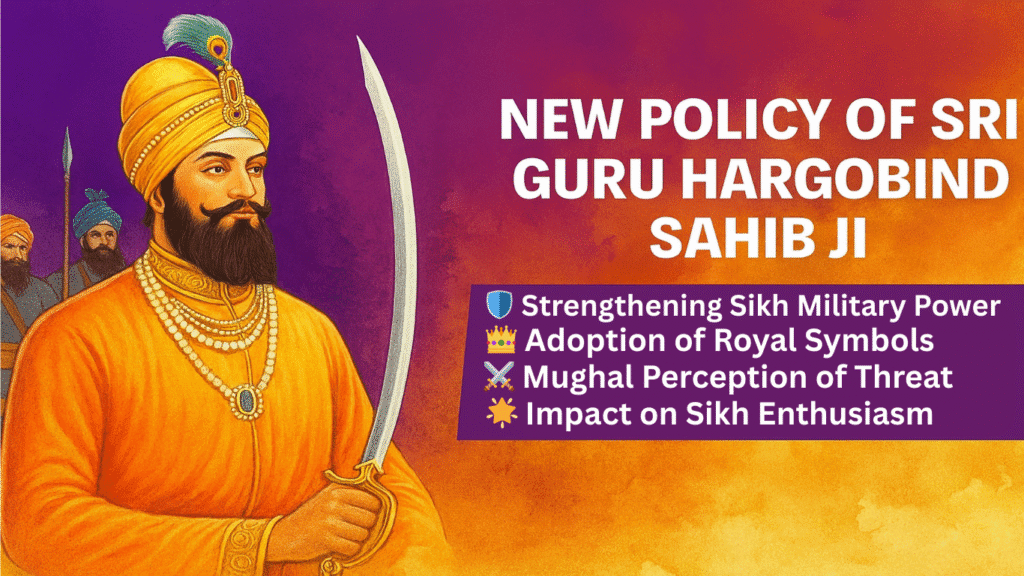
The New Policy of Sri Guru Hargobind Sahib Ji was a turning point in Sikh history and became the major factor in widening the gulf between the Sikhs and the Mughal Empire under Shah Jahan. After the martyrdom of Sri Guru Arjan Dev Ji, Guru Hargobind Sahib Ji realized that Sikhism could no longer survive through purely spiritual guidance alone—it needed the strength to defend itself against oppression.
🛡️ Strengthening Sikh Military Power
- Guru Sahib infused the Sikh Panth with the doctrine of Miri-Piri, combining spiritual authority (Piri) with temporal sovereignty (Miri).
- He organized a standing army of Sikhs, trained them in horsemanship, archery, and swordsmanship, and encouraged them to live as Saint-Soldiers.
- This policy gave the Sikhs not only the ability to protect themselves but also the confidence to resist Mughal tyranny.
👑 Adoption of Royal Symbols
- To assert sovereignty, Guru Sahib adopted royal symbols such as:
- A throne (Takht) for hearing petitions and dispensing justice.
- A Kalgi (plume) on his turban, symbolizing kingship.
- Regal attire and a kingly aigret, projecting authority.
- Devotees began reverently addressing him as Sacha Padshah (True Emperor), a title that symbolized both spiritual and temporal leadership.
⚔️ Mughal Perception of Threat
- Shah Jahan, a deeply orthodox ruler, interpreted this policy as a direct challenge to Mughal sovereignty.
- The growing military strength of the Sikhs and Guru Sahib’s adoption of royal symbols alarmed the emperor.
- He feared that the Sikhs were emerging as an independent power in Punjab, capable of undermining Mughal authority.
- As a result, Shah Jahan resolved to take action against Guru Hargobind Sahib Ji, setting the stage for open confrontation.
🌟 Impact on Sikh Enthusiasm
- The New Policy infused new zeal and confidence among the Sikhs.
- They no longer saw themselves as a passive religious community but as a sovereign force ready to defend their faith and dignity.
- This transformation marked the beginning of the Sikh Panth’s evolution into a martial community, laying the foundation for later struggles against Mughal oppression.
🌸 Kaulan’s Affair: A Personal Incident with Political Consequences
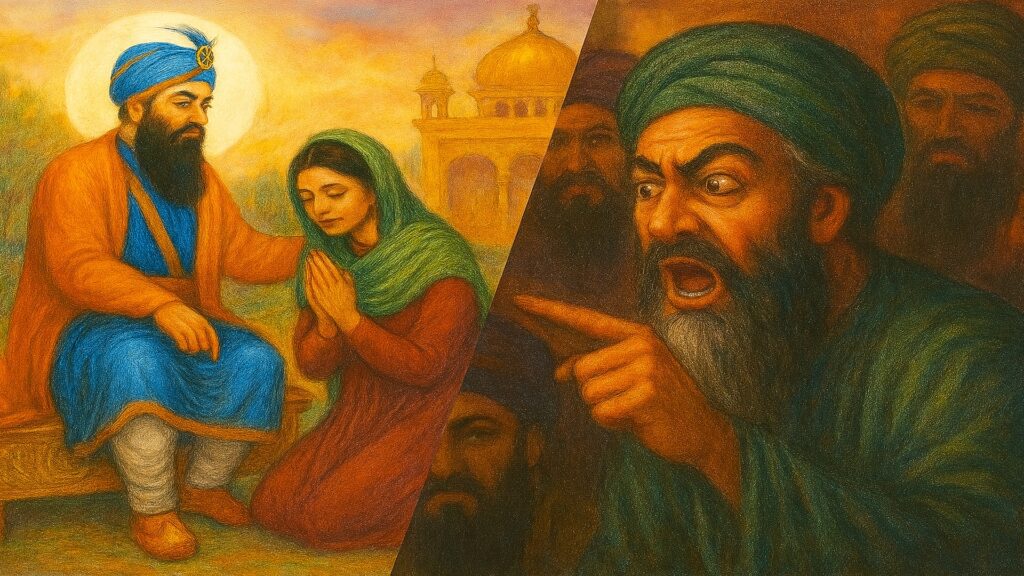
The Kaulan affair added a deeply personal dimension to the already strained Sikh–Mughal relations under Shah Jahan.
👩 Kaulan’s Devotion
- Kaulan was the daughter of Qazi Rustam Khan of Lahore, a strict Sunni Muslim and a prominent religious figure.
- Unlike her father, Kaulan was deeply religious‑minded and spiritually inclined.
- She was profoundly impressed by the teachings of Sri Guru Arjan Dev Ji, and with great fondness, she read and meditated upon the Sikh Bani (hymns).
🚫 Conflict with Her Father
- Rustam Khan, being a fanatic, could not tolerate that his own daughter was drawn to Sikh teachings.
- He imposed harsh restrictions on Kaulan, forbidding her from leaving the house and preventing her from reading Sikh scriptures.
- Kaulan, distressed by this oppressive treatment, eventually grew weary of her father’s attitude.
🕊️ Refuge with Guru Sahib
- Seeking freedom and spiritual solace, Kaulan left her home and took refuge with Sri Guru Hargobind Sahib Ji.
- Guru Sahib welcomed her with compassion, offering her protection and dignity.
- This act symbolized Sikhism’s openness and inclusivity, but it enraged her father.
⚔️ Mughal Hostility Intensifies
- When Rustam Khan discovered Kaulan’s refuge, he flew into a rage.
- He accused Guru Sahib of corrupting Muslim women and began poisoning Shah Jahan’s ears against him.
- Already influenced by the Naqshbandis and his own religious fanaticism, Shah Jahan accepted these accusations.
- The incident further embittered relations, and Shah Jahan became the sworn enemy of Guru Hargobind Sahib Ji, determined to suppress the Sikh community.
🌟 Historical Significance
- The Kaulan affair shows how personal incidents could escalate into political hostility.
- It highlights the inclusive nature of Sikhism, which welcomed seekers from all backgrounds.
- For Shah Jahan, however, it became another justification to view Sikhism as a threat to Mughal authority and orthodoxy.
🌟 The Spirit That Could Not Be Broken
The reign of Shah Jahan marked one of the most turbulent phases in Sikh–Mughal relations. His fanatic policies, the revival of Naqshbandi opposition, the bold new policy of Guru Hargobind Sahib Ji, and the Kaulan affair all combined to create a storm of hostility. Yet, in the face of oppression, the Sikh Panth did not falter.
Instead, these challenges became the very crucible in which Sikh identity was forged—transforming the community into a force of saint-soldiers, ready to defend their faith and dignity. Guru Hargobind Sahib Ji’s vision of Miri-Piri infused courage, sovereignty, and resilience into the Sikhs, ensuring that no empire, however mighty, could silence their spirit.
For aspirants, this chapter of history is more than just dates and causes—it is a reminder that true leadership lies in standing firm against injustice, even when the odds seem insurmountable. The story of Guru Sahib and the Sikh Panth under Shah Jahan is a timeless lesson in courage, unity, and faith.
📲 Stay Connected! For all important notifications delivered directly to your mobile phones, follow our WhatsApp channel today.
📖 And for more inspiring articles on Punjab History & Culture, don’t miss out—click here to explore our Punjab (History & Culture) section and continue your journey into the legacy that shaped our heritage.