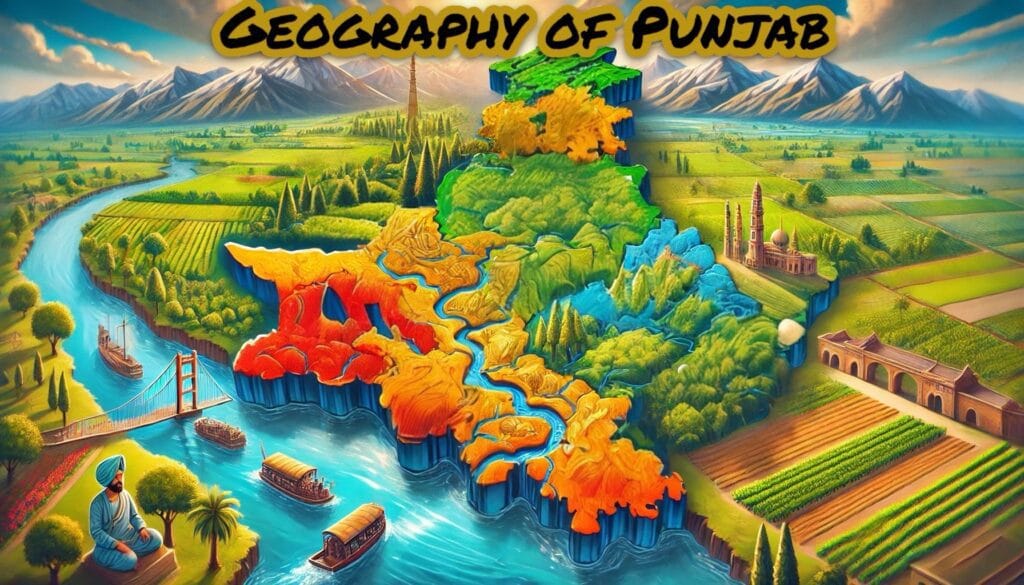
Sri Guru Arjan Dev Ji, the fifth Guru of Sikhism, played a historic role in shaping and strengthening the Sikh faith. His leadership came during a time of serious challenges, yet he responded with wisdom, peace, and unwavering commitment to the community. His calm approach to complex problems reflected his deep spiritual strength and visionary thinking.
One of his most iconic contributions was laying the foundation of Harmandir Sahib in Amritsar, now known as the Golden Temple—the holiest pilgrimage site for Sikhs worldwide. Guru Arjan Dev Ji also established key towns such as Tarn Taran, Kartarpur, and Hargobindpur, and laid the foundation of a Boli at Dabbi Bazaar in Lahore, further expanding the Sikh presence across Punjab.
To strengthen the Sikh community, he introduced the Masand system, a network of trusted representatives who helped spread Sikh teachings and manage offerings. This system gave a major boost to missionary activities and helped Sikhism grow across regions.
His most precious gift to the Sikh world was the compilation of the Adi Granth in 1604 A.D.—a sacred scripture that brought together the divine hymns of Sikh Gurus and other saints. This spiritual treasure became the foundation of Sikh philosophy and practice.
In 1606 A.D., Guru Arjan Dev Ji became the first Sikh Guru to attain martyrdom, earning the revered title “Shaheedan De Sartaj”—the crown of martyrs. His sacrifice marked a turning point in Sikh history, inspiring future generations to stand firm in their faith and values.
Table of Contents
🌸 Early Life and Family
Sri Guru Arjan Dev Ji was born on April 15, 1563 A.D. in Goindwal Sahib, a sacred town in Punjab. He was the youngest son of Guru Ram Das Ji, the fourth Sikh Guru. His mother, Bibi Bhani Ji, was a deeply spiritual and devoted woman. Her strong faith and religious values had a lasting impact on young Arjan Dev Ji, shaping his character and guiding him toward a life of humility, devotion, and service.
👦 Childhood and Marriage of Sri Guru Arjan Dev Ji
From a young age, Sri Guru Arjan Dev Ji was deeply loved by his parents. His gentle nature, humility, and devotion made him stand out. His maternal grandfather, Guru Amar Das Ji, had a special bond with him and once said, “Ih Mera Dohta, Bani Ka Bohita Hovega” (“This grandson of mine will become the boat of divine hymns to carry others across.”) This prophecy came true, as Guru Arjan Dev Ji grew into a wise and spiritual leader.
He learned Gurbani and Sikh teachings from his parents and grandfather, developing a strong foundation in faith and service. He was married to Mata Ganga Ji, the daughter of Krishan Chand from the village Mou in Phillaur. In 1595 A.D., they were blessed with a son named Hargobind Ji, who would later become the sixth Guru of Sikhism.
🪔 Assumption of Guruship
Sri Guru Ram Das Ji had three sons—Prithi Chand, Mahadev, and Arjan Dev Ji. Among them, Prithi Chand, the eldest, was known for his selfish and cunning nature, which deeply disappointed his father. Mahadev, the second son, chose a life of solitude and spiritual detachment, showing little interest in leading the community.
In contrast, Arjan Dev Ji, the youngest, stood out for his devotion to God, humility, and selfless service. These qualities earned him great respect from his father and the Sikh Sangat. Recognizing his spiritual strength and leadership, Guru Ram Das Ji appointed Arjan Dev Ji as his successor in 1581 A.D.
With this, Sri Guru Arjan Dev Ji became the fifth Guru of Sikhism.
⚔️ Challenges Faced by Sri Guru Arjan Dev Ji
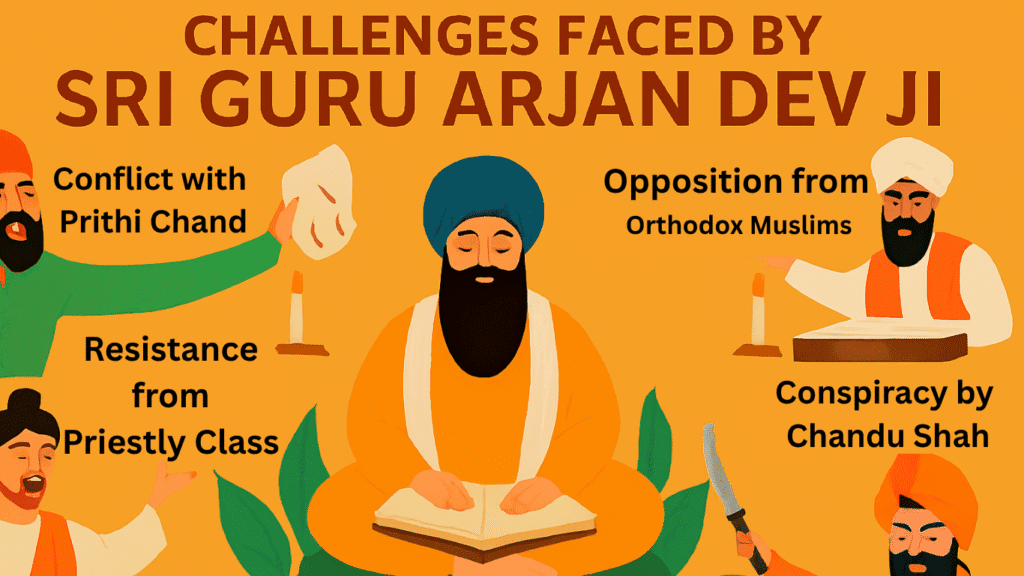
After becoming the fifth Guru in 1581 A.D., Sri Guru Arjan Dev Ji faced many serious challenges. Despite these difficulties, he remained calm, brave, and focused on strengthening the Sikh community. Here are the key struggles he encountered:
1. 🧿 Conflict with Prithi Chand
Guru Arjan Dev Ji’s elder brother, Prithi Chand, believed he deserved the Guruship. When Guru Ram Das Ji chose Arjan Dev Ji instead, Prithi Chand refused to accept it. He demanded his share of property, which Guru Arjan Dev Ji peacefully gave. Still unhappy, Prithi Chand began collecting donations meant for the Sikh Langar and hoped his son, Meharban, would become the next Guru.
In 1595 A.D., when Guru Arjan Dev Ji’s wife gave birth to Hargobind Ji, Prithi Chand’s hopes were shattered. He then plotted against the infant’s life, but his plans failed. Later, he complained to Emperor Akbar through a Mughal official named Sulhai Khan, and remained a lifelong enemy of Guru Arjan Dev Ji.
2. 🕌 Opposition from Orthodox Muslims
Many orthodox Muslim leaders were disturbed by the growing influence of Sikhism in Punjab. They wanted non-Muslims to convert to Islam and saw Sikhism as a threat. A group called the Naqshbandi order, led by Sheikh Ahmad Sirhindi, tried to turn Emperor Akbar against Guru Arjan Dev Ji, but failed.
However, when Jahangir became emperor in 1605 A.D., the Naqshbandis succeeded in poisoning his mind against the Sikhs. Jahangir’s orthodox views made him more hostile, and this opposition became one of the main reasons behind Guru Arjan Dev Ji’s martyrdom.
3. 🧘♂️ Resistance from the Priestly Class
The Brahmin priests of Punjab were also unhappy with the rise of Sikhism. As Sikh teachings rejected the caste system and rituals, the influence of Brahmins began to decline. They feared losing control over the Hindu masses.
When Guru Arjan Dev Ji compiled the Adi Granth, the priests complained to Akbar, claiming it was against their beliefs. But Akbar respected the scripture and dismissed their objections, recognizing its spiritual value.
4. 🏰 Conspiracy by Chandu Shah
Chandu Shah, the Diwan of Lahore, wanted his daughter to marry Hargobind Ji. At first, he insulted Guru Arjan Dev Ji, but later agreed to the proposal. However, the Sikh community opposed the match due to Chandu Shah’s earlier remarks. Guru Arjan Dev Ji respected their wishes and declined the offer.
Feeling insulted, Chandu Shah became a sworn enemy. He joined hands with Prithi Chand and Sulhai Khan to plot against Guru Arjan Dev Ji, further intensifying the threats.
🩸 Martyrdom of Sri Guru Arjan Dev Ji: A Historic Turning Point
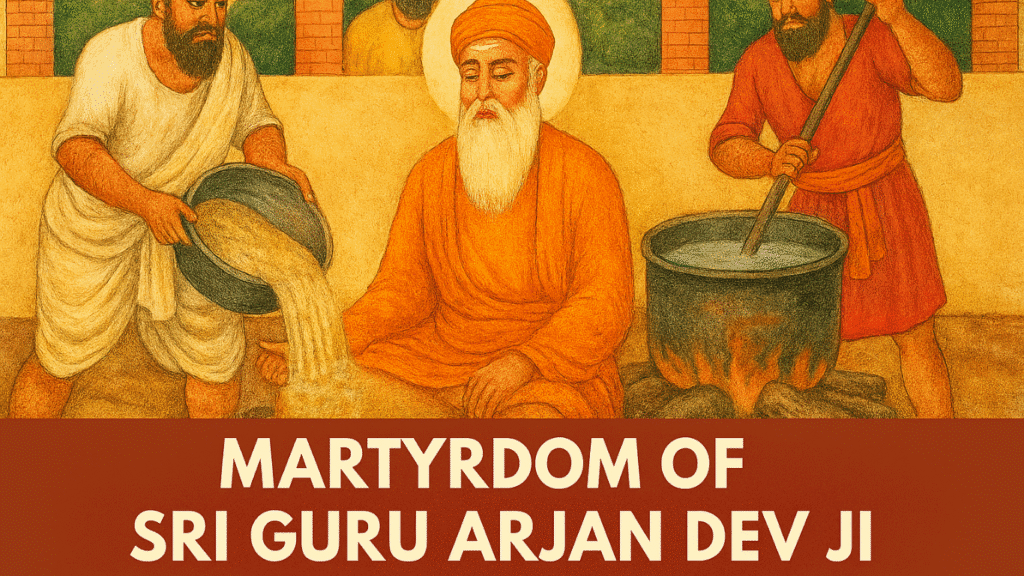
In 1606 A.D., Sri Guru Arjan Dev Ji, the fifth Guru of Sikhism, gave his life for truth, justice, and religious freedom. His martyrdom marked a powerful shift in Sikh history. Until then, Sikhism had grown peacefully—but after this sacrifice, the community began to prepare for self-defense, standing firmly against Mughal oppression.
Guru Arjan Dev Ji’s death was not accidental. It was the result of multiple forces working against him, including religious intolerance, political jealousy, and internal betrayal. His growing influence, spiritual leadership, and fearless commitment to equality made him a target for the Mughal rulers and their allies.
This moment in history sparked a new spirit of bravery and resistance among Sikhs. It laid the foundation for the transformation of the Sikh Panth—from a peaceful spiritual path to a community ready to defend its values with courage.
🔥 1. Religious Intolerance of Emperor Jahangir
One of the main reasons behind the martyrdom of Sri Guru Arjan Dev Ji was the religious fanaticism of Emperor Jahangir. After the death of Akbar in 1605 A.D., Jahangir became the new Mughal ruler. Unlike Akbar, who was known for his tolerance, Jahangir held strict Sunni beliefs and could not accept the growing popularity of Sikhism in Punjab.
Guru Arjan Dev Ji’s peaceful teachings and rising influence attracted both Hindus and Muslims. This deeply disturbed Jahangir, who saw Sikhism as a challenge to Islamic dominance. In his autobiography, Tuzuk-i-Jahangiri, Jahangir openly expressed his frustration, writing that Guru Arjan Dev Ji had gained the devotion of many and that he had long considered putting an end to this “affair.”
These statements clearly show that Jahangir’s intolerance toward other faiths played a major role in his decision to take action against Guru Arjan Dev Ji, ultimately leading to his martyrdom.
🛕 2. Growth and Strength of the Sikh Panth
During the leadership of Sri Guru Arjan Dev Ji, Sikhism experienced remarkable growth. The construction of Harimandir Sahib (Golden Temple) gave Sikhs a sacred center of worship, while the founding of towns like Tarn Taran, Kartarpur, and Hargobindpur helped expand the community’s presence across Punjab.
Guru Arjan Dev Ji also introduced the Masand system, which organized Sikh representatives across regions. This system helped collect offerings and ensured a steady income for the Guru’s treasury. The funds were used to support religious, social, and developmental activities for the Sikh Panth.
To strengthen the community economically, Guru Ji encouraged horse trade with Arab countries, boosting financial independence. His most spiritual contribution was the compilation of the Adi Granth Sahib, which unified Sikh teachings and spread the message of equality and devotion.
As Sikhism flourished, followers began calling Guru Arjan Dev Ji “Sacha Padshah” (True King). This rising influence and respect deeply unsettled the Mughal rulers, who saw it as a threat to their authority. They began plotting ways to suppress the growing power of the Sikhs.
⚔️ 3. Enmity of Prithi Chand
Prithi Chand, also known as Prithia, was the eldest brother of Sri Guru Arjan Dev Ji. He was known for his greedy and selfish nature, which is why Guru Ram Das Ji chose Arjan Dev Ji as his successor in 1581 A.D. instead of him.
Prithi Chand could not accept this decision and began openly opposing Guru Arjan Dev Ji. He misused funds collected by Masands—which were meant for the community kitchen (Langar)—for his personal benefit. At first, he hoped that Guru Arjan Dev Ji, being childless, would eventually be succeeded by his own son, Meharban.
However, in 1595 A.D., when Mata Ganga Ji gave birth to Hargobind Ji, Prithi Chand’s hopes were shattered. This made him even more hostile. He began plotting against Guru Arjan Dev Ji, joining hands with Mughal officials to create trouble. These conspiracies further damaged the relationship between the Mughals and the Sikh Guru, adding to the tensions that led to Guru Arjan Dev Ji’s martyrdom.
🏰 4. Enmity of Chandu Shah
Chandu Shah, the Diwan of Lahore, played a major role in the events leading to the martyrdom of Sri Guru Arjan Dev Ji. He was searching for a suitable match for his daughter, and many suggested Hargobind Ji, the son of Guru Arjan Dev Ji. Instead of being honored, Chandu Shah became angry and insulted Guru Ji with harsh words.
Later, his wife persuaded him to accept the proposal. But by then, Guru Arjan Dev Ji had learned about the disrespectful remarks Chandu Shah had made. Out of principle, Guru Ji refused to accept the shagun (wedding offering) sent by Chandu Shah.
Feeling insulted, Chandu Shah became determined to take revenge. He first tried to turn Emperor Akbar against Guru Ji, but failed. After Akbar’s death in 1605 A.D., Chandu Shah began poisoning the mind of Jahangir, the new emperor. This time, he succeeded. Jahangir, already influenced by religious intolerance, decided to take strict action against Guru Arjan Dev Ji, setting the stage for his martyrdom.
🕌 5. Opposition from the Naqshbandi Order
Another major force behind the martyrdom of Sri Guru Arjan Dev Ji was the Naqshbandi order, a group of orthodox Muslim leaders based in Sirhind. They were disturbed by the growing popularity and influence of Sikhism in Punjab, which they saw as a threat to their religious dominance.
The leader of the Naqshbandis, Shaikh Ahmad Sirhindi, held considerable sway in the Mughal court. He used his position to instigate Emperor Jahangir against Guru Arjan Dev Ji, portraying Sikhism as a challenge to Islamic authority.
This pressure from the Naqshbandis added to Jahangir’s existing religious intolerance and pushed him further toward taking strict action against Guru Ji. Their opposition played a significant role in the events that led to his martyrdom.
📖 6. Compilation of Adi Granth Sahib Ji
The compilation of the Adi Granth Sahib Ji by Sri Guru Arjan Dev Ji was a landmark achievement in Sikh history—but it also became a reason for his martyrdom. Opponents falsely accused Guru Ji of including content that was against Islam, and they complained to Emperor Jahangir.
Jahangir demanded that Guru Arjan Dev Ji remove the so-called anti-Islamic verses, but Guru Ji firmly replied that the Adi Granth contained nothing offensive toward any faith. Jahangir then asked him to add verses about Hazrat Mohammad, but Guru Ji respectfully declined, saying that he could not alter the sacred scripture without divine guidance.
This refusal angered Jahangir, who saw it as defiance. It further strengthened his resolve to take strict action against Guru Arjan Dev Ji, contributing to the decision that led to his martyrdom.
👑 7. Support to Prince Khusrau: The Immediate Trigger
The final and immediate cause of Sri Guru Arjan Dev Ji’s martyrdom was his support to Prince Khusrau, the eldest son of Emperor Jahangir. In April 1606 A.D., Khusrau rebelled against his father and fled toward Punjab to escape Mughal forces.
When he reached Tarn Taran, he sought blessings from Guru Arjan Dev Ji. As the grandson of Akbar—who had always respected Guru Ji—it was natural for Guru Ji to show sympathy. Moreover, the Guru’s house was open to all, and anyone could receive spiritual blessings without discrimination.
It is said that Guru Arjan Dev Ji placed a tilak on Khusrau’s forehead and offered him help for his journey toward Kabul. When Jahangir learned of this, he saw it as a perfect excuse to act against Guru Ji. He ordered Murtaza Khan, the Governor of Lahore, to arrest Guru Arjan Dev Ji, confiscate his property, and subject him to severe physical torture.
This tragic event marked the beginning of a new chapter in Sikh history—one of resistance, courage, and sacrifice.
🩸 How Was Sri Guru Arjan Dev Ji Martyred?
On 24th May 1606 A.D., Sri Guru Arjan Dev Ji was arrested by Mughal authorities on the orders of Emperor Jahangir and taken to Lahore. Despite appeals from the respected Sufi saint Mian Mir to spare his life, the Mughal officials carried out brutal punishments.
Guru Arjan Dev Ji was subjected to extreme physical torture:
- He was made to sit in a vessel of boiling water.
- Then placed on red-hot iron plates.
- Burning sand was poured over his bare body.
Despite this unimaginable suffering, Guru Ji remained calm and composed, accepting every pain with spiritual grace and dignity.
On 30th May 1606 A.D., Sri Guru Arjan Dev Ji merged into Eternal Light, becoming the first Sikh martyr. His sacrifice marked the beginning of a new chapter in Sikh history—one of resistance, courage, and spiritual strength.
🌟 Significance of the Martyrdom of Sri Guru Arjan Dev Ji
The martyrdom of Sri Guru Arjan Dev Ji in 1606 A.D. was a defining moment in the evolution of Sikhism and the history of Punjab. It marked the beginning of a new era—where the Sikh community, once peaceful and spiritual, began to prepare for self-defense and resistance against injustice.
Guru Arjan Dev Ji’s sacrifice became a symbol of spiritual courage, unshakable faith, and commitment to truth. His martyrdom inspired Sikhs to stand united, uphold their values, and face oppression with bravery. It laid the foundation for the transformation of the Sikh Panth into a fearless and resilient force, ready to protect its beliefs and people.
This historic event not only strengthened the Sikh identity but also ignited a spirit of justice and equality that continues to guide the community to this day.
⚔️1. New Policy of Sri Guru Hargobind Ji: Rise of the Saint-Soldier
The martyrdom of Sri Guru Arjan Dev Ji in 1606 A.D. marked a turning point in Sikh history. It became clear that spiritual strength alone was no longer enough to protect the Sikh community from growing Mughal hostility. In his final message, Guru Arjan Dev Ji advised his son: “Let him sit fully armed on this throne and maintain an army to the best of his ability.”
Following this guidance, Sri Guru Hargobind Sahib Ji, the sixth Guru, introduced a New Policy to prepare Sikhs for both spiritual leadership and self-defense. He transformed the community into a force of saint-soldiers, blending devotion with courage.
Key steps in his new approach included:
- Wearing two swords:
- Miri symbolized temporal power (leadership and protection)
- Piri symbolized spiritual authority
- Constructing the Akal Takht Sahib, a throne of divine justice, where military training was imparted to Sikhs.
- Encouraging followers to bring horses and weapons, and join his army.
This bold shift redefined Sikhism—from a purely spiritual movement to a dynamic, resilient community ready to defend its values and people.
🤝 2. Unity Among the Sikhs
The martyrdom of Sri Guru Arjan Dev Ji sparked a powerful wave of unity and determination among the Sikh community. Realizing the growing threat of Mughal tyranny, Sikhs began to join hands and stand together to protect their faith and values.
From this moment onward, the Sikh Panth started to assemble under one banner, guided by a shared purpose and spiritual strength. This unity laid the foundation for a glorious tradition in Sikh history—one of collective resilience, courage, and unwavering commitment.
Without doubt, the credit for this transformation goes to the sacrifice of Guru Arjan Dev Ji, whose martyrdom awakened a new spirit of solidarity and resistance among his followers.
⚖️ 3. Shift in Mughal–Sikh Relations
Before the martyrdom of Sri Guru Arjan Dev Ji, the relationship between the Sikh Gurus and the Mughal emperors was largely cordial. Emperors like Akbar had shown deep respect toward Sikh Gurus such as Guru Amar Das Ji, Guru Ram Das Ji, and Guru Arjan Dev Ji. This friendship greatly supported the growth of the Sikh Panth.
However, after Guru Arjan Dev Ji’s martyrdom in 1606 A.D., the situation completely changed. The Sikhs, deeply hurt by the injustice, began to view the Mughals as oppressors. They were now determined to defend their faith and seek justice.
On the other hand, the Mughal rulers were alarmed by the militant transformation of the Sikh community under Guru Hargobind Ji. They did not approve of Sikhs taking up arms or organizing themselves militarily.
This mutual distrust led to a strained relationship, setting the stage for future conflicts and shaping the Sikh struggle for freedom and dignity.
🌱 4. Rise in the Popularity of Sikhism
The martyrdom of Sri Guru Arjan Dev Ji became a milestone in the growth of Sikhism. His sacrifice stirred deep respect, love, and spiritual admiration—not only among Hindus, but also among many Muslims. People from different backgrounds began to embrace Sikh teachings, drawn by Guru Ji’s message of truth, equality, and devotion.
This event infused the Sikh community with a renewed spirit of:
- Unity in purpose and identity
- Bravery to stand against injustice
- Self-sacrifice for the greater good
- Confidence in their spiritual path
Guru Arjan Dev Ji’s martyrdom ushered in a new era, transforming Sikhism from a peaceful reformist movement into a resilient and respected force in Punjab. It redefined the role of Sikhs—not just as spiritual seekers, but as defenders of justice and freedom.
Sri Guru Arjan Dev Ji played a key role in shaping the future of Sikhism. He faced many challenges—from family opposition to pressure from religious and political groups—but he responded with wisdom, peace, and courage. His efforts to build sacred places, strengthen the Sikh community, and compile the Adi Granth Sahib Ji gave Sikhism a strong foundation.
His martyrdom in 1606 A.D. was not just a personal sacrifice—it became a turning point in Sikh history. It inspired unity, bravery, and spiritual strength among Sikhs. Because he was the first Sikh Guru to give his life for truth and justice, he is remembered as ‘Shaheedan De Sartaj’—the crown of martyrs.
Through his life and teachings, Sri Guru Arjan Dev Ji showed that true leadership means serving others, standing firm in faith, and facing hardship with grace.
📚 Explore More on Rankers Choice
- 🔍 Current Affairs & Articles: Stay updated with weekly digests, exam-focused insights, and original analysis.
- 📄 Previous Year Question Papers (PYQ): Practice with solved papers and boost your exam readiness.
- 📘 Punjabi Grammar: Master key grammar rules with structured lessons and examples.
- 🏞️ Punjab (History & Culture): Learn about Punjab’s rich heritage, movements, and cultural milestones.
- 📖 English Vocabulary & Grammar: Strengthen your language skills with curated word lists and grammar tips.
- 💼 Jobs & Career: Updates Find the latest job alerts, recruitment news, and career guidance.