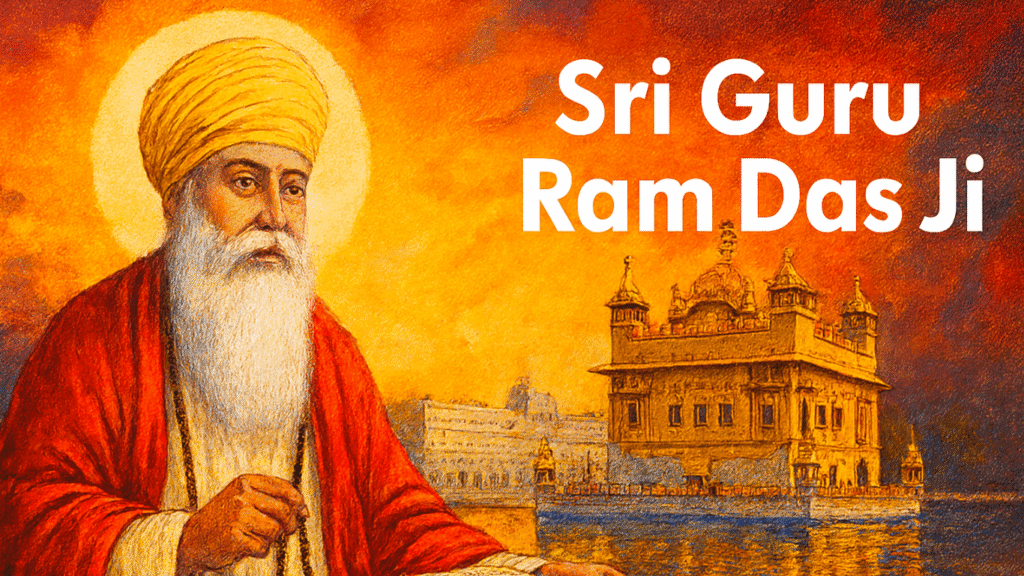
Sri Guru Har Krishan Ji, fondly remembered as Bal Guru (Child Guru) and Bala Pritam, became the 8th Guru of the Sikhs at the tender age of five. Despite his short life, he left an enduring legacy of compassion, humility, and service to humanity.
Sri Guru Har Krishan Ji – Birth and Childhood
Date and Place of Birth
Sri Guru Har Krishan Ji, the eighth Guru of Sikhism, was born on 7 July 1656 A.D. at Kiratpur Sahib, a town in present‑day Punjab. Kiratpur Sahib was already a sacred centre, closely associated with Guru Hargobind Ji and Guru Har Rai Ji, making it a spiritually significant birthplace.
Parentage
- Father: Sri Guru Har Rai Ji, the seventh Guru of Sikhism, known for his compassion, humility, and service to humanity.
- Mother: Mata Sulakhni Ji, remembered for her devotion and nurturing nature.
- Elder Brother: Ram Rai, who later opposed Guru Har Krishan Ji’s succession due to his disinheritance.
Childhood Qualities
Even as a child, Guru Har Krishan Ji displayed extraordinary qualities that set him apart:
- Service: He was inclined towards helping others, showing empathy for the poor and needy.
- Respect for Elders: His humility and obedience made him beloved in the sangat.
- Compassion: He was deeply moved by the suffering of others, a trait that later defined his Guruship.
- Charismatic Personality: Despite his tender age, his presence inspired devotion and reverence among Sikhs.
Significance of Childhood
- His gentle nature and spiritual depth convinced Guru Har Rai Ji to nominate him as his successor, despite his young age.
- The sangat affectionately called him Bal Guru (Child Guru) and Bala Pritam, acknowledging his innocence combined with divine wisdom.
- His childhood qualities foreshadowed his later role as a Guru who served humanity during epidemics and upheld the sanctity of Sikh principles.
Sri Guru Har Krishan Ji – Assumption of Guruship
Date and Context
On 6 October 1661 A.D., Sri Guru Har Rai Ji, the seventh Guru, formally passed the Guruship to his younger son, Sri Guru Har Krishan Ji, at Kiratpur Sahib. This moment marked a turning point in Sikh history, as the Guruship was entrusted to a child barely five years old.
Disinheritance of Ram Rai
- Ram Rai, the elder son, had earlier misinterpreted a verse of Gurbani in Aurangzeb’s court to please the emperor.
- Guru Har Rai Ji considered this act a grave violation of Sikh principles, as Gurbani is regarded as inviolable and sacred.
- Consequently, Ram Rai was disinherited and declared unworthy of Guruship.
- This decision reinforced the principle that no compromise can be made with the sanctity of Gurbani.
Installation of Guru Har Krishan Ji
- Despite his tender age, Guru Har Krishan Ji was chosen for his innocence, humility, compassion, and spiritual depth.
- His charismatic personality and divine qualities convinced Guru Har Rai Ji that he was the rightful successor.
- The sangat affectionately called him Bal Guru (Child Guru) and Bala Pritam, acknowledging his youth combined with divine wisdom.
- He became the youngest Guru in Sikh history, holding Guruship from 1661 to 1664 A.D.
Significance of Guruship
- His succession demonstrated that spiritual authority is based on purity and devotion, not age or worldly power.
- It highlighted the Sikh principle that Guruship is divinely guided, not hereditary entitlement.
- Guru Har Krishan Ji’s leadership, though short, was marked by service, compassion, and protection of Sikh values.
Sri Guru Har Krishan Ji – Opposition of Ram Rai
Ram Rai’s Claim to Guruship
- Being the elder son of Guru Har Rai Ji, Ram Rai considered himself the rightful heir to the Gurgaddi (seat of Guruship).
- However, Guru Har Rai Ji had already disinherited him for altering Gurbani in Aurangzeb’s court, declaring him unworthy of spiritual leadership.
Conspiracies with Masands
- Ram Rai began hatching conspiracies to challenge Guru Har Krishan Ji’s authority.
- He won over several selfish and corrupt Masands (local Sikh leaders responsible for collecting offerings and guiding sangats).
- Through these Masands, Ram Rai spread false propaganda, announcing that he was the “real Guru” and urging Sikhs to accept him.
- Despite these efforts, the majority of Sikhs remained loyal to Guru Har Krishan Ji, rejecting Ram Rai’s claims.
Seeking Aurangzeb’s Support
- Frustrated by his failure to win the Sikh community, Ram Rai turned to Aurangzeb, the Mughal emperor.
- He sought imperial backing to establish his authority as Guru.
- Aurangzeb, already suspicious of Sikh influence, saw an opportunity to exploit the division.
- To settle the dispute, Aurangzeb summoned Guru Har Krishan Ji to Delhi for arbitration between the two factions.
Significance of Opposition
- The episode highlighted the firmness of Sikh principles: Guruship was not a matter of inheritance but of spiritual worthiness and divine guidance.
- Ram Rai’s failure demonstrated that worldly power and conspiracies cannot override the sanctity of Gurbani.
- Guru Har Krishan Ji’s calm acceptance of Aurangzeb’s summons reflected his humility and spiritual strength, even at a young age.
Sri Guru Har Krishan Ji – Visit to Delhi
Background
After Ram Rai’s conspiracies failed to win over the Sikhs, he sought the support of Aurangzeb, the Mughal emperor. To settle the dispute over Guruship, Aurangzeb decided to summon Guru Har Krishan Ji to Delhi.
Role of Raja Jai Singh
- Aurangzeb entrusted the responsibility of bringing Guru Ji to Delhi to Raja Jai Singh of Amber, a respected Hindu noble at the Mughal court.
- Raja Jai Singh sent his Diwan, Paras Ram, to Kiratpur Sahib to convey the emperor’s summons.
Guru Ji’s Decision
- Initially, Guru Har Krishan Ji declined to meet Aurangzeb, as he did not wish to compromise Sikh principles before worldly power.
- However, when Paras Ram humbly requested that the Delhi sangat (Sikh congregation) was eager to see him, Guru Ji agreed.
- This decision reflected Guru Ji’s compassion and humility — prioritizing the spiritual needs of the sangat over political disputes.
Stay in Delhi
- In 1664 A.D., Guru Har Krishan Ji arrived in Delhi and chose to stay at Raja Jai Singh’s residence, rather than at Aurangzeb’s court.
- His presence in Delhi brought immense joy to the Sikh community, who flocked to seek his blessings.
- Historians differ on whether Guru Ji ever met Aurangzeb personally — some accounts suggest he refused, while others claim a brief meeting may have taken place.
Sri Guru Har Krishan Ji – Service During Epidemics
Delhi in Crisis
In 1664 A.D., when Guru Har Krishan Ji was residing at Raja Jai Singh’s house in Delhi, the city was struck by severe outbreaks of cholera and smallpox. These epidemics caused widespread suffering, especially among the poor and orphaned, who had little access to medical care.
Guru Ji’s Compassionate Service
- Guru Ji, despite being only a child, displayed extraordinary humanitarian spirit.
- He personally attended to the sick, poor, and orphans, offering them comfort and healing.
- Many patients were cured through his blessings, prayers, and divine grace.
- His actions reflected the Sikh principle of seva (selfless service) and sarbat da bhala (welfare of all).
Guru Ji’s Own Sacrifice
- While serving tirelessly, Guru Ji himself contracted smallpox.
- The disease proved fatal, yet he bore the suffering with calmness and divine acceptance.
- His sacrifice became a symbol of ultimate compassion, as he gave his life while serving humanity.
Spiritual Significance
- Guru Ji’s service during epidemics demonstrated that true Guruship lies in selfless dedication to humanity, not in worldly power.
- His example continues to inspire Sikhs to uphold values of charity, humility, and service in times of crisis.
- Even at a tender age, he embodied the qualities of a spiritual leader and healer.
Significance
- Guru Ji’s refusal to bow before Aurangzeb highlighted the independence of Sikh spiritual authority from political power.
- His visit strengthened the Sikh sangat in Delhi, reinforcing the Guru’s role as a spiritual guide and servant of humanity.
- The episode demonstrated Guru Ji’s wisdom and courage, even at a very young age.
Sri Guru Har Krishan Ji – Immersion in Eternal Light
Final Moments
On 30 March 1664 A.D., Sri Guru Har Krishan Ji attained Joti Jot (immersion in Eternal Light) at Delhi. His passing at such a tender age deeply moved the Sikh community, yet it also reinforced the principle that Guruship is divinely guided, not bound by age or worldly power.
Symbolic Indication of Successor
- As his health worsened due to smallpox, the sangat anxiously asked who would lead them after him.
- Guru Ji asked for a coconut and five paise, placed them before the congregation, and uttered the words “Baba Bakala.”
- This cryptic message indicated that the next Guru would be found at Baba Bakala, a village near Amritsar.
- This divine hint eventually led the Sikhs to recognize Guru Tegh Bahadur Ji as the ninth Guru.
Legacy of Guruship
- Guru Har Krishan Ji’s Guruship lasted only two and a half years (1661–1664 A.D.), yet it was marked by:
- Wisdom far beyond his age
- Compassionate service during epidemics
- Upholding the sanctity of Gurbani against Ram Rai’s distortion
- Humility and spiritual strength in refusing Aurangzeb’s summons
Spiritual Significance
- His short life exemplified the Sikh ideals of seva (selfless service) and sarbat da bhala (welfare of all).
- By sacrificing his own life while serving epidemic victims, he became a symbol of ultimate compassion and divine leadership.
- His final words, “Baba Bakala,” ensured the continuity of Sikh Guruship, guiding the sangat towards their next spiritual leader.
Achievements of Sri Guru Har Krishan Ji
Youngest Guru in Sikh History
- At just five years old, Guru Har Krishan Ji became the youngest Guru in Sikh history.
- His Guruship (1661–1664 A.D.) proved that spiritual authority is based on purity and divine wisdom, not age or worldly entitlement.
- The sangat revered him as Bal Guru (Child Guru) and Bala Pritam, acknowledging his innocence combined with spiritual depth.
Upholding the Sanctity of Gurbani
- Guru Ji firmly upheld the inviolability of Gurbani, rejecting Ram Rai’s distortion in Aurangzeb’s court.
- His succession reinforced the Sikh principle that no compromise can be made with scripture, even under political pressure.
- This act safeguarded the spiritual foundation of Sikhism for future generations.
Service During Epidemics
- During the cholera and smallpox outbreaks in Delhi (1664 A.D.), Guru Ji tirelessly served the sick, poor, and orphans.
- Many were cured through his blessings and compassionate care.
- Ultimately, he sacrificed his own life, contracting smallpox while serving humanity — a symbol of ultimate seva (selfless service).
Strengthening Sikhism
- Despite his short tenure, Guru Ji strengthened Sikhism through:
- Compassion and humility in leadership.
- Divine knowledge and sublime thoughts, inspiring the sangat.
- Service to humanity, which became the hallmark of Sikh identity.
- His Guruship demonstrated that Sikhism thrives on spiritual values, equality, and service, not worldly power.