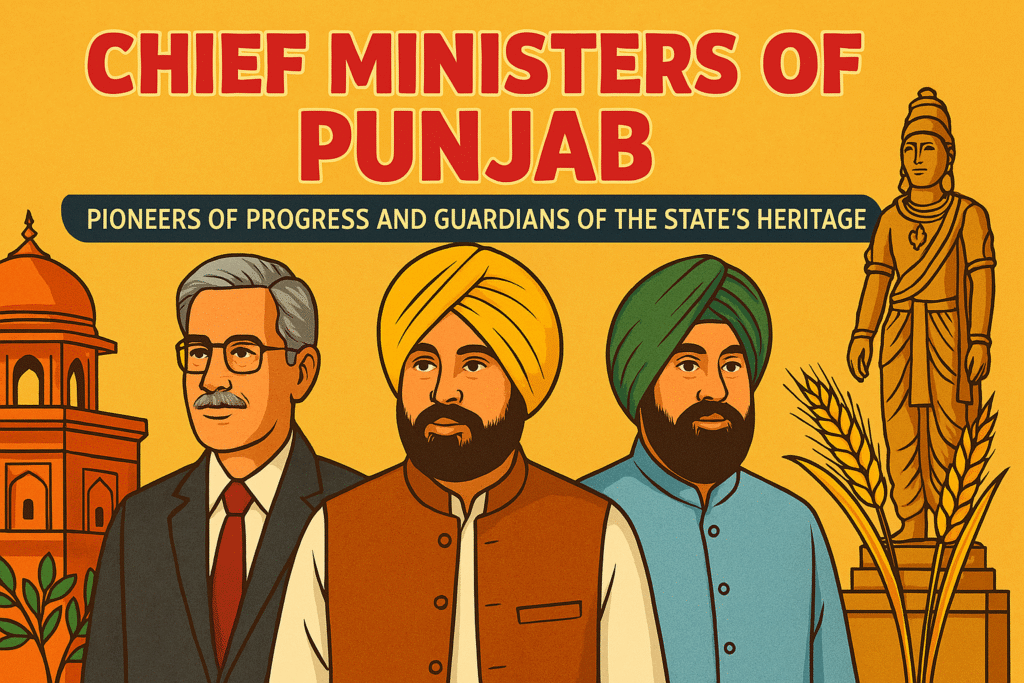
Punjab has produced many famous leaders in the freedom struggle for Indian independence and later for safeguarding the identity of Punjab in India and its own language, Punjabi. These leaders have fought against every injustice—from the Britishers for the country to the struggle for their existence—standing for the nation in times of famine and rising successfully to the Green Revolution, which made Punjab the “food bowl of India”.
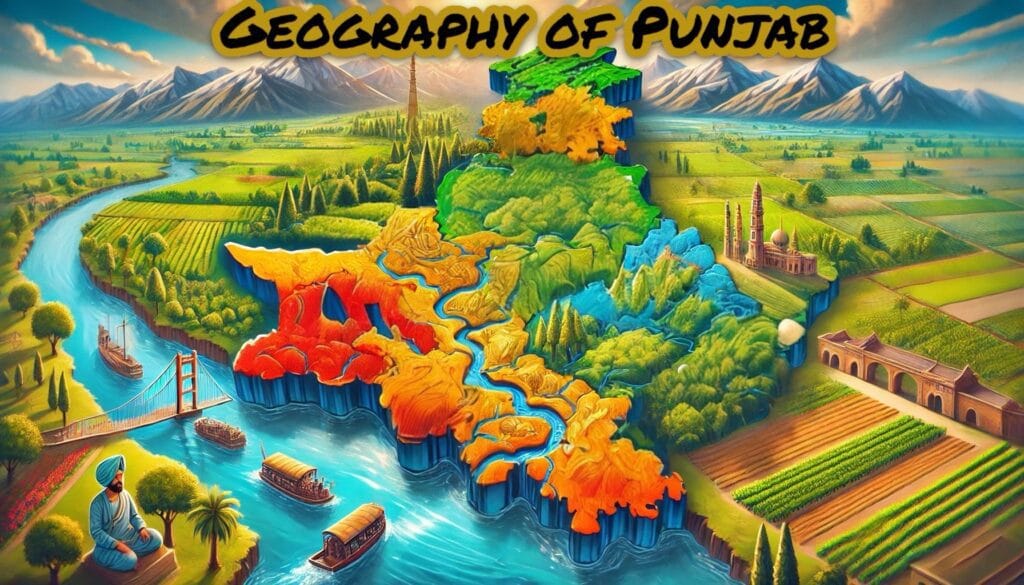
In this article you will know how Punjab politics was guided by the Chief Ministers of Punjab in India, their major contribution to make Punjab, which is also known as the land of five rivers, and how these Chief Ministers of Punjab led this state to showcase its geography on the map of India and even in the world.
Punjab Before 1947: The Premiers of Punjab
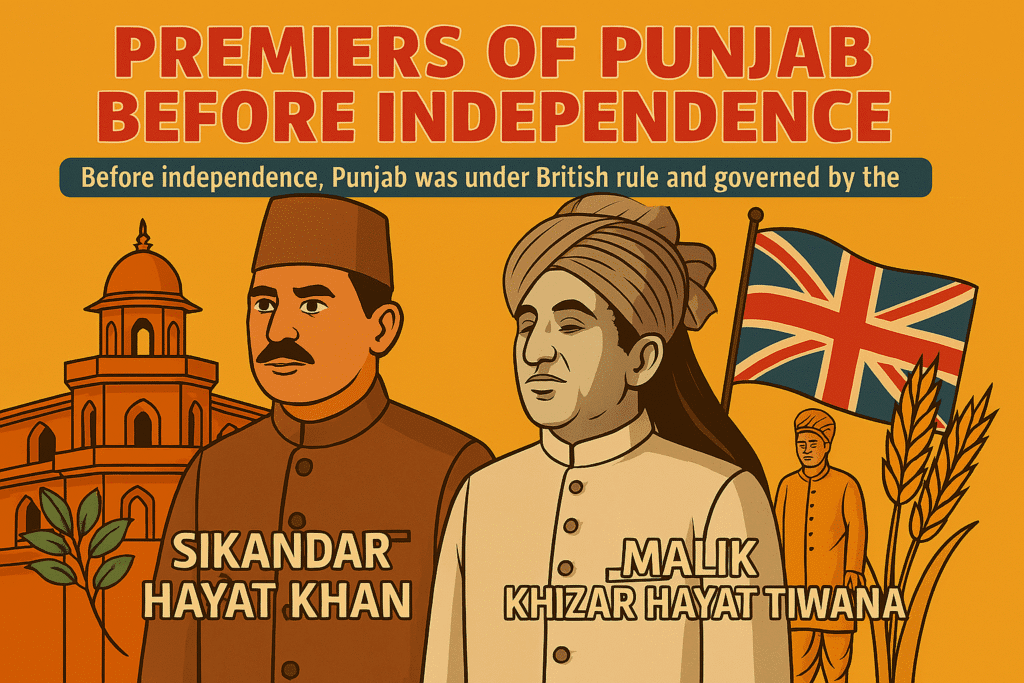
Before India got independence from the Britishers, Punjab was governed by the Premiers and some of the notable names include Sikandar Hayat Khan and Malik Khizar Hayat Tiwana. They both had a very crucial impact on the shaping of the Punjab province’s administration, but unfortunately after independence some part of Punjab went to the Pakistan side Punjab and some part remained in the India side Punjab.
List of Chief Ministers of Punjab (1947-Present)
1. Dr. Gopi Chand Bhargava (15-08-1947 to 13-04-1949; 18-10-1949 to 20-06-1951; 21-06-1964 to 06-07-1964)
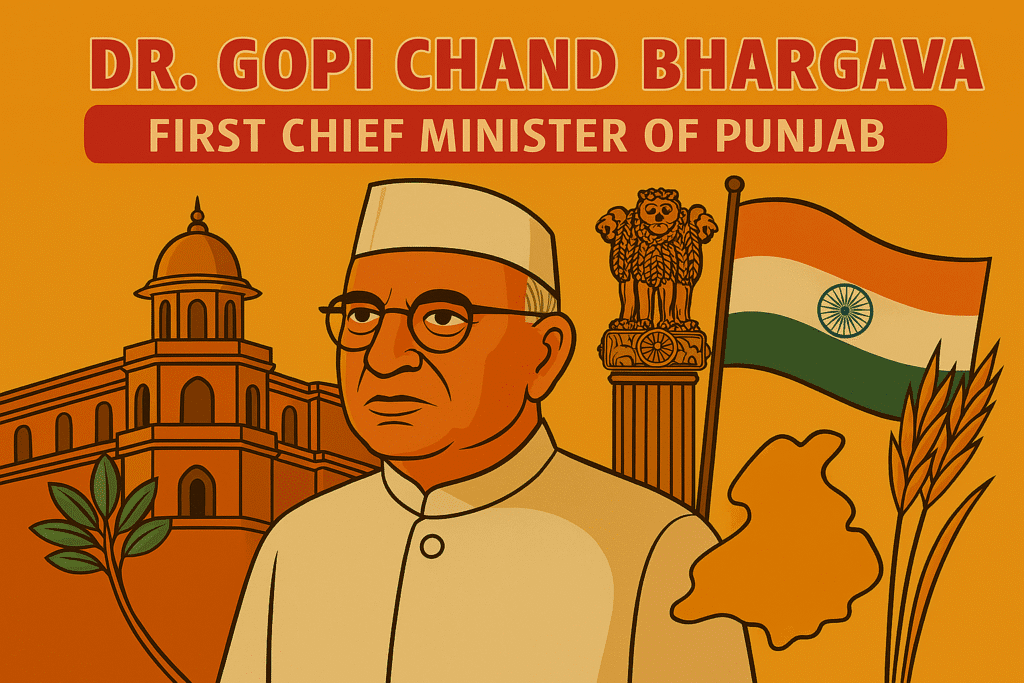
Dr. Gopi Chand Bhargava, the first Chief Minister of Punjab after independence, was born on 8 March 1889 at Sirsa (presently in Haryana). His father, Munshi Badri Prasad, was a government servant in the Punjab government. Dr. Gopi Chand Bhargava was very sharp in his studies as he passed his matriculation examination from the D.A.V. High School in Hissar in 1905. After his schooling, he went to the Punjab capital at that time, Lahore, for his higher education, and afterward he completed his M.B.B.S. from King Edward’s College, Stourbridge, in 1912. After returning from London, he started his career as a medical practitioner in Lahore.
After working as a medical practitioner in Lahore, he decided to participate in the Punjab Legislative Council and he was elected to the Punjab Legislative Council in 1927. Unfortunately, he resigned from the Punjab Legislative Council after the death of Jatin Das. Later, he was again elected to the Legislative Assembly of Punjab in 1937, and at that time he became the leader of the opposition under the Unionist government of Sikander Hayat Khan.
2. Bhim Sen Sachar (13-04-1949 to 18-10-1949; 17-04-1952 to 23-01-1956)
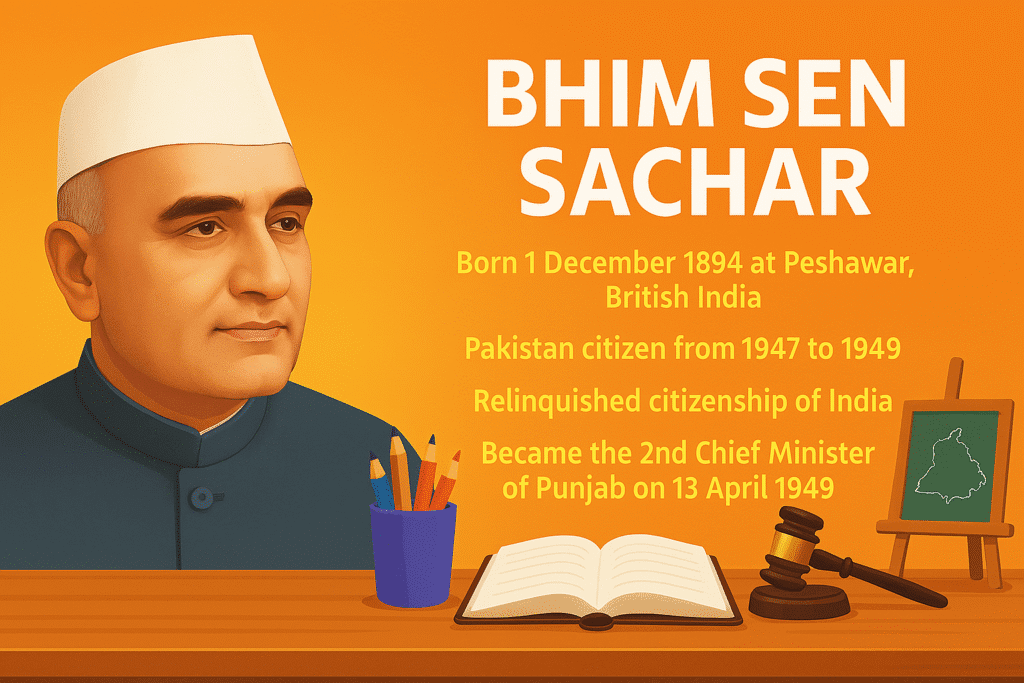
Bhim Sen Sachar, the second Chief Minister of Punjab, was born on 1 December 1894 at Peshawar (now in Pakistan). Interestingly, he first accepted Pakistan’s citizenship after independence in 1947 and also became a member of the first Pakistani Constituent Assembly, but later he relinquished the citizenship of Pakistan and accepted the citizenship of India. He became the second Chief Minister of Punjab, India, on 13 April 1949 by succeeding Dr. Gopi Chand Bhargava.
3. Pratap Singh Kairon (23-01-1956 to 21-06-1964)
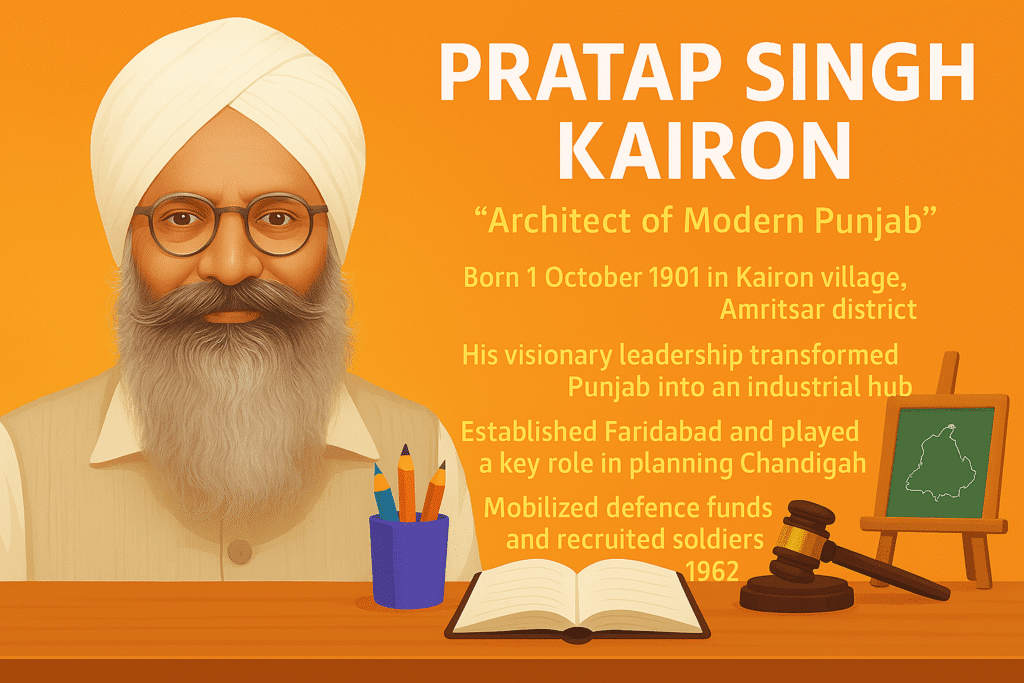
Pratap Singh Kairon, the real son of Punjab who became the third Chief Minister of Punjab and one of the most prominent Chief Ministers of Punjab, was born on 1 October 1901 in Kairon village in Amritsar District. He is often called the Architect of Modern Punjab. His vision and leadership quality were far better and very sharp among the other Chief Ministers of Punjab as he transformed Punjab into an industrial hub by establishing Faridabad (now in Haryana) into a world-class industrial township, which to this day is performing much growth for Haryana. Along with this, his role in planning Chandigarh as the capital of Punjab is unmatched compared to other Chief Ministers of Punjab.
He also showed his commitment to the country during the 1962 Indo-China war, where he mobilized defence funds and encouraged youth to recruit as soldiers to take part in the war for the country. This shows his visionary power and administrative skill.
4. Ram Kishan (06-07-1964 to 05-07-1966)
The fourth Chief Minister of Punjab was Ram Kishan, who was born on 7 November 1913 in Jhang (now in Pakistan).
He became the Chief Minister of Punjab at that time when the country was restructuring after the Indo-China war, and his tenure was to maintain stability and handle the political turbulence in the state.
5. Giani Gurmukh Singh Musafir (01-11-1966 to 08-03-1967)
Giani Gurmukh Singh Musafir, the first one from Punjab among other Chief Ministers of Punjab to become the Chief Minister from a poet background, was born on 15 January 1899 in Adhval Village.
He became the Chief Minister of Punjab when geographical alteration of the state and reorganization of Punjab happened in 1966. He focused on the cultural and social development of Punjab after the separation of the Hindi-speaking region to Himachal and the Haryanavi-speaking region to Haryana.
6. Justice Gurnam Singh (08-03-1967 to 25-11-1967; 17-02-1969 to 27-03-1970)
Justice Gurnam Singh became the first Chief Minister of Punjab from Punjab’s oldest party, the Akali Dal. He was born on 25 February 1899 in Narangwal (Ludhiana).
His leadership and visionary thinking emphasized the state’s agricultural potential and industrial growth, so he worked with farmers and industrialists to make Punjab a more prominent state in the country.
7. Lachhman Singh Gill (25-11-1967 to 23-08-1968)
Lachhman Singh Gill, whose tenure was very short and marked by political instability, did not get much time to stabilize the unrest in the state like other Chief Ministers of Punjab.
He was born in 1917 in Jagraon (Ludhiana District).
8. Parkash Singh Badal (27-03-1970 to 14-06-1971; 20-06-1977 to 17-01-1980; 12-02-1997 to 26-02-2002; 01-03-2007 to 06-03-2012; 06-03-2012 to 16-03-2017)
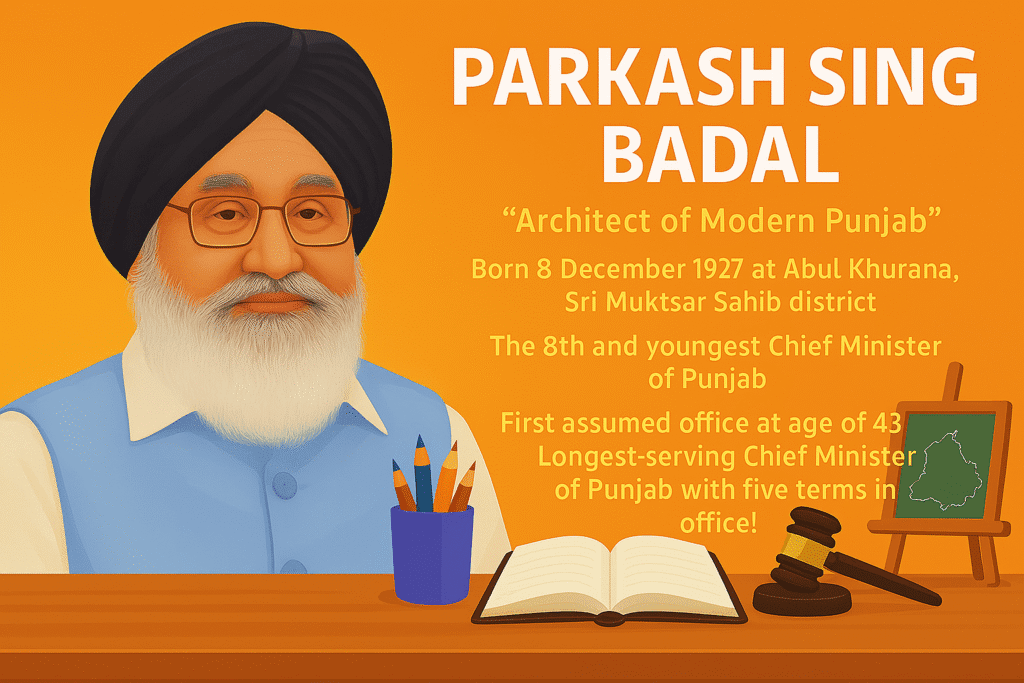
Parkash Singh Badal, a very promising Chief Minister of Punjab among other Chief Ministers of Punjab, served as the youngest Chief Minister of Punjab at the age of 43 by becoming the 8th Chief Minister of Punjab. Along with being the youngest Chief Minister of Punjab, he also held the record of longest-serving Chief Minister of Punjab with five terms in the office of Chief Minister of Punjab.
He was born on 8 December 1927 at Abul Khurana near Malout in Sri Muktsar Sahib district.
9. Giani Zail Singh (17-03-1972 to 30-04-1977)
Giani Zail Singh also had one term as the Chief Minister of Punjab, as he was a very active leader in national politics. He later became the 7th President of India.
During his tenure as the Chief Minister of Punjab, he worked towards social justice and rural upliftment of people. He was born on 5 May 1916 in Sandhwan (Faridkot District).
10. Darbara Singh (06-06-1980 to 10-10-1983)
Darbara Singh became the tenth Chief Minister of Punjab when the state was under immense unrest, so his efforts were to restore peace and stability in the state.
He was born on 10 February 1916 in Jandiala, Amritsar.
11. Surjit Singh Barnala (29-09-1985 to 11-06-1987)
Surjit Singh Barnala, born on 2 October 1925 in Ateli (now in Haryana), served as Punjab’s eleventh Chief Minister. He later became the Governor of Tamil Nadu.
12. Beant Singh (25-02-1992 to 31-08-1995)
Beant Singh, who was born on 19 February 1922 in Patiala, played a crucial role in restoring the law and order situation in Punjab during a very important time, but unfortunately he was assassinated in 1995.
13. Harcharan Singh Brar (31-08-1995 to 21-01-1996)
Harcharan Singh Brar became the Chief Minister of Punjab after the assassination of Beant Singh in 1995, and his primary focus was to eliminate the unrest situation in Punjab and lead the state to normalcy.
He was born on 21 January 1922 in Sri Muktsar Sahib.
14. Rajinder Kaur Bhattal (21-01-1996 to 12-02-1997)
Rajinder Kaur Bhattal became the first woman in Punjab to become the Chief Minister of Punjab, and her important role was to emphasize women’s empowerment and rural development.
She was born on 30 September 1945 in Lahore (now in Pakistan).
15. Captain Amarinder Singh (25-02-2002 to 01-03-2007; 16-03-2017 to 18-09-2021)
The Captain of Punjab, Captain Amarinder Singh, was born on 11 March 1942 in Patiala to the Royal Princely State of Patiala. He once also served as a Captain in the Indian Army and wrote several accomplished books including The Last Sunset, The Monsoon War: Young Officers Reminisce: 1965 India-Pakistan War, Saragarhi and the Defence of the Samana Forts, and Honour and Fidelity: India’s Military Contribution in the Great War 1914-18.
He also became the 15th Chief Minister of Punjab.
16. Charanjit Singh Channi (20-09-2021 to 16-03-2022)
Charanjit Singh Channi from the Dalit community of Punjab became the first Chief Minister of Punjab from the Dalit community, and he was also the first Chief Minister of Punjab to be born after the Independence of India.
However, his tenure lasted for only about six months. He was born on 1 March 1963 in Chamkaur Sahib.
17. Bhagwant Singh Mann (16-03-2022 to Present)
Bhagwant Singh Mann, the former comedian of Punjab, became the 17th Chief Minister of Punjab.
He was born on 17 October 1973 in Satoj Village (Sangrur District).
President’s Rule in Punjab
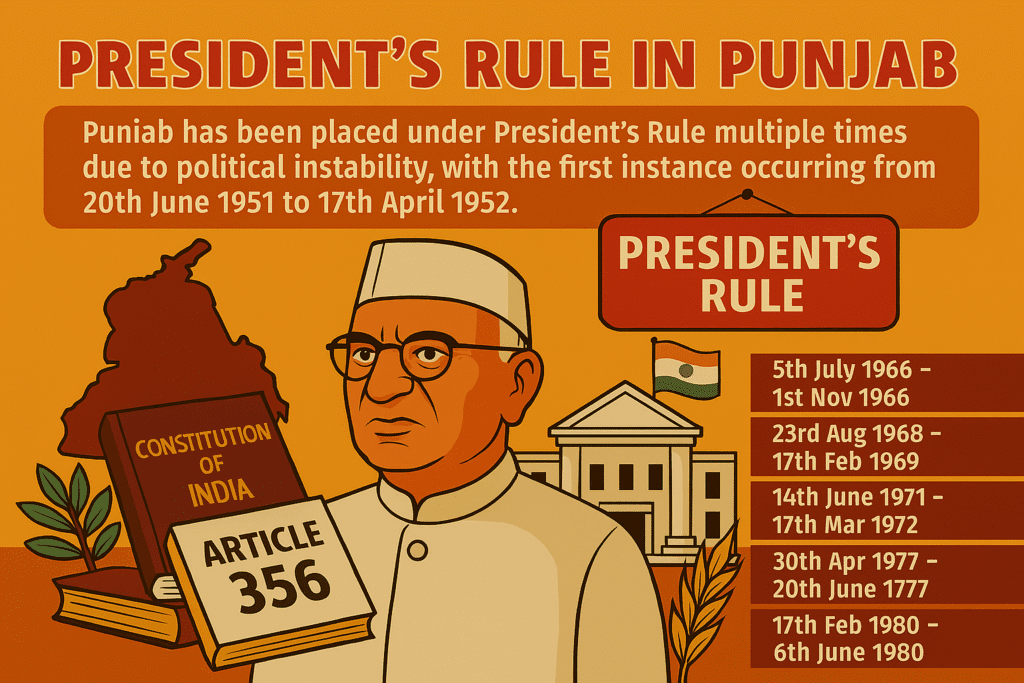
Punjab has seen President’s Rule multiple times due to political instability, with the first imposition on 20th June 1951 to 17th April 1952 under Article 356 of the Constitution of India. This was the first time that any Indian state had experienced the President’s Rule, which arose from the conflict between Dr. Gopi Chand Bhargava and Bhim Sen Sachar.
Subsequently, Punjab came under President’s Rule on multiple occasions: from 5th July 1966 to 1st November 1966, 23rd August 1968 to 17th February 1969, 14th June 1971 to 17th March 1972, 30th April 1977 to 20th June 1977, 17th February 1980 to 6th June 1980, 10th October 1983 to 29th September 1985, and finally, the longest spell from 11th June 1987 to 25th February 1992 during the peak of militancy.