In this world where everyone is interconnected via many means, the health threats looming from global pandemics to neglected tropical diseases—unbounded by the imaginary borders of countries—are serious threats to humankind. These challenges demand a well-coordinated international response urgently and require more focused resolution than ever.
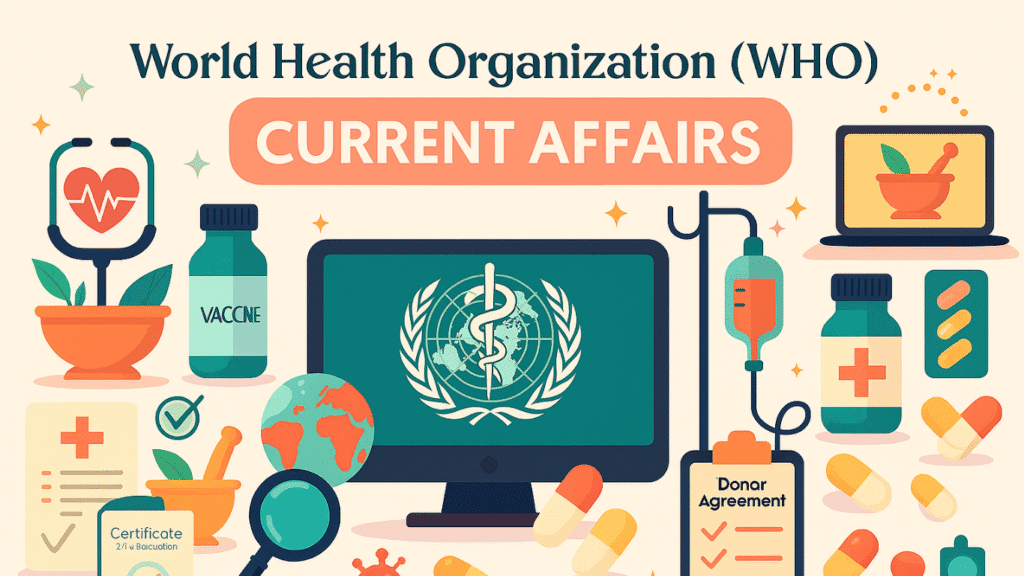
The World Health Organization (WHO), born as a specialized agency of the United Nations, is solemnly responsible for taking care of the world’s health, safeguarding global populations, and most importantly, supporting the countries that are more vulnerable.
Origin and Establishment
The need for the WHO, which was first proposed by Brazil and China, became officially established on 7th April 1948. WHO became the first specialized agency of the United Nations, to which every member of the United Nations subscribes to be a member. Every year, 7th April is celebrated as World Health Day to commemorate this very day, emphasizing the issues of global health and making efforts to deal with those collectively.
- Headquarters: Geneva, Switzerland
- Membership: 194 members
- Includes 192 UN member states (excluding Liechtenstein)
- Plus Cook Islands and Niue
The idea for the specialized agency for the world, the WHO, was constituted at the International Health Conference held in New York in 1946, and from that, the WHO came into force in 1948. This mandated all countries of the world to coordinate with any international health efforts, set specialist standards, and provide technical support to those countries that are dealing with serious health problems to eliminate them.
Leadership and Governance
- Current Director-General: Dr. Tedros Adhanom Ghebreyesus (since 2017)
- First African DG, from Ethiopia
- World Health Assembly (WHA): Annual decision-making body
- Executive Board: Implements WHA decisions
- Funding Sources:
- Assessed Contributions (AC): Based on GDP, approved biennially
- Voluntary Contributions (VC): From member states, foundations, private sector
The United States, which recently withdrew its membership from WHO, still remains the largest contributor with a projection to donate $958 million for the 2024–2025 budget.
Regional Structure
WHO has divided its structure into six regions of the world:
- Africa
- Americas
- Eastern Mediterranean
- Europe
- South-East Asia
- Western Pacific
WHO South-East Asia Region
- Regional Headquarters: New Delhi, India
- Member Countries:
- Bangladesh
- Bhutan
- Democratic People’s Republic of Korea
- Indonesia
- Maldives
- Myanmar
- Nepal
- Sri Lanka
- Thailand
- Timor-Leste
- India
Early Milestones and Disease Control
WHO, whose earliest mission was in the year 1947 when the epidemic of Cholera spread in Egypt and also threatened to spread across Africa and the Middle East. An expert UN team managed to contain the outbreak of Cholera within weeks. Since then, WHO has maintained a Cholera Vaccine Bank and continues to combat other diseases like:
- Malaria
- Tuberculosis
- Leprosy
- Guinea Worm Disease (eradicated in India in 2000)
- Smallpox (eradicated globally in 1980)
- Rinderpest (cattle disease, eradicated in 2011)
WHO Importan Current Affairs January 2024–January 2026
India Launches Traditional Knowledge Digital Library (TKDL)
Indian Government Launches the world first Traditional Knowledge Digital Library (TKDL) which is backed by the World Health Organization. For the TKDL Artificial Intelligence uses to create digital repository to document and protect India’s rich heritage of Ayurveda, Unani, Siddha, and other traditional medicine system. With TKDL have the aim to prevent the bio-piracy and also ensure that the ancient Indian medicine are not patented by foreign entities without the proper recognition.
With the digitalization of traditional knowledge of ancient medicine, which is centuries-old and proven, it is being made accessible to researchers all over the world to enrich modern research with the traditional knowledge of Indian medicine. Along with this, India strongly supports the WHO’s Global Traditional Medicine Strategy 2025–2034.
India Declared Trachoma-Free
Recently, India has achieved a major milestone in public health by eliminating Trachoma, which is a bacterial eye infection caused by Chlamydia trachomatis that eventually leads to blindness. The success was the result of years of targeted interventions, improved sanitation, and awareness programs run by the government. With this milestone, India joined the club with Nepal, Myanmar, and 19 other countries to combat this tropical disease.
With official certification by the WHO as Trachoma-Free, it also shows India’s efforts to combat the disease through surveillance, antibiotic distribution, and surgical interventions. All these achievements were highlighted during the 78th World Health Assembly, which was attended by India’s Health Secretary Punya Salila Srivastava, who also presented India’s Ayushman Bharat program committed to maternal and child health.
India’s Postions at the 78th World Health Assembly
At the 78th World Health Assembly, India was represented by its senior delegation, who strongly emphasized health equity, universal health coverage, and pandemic preparedness for the world, along with the importance of inclusive healthcare systems and resilient infrastructure, especially for low and middle income countries.
India also endorsed the WHO Global Traditional Medicine Strategy 2025–2034 and announced the establishment of a Global Traditional Medicine Centre in Jamnagar, Gujarat. In addition, India signed a Donor Agreement to develop a Traditional Medicine Module within the International Classification of Health Interventions (ICHI), which ensures that traditional practices are scientifically validated and globally recognized.
East African Nations Unite to Eliminate Kala-azar
In the latest development, six East African nations signed a Memorandum of Understanding (MoU) to eliminate Kala-Azar, which is a life-threatening neglected tropical disease (NTD). WHO also supported this MoU along with the African Union and the Drugs for Neglected Diseases Initiative (DNDi).
Kala-Azar, which is also known as visceral leishmaniasis, has impacted thousands annually, and its effects become fatal if not treated. The MoU mainly focuses on improving diagnostics, drug access for all, and vector control, etc. WHO also ensures that technical guidance and monitoring will help to control Kala-Azar, while DNDi contributes research and affordable treatment solutions.
WHO Adopts First-Ever Global Pandemic Treaty
In the history of WHO, it is the first time that on 20 May 2025, WHO adopted its first-ever Pandemic Treaty along with its annual World Health Assembly. This treaty was supported by 124 countries, with 11 countries abstaining, and interestingly, no country opposed it. Its main goal is to strengthen global cooperation during health emergencies, which could be done without any external mandates.
One of the key features of the treaty is “No External Control,” which literally means that WHO cannot enforce any country to implement lockdowns or vaccination rules, so all jurisdiction remains with the home country. This very idea was first proposed during the 2nd special session of WHA in December 2021 after the second wave of COVID-19.
World No Tobacco Day 2025: Unmasking the Appeal
World No Tobacco Day is celebrated each year on 31 May, and in 2025 it was also celebrated with the theme Bright Products. Dark Intentions. Unmasking the Appeal. This year, the campaign focused on exposing deceptive and tactical marketing cleverly used by tobacco companies to attract youth and vulnerable groups.
With this initiative, strict regulation on packaging, flavoring, and advertising was introduced by the authority. It also encourages countries to pay attention to plain packaging laws, increase taxes on these sin products, and promote cessation of these products. According to WHO, tobacco is one of the leading causes of preventable death worldwide, and some harsh action needs to be taken to protect future generations from the effects of these sin products.
World Health Day 2025: Healthy Beginnings, Hopeful Futures
Every year on 7 April, World Health Day is celebrated, and in 2025 it was also celebrated with the theme “Healthy Beginnings, Hopeful Futures.” The focus of this year was on maternal and newborn health, highlighting the importance of early intervention to reduce infant and maternal mortality all over the world.
Along with this, WHO also urges governments to invest in prenatal care, skilled birth attendants, and postnatal support in every facility. In this campaign, WHO also promotes breastfeeding, immunization, and nutrition programs to support women and child health. For India, the achievements through Ayushman Bharat were showcased to the developing nations as a model of success.
NIIMH Hyderabad Becomes WHO Collaborating Centre
Another achievement for India is that the National Institute of Indian Medical Heritage (NIIMH) in Hyderabad, which is under the Ayush Ministry, has been designated as a WHO Collaborating Centre for traditional medicine research. With this campaign, India’s role in global health research and its traditional knowledge system helps to combat diseases and health-related problems.
NIIMH in Hyderabad will work with WHO and its research team to develop evidence-based guidelines, conduct clinical trials, promote integrative medicine, and also support WHO’s broader goal of mainstreaming traditional medicine into health systems to ensure safety, efficacy, and accessibility for every person on Earth.
WHO Launches MeDevIS Platform
WHO has introduced MeDevIS (Medical Devices Information System), the world’s first open-access clearinghouse of medical device data for all. This online platform provides detailed information on thousands of devices for medical use, including specifications, regulatory status, and usage guidelines.
MeDevIS aims to help all countries make informed decisions about procurement before they actually buy the product, especially during emergencies. Along with this, it also supports manufacturers by offering a well-transparent system that is globally recognized. This new platform is expected to improve easy access to essential devices in low-resource settings and enhance global health equity.
Mpox Declared Public Health Emergency
Mpox, which is rising in prevalence in Africa, has been designated by WHO (formerly known as Monkeypox) as a Public Health Emergency of International Concern (PHEIC). The decision to declare Mpox as a Public Health Emergency of International Concern was based on increasing transmission rates, cross-border spread, and limited vaccine availability in the region and the world.
WHO has increased surveillance, community awareness, and vaccine distribution. With the declaration, WHO mobilizes international resources and encourages countries to integrate the Mpox response into their existing health systems. Along with this, it also highlights the need for global preparedness against emerging zoonotic diseases in the region.
Jordan Eliminates Leprosy
In another historic achievement for WHO, Jordan became the first country in the world to eliminate leprosy, which is a chronic infectious disease caused by Mycobacterium leprae. WHO also commemorated Jordan’s efforts in early detection, treatment, and stigma reduction among the citizens of the country.
Jordan’s integrated and coordinated approach, which includes community outreach, free medication for citizens, and most importantly rehabilitation services, helped to successfully eliminate leprosy. WHO also encouraged other nations to replicate Jordan’s model, especially in regions where leprosy remains endemic and continues to spread.
Egypt Declared Malaria-Free
On 20 October 2024, Egypt was officially declared a malaria-free country by WHO, becoming the second African country to achieve this milestone after Cabo Verde, Mauritius, and Algeria. This achievement is the result of years of vector control, surveillance, and public education.
Egypt’s success showed strong government commitment, cross-border coordination, and WHO’s help, especially in technical support. With malaria-free status, Egypt’s tourism and public health reputation improved and it also became a model for other countries to achieve the same status.
Global Hepatitis Report 2024: India’s Burden
According to the Global Hepatitis Report of 2024, India ranks second, only behind China, in the total number of cases of Hepatitis B and C infections, which are estimated at 3.5 crore cases. Hepatitis is a major infection that causes liver inflammation and could lead to cirrhosis and liver cancer if not treated properly.
For this, WHO called for increased vaccination, early diagnosis processes, and more affordable treatment. India has also launched its awareness campaigns and expanded its screening programs, but major challenges remain in rural outreach and stigma reduction. The report also emphasizes the urgent need for a national hepatitis elimination strategy.
Argentina Withdraws from WHO
After the withdrawal of the United States, Argentina also decided to withdraw from the World Health Organization. This move was part of Argentina’s shift in foreign policy, emphasizing national autonomy and reduced participation in multilateral institutions.
However, with the withdrawal of Argentina, WHO reiterated its commitment toward Argentina’s public health programs through its regional partnerships. This harsh decision may impact Argentina’s access to WHO initiatives, which include disease surveillance, vaccine procurement, and emergency response frameworks.
🧬 WHO’s Push for Hepatitis Elimination
The 2024 Global Hepatitis Report revealed a concerning statistic: India ranks second globally, after China, in the number of Hepatitis B and C infections, with an estimated 3.5 crore cases. Hepatitis, a viral infection that inflames the liver, poses a serious public health challenge due to its chronic nature and potential to cause liver cancer.
WHO has urged countries like India to intensify efforts in vaccination, early diagnosis, and affordable treatment access. In response, India has expanded its screening programs and launched awareness campaigns targeting high-risk populations. The report also emphasized the need for community-level interventions, especially in rural and underserved areas, to curb transmission and improve outcomes.
🧈 Global Recognition for Trans Fat Elimination
In a groundbreaking move, WHO issued its first-ever certificate recognizing countries that have successfully eliminated Trans Fatty Acids (TFA)—both industrially produced and naturally occurring. The five countries honored were:
- Denmark
- Lithuania
- Poland
- Saudi Arabia
- Thailand
These nations demonstrated exemplary public health policies, including strict food labeling, regulatory bans, and robust monitoring systems. WHO praised their efforts as models for global replication. India, which has also taken steps to reduce TFA in processed foods, is expected to accelerate its elimination strategy in alignment with WHO’s recommendations.
🩺 WHO Launches MeDevIS: A Game-Changer for Medical Devices
To improve transparency and access to medical technology, WHO launched MeDevIS (Medical Devices Information System)—the world’s first open-access global clearinghouse for medical device information. The platform provides detailed data on thousands of devices, including specifications, regulatory status, and usage guidelines.
MeDevIS is designed to help governments, hospitals, and procurement agencies make informed decisions, especially during health emergencies. It also supports manufacturers by offering a standardized system for global recognition. The platform is expected to enhance equity, efficiency, and safety in medical device distribution worldwide.
🗓️ WHO Observances: Health Awareness in Action
World Health Day 2025
- Date: 7 April
- Theme: “Healthy Beginnings, Hopeful Futures”
- Focused on maternal and newborn health, promoting early interventions to reduce mortality and improve long-term outcomes.
World No Tobacco Day 2025
- Date: 31 May
- Theme: “Bright Products. Dark Intentions. Unmasking the Appeal”
- Exposed deceptive marketing tactics used by tobacco companies and called for stronger regulations and youth protection.
These observances serve as global platforms to raise awareness, mobilize action, and celebrate progress in public health. They also provide valuable content for aspirants preparing for exams that test current affairs and health policy knowledge.
🧪 India’s Expanding Role in Traditional Medicine Research
India’s leadership in traditional medicine was further solidified when the National Institute of Indian Medical Heritage (NIIMH) in Hyderabad was designated as a WHO Collaborating Centre. This recognition empowers NIIMH to contribute to global research, policy development, and evidence-based validation of traditional practices.
The collaboration aligns with WHO’s Global Traditional Medicine Strategy, which aims to integrate traditional medicine into national health systems while ensuring safety and efficacy. India’s proactive role in this domain reflects its commitment to preserving heritage while advancing scientific innovation.
🧾 Summary for Aspirants
Here’s a quick recap of key WHO-related current affairs from January 2024 to September 2025:
| Event | Date | Highlight |
|---|---|---|
| TKDL Launch | 2024 | India becomes first country to digitize traditional medicine with WHO support |
| Trachoma Elimination | 2024 | India certified Trachoma-Free by WHO |
| 78th WHA | May 2025 | India advocates health equity, endorses Traditional Medicine Strategy |
| Kala-azar MoU | 2025 | Six East African nations unite to eliminate NTD |
| Global Pandemic Treaty | May 2025 | Adopted by 124 countries, no external control |
| World Health Day | 7 April 2025 | Theme: Healthy Beginnings, Hopeful Futures |
| World No Tobacco Day | 31 May 2025 | Theme: Bright Products. Dark Intentions |
| MeDevIS Launch | 2025 | WHO’s global platform for medical device data |
| Mpox Emergency | 2025 | Declared PHEIC due to rising cases in Africa |
| Jordan Leprosy-Free | 2025 | First country to eliminate leprosy |
| Egypt Malaria-Free | Oct 2024 | Second African country after Mauritius, Algeria |
| TFA Certification | 2024 | Denmark, Lithuania, Poland, Saudi Arabia, Thailand recognized |
| Hepatitis Report | 2024 | India ranks 2nd in Hepatitis B & C cases |
| US & Argentina Withdrawals | 2024–2025 | Political shifts in global health participation |
The World Health Organization, since its inception on 7th April 1948, has stood as a pillar of global health governance—responding to epidemics, shaping health policies, and fostering international collaboration. From eradicating smallpox and rinderpest to launching digital platforms like MeDevIS and certifying nations for disease elimination, WHO continues to evolve with the changing health landscape.
Between January 2024 and September 2025, WHO has witnessed historic developments: the adoption of the Global Pandemic Treaty, India’s recognition as Trachoma-Free, the launch of the Traditional Knowledge Digital Library, and the rise of Ayush-led research centers. These milestones not only reflect WHO’s commitment to inclusive health systems but also highlight India’s growing influence in shaping global health narratives.
For aspirants preparing for UPSC, PCS, SSC, and other competitive exams, understanding WHO’s structure, achievements, and current affairs is essential—not just for scoring marks, but for appreciating the collaborative efforts that safeguard public health across borders. As global health challenges grow more complex, WHO’s role remains indispensable—and so does your awareness of it.
For aspirants seeking a deeper understanding of India’s regional heritage alongside global health governance, don’t miss our detailed article on Punjab’s History and Cultural Legacy—a vital topic for UPSC and PCS exams.