In the race of life and exams, we often forget the quiet battles happening inside our bodies. One such battle is fought every day by millions—against pneumonia. It doesn’t make headlines like politics or cricket, but it silently steals lives, especially of children who never got a chance to dream.
For aspirants preparing for UPSC, SSC, or state exams, World Pneumonia Day is not just a health observance—it’s a reminder. A reminder that knowledge is not just about marks, but about meaning. That every fact we learn can save a life.
So today, let’s pause. Let’s learn. Let’s care. Because when we understand pneumonia, we don’t just prepare for an exam—we prepare to be responsible citizens, compassionate leaders, and informed changemakers.
Table of Contents
🌍 World Pneumonia Day: Every Breath Deserves Protection
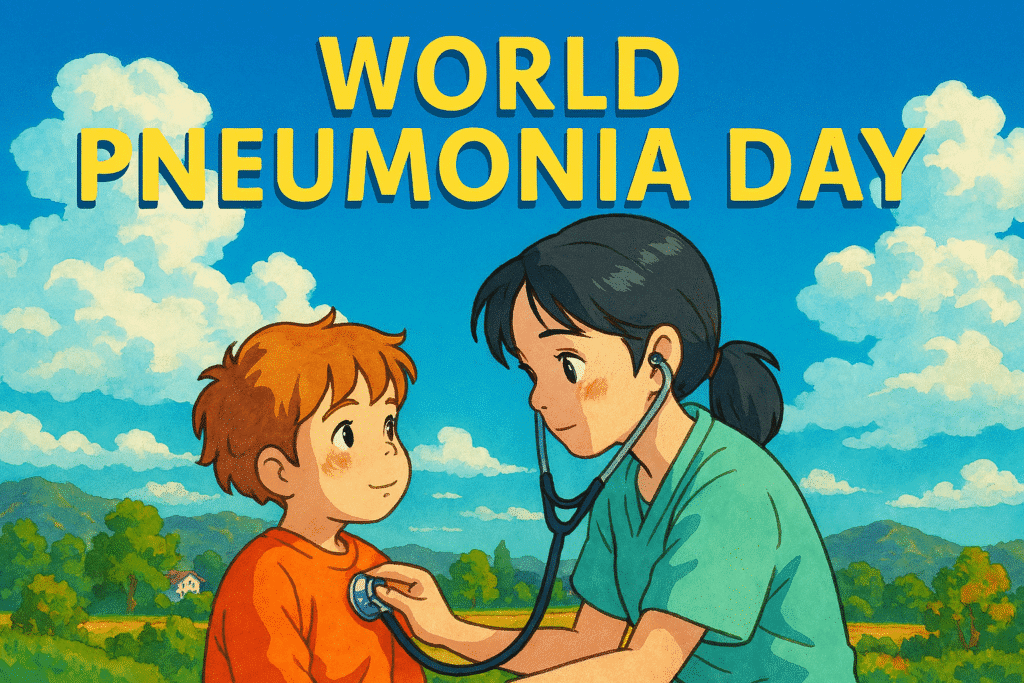
Every year on 12th November, the world observes World Pneumonia Day to raise awareness about a disease that silently affects millions. Pneumonia is a lung infection that makes breathing painful and difficult. It can be caused by bacteria, viruses, or fungi, and spreads easily in places with poor hygiene, pollution, and weak healthcare systems. Though it is preventable and treatable, many people—especially children—do not get the care they need. This day reminds us that health is a right, not a privilege.
🕰️ History of World Pneumonia Day
World Pneumonia Day was first celebrated in 2009, started by the Global Coalition Against Child Pneumonia. The goal was to bring attention to the fact that pneumonia was killing more children than any other disease, yet it was not getting enough support or funding. Many global organizations like WHO, UNICEF, and Save the Children joined hands to fight pneumonia through awareness, vaccines, and better healthcare. Since then, this day has become a symbol of global action and care.
📅 Why Is It Celebrated on 12 November?
The date 12th November was chosen to make sure pneumonia gets global attention during a time when respiratory infections rise—especially in countries like India after the Diwali season. It also connects with other health-related observances in early November, like World Science Day (Nov 10) and World Radiology Day (Nov 8). This timing helps create a strong message about science, health, and the importance of breathing clean air.
🎯 Theme of 2025: “Child Survival”
The theme for 2025 is “Child Survival It reminds us that breathing is not just a natural act—it’s a right. Every child, every person, deserves clean air, proper nutrition, and access to vaccines. It also highlights the role of students, teachers, doctors, and leaders in protecting lives through knowledge and action. For aspirants, this theme is a call to learn with purpose and serve with compassion.
🇮🇳 India’s Status and Response
India still faces a big challenge with pneumonia. Many children die every year because of poor nutrition, lack of vaccines, and high air pollution. The government has launched campaigns like:
- SAANS (Social Awareness and Action to Neutralize Pneumonia Successfully)
- Mission Indradhanush for full immunization
- Poshan Abhiyaan to improve child nutrition
These programs aim to protect children and improve healthcare in villages and cities. But challenges remain in rural outreach, early diagnosis, and pollution control.
🩺 What Is Pneumonia?
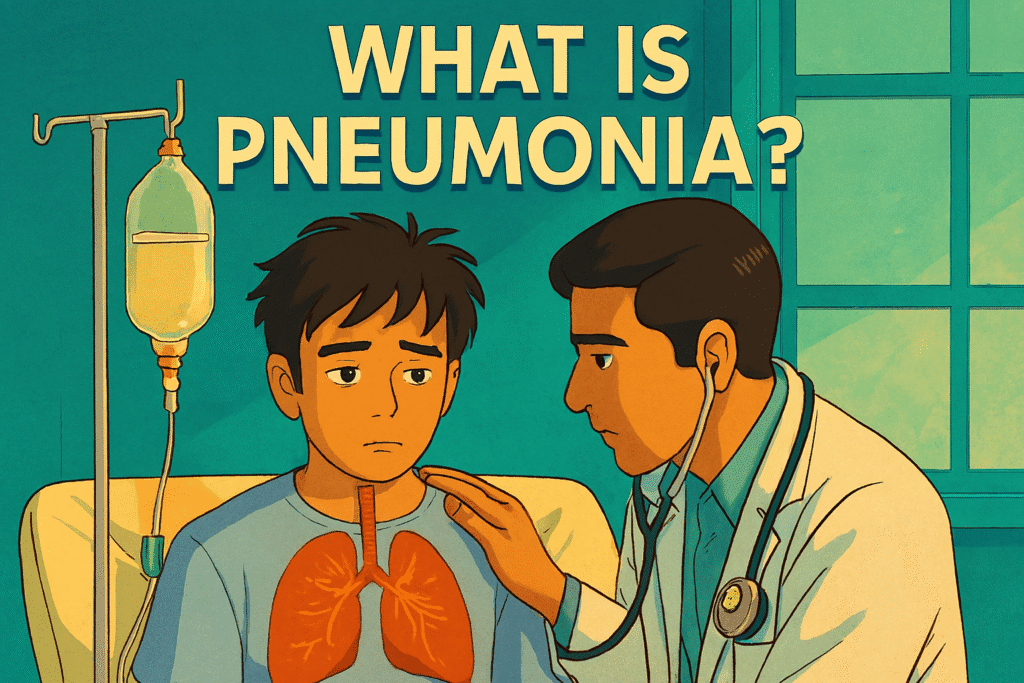
Pneumonia is not just a disease—it’s a silent storm inside the lungs. It fills the tiny air sacs with fluid or pus, making every breath a struggle. For a child, an elder, or someone with weak immunity, this struggle can be life-threatening.
It starts with a cough, a fever, or chest pain. But if ignored, it can quickly turn into something dangerous. Breathing becomes painful. The body becomes weak. And without timely care, lives can be lost.
🦠 What Causes Pneumonia?
Pneumonia can be caused by different germs. The most common is a bacteria called Streptococcus pneumoniae. It enters the lungs and causes infection.
Sometimes, viruses like the flu or COVID-19 can also lead to pneumonia. In people with weak immunity, even fungi can be the cause. That’s why it’s important to know the type—so the right treatment can begin.
💊 How Is Pneumonia Treated?
The good news is—pneumonia can be treated. If it’s caused by bacteria, doctors give antibiotics. If it’s viral, rest, fluids, and antiviral medicines help.
In serious cases, patients may need oxygen or hospital care. But the most powerful tool is early action. The sooner it’s treated, the better the chances of recovery.
🛡️ How Can We Prevent It?
Pneumonia can be prevented—and that’s the most hopeful part.
Vaccines like PCV (Pneumococcal Conjugate Vaccine), Hib, and flu shots protect children and adults. These vaccines are safe, effective, and life-saving.
Clean hands, clean air, and good food also matter. Breastfeeding protects babies. Avoiding smoke and pollution keeps lungs strong. And simple habits—like covering your mouth when you cough—can stop the spread.
🕰️ The Long Journey to Understanding Pneumonia
Pneumonia has haunted humanity for thousands of years. In ancient Greece, around 460 BC, the great physician Hippocrates described symptoms of lung infections—fever, cough, and chest pain. But back then, pneumonia was seen as a mystery illness, a punishment from the gods, or a symptom of other diseases. There were no microscopes, no antibiotics—only suffering and silence.
For centuries, pneumonia was known by many names: Winter Fever, Lung Fever, Chest Inflammation. It came quietly, especially in cold seasons, and took lives without warning. Families watched loved ones struggle to breathe, and doctors could only offer warmth, herbs, and hope.
🔬 The Breakthrough: Seeing the Invisible
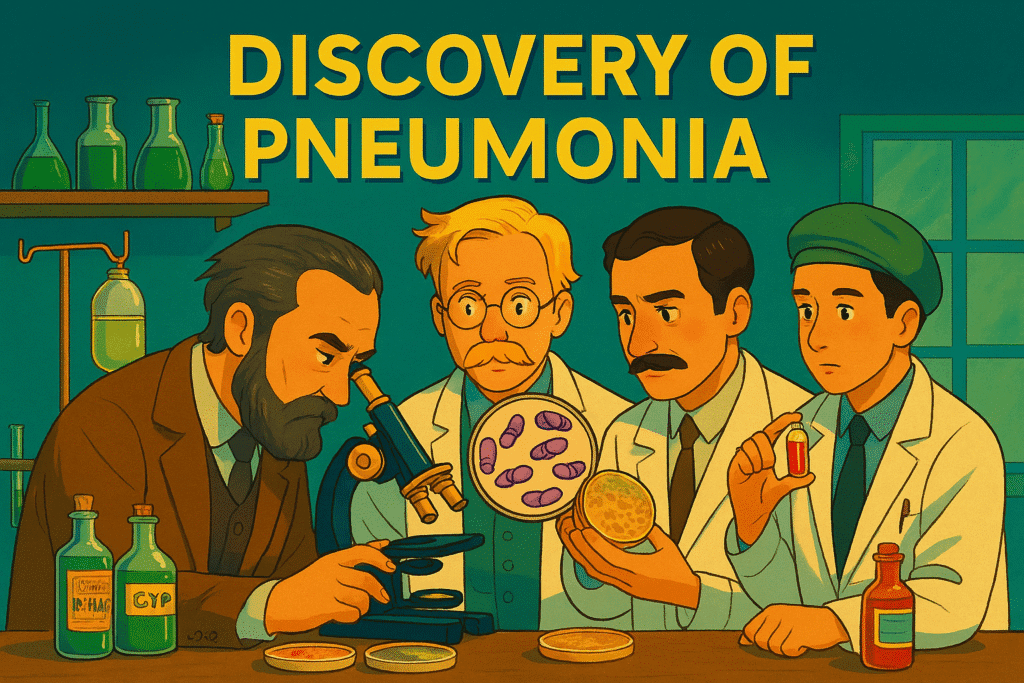
The real turning point came in the 19th century, when science began to look deeper. In 1875, German pathologist Edwin Klebs became the first to observe pneumonia bacteria under a microscope. It was a moment of revelation—proof that pneumonia was not just a symptom, but a disease caused by a living organism.
Soon after, in 1881, two scientists—Carl Friedländer and Albert Fränkel—identified the bacteria Streptococcus pneumoniae. This was the true enemy. For the first time, pneumonia had a name, a face, and a cause. It was no longer invisible.
But knowing the cause wasn’t enough. People still died. The bacteria was strong, and there was no cure.
💊 The Hope: A Cure Is Born
Then came a miracle. In 1928, Alexander Fleming made the groundbreaking discovery of penicillin, which became the world’s first antibiotic.. Though it took years to develop and distribute, penicillin changed everything. Pneumonia, once a death sentence, became treatable. Hospitals saw fewer deaths. Families saw more recoveries. Science had turned the tide.
This discovery didn’t just save lives—it inspired generations of doctors, researchers, and students. It showed that even the quietest diseases could be defeated with knowledge, persistence, and compassion.
📝 Every Breath Is a Responsibility
Pneumonia may not make breaking news, but it breaks hearts—quietly, painfully, and far too often. Behind every statistic is a child gasping for air, a mother praying for recovery, a doctor racing against time. And behind every awareness campaign is a hope: that someone, somewhere, will care enough to act.
As aspirants preparing for UPSC, SSC, or state exams, you are not just learners—you are future leaders. Your knowledge has the power to shape policies, protect lives, and bring light to places where breath is a luxury. World Pneumonia Day is not just a health observance—it’s a mirror. It reflects the kind of society we choose to build: one that listens to the silent, protects the vulnerable, and values every heartbeat.
Let this day remind you that every breath counts. That science is not just about formulas—it’s about empathy. That your preparation is not just for a job—it’s for a purpose.
If this article moved you, inspired you, or taught you something new—don’t stop here.
Join our WhatsApp group to receive regular updates and exam-ready capsules that empower your journey.
👉 Join Our WhatsApp Group Now for notifications and exclusive content
👉 Click Here for More Current Affairs & Articles to explore related topics that matter