In a world torn by conflict, inequality, and climate despair, there exists a quiet force—unseen yet unwavering. It doesn’t wear medals, march in parades, or shout slogans. It heals without borders, builds without bias, and dreams without limits. That force is science.
Every year, on November 10, the world pauses to honor this silent soldier through the World Science Day for Peace and Development. But for you—the aspirant, the future officer, policymaker, educator—this day is more than a date. It is a reminder that your preparation is not just for a job, but for a mission: to use knowledge as a tool for justice, unity, and progress.
Because science isn’t just about formulas—it’s about fairness. It’s not just about discovery—it’s about dignity. And when you study it with purpose, you don’t just crack exams—you crack the code to a better world.
Table of Contents
🌍 The Origin of World Science Day for Peace and Development : From Budapest to the World
The seeds of World Science Day were sown during the World Conference on Science, held in Budapest, Hungary, in July 1999. This landmark event, jointly organized by UNESCO and the International Council for Science (ICSU), brought together scientists, policymakers, educators, and civil society from across the globe. The conference was driven by a shared concern: science was advancing rapidly, but public understanding and access to its benefits remained unequal and limited.
Participants recognized that while science had the power to solve global challenges—like poverty, disease, and environmental degradation—it could also deepen inequalities if not guided by ethics and inclusivity. There was a growing need to:
- Bridge the gap between science and society
- Promote responsible, ethical scientific practices
- Ensure that scientific knowledge benefits all humanity—not just a privileged few
Out of this urgency, the idea of a dedicated day to celebrate and reflect on the role of science in peace and development was born.
🕊️ The Struggle and the Vision
It wasn’t easy. Convincing global leaders to institutionalize such a day required persistent advocacy. Scientists and educators argued that science must not remain confined to labs or elite institutions—it must become a public good. They emphasized that:
- Science literacy is essential for democracy
- Public trust in science must be rebuilt through transparency
- Global cooperation in science can prevent conflict and foster peace
After two years of deliberation and campaigning, the proposal was formally adopted at the 31st UNESCO General Conference in 2001. Thus, November 10 was declared as the World Science Day for Peace and Development—a date chosen to commemorate the spirit of the 1999 Budapest Declaration and to align with UNESCO’s broader mission of promoting peace through education, science, and culture.
📚 Why November 10 Still Matters Today for World Science Day
In today’s world—marked by climate emergencies, pandemics, misinformation, and geopolitical tensions—this day is more relevant than ever. It reminds us that:
- Science is not just about discovery—it’s about dignity
- Peace is not just the absence of war—it’s the presence of justice, health, and opportunity
- Development is not just economic growth—it’s sustainable, inclusive progress for all
🔮 Theme 2025: Trust, Transformation, and Tomorrow—The Science We Need for 2050
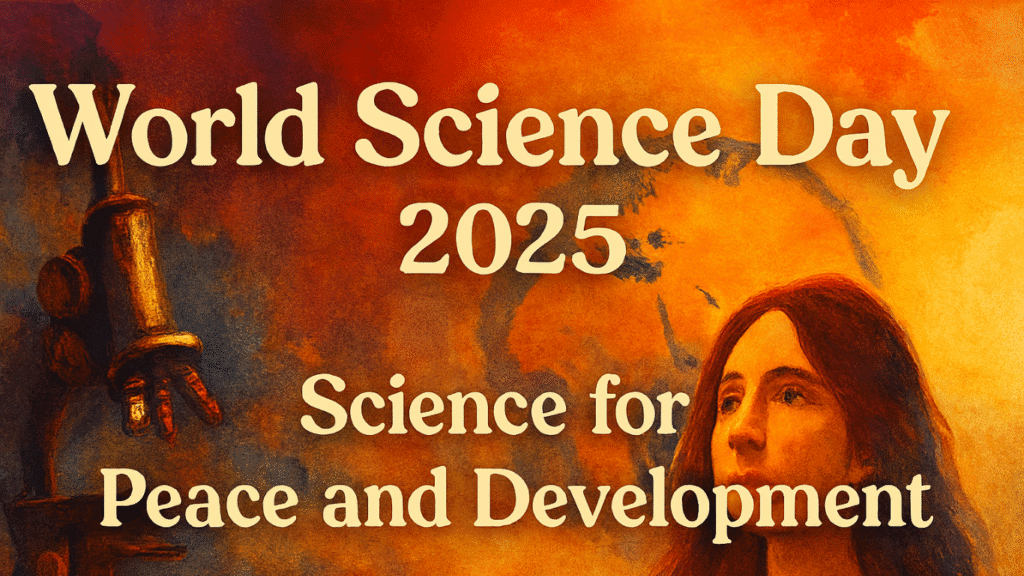
In a world racing toward technological breakthroughs and climate tipping points, the theme for World Science Day for Peace and Development 2025 is a bold call to action: “Trust, Transformation, and Tomorrow: The Science We Need for 2050.”
This theme isn’t just poetic—it’s prophetic. It asks us to imagine the kind of science that will shape the next 25 years. But more importantly, it challenges us to rebuild the broken bridges between science and society.
🧭 Why This Theme Matters
- Trust: In an age of misinformation, fake news, and public skepticism, rebuilding trust in science is essential. People must believe that science serves humanity—not just profit or power.
- Transformation: Science must evolve—not just in labs, but in classrooms, communities, and cultures. It must be inclusive, ethical, and responsive to real-world needs.
- Tomorrow: The future demands science that is climate-ready, peace-driven, and people-centered. From AI to biotechnology, every innovation must be guided by compassion and conscience.
This theme is a mirror—and a map. It reflects our current challenges and charts a path toward a better, fairer, and more sustainable 2050.
🏛️ UNESCO’s 43rd General Conference: Samarkand, Uzbekistan
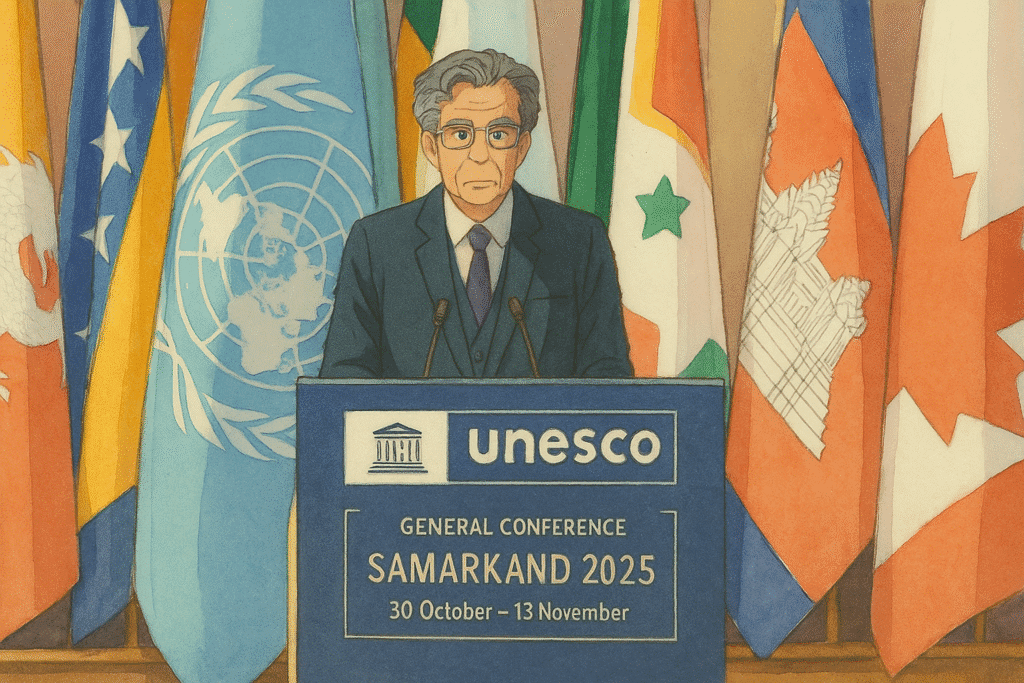
In 2025, the global celebration of World Science Day will take center stage at the 43rd session of the UNESCO General Conference, held in the historic city of Samarkand, Uzbekistan. Known for its legacy of Silk Road scholarship and cultural exchange, Samarkand is a symbolic venue—where ancient wisdom meets future vision.
At this conference, world leaders, scientists, educators, and youth will gather to:
- Reflect on the role of science in peacebuilding and sustainable development
- Launch initiatives aligned with the International Decade of Sciences for Sustainable Development (2024–2033)
- Promote open science, ethical research, and inclusive innovation
- Discuss how science can address global crises—from climate change to digital inequality
This isn’t just a celebration—it’s a strategic summit to shape the science of tomorrow.
🕊️ UNGA’s Proclamation: A Decade of Scientific Hope
In August 2023, the United Nations General Assembly (UNGA) proclaimed 2024–2033 as the International Decade of Sciences for Sustainable Development. This historic declaration recognizes that science is not a luxury—it’s a lifeline.
The decade aims to:
- Strengthen scientific cooperation across borders
- Promote science education and literacy for all
- Ensure that scientific progress aligns with the UN Sustainable Development Goals (SDGs)
In this context, World Science Day 2025 becomes a powerful moment to ask:
What kind of science do we need—not just to survive, but to thrive?
🇮🇳 National Science Day (India): A Tribute to Discovery and Dedication
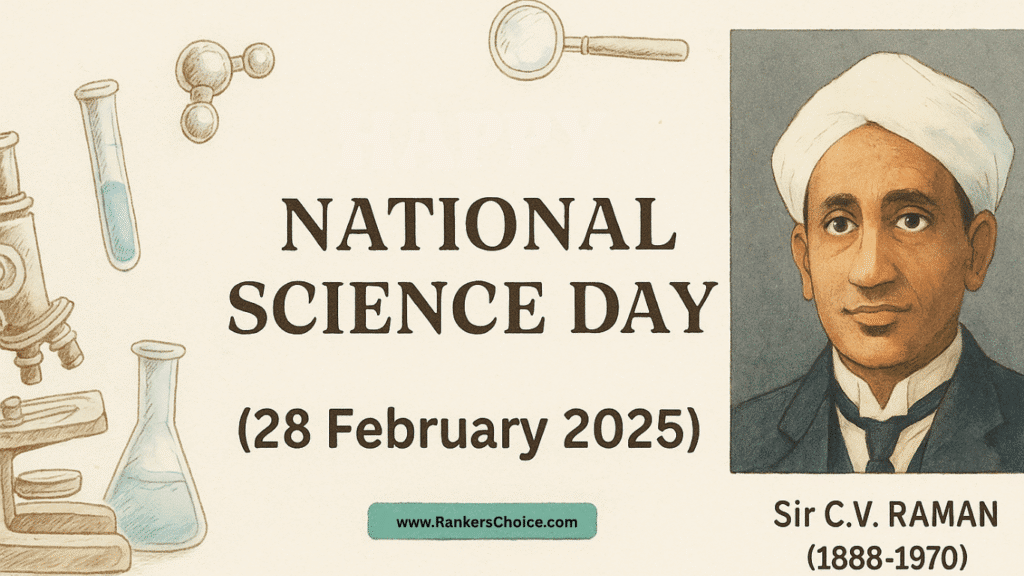
On February 28, 1928, while working at the Indian Association for the Cultivation of Science (IACS), Kolkata, Sir Chandrasekhara Venkata Raman made a groundbreaking discovery: the Raman Effect. This phenomenon—explaining how light scatters when passing through a transparent medium—revolutionized modern physics and earned him the Nobel Prize in 1930, making him the first Asian to win in any science category.
To honor this achievement, the National Council for Science and Technology Communication (NCSTC) proposed in 1986 that February 28 be designated as National Science Day. The Government of India accepted the proposal, and the first celebration was held in 1987.
🧪 Why National Science Day Matters
- Celebrates Indian scientific excellence and inspires youth to pursue science and innovation.
- Promotes public understanding of science, bridging the gap between labs and society.
- Encourages scientific temper, a constitutional duty under Article 51A(h).
- Highlights indigenous technologies, especially in rural and sustainable development sectors.
Each year, a theme is chosen to reflect national priorities.
For example, the 2025 theme was “Empowering Indian Youth for Global Leadership in Science & Innovation for Viksit Bharat“, aligning with India’s vision of self-reliance and innovation.
🌍 Connecting with World Science Day for Peace and Development
While National Science Day celebrates a specific Indian achievement, World Science Day (November 10)—established by UNESCO in 2001—focuses on the global role of science in promoting peace, development, and ethical responsibility.
Together, these two observances form a powerful narrative:
| Aspect | National Science Day (India) | World Science Day (Global) |
|---|---|---|
| Date | February 28 | November 10 |
| Origin | Discovery of Raman Effect (1928) | UNESCO declaration (2001) |
| Focus | Indian scientific achievement | Science for peace & development |
| Celebrated by | Government of India, schools, colleges | UNESCO, global institutions |
| Themes | Empowering Indian Youth for Global Leadership in Science & Innovation for Viksit Bharat | Trust, Transformation, and Tomorrow—The Science We Need for 2050 |
National Science Day is India’s voice in the global chorus of scientific progress. It reminds us that local discoveries can have global impact—and that science, when rooted in ethics and equity, becomes a tool for peace.
🕊️ Science with Heart, Purpose, and Vision
From the quiet brilliance of C.V. Raman’s lab in Kolkata to the global stage of UNESCO in Samarkand, science has always been more than equations—it has been a force of empathy, unity, and transformation. Whether it’s February 28 or November 10, these days remind us that science is not just about what we know—it’s about what we choose to do with that knowledge.
As aspirants preparing to serve society, you are not just memorizing facts—you are inheriting a legacy. A legacy where trust in truth, transformation through innovation, and hope for tomorrow guide every decision. You are the bridge between science and society, between policy and people, between data and dignity.
Let this article be more than information—let it be inspiration. Because the science we need for 2050 begins with the choices we make today.
👉 For more empowering articles and regular updates, please join our WhatsApp group.
📚 To explore more related content, visit our Current Affairs & Articles section by clicking here.
Let’s build a future where science serves peace—and aspirants like you lead the way.