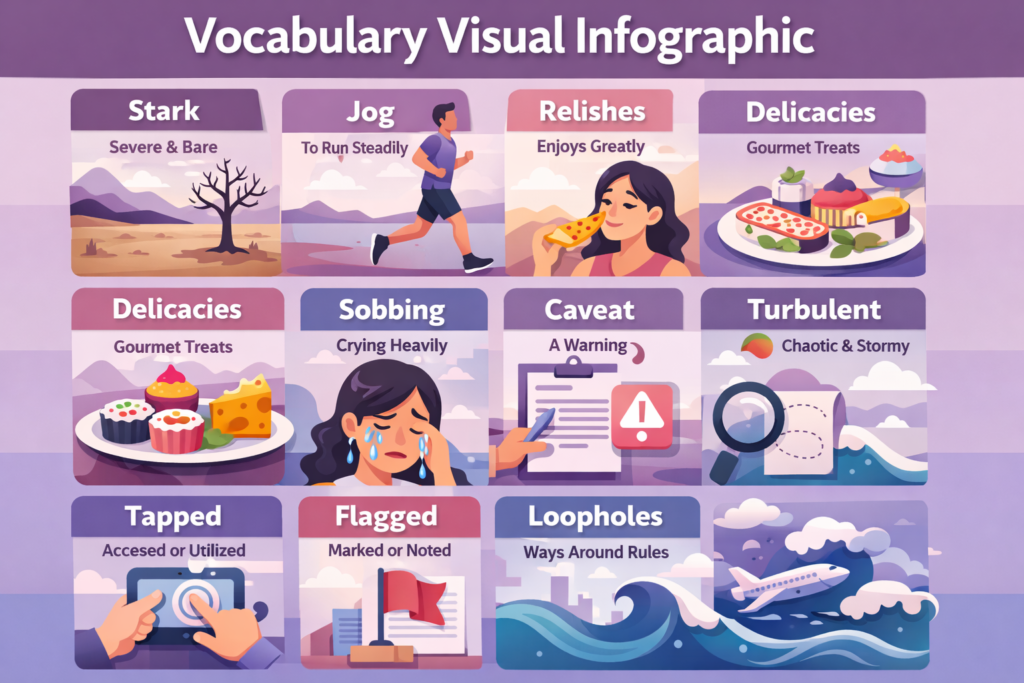
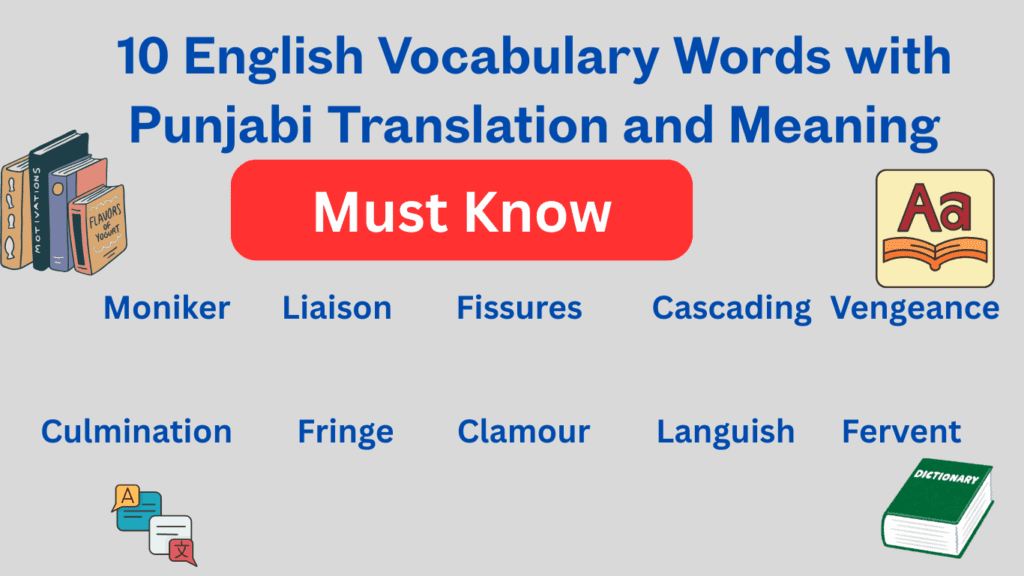
In this article, you will learn another 10 important vocabulary words: Stark, Jog, Relishes, Delicacies, Sobbing, Caveat, Tapped, Flagged, Loopholes and Turbulent.
10 English The Most Important Vocabulary Words for 11 June Upcoming Exams with Punjabi Meanings
1. Stark (ਸਪਸ਼ਟ, ਬਿਲਕੁਲ ਖੁੱਲ੍ਹਾ, ਕਰੜਾ, ਬਹੁਤ ਵੱਡਾ ਫ਼ਰਕ ਦਰਸਾਉਣ ਵਾਲਾ)
The new vocabulary word ‘Stark’ literally means “very obvious, plain, severe, or sharply noticeable.” It is often used to describe a strong contrast, harsh reality, simplicity, or something that stands out clearly without decoration or concealment.
In Punjabi, stark meaning is: ਸਪਸ਼ਟ, ਕਰੜਾ, ਨੰਗਾ-ਚਿੱਟਾ, ਬਹੁਤ ਵੱਡਾ ਫ਼ਰਕ ਦਰਸਾਉਣ ਵਾਲਾ
Now, understand the vocabulary word “Stark” with the sentence:
e.g. There is a stark difference between the rich and the poor in the city.
ਸ਼ਹਿਰ ਵਿੱਚ ਅਮੀਰਾਂ ਅਤੇ ਗਰੀਬਾਂ ਵਿਚਕਾਰ ਬਹੁਤ ਸਪਸ਼ਟ ਅਤੇ ਵੱਡਾ ਫ਼ਰਕ (stark difference) ਹੈ।
So, in the above sentence the contextual meaning of the vocabulary word ‘Stark’ that:
Stark, which literally means sharply visible or obvious, is often used in situations involving contrasts, inequalities, realities, landscapes, warnings, and facts. In this case, it highlights that the difference between the rich and the poor is very clear and impossible to ignore. The word ‘stark’ emphasizes contrast, severity, clarity, harshness, and plainness.
ਉਪਰੋਕਤ ਵਾਕ ਵਿੱਚ ‘Stark’ ਸ਼ਬਦ ਦਾ ਸੰਦਰਭਗਤ ਅਰਥ ‘ਬਹੁਤ ਸਪਸ਼ਟ ਅਤੇ ਕਰੜਾ’ ਹੈ। ਇਸ ਵਾਕ ਵਿੱਚ ਦਰਸਾਇਆ ਗਿਆ ਹੈ ਕਿ ਅਮੀਰਾਂ ਅਤੇ ਗਰੀਬਾਂ ਵਿਚਕਾਰ ਦਾ ਫ਼ਰਕ ਬਿਲਕੁਲ ਸਾਫ਼ ਦਿਖਾਈ ਦਿੰਦਾ ਹੈ। ‘Stark’ ਸ਼ਬਦ ਇੱਥੇ ਸਪਸ਼ਟਤਾ, ਵੱਡੇ ਅੰਤਰ ਅਤੇ ਕਰੜੀ ਹਕੀਕਤ ਨੂੰ ਦਰਸਾਉਂਦਾ ਹੈ।
ਜਦੋਂ ਵੀ stark ਸ਼ਬਦ ਕਿਸੇ passage ਵਿੱਚ ਆਵੇ:
ਤਾਂ ਉਸਨੂੰ “ਅਜਿਹੀ ਚੀਜ਼ ਜੋ ਬਿਲਕੁਲ ਸਪਸ਼ਟ, ਕਰੜੀ, ਸਾਫ਼ ਜਾਂ ਧਿਆਨ ਖਿੱਚਣ ਵਾਲੀ ਹੋਵੇ” ਨਾਲ ਜੋੜ ਕੇ ਸਮਝੋ। ਇਹ ਅਕਸਰ ਉਹਨਾਂ ਸਥਿਤੀਆਂ ਵਿੱਚ ਵਰਤਿਆ ਜਾਂਦਾ ਹੈ—ਜਿੱਥੇ ਵੱਡੇ ਅੰਤਰਾਂ, ਸਮਾਜਿਕ ਅਸਮਾਨਤਾਵਾਂ, ਕਰੜੀਆਂ ਹਕੀਕਤਾਂ, ਸਾਦੇ ਦ੍ਰਿਸ਼ਾਂ ਜਾਂ ਚੇਤਾਵਨੀਆਂ ਦੀ ਗੱਲ ਕੀਤੀ ਜਾ ਰਹੀ ਹੋਵੇ।
Synonyms: Obvious (ਸਪਸ਼ਟ), Sharp (ਤੀਖਾ), Severe (ਕਰੜਾ), Plain (ਸਾਦਾ), Striking (ਧਿਆਨ ਖਿੱਚਣ ਵਾਲਾ)
Antonyms: Subtle (ਸੂਖਮ), Mild (ਹਲਕਾ), Hidden (ਲੁਕਿਆ ਹੋਇਆ), Indistinct (ਅਸਪਸ਼ਟ), Gentle (ਨਰਮ)
2. Jog (ਹੌਲੀ ਦੌੜ, ਹੌਲੀ-ਹੌਲੀ ਦੌੜਨਾ, ਯਾਦ ਦਿਵਾਉਣਾ)
The word ‘Jog’ can be used as both a noun and a verb.
1. As a Verb: Jog
Jog means “to run slowly and steadily, especially for exercise.”
Punjabi meaning: ਹੌਲੀ-ਹੌਲੀ ਦੌੜਨਾ, ਕਸਰਤ ਲਈ ਦੌੜਨਾ
e.g. He jogs in the park every morning.
ਉਹ ਹਰ ਸਵੇਰੇ ਪਾਰਕ ਵਿੱਚ ਹੌਲੀ-ਹੌਲੀ ਦੌੜਦਾ (jogs) ਹੈ।
2. As a Noun: Jog
Jog means “a slow run done for exercise.”
Punjabi meaning: ਹੌਲੀ ਦੌੜ, ਕਸਰਤ ਵਾਲੀ ਦੌੜ
e.g. She went for a jog after work.
ਉਹ ਕੰਮ ਤੋਂ ਬਾਅਦ ਹੌਲੀ ਦੌੜ (jog) ਲਈ ਗਈ।
3. Jog One’s Memory
Jog can also mean “to remind someone of something that they have forgotten.”
Punjabi meaning: ਯਾਦ ਦਿਵਾਉਣਾ, ਯਾਦ ਤਾਜ਼ਾ ਕਰਵਾਉਣਾ
e.g. That photograph jogged my memory.
ਉਸ ਤਸਵੀਰ ਨੇ ਮੇਰੀ ਯਾਦ ਤਾਜ਼ਾ ਕਰਵਾ ਦਿੱਤੀ (jogged my memory)।
So, in the above sentences the contextual meaning of the word ‘Jog’ that:
Jog, as a verb, usually refers to running slowly for fitness, while in expressions like “jog someone’s memory”, it means helping someone remember something. The word often relates to exercise, health, movement, and memory.
ਉਪਰੋਕਤ ਵਾਕਾਂ ਵਿੱਚ ‘Jog’ ਦਾ ਅਰਥ ਸੰਦਰਭ ਅਨੁਸਾਰ ਬਦਲਦਾ ਹੈ। ਆਮ ਤੌਰ ‘ਤੇ ਇਸਦਾ ਅਰਥ ‘ਹੌਲੀ-ਹੌਲੀ ਦੌੜਨਾ’ ਹੁੰਦਾ ਹੈ, ਪਰ jog one’s memory ਵਿੱਚ ਇਸਦਾ ਅਰਥ ‘ਯਾਦ ਤਾਜ਼ਾ ਕਰਵਾਉਣਾ’ ਹੁੰਦਾ ਹੈ।
ਜਦੋਂ ਵੀ jog ਸ਼ਬਦ ਕਿਸੇ passage ਵਿੱਚ ਆਵੇ:
ਤਾਂ ਸੰਦਰਭ ਦੇਖੋ। ਜੇ ਸਿਹਤ, ਕਸਰਤ ਜਾਂ ਦੌੜ ਦੀ ਗੱਲ ਹੋਵੇ ਤਾਂ ਇਸਦਾ ਅਰਥ ‘ਹੌਲੀ ਦੌੜਨਾ’ ਹੋਵੇਗਾ। ਜੇ ਯਾਦਾਂ ਦੀ ਗੱਲ ਹੋਵੇ ਤਾਂ ਇਸਦਾ ਅਰਥ ‘ਯਾਦ ਦਿਵਾਉਣਾ’ ਹੋਵੇਗਾ।
Synonyms (Running): Trot (ਹੌਲੀ ਦੌੜਨਾ), Run (ਦੌੜਨਾ), Lope (ਹੌਲੀ ਰਫ਼ਤਾਰ ਨਾਲ ਦੌੜਨਾ), Exercise (ਕਸਰਤ ਕਰਨਾ)
Synonyms (Memory): Remind (ਯਾਦ ਦਿਵਾਉਣਾ), Prompt (ਇਸ਼ਾਰਾ ਦੇਣਾ), Refresh (ਤਾਜ਼ਾ ਕਰਨਾ), Recall (ਯਾਦ ਕਰਵਾਉਣਾ)
Antonyms: Walk Slowly (ਹੌਲੀ ਤੁਰਨਾ), Stand Still (ਥਿਰ ਖੜ੍ਹੇ ਰਹਿਣਾ), Forget (ਭੁੱਲ ਜਾਣਾ), Ignore (ਅਣਡਿੱਠਾ ਕਰਨਾ)
3. Relishes (ਬਹੁਤ ਆਨੰਦ ਲੈਂਦਾ ਹੈ, ਮਜ਼ੇ ਨਾਲ ਮਾਣਦਾ ਹੈ, ਚਾਵ ਨਾਲ ਕਰਦਾ ਹੈ)
The new vocabulary word ‘Relishes’ is the third-person singular form of ‘Relish’ and literally means “enjoys something greatly or takes great pleasure in it.”
In Punjabi, relishes meaning is: ਬਹੁਤ ਆਨੰਦ ਲੈਂਦਾ ਹੈ, ਮਜ਼ੇ ਨਾਲ ਮਾਣਦਾ ਹੈ, ਚਾਵ ਨਾਲ ਕਰਦਾ ਹੈ
Now, understand the vocabulary word “Relishes” with the sentence:
e.g. She relishes the opportunity to learn new languages.
ਉਹ ਨਵੀਆਂ ਭਾਸ਼ਾਵਾਂ ਸਿੱਖਣ ਦੇ ਮੌਕੇ ਦਾ ਬਹੁਤ ਆਨੰਦ ਲੈਂਦੀ ਹੈ (relishes)।
So, in the above sentence the contextual meaning of the vocabulary word ‘Relishes’ that:
Relishes, which literally means enjoying something deeply, is often used in situations involving hobbies, challenges, responsibilities, food, learning, sports, and personal interests. In this case, it highlights that she greatly enjoys learning new languages. The word ‘relishes’ emphasizes pleasure, enthusiasm, delight, appreciation, and enjoyment.
ਉਪਰੋਕਤ ਵਾਕ ਵਿੱਚ ‘Relishes’ ਸ਼ਬਦ ਦਾ ਸੰਦਰਭਗਤ ਅਰਥ ‘ਬਹੁਤ ਆਨੰਦ ਲੈਣਾ ਜਾਂ ਚਾਵ ਨਾਲ ਮਾਣਨਾ’ ਹੈ। ਇਸ ਵਾਕ ਵਿੱਚ ਦਰਸਾਇਆ ਗਿਆ ਹੈ ਕਿ ਉਹ ਨਵੀਆਂ ਭਾਸ਼ਾਵਾਂ ਸਿੱਖਣ ਦੇ ਮੌਕੇ ਨੂੰ ਬਹੁਤ ਪਸੰਦ ਕਰਦੀ ਹੈ। ‘Relishes’ ਸ਼ਬਦ ਇੱਥੇ ਖੁਸ਼ੀ, ਉਤਸ਼ਾਹ, ਰੁਚੀ ਅਤੇ ਆਨੰਦ ਨੂੰ ਦਰਸਾਉਂਦਾ ਹੈ।
ਜਦੋਂ ਵੀ relishes ਸ਼ਬਦ ਕਿਸੇ passage ਵਿੱਚ ਆਵੇ:
ਤਾਂ ਉਸਨੂੰ “ਕਿਸੇ ਕੰਮ, ਮੌਕੇ ਜਾਂ ਅਨੁਭਵ ਦਾ ਬਹੁਤ ਚਾਵ ਅਤੇ ਖੁਸ਼ੀ ਨਾਲ ਆਨੰਦ ਲੈਣਾ” ਨਾਲ ਜੋੜ ਕੇ ਸਮਝੋ। ਇਹ ਅਕਸਰ ਉਹਨਾਂ ਸਥਿਤੀਆਂ ਵਿੱਚ ਵਰਤਿਆ ਜਾਂਦਾ ਹੈ—ਜਿੱਥੇ ਕਿਸੇ ਵਿਅਕਤੀ ਦੀ ਰੁਚੀ, ਸ਼ੌਕ, ਚੁਣੌਤੀ ਜਾਂ ਮਨਪਸੰਦ ਕੰਮ ਦੀ ਗੱਲ ਕੀਤੀ ਜਾ ਰਹੀ ਹੋਵੇ।
Synonyms: Enjoys (ਆਨੰਦ ਲੈਂਦਾ ਹੈ), Savors (ਮਜ਼ੇ ਨਾਲ ਮਾਣਦਾ ਹੈ), Delights In (ਖੁਸ਼ੀ ਮਹਿਸੂਸ ਕਰਦਾ ਹੈ), Loves (ਪਸੰਦ ਕਰਦਾ ਹੈ), Appreciates (ਕਦਰ ਕਰਦਾ ਹੈ)
Antonyms: Dislikes (ਨਾਪਸੰਦ ਕਰਦਾ ਹੈ), Hates (ਨਫ਼ਰਤ ਕਰਦਾ ਹੈ), Detests (ਘ੍ਰਿਣਾ ਕਰਦਾ ਹੈ), Avoids (ਬਚਦਾ ਹੈ), Resents (ਨਾਰਾਜ਼ ਹੁੰਦਾ ਹੈ)
4. Delicacies (ਲਜ਼ੀਜ਼ ਪਕਵਾਨ, ਖ਼ਾਸ ਸੁਆਦਲੇ ਭੋਜਨ, ਵਿਸ਼ੇਸ਼ ਖਾਣੇ)
The new vocabulary word ‘Delicacies’ is the plural form of ‘Delicacy’ and literally means “special, rare, or particularly delicious foods that are considered luxurious or highly desirable.”
In Punjabi, delicacies meaning is: ਲਜ਼ੀਜ਼ ਪਕਵਾਨ, ਖ਼ਾਸ ਸੁਆਦਲੇ ਭੋਜਨ, ਵਿਸ਼ੇਸ਼ ਖਾਣੇ
Now, understand the vocabulary word “Delicacies” with the sentence:
e.g. The festival offered a variety of local delicacies.
ਤਿਉਹਾਰ ਵਿੱਚ ਕਈ ਤਰ੍ਹਾਂ ਦੇ ਸਥਾਨਕ ਲਜ਼ੀਜ਼ ਪਕਵਾਨ (delicacies) ਪੇਸ਼ ਕੀਤੇ ਗਏ।
So, in the above sentence the contextual meaning of the vocabulary word ‘Delicacies’ that:
Delicacies, which literally means special and delicious foods, is often used in situations involving traditional cuisine, cultural festivals, restaurants, travel, and gourmet cooking. In this case, it highlights that the festival featured unique and tasty local dishes. The word ‘delicacies’ emphasizes fine food, culinary specialties, taste, luxury, and cultural significance.
ਉਪਰੋਕਤ ਵਾਕ ਵਿੱਚ ‘Delicacies’ ਸ਼ਬਦ ਦਾ ਸੰਦਰਭਗਤ ਅਰਥ ‘ਖ਼ਾਸ ਸੁਆਦਲੇ ਪਕਵਾਨ’ ਹੈ। ਇਸ ਵਾਕ ਵਿੱਚ ਦਰਸਾਇਆ ਗਿਆ ਹੈ ਕਿ ਤਿਉਹਾਰ ਵਿੱਚ ਸਥਾਨਕ ਵਿਸ਼ੇਸ਼ ਭੋਜਨ ਪੇਸ਼ ਕੀਤੇ ਗਏ ਸਨ। ‘Delicacies’ ਸ਼ਬਦ ਇੱਥੇ ਸੁਆਦ, ਵਿਸ਼ੇਸ਼ਤਾ ਅਤੇ ਰਵਾਇਤੀ ਖਾਣਿਆਂ ਨੂੰ ਦਰਸਾਉਂਦਾ ਹੈ।
ਜਦੋਂ ਵੀ delicacies ਸ਼ਬਦ ਕਿਸੇ passage ਵਿੱਚ ਆਵੇ:
ਤਾਂ ਉਸਨੂੰ “ਅਜਿਹੇ ਖ਼ਾਸ ਅਤੇ ਸੁਆਦਲੇ ਭੋਜਨ ਜੋ ਕਿਸੇ ਖੇਤਰ, ਸੰਸਕ੍ਰਿਤੀ ਜਾਂ ਮੌਕੇ ਦੀ ਵਿਸ਼ੇਸ਼ ਪਛਾਣ ਹੋਣ” ਨਾਲ ਜੋੜ ਕੇ ਸਮਝੋ। ਇਹ ਅਕਸਰ ਉਹਨਾਂ ਸਥਿਤੀਆਂ ਵਿੱਚ ਵਰਤਿਆ ਜਾਂਦਾ ਹੈ—ਜਿੱਥੇ ਖਾਣ-ਪੀਣ, ਰਵਾਇਤੀ ਪਕਵਾਨਾਂ, ਯਾਤਰਾ, ਹੋਟਲਾਂ ਜਾਂ ਤਿਉਹਾਰਾਂ ਦੀ ਗੱਲ ਕੀਤੀ ਜਾ ਰਹੀ ਹੋਵੇ।
Synonyms: Specialties (ਵਿਸ਼ੇਸ਼ ਪਕਵਾਨ), Gourmet Foods (ਉੱਚ-ਗੁਣਵੱਤਾ ਵਾਲੇ ਭੋਜਨ), Treats (ਸੁਆਦਲੇ ਪਦਾਰਥ), Fine Foods (ਲਜ਼ੀਜ਼ ਭੋਜਨ), Dainties (ਨਫ਼ੀਸ ਪਕਵਾਨ)
Antonyms: Ordinary Food (ਆਮ ਭੋਜਨ), Simple Meal (ਸਧਾਰਣ ਖਾਣਾ), Basic Food (ਮੂਲ ਭੋਜਨ), Plain Fare (ਸਾਦਾ ਭੋਜਨ)
5. Sobbing (ਹੌਕਿਆਂ ਨਾਲ ਰੋਣਾ, ਫੁੱਟ-ਫੁੱਟ ਕੇ ਰੋਣਾ, ਵਿਲਕਣਾ)
The new vocabulary word ‘Sobbing’ is the present participle of ‘Sob’ and literally means “crying noisily with deep emotion, often with short, sudden breaths.”
In Punjabi, sobbing meaning is: ਹੌਕਿਆਂ ਨਾਲ ਰੋਣਾ, ਫੁੱਟ-ਫੁੱਟ ਕੇ ਰੋਣਾ, ਵਿਲਕਣਾ
Now, understand the vocabulary word “Sobbing” with the sentence:
e.g. The child was sobbing after losing his favorite toy.
ਆਪਣਾ ਮਨਪਸੰਦ ਖਿਡੌਣਾ ਗੁਆਉਣ ਤੋਂ ਬਾਅਦ ਬੱਚਾ ਫੁੱਟ-ਫੁੱਟ ਕੇ ਰੋ ਰਿਹਾ ਸੀ (sobbing)।
So, in the above sentence the contextual meaning of the vocabulary word ‘Sobbing’ that:
Sobbing, which literally means crying intensely with emotion, is often used in situations involving sadness, grief, disappointment, heartbreak, fear, or emotional distress. In this case, it highlights that the child was crying uncontrollably because of losing something precious. The word ‘sobbing’ emphasizes deep sadness, emotional pain, grief, and distress.
ਉਪਰੋਕਤ ਵਾਕ ਵਿੱਚ ‘Sobbing’ ਸ਼ਬਦ ਦਾ ਸੰਦਰਭਗਤ ਅਰਥ ‘ਫੁੱਟ-ਫੁੱਟ ਕੇ ਰੋਣਾ’ ਹੈ। ਇਸ ਵਾਕ ਵਿੱਚ ਦਰਸਾਇਆ ਗਿਆ ਹੈ ਕਿ ਬੱਚਾ ਆਪਣੇ ਮਨਪਸੰਦ ਖਿਡੌਣੇ ਦੇ ਗੁੰਮ ਹੋਣ ਕਾਰਨ ਬਹੁਤ ਦੁਖੀ ਸੀ ਅਤੇ ਹੌਕਿਆਂ ਨਾਲ ਰੋ ਰਿਹਾ ਸੀ। ‘Sobbing’ ਸ਼ਬਦ ਇੱਥੇ ਗਹਿਰੇ ਦੁੱਖ, ਭਾਵਨਾਤਮਕ ਪੀੜਾ ਅਤੇ ਵਿਲਾਪ ਨੂੰ ਦਰਸਾਉਂਦਾ ਹੈ।
ਜਦੋਂ ਵੀ sobbing ਸ਼ਬਦ ਕਿਸੇ passage ਵਿੱਚ ਆਵੇ:
ਤਾਂ ਉਸਨੂੰ “ਬਹੁਤ ਜ਼ਿਆਦਾ ਦੁੱਖ ਜਾਂ ਭਾਵਨਾਤਮਕ ਪੀੜਾ ਕਾਰਨ ਹੌਕਿਆਂ ਨਾਲ ਰੋਣਾ” ਨਾਲ ਜੋੜ ਕੇ ਸਮਝੋ। ਇਹ ਅਕਸਰ ਉਹਨਾਂ ਸਥਿਤੀਆਂ ਵਿੱਚ ਵਰਤਿਆ ਜਾਂਦਾ ਹੈ—ਜਿੱਥੇ ਸੋਗ, ਨਿਰਾਸ਼ਾ, ਦਿਲ ਟੁੱਟਣ, ਡਰ ਜਾਂ ਭਾਵਨਾਤਮਕ ਸਦਮੇ ਦੀ ਗੱਲ ਕੀਤੀ ਜਾ ਰਹੀ ਹੋਵੇ।
Synonyms: Crying (ਰੋਣਾ), Weeping (ਅੱਥਰੂ ਵਗਾਉਣਾ), Wailing (ਵਿਲਾਪ ਕਰਨਾ), Bawling (ਉੱਚੀ ਆਵਾਜ਼ ਨਾਲ ਰੋਣਾ), Lamenting (ਵਿਰਲਾਪ ਕਰਨਾ)
Antonyms: Smiling (ਮੁਸਕਰਾਉਣਾ), Laughing (ਹੱਸਣਾ), Rejoicing (ਖੁਸ਼ੀ ਮਨਾਉਣਾ), Cheerful (ਖੁਸ਼ਮਿਜ਼ਾਜ਼), Delighted (ਪ੍ਰਸੰਨ)
6. Caveat (ਚੇਤਾਵਨੀ, ਸ਼ਰਤ, ਸਾਵਧਾਨੀ-ਸੂਚਨਾ, ਧਿਆਨ ਰੱਖਣ ਵਾਲੀ ਗੱਲ)
The new vocabulary word ‘Caveat’ literally means “a warning, caution, or condition that must be considered before doing or accepting something.”
In Punjabi, caveat meaning is: ਚੇਤਾਵਨੀ, ਸ਼ਰਤ, ਸਾਵਧਾਨੀ-ਸੂਚਨਾ, ਧਿਆਨ ਰੱਖਣ ਵਾਲੀ ਗੱਲ
Now, understand the vocabulary word “Caveat” with the sentence:
e.g. The offer comes with one important caveat.
ਇਸ ਪੇਸ਼ਕਸ਼ ਦੇ ਨਾਲ ਇੱਕ ਮਹੱਤਵਪੂਰਨ ਸ਼ਰਤ ਜਾਂ ਚੇਤਾਵਨੀ (caveat) ਵੀ ਜੁੜੀ ਹੋਈ ਹੈ।
So, in the above sentence the contextual meaning of the vocabulary word ‘Caveat’ that:
Caveat, which literally means a warning or condition, is often used in situations involving agreements, contracts, advice, policies, legal matters, and recommendations. In this case, it highlights that the offer should not be accepted without considering an important condition. The word ‘caveat’ emphasizes caution, limitation, warning, condition, and reservation.
ਉਪਰੋਕਤ ਵਾਕ ਵਿੱਚ ‘Caveat’ ਸ਼ਬਦ ਦਾ ਸੰਦਰਭਗਤ ਅਰਥ ‘ਚੇਤਾਵਨੀ ਜਾਂ ਸ਼ਰਤ’ ਹੈ। ਇਸ ਵਾਕ ਵਿੱਚ ਦਰਸਾਇਆ ਗਿਆ ਹੈ ਕਿ ਪੇਸ਼ਕਸ਼ ਨੂੰ ਮੰਨਣ ਤੋਂ ਪਹਿਲਾਂ ਇੱਕ ਮਹੱਤਵਪੂਰਨ ਗੱਲ ਦਾ ਧਿਆਨ ਰੱਖਣਾ ਜ਼ਰੂਰੀ ਹੈ। ‘Caveat’ ਸ਼ਬਦ ਇੱਥੇ ਸਾਵਧਾਨੀ, ਸੀਮਾ, ਸ਼ਰਤ ਅਤੇ ਚੇਤਾਵਨੀ ਨੂੰ ਦਰਸਾਉਂਦਾ ਹੈ।
ਜਦੋਂ ਵੀ caveat ਸ਼ਬਦ ਕਿਸੇ passage ਵਿੱਚ ਆਵੇ:
ਤਾਂ ਉਸਨੂੰ “ਅਜਿਹੀ ਚੇਤਾਵਨੀ, ਸ਼ਰਤ ਜਾਂ ਸੀਮਾ ਜਿਸਨੂੰ ਧਿਆਨ ਵਿੱਚ ਰੱਖਣਾ ਲਾਜ਼ਮੀ ਹੋਵੇ” ਨਾਲ ਜੋੜ ਕੇ ਸਮਝੋ। ਇਹ ਅਕਸਰ ਉਹਨਾਂ ਸਥਿਤੀਆਂ ਵਿੱਚ ਵਰਤਿਆ ਜਾਂਦਾ ਹੈ—ਜਿੱਥੇ ਸਲਾਹ, ਸਮਝੌਤੇ, ਕਾਨੂੰਨੀ ਮਾਮਲੇ, ਨੀਤੀਆਂ ਜਾਂ ਕਿਸੇ ਫ਼ੈਸਲੇ ਨਾਲ ਜੁੜੀਆਂ ਮਹੱਤਵਪੂਰਨ ਸ਼ਰਤਾਂ ਦੀ ਗੱਲ ਕੀਤੀ ਜਾ ਰਹੀ ਹੋਵੇ।
Synonyms: Warning (ਚੇਤਾਵਨੀ), Caution (ਸਾਵਧਾਨੀ), Condition (ਸ਼ਰਤ), Reservation (ਇਤਰਾਜ਼/ਰਾਖਵਾਂ), Limitation (ਸੀਮਾ)
Antonyms: Assurance (ਭਰੋਸਾ), Guarantee (ਗਾਰੰਟੀ), Certainty (ਨਿਸ਼ਚਿਤਤਾ), Approval (ਮਨਜ਼ੂਰੀ), Encouragement (ਹੌਸਲਾ-ਅਫ਼ਜ਼ਾਈ)
7. Tapped (ਹੌਲੀ ਜਿਹਾ ਠੋਕਣਾ, ਟੈਪ ਕਰਨਾ, ਛੂਹ ਕੇ ਸੰਕੇਤ ਦੇਣਾ, ਹੌਲੀ ਚੋਟ ਮਾਰਨਾ)
The new vocabulary word ‘Tapped’ is the past tense and past participle of ‘Tap’ and literally means “to strike or touch something lightly and quickly, often to get attention, give a signal, or interact with a device.”
In Punjabi, tapped meaning is: ਹੌਲੀ ਜਿਹਾ ਠੋਕਣਾ, ਟੈਪ ਕਰਨਾ, ਛੂਹ ਕੇ ਸੰਕੇਤ ਦੇਣਾ, ਹੌਲੀ ਚੋਟ ਮਾਰਨਾ
Now, understand the vocabulary word “Tapped” with the sentence:
e.g. She tapped me on the shoulder to get my attention.
ਉਸਨੇ ਮੇਰਾ ਧਿਆਨ ਖਿੱਚਣ ਲਈ ਮੇਰੇ ਮੋਢੇ ‘ਤੇ ਹੌਲੀ ਜਿਹਾ ਠੋਕਿਆ (tapped)।
So, in the above sentence the contextual meaning of the vocabulary word ‘Tapped’ is that:
Tapped, which literally means touching or striking something lightly, is often used in situations involving attracting someone’s attention, giving a signal, expressing a message without speaking, or making light contact. In this case, it highlights that the woman gently touched the shoulder to gain attention. The word ‘tapped’ emphasizes a light touch, gentle signaling, attention-seeking, and non-verbal communication.
ਉਪਰੋਕਤ ਵਾਕ ਵਿੱਚ ‘Tapped’ ਸ਼ਬਦ ਦਾ ਸੰਦਰਭਗਤ ਅਰਥ ‘ਹੌਲੀ ਜਿਹਾ ਠੋਕਣਾ ਜਾਂ ਧਿਆਨ ਖਿੱਚਣ ਲਈ ਛੂਹਣਾ’ ਹੈ। ਇਸ ਵਾਕ ਵਿੱਚ ਦਰਸਾਇਆ ਗਿਆ ਹੈ ਕਿ ਉਸਨੇ ਬਿਨਾਂ ਬੋਲਿਆਂ ਕਿਸੇ ਦਾ ਧਿਆਨ ਆਪਣੇ ਵੱਲ ਖਿੱਚਣ ਲਈ ਮੋਢੇ ‘ਤੇ ਹੌਲੀ ਜਿਹੀ ਚੋਟ ਮਾਰੀ। ‘Tapped’ ਸ਼ਬਦ ਇੱਥੇ ਨਰਮ ਸੰਕੇਤ, ਧਿਆਨ ਖਿੱਚਣ ਅਤੇ ਗੈਰ-ਮੌਖਿਕ ਸੰਚਾਰ ਨੂੰ ਦਰਸਾਉਂਦਾ ਹੈ।
ਜਦੋਂ ਵੀ tapped ਸ਼ਬਦ ਕਿਸੇ passage ਵਿੱਚ ਆਵੇ:
ਤਾਂ ਉਸਨੂੰ “ਹੌਲੀ ਜਿਹਾ ਠੋਕਣ, ਸੰਕੇਤ ਦੇਣ, ਧਿਆਨ ਖਿੱਚਣ ਜਾਂ ਹਲਕੇ ਸਪਰਸ਼ ਕਰਨ” ਨਾਲ ਜੋੜ ਕੇ ਸਮਝੋ। ਇਹ ਅਕਸਰ ਉਹਨਾਂ ਸਥਿਤੀਆਂ ਵਿੱਚ ਵਰਤਿਆ ਜਾਂਦਾ ਹੈ—ਜਿੱਥੇ ਕਿਸੇ ਦਾ ਧਿਆਨ ਖਿੱਚਣਾ ਹੋਵੇ, ਕੋਈ ਸੰਕੇਤ ਦੇਣਾ ਹੋਵੇ, ਕਿਸੇ ਚੀਜ਼ ਨੂੰ ਹੌਲੀ ਜਿਹਾ ਛੂਹਣਾ ਹੋਵੇ ਜਾਂ ਮੋਬਾਈਲ/ਸਕ੍ਰੀਨ ‘ਤੇ ਟੈਪ ਕਰਨ ਦੀ ਗੱਲ ਕੀਤੀ ਜਾ ਰਹੀ ਹੋਵੇ।
Synonyms: Knocked lightly (ਹੌਲੀ ਜਿਹਾ ਖੜਕਾਇਆ), Patted (ਹੌਲੀ ਥਪਥਪਾਇਆ), Touched (ਛੂਹਿਆ), Nudged (ਹੌਲੀ ਜਿਹਾ ਧੱਕਾ ਦਿੱਤਾ), Signaled (ਸੰਕੇਤ ਦਿੱਤਾ)
Antonyms: Hit hard (ਜ਼ੋਰ ਨਾਲ ਮਾਰਿਆ), Struck (ਪ੍ਰਹਾਰ ਕੀਤਾ), Ignored (ਅਣਡਿੱਠਾ ਕੀਤਾ), Avoided (ਪਰਹੇਜ਼ ਕੀਤਾ), Neglected (ਅਣਗਹਿਲੀ ਕੀਤੀ)
8. Flagged (ਨਿਸ਼ਾਨਬੱਧ ਕੀਤਾ, ਚਿੰਨ੍ਹਿਤ ਕੀਤਾ, ਧਿਆਨ ਲਈ ਦਰਸਾਇਆ, ਸ਼ੱਕੀ ਕਰਾਰ ਦਿੱਤਾ)
The new vocabulary word ‘Flagged’ is the past tense and past participle of ‘Flag’ and literally means “to mark, identify, or highlight something for special attention, review, concern, or action.”
In Punjabi, flagged meaning is: ਨਿਸ਼ਾਨਬੱਧ ਕੀਤਾ, ਚਿੰਨ੍ਹਿਤ ਕੀਤਾ, ਧਿਆਨ ਲਈ ਦਰਸਾਇਆ, ਸ਼ੱਕੀ ਕਰਾਰ ਦਿੱਤਾ
Now, understand the vocabulary word “Flagged” with the sentence:
e.g. The system flagged the transaction as suspicious.
ਸਿਸਟਮ ਨੇ ਉਸ ਲੈਣ-ਦੇਣ ਨੂੰ ਸ਼ੱਕੀ ਵਜੋਂ ਚਿੰਨ੍ਹਿਤ ਕੀਤਾ (flagged)।
So, in the above sentence the contextual meaning of the vocabulary word ‘Flagged’ is that:
Flagged, which literally means marking or highlighting something for attention, is often used in situations involving warnings, reviews, security checks, errors, concerns, or important observations. In this case, it highlights that the system identified the transaction as potentially suspicious and brought it to attention for further examination. The word ‘flagged’ emphasizes identification, alerting, marking for review, and drawing attention to a possible issue.
ਉਪਰੋਕਤ ਵਾਕ ਵਿੱਚ ‘Flagged’ ਸ਼ਬਦ ਦਾ ਸੰਦਰਭਗਤ ਅਰਥ ‘ਸ਼ੱਕੀ ਜਾਂ ਮਹੱਤਵਪੂਰਨ ਸਮਝ ਕੇ ਚਿੰਨ੍ਹਿਤ ਕਰਨਾ’ ਹੈ। ਇਸ ਵਾਕ ਵਿੱਚ ਦਰਸਾਇਆ ਗਿਆ ਹੈ ਕਿ ਸਿਸਟਮ ਨੇ ਉਸ ਲੈਣ-ਦੇਣ ਵਿੱਚ ਕੋਈ ਸੰਭਾਵਿਤ ਸਮੱਸਿਆ ਵੇਖੀ ਅਤੇ ਉਸਨੂੰ ਜਾਂਚ ਲਈ ਨਿਸ਼ਾਨਬੱਧ ਕਰ ਦਿੱਤਾ। ‘Flagged’ ਸ਼ਬਦ ਇੱਥੇ ਚੇਤਾਵਨੀ ਦੇਣ, ਧਿਆਨ ਖਿੱਚਣ, ਨਿਸ਼ਾਨ ਲਗਾਉਣ ਅਤੇ ਜਾਂਚ ਲਈ ਦਰਸਾਉਣ ਦੇ ਭਾਵ ਨੂੰ ਪ੍ਰਗਟ ਕਰਦਾ ਹੈ।
ਜਦੋਂ ਵੀ flagged ਸ਼ਬਦ ਕਿਸੇ passage ਵਿੱਚ ਆਵੇ:
ਤਾਂ ਉਸਨੂੰ “ਕਿਸੇ ਚੀਜ਼ ਨੂੰ ਖਾਸ ਧਿਆਨ, ਜਾਂਚ ਜਾਂ ਕਾਰਵਾਈ ਲਈ ਨਿਸ਼ਾਨਬੱਧ ਕਰਨਾ” ਨਾਲ ਜੋੜ ਕੇ ਸਮਝੋ। ਇਹ ਅਕਸਰ ਉਹਨਾਂ ਸਥਿਤੀਆਂ ਵਿੱਚ ਵਰਤਿਆ ਜਾਂਦਾ ਹੈ—ਜਿੱਥੇ ਕੋਈ ਗਲਤੀ, ਖ਼ਤਰਾ, ਸ਼ੱਕੀ ਗਤੀਵਿਧੀ, ਮਹੱਤਵਪੂਰਨ ਜਾਣਕਾਰੀ ਜਾਂ ਸਮੱਸਿਆ ਦੀ ਪਛਾਣ ਕਰਕੇ ਉਸਨੂੰ ਵੱਖਰਾ ਦਰਸਾਇਆ ਜਾਂਦਾ ਹੋਵੇ।
Synonyms: Marked (ਨਿਸ਼ਾਨ ਲਗਾਇਆ), Highlighted (ਉਭਾਰਿਆ), Identified (ਪਛਾਣਿਆ), Noted (ਨੋਟ ਕੀਤਾ), Tagged (ਟੈਗ ਕੀਤਾ)
Antonyms: Ignored (ਅਣਡਿੱਠਾ ਕੀਤਾ), Overlooked (ਨਜ਼ਰਅੰਦਾਜ਼ ਕੀਤਾ), Disregarded (ਧਿਆਨ ਨਾ ਦਿੱਤਾ), Missed (ਖੁੰਝ ਗਿਆ), Neglected (ਅਣਗਹਿਲੀ ਕੀਤੀ)
9. Loopholes (ਕਾਨੂੰਨ ਜਾਂ ਨਿਯਮਾਂ ਦੀਆਂ ਖਾਮੀਆਂ, ਕਮੀਆਂ, ਬਚਣ ਦੇ ਰਾਹ, ਸੁਰਾਖ਼)
The new vocabulary word ‘Loopholes’ is the plural form of ‘Loophole’ and literally means “gaps, weaknesses, or ambiguities in a law, rule, agreement, or system that allow people to avoid its intended effect or requirements.”
In Punjabi, loopholes meaning is: ਕਾਨੂੰਨ ਜਾਂ ਨਿਯਮਾਂ ਦੀਆਂ ਖਾਮੀਆਂ, ਕਮੀਆਂ, ਬਚਣ ਦੇ ਰਾਹ, ਸੁਰਾਖ਼
Now, understand the vocabulary word “Loopholes” with the sentence:
e.g. Some companies exploit loopholes in tax laws to reduce their tax payments.
ਕੁਝ ਕੰਪਨੀਆਂ ਆਪਣੇ ਟੈਕਸ ਦੀ ਰਕਮ ਘਟਾਉਣ ਲਈ ਟੈਕਸ ਕਾਨੂੰਨਾਂ ਦੀਆਂ ਖਾਮੀਆਂ (loopholes) ਦਾ ਫਾਇਦਾ ਉਠਾਉਂਦੀਆਂ ਹਨ।
So, in the above sentence the contextual meaning of the vocabulary word ‘Loopholes’ is that:
Loopholes, which literally means weaknesses or gaps in rules and laws, is often used in situations involving legal systems, regulations, contracts, policies, or procedures. In this case, it highlights that certain companies take advantage of imperfections in tax laws to legally reduce the amount of tax they owe. The word ‘loopholes’ emphasizes gaps, weaknesses, technicalities, and ways of bypassing intended rules.
ਉਪਰੋਕਤ ਵਾਕ ਵਿੱਚ ‘Loopholes’ ਸ਼ਬਦ ਦਾ ਸੰਦਰਭਗਤ ਅਰਥ ‘ਕਾਨੂੰਨ ਜਾਂ ਨਿਯਮਾਂ ਦੀਆਂ ਉਹ ਖਾਮੀਆਂ ਜਿਨ੍ਹਾਂ ਦਾ ਫਾਇਦਾ ਚੁੱਕ ਕੇ ਕੋਈ ਵਿਅਕਤੀ ਜਾਂ ਸੰਸਥਾ ਨਿਯਮਾਂ ਤੋਂ ਬਚ ਸਕੇ’ ਹੈ। ਇਸ ਵਾਕ ਵਿੱਚ ਦਰਸਾਇਆ ਗਿਆ ਹੈ ਕਿ ਕੁਝ ਕੰਪਨੀਆਂ ਟੈਕਸ ਕਾਨੂੰਨਾਂ ਦੀਆਂ ਕਮੀਆਂ ਦਾ ਲਾਭ ਲੈ ਕੇ ਆਪਣਾ ਟੈਕਸ ਘਟਾ ਲੈਂਦੀਆਂ ਹਨ। ‘Loopholes’ ਸ਼ਬਦ ਇੱਥੇ ਕਾਨੂੰਨੀ ਖਾਮੀਆਂ, ਕਮਜ਼ੋਰੀਆਂ ਅਤੇ ਨਿਯਮਾਂ ਤੋਂ ਬਚਣ ਦੇ ਰਸਤਿਆਂ ਨੂੰ ਦਰਸਾਉਂਦਾ ਹੈ।
ਜਦੋਂ ਵੀ loopholes ਸ਼ਬਦ ਕਿਸੇ passage ਵਿੱਚ ਆਵੇ:
ਤਾਂ ਉਸਨੂੰ “ਕਾਨੂੰਨ, ਨਿਯਮ, ਨੀਤੀ ਜਾਂ ਪ੍ਰਣਾਲੀ ਵਿੱਚ ਮੌਜੂਦ ਖਾਮੀਆਂ ਜਾਂ ਕਮਜ਼ੋਰੀਆਂ” ਨਾਲ ਜੋੜ ਕੇ ਸਮਝੋ। ਇਹ ਅਕਸਰ ਉਹਨਾਂ ਸਥਿਤੀਆਂ ਵਿੱਚ ਵਰਤਿਆ ਜਾਂਦਾ ਹੈ—ਜਿੱਥੇ ਕੋਈ ਵਿਅਕਤੀ ਜਾਂ ਸੰਸਥਾ ਨਿਯਮਾਂ ਦੇ ਅਸਲ ਉਦੇਸ਼ ਤੋਂ ਬਚਣ ਲਈ ਤਕਨੀਕੀ ਕਮੀਆਂ ਦਾ ਫਾਇਦਾ ਉਠਾ ਰਹੀ ਹੋਵੇ।
Synonyms: Gaps (ਖਾਲੀਆਂ ਥਾਵਾਂ), Weaknesses (ਕਮਜ਼ੋਰੀਆਂ), Flaws (ਖਾਮੀਆਂ), Technicalities (ਤਕਨੀਕੀ ਪੇਚ), Escape Clauses (ਬਚਣ ਦੇ ਰਾਹ)
Antonyms: Safeguards (ਸੁਰੱਖਿਆ ਉਪਾਅ), Protections (ਰੱਖਿਆ ਪ੍ਰਬੰਧ), Regulations (ਨਿਯਮ), Restrictions (ਪਾਬੰਦੀਆਂ), Controls (ਨਿਯੰਤਰਣ)
10. Turbulent (ਅਸ਼ਾਂਤ, ਉਥਲ-ਪੁਥਲ ਭਰਿਆ, ਅਸਥਿਰ, ਗੜਬੜ ਵਾਲਾ)
The new vocabulary word ‘Turbulent’ is an adjective and literally means “characterized by disorder, instability, confusion, violence, or strong and irregular movement.”
In Punjabi, turbulent meaning is: ਅਸ਼ਾਂਤ, ਉਥਲ-ਪੁਥਲ ਭਰਿਆ, ਅਸਥਿਰ, ਗੜਬੜ ਵਾਲਾ
Now, understand the vocabulary word “Turbulent” with the sentence:
e.g. The country went through a turbulent period after the political crisis.
ਰਾਜਨੀਤਿਕ ਸੰਕਟ ਤੋਂ ਬਾਅਦ ਦੇਸ਼ ਇੱਕ ਉਥਲ-ਪੁਥਲ ਭਰੇ (turbulent) ਦੌਰ ਵਿੱਚੋਂ ਲੰਘਿਆ।
So, in the above sentence the contextual meaning of the vocabulary word ‘Turbulent’ is that:
Turbulent, which literally means full of disturbance or instability, is often used in situations involving politics, society, history, relationships, weather, or financial markets. In this case, it highlights that the country experienced significant unrest, uncertainty, and disorder following the political crisis. The word ‘turbulent’ emphasizes instability, conflict, chaos, and a lack of peace or normalcy.
ਉਪਰੋਕਤ ਵਾਕ ਵਿੱਚ ‘Turbulent’ ਸ਼ਬਦ ਦਾ ਸੰਦਰਭਗਤ ਅਰਥ ‘ਉਥਲ-ਪੁਥਲ ਭਰਿਆ ਅਤੇ ਅਸਥਿਰ’ ਹੈ। ਇਸ ਵਾਕ ਵਿੱਚ ਦਰਸਾਇਆ ਗਿਆ ਹੈ ਕਿ ਰਾਜਨੀਤਿਕ ਸੰਕਟ ਤੋਂ ਬਾਅਦ ਦੇਸ਼ ਵਿੱਚ ਸ਼ਾਂਤੀ ਅਤੇ ਸਥਿਰਤਾ ਦੀ ਘਾਟ ਸੀ ਅਤੇ ਹਾਲਾਤ ਕਾਫ਼ੀ ਗੜਬੜ ਵਾਲੇ ਸਨ। ‘Turbulent’ ਸ਼ਬਦ ਇੱਥੇ ਅਸਥਿਰਤਾ, ਅਸ਼ਾਂਤੀ, ਸੰਘਰਸ਼ ਅਤੇ ਅਨਿਸ਼ਚਿਤਤਾ ਨੂੰ ਦਰਸਾਉਂਦਾ ਹੈ।
ਜਦੋਂ ਵੀ turbulent ਸ਼ਬਦ ਕਿਸੇ passage ਵਿੱਚ ਆਵੇ:
ਤਾਂ ਉਸਨੂੰ “ਉਥਲ-ਪੁਥਲ, ਅਸਥਿਰਤਾ, ਗੜਬੜ ਜਾਂ ਅਸ਼ਾਂਤੀ ਵਾਲੀ ਸਥਿਤੀ” ਨਾਲ ਜੋੜ ਕੇ ਸਮਝੋ। ਇਹ ਅਕਸਰ ਉਹਨਾਂ ਸਥਿਤੀਆਂ ਵਿੱਚ ਵਰਤਿਆ ਜਾਂਦਾ ਹੈ—ਜਿੱਥੇ ਰਾਜਨੀਤਿਕ ਸੰਕਟ, ਸਮਾਜਿਕ ਅਸ਼ਾਂਤੀ, ਆਰਥਿਕ ਅਨਿਸ਼ਚਿਤਤਾ, ਤੂਫ਼ਾਨੀ ਮੌਸਮ ਜਾਂ ਤਣਾਅਪੂਰਨ ਸੰਬੰਧਾਂ ਦੀ ਗੱਲ ਕੀਤੀ ਜਾ ਰਹੀ ਹੋਵੇ।
Synonyms: Unstable (ਅਸਥਿਰ), Chaotic (ਅਰਾਜਕ), Disorderly (ਅਵਿਵਸਥਿਤ), Stormy (ਤੂਫ਼ਾਨੀ), Troubled (ਪਰੇਸ਼ਾਨੀ ਭਰਿਆ)
Antonyms: Calm (ਸ਼ਾਂਤ), Peaceful (ਸੁਖਦਾਈ), Stable (ਸਥਿਰ), Orderly (ਵਿਵਸਥਿਤ), Tranquil (ਪ੍ਰਸ਼ਾਂਤ)
In the next article, you will learn another 10 important English vocabulary words: Carnage, Stalled, Intricacies, Marginalised, Stack, Dissemination, Alleviating, Mutations, Usurious and Sceptical.