
ਸਤ ਸ੍ਰੀ ਅਕਾਲ ਪਿਆਰੇ ਵਿਦਿਆਰਥੀਓ! ਅੱਜ ਦੇ ਇਸ ਵਿਸ਼ੇਸ਼ ਲੇਖ ਵਿੱਚ ਅਸੀਂ 10 ਬਹੁਤ ਹੀ ਮਹੱਤਵਪੂਰਨ ਅੰਗਰੇਜ਼ੀ ਸ਼ਬਦਾਂ ਦਾ ਵਿਸਤਾਰਪੂਰਵਕ ਅਧਿਐਨ ਕਰਾਂਗੇ, ਜੋ SSC, IBPS, PSSSB, Patwari ਅਤੇ ਹੋਰ ਪ੍ਰਤੀਯੋਗੀ ਪ੍ਰੀਖਿਆਵਾਂ ਵਿੱਚ ਬਾਰ-ਬਾਰ ਪੁੱਛੇ ਜਾਂਦੇ ਹਨ। ਇਹ ਸ਼ਬਦ ਨਾ ਸਿਰਫ਼ ਤੁਹਾਡੇ ਅੰਗਰੇਜ਼ੀ ਵਿਭਾਗ ਨੂੰ ਮਜ਼ਬੂਤ ਕਰਨਗੇ, ਸਗੋਂ ਤੁਹਾਡੇ ਰੋਜ਼ਾਨਾ ਜੀਵਨ ਅਤੇ ਇੰਟਰਵਿਊ ਵਿੱਚ ਵੀ ਕੰਮ ਆਉਣਗੇ। ਆਓ, ਇਸ ਸਫ਼ਰ ਨੂੰ ਧਿਆਨ ਨਾਲ ਪੜ੍ਹੀਏ ਅਤੇ ਆਪਣੀ ਤਿਆਰੀ ਨੂੰ ਨਵੀਂ ਉਡਾਣ ਦਿਈਏ।
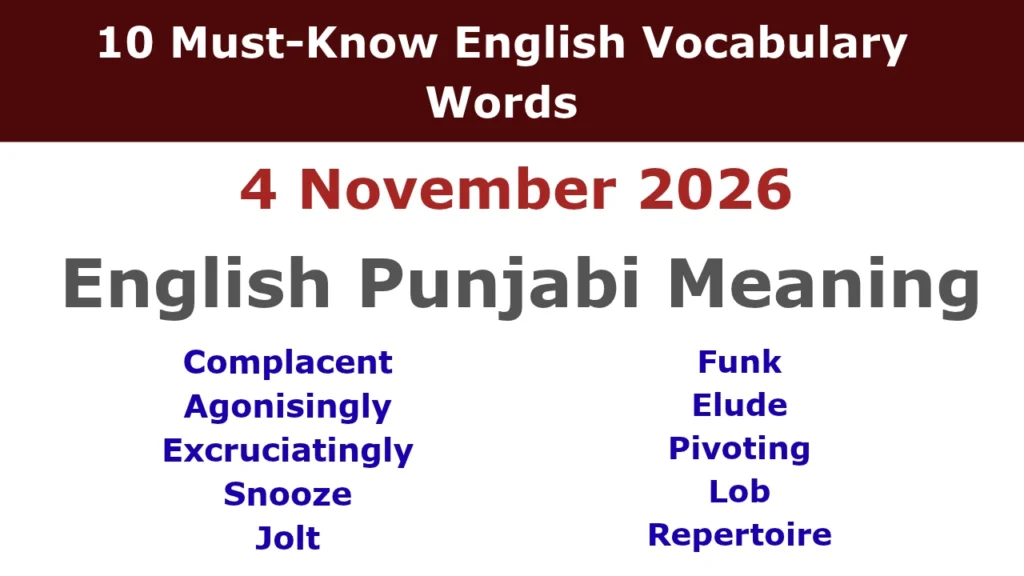
10 English Vocabulary Words (4 November 2026) Daily with Meaning in English & Punjabi
1. Complacent (ਆਤਮ-ਸੰਤੁਸ਼ਟ, ਸਵੈ-ਪ੍ਰਸੰਨ, ਬੇਫ਼ਿਕਰ)
The vocabulary word ‘Complacent’ is an Adjective. It means showing smug or uncritical satisfaction with oneself or one’s achievements, often without awareness of potential dangers or problems. It can also describe a person who is overly self-satisfied and unconcerned about future challenges.
In English, complacent is commonly used in contexts related to self-assessment, business performance, political leadership, personal growth, academic progress, and competitive exam preparation. It can also be used for describing a society or organization that has stopped striving for improvement.
In Punjabi, ‘Complacent’ meaning is: ਆਤਮ-ਸੰਤੁਸ਼ਟ, ਸਵੈ-ਪ੍ਰਸੰਨ, ਬੇਫ਼ਿਕਰ।
Contextual Example
Now, understand the vocabulary word “Complacent” with the sentence:
- e.g. After winning the first match, the team became complacent and lost the next three games.
ਪਹਿਲਾ ਮੈਚ ਜਿੱਤਣ ਤੋਂ ਬਾਅਦ, ਟੀਮ ਆਤਮ-ਸੰਤੁਸ਼ਟ (complacent) ਹੋ ਗਈ ਅਤੇ ਅਗਲੇ ਤਿੰਨ ਮੈਚ ਹਾਰ ਗਈ।
So, in the above sentence the contextual meaning of the vocabulary word ‘Complacent’ is “ਬੇਲੋੜੀ ਸਵੈ-ਪ੍ਰਸੰਨਤਾ ਕਾਰਨ ਸੁਧਾਰ ਦੀ ਕੋਸ਼ਿਸ਼ ਛੱਡ ਦੇਣਾ”।
ਉਪਰੋਕਤ ਵਾਕ ਵਿੱਚ ‘Complacent’ ਸ਼ਬਦ ਦਾ ਸੰਦਰਭਗਤ ਅਰਥ ‘ਇੱਕ ਵਾਰ ਸਫ਼ਲਤਾ ਮਿਲਣ ਤੋਂ ਬਾਅਦ ਆਪਣੇ ਆਪ ਨਾਲ ਬਹੁਤ ਜ਼ਿਆਦਾ ਖੁਸ਼ ਹੋ ਕੇ ਅੱਗੇ ਮਿਹਨਤ ਕਰਨਾ ਛੱਡ ਦੇਣਾ’ ਹੈ।
Passage Guide (ਸੰਦਰਭਗਤ ਅਰਥ)
ਜਦੋਂ ਵੀ Complacent ਸ਼ਬਦ ਕਿਸੇ passage ਵਿੱਚ ਆਵੇ:
- ਜੇ ਗੱਲ ਆਪਣੀ ਸਫ਼ਲਤਾ ‘ਤੇ ਖੁਸ਼ ਹੋਣ ਦੀ ਹੋਵੇ, ਤਾਂ complacent = ਆਤਮ-ਸੰਤੁਸ਼ਟ
- ਜੇ ਗੱਲ ਖ਼ਤਰਿਆਂ ਤੋਂ ਬੇਖ਼ਬਰ ਰਹਿਣ ਦੀ ਹੋਵੇ, ਤਾਂ complacent = ਬੇਫ਼ਿਕਰ
- ਜੇ ਗੱਲ ਸੁਧਾਰ ਦੀ ਕੋਸ਼ਿਸ਼ ਨਾ ਕਰਨ ਦੀ ਹੋਵੇ, ਤਾਂ complacent = ਸਵੈ-ਪ੍ਰਸੰਨ
- ਜੇ ਗੱਲ ਸੰਗਠਨ ਜਾਂ ਸਰਕਾਰ ਦੀ ਹੋਵੇ, ਤਾਂ complacent = ਨਿਸ਼ਚਿੰਤ ਅਤੇ ਸੁਸਤ
- ਜੇ ਗੱਲ ਵਿਅਕਤੀਗਤ ਰਵੱਈਏ ਦੀ ਹੋਵੇ, ਤਾਂ complacent = ਹੰਕਾਰੀ ਅਤੇ ਅਲਾਰਮ ਨਾ ਮੰਨਣ ਵਾਲਾ
Exam Tip
Complacent, Content, Satisfied, ਅਤੇ Smug ਵਿੱਚ ਫ਼ਰਕ ਯਾਦ ਰੱਖੋ:
- Complacent = ਬੇਲੋੜੀ ਸਵੈ-ਪ੍ਰਸੰਨਤਾ ਜਿਸ ਵਿੱਚ ਖ਼ਤਰਿਆਂ ਦੀ ਪਛਾਣ ਨਹੀਂ ਹੁੰਦੀ
- Content = ਸੰਤੁਸ਼ਟ, ਜੋ ਸਕਾਰਾਤਮਕ ਅਰਥ ਵਿੱਚ ਵਰਤਿਆ ਜਾਂਦਾ ਹੈ
- Satisfied = ਖੁਸ਼ ਜਾਂ ਪੂਰਾ ਹੋਇਆ, ਜੋ ਆਮ ਤੌਰ ‘ਤੇ ਸਕਾਰਾਤਮਕ ਹੁੰਦਾ ਹੈ
- Smug = ਹੰਕਾਰੀ ਖੁਸ਼ੀ, ਜਿਸ ਵਿੱਚ ਦੂਜਿਆਂ ਨੂੰ ਹੇਠਾਂ ਦਿਖਾਉਣ ਦੀ ਭਾਵਨਾ ਹੁੰਦੀ ਹੈ
Common Phrases
- Complacent attitude = ਆਤਮ-ਸੰਤੁਸ਼ਟ ਰਵੱਈਆ
- Grow complacent = ਆਤਮ-ਸੰਤੁਸ਼ਟ ਹੋ ਜਾਣਾ
- Complacent about the future = ਭਵਿੱਖ ਬਾਰੇ ਬੇਫ਼ਿਕਰ
- Become complacent with success = ਸਫ਼ਲਤਾ ਨਾਲ ਆਤਮ-ਪ੍ਰਸੰਨ ਹੋਣਾ
- Warned against complacency = ਆਤਮ-ਸੰਤੁਸ਼ਟੀ ਤੋਂ ਸਾਵਧਾਨ ਕੀਤਾ
Examples
- The government cannot afford to be complacent about rising inflation.
ਮਹਿੰਗਾਈ ਵਧਣ ਬਾਰੇ ਸਰਕਾਰ ਆਤਮ-ਸੰਤੁਸ਼ਟ (complacent) ਨਹੀਂ ਹੋ ਸਕਦੀ। - A complacent student rarely scores high marks in competitive exams.
ਆਤਮ-ਸੰਤੁਸ਼ਟ (complacent) ਵਿਦਿਆਰਥੀ ਪ੍ਰਤੀਯੋਗੀ ਪ੍ਰੀਖਿਆਵਾਂ ਵਿੱਚ ਸ਼ਾਇਦ ਹੀ ਉੱਚੇ ਅੰਕ ਪ੍ਰਾਪਤ ਕਰਦਾ ਹੈ। - His complacent smile showed he had no idea of the trouble ahead.
ਉਸਦੀ ਸਵੈ-ਪ੍ਰਸੰਨ ਮੁਸਕਰਾਹਟ ਦੱਸ ਰਹੀ ਸੀ ਕਿ ਉਸਨੂੰ ਅੱਗੇ ਆਉਣ ਵਾਲੀ ਮੁਸ਼ਕਲ ਦਾ ਕੋਈ ਅੰਦਾਜ਼ਾ ਨਹੀਂ ਸੀ।
Synonyms
Smug (ਹੰਕਾਰੀ), Self-satisfied (ਸਵੈ-ਪ੍ਰਸੰਨ), Unconcerned (ਬੇਫ਼ਿਕਰ), Indifferent (ਲਾਪਰਵਾਹ), Supine (ਸੁਸਤ)
Antonyms
Anxious (ਚਿੰਤਤ), Vigilant (ਸਾਵਧਾਨ), Concerned (ਫ਼ਿਕਰਮੰਦ), Alert (ਚੌਕਸ), Dissatisfied (ਨਾਰਾਜ਼)
2. Agonisingly (ਬੇਹੱਦ ਪੀੜਦਾਇਕ ਢੰਗ ਨਾਲ, ਅਸਹਿਣਯੋਗ ਤੌਰ ‘ਤੇ, ਦੁੱਖਦਾਈ ਢੰਗ ਨਾਲ)
The vocabulary word ‘Agonisingly’ is an Adverb. It means in a way that causes extreme physical or mental pain, suffering, or distress. It can also describe something that is extremely difficult, slow, or emotionally painful to experience.
In English, agonisingly is commonly used in contexts related to physical pain, emotional grief, slow progress, difficult decisions, awkward silences, and prolonged waiting. It can also be used for describing situations that test one’s patience or endurance.
In Punjabi, ‘Agonisingly’ meaning is: ਬੇਹੱਦ ਪੀੜਦਾਇਕ ਢੰਗ ਨਾਲ, ਅਸਹਿਣਯੋਗ ਤੌਰ ‘ਤੇ, ਦੁੱਖਦਾਈ ਢੰਗ ਨਾਲ।
Contextual Example
Now, understand the vocabulary word “Agonisingly” with the sentence:
- e.g. The injured soldier waited agonisingly for help to arrive.
ਜ਼ਖ਼ਮੀ ਸਿਪਾਹੀ ਮਦਦ ਆਉਣ ਦੀ ਉਡੀਕ ਬੇਹੱਦ ਪੀੜਦਾਇਕ ਢੰਗ ਨਾਲ (agonisingly) ਕਰ ਰਿਹਾ ਸੀ।
So, in the above sentence the contextual meaning of the vocabulary word ‘Agonisingly’ is “ਬਹੁਤ ਜ਼ਿਆਦਾ ਦਰਦ ਅਤੇ ਬੇਚੈਨੀ ਨਾਲ”।
ਉਪਰੋਕਤ ਵਾਕ ਵਿੱਚ ‘Agonisingly’ ਸ਼ਬਦ ਦਾ ਸੰਦਰਭਗਤ ਅਰਥ ‘ਸਰੀਰਕ ਜਾਂ ਮਾਨਸਿਕ ਪੀੜਾ ਦੇ ਕਾਰਨ ਬਹੁਤ ਹੀ ਦੁੱਖ ਭਰੇ ਅਤੇ ਬੇਚੈਨੀ ਵਾਲੇ ਢੰਗ ਨਾਲ’ ਹੈ।
Passage Guide (ਸੰਦਰਭਗਤ ਅਰਥ)
ਜਦੋਂ ਵੀ Agonisingly ਸ਼ਬਦ ਕਿਸੇ passage ਵਿੱਚ ਆਵੇ:
- ਜੇ ਗੱਲ ਸਰੀਰਕ ਦਰਦ ਦੀ ਹੋਵੇ, ਤਾਂ agonisingly = ਬੇਹੱਦ ਦਰਦਨਾਕ ਢੰਗ ਨਾਲ
- ਜੇ ਗੱਲ ਮਾਨਸਿਕ ਪੀੜਾ ਦੀ ਹੋਵੇ, ਤਾਂ agonisingly = ਦੁੱਖਦਾਈ ਤੌਰ ‘ਤੇ
- ਜੇ ਗੱਲ ਹੌਲੀ ਪ੍ਰਗਤੀ ਦੀ ਹੋਵੇ, ਤਾਂ agonisingly = ਬਹੁਤ ਹੀ ਹੌਲੀ ਅਤੇ ਤਕਲੀਫ਼ਦੇਹ ਢੰਗ ਨਾਲ
- ਜੇ ਗੱਲ ਫ਼ੈਸਲੇ ਲੈਣ ਦੀ ਹੋਵੇ, ਤਾਂ agonisingly = ਬਹੁਤ ਹੀ ਮੁਸ਼ਕਲ ਅਤੇ ਦੁਖਦਾਈ ਢੰਗ ਨਾਲ
- ਜੇ ਗੱਲ ਉਡੀਕ ਦੀ ਹੋਵੇ, ਤਾਂ agonisingly = ਬੇਚੈਨੀ ਨਾਲ ਭਰੀ ਉਡੀਕ ਵਿੱਚ
Exam Tip
Agonisingly, Excruciatingly, Painfully, ਅਤੇ Acutely ਵਿੱਚ ਫ਼ਰਕ ਯਾਦ ਰੱਖੋ:
- Agonisingly = ਮਾਨਸਿਕ ਜਾਂ ਸਰੀਰਕ ਪੀੜਾ ਨਾਲ ਭਰਿਆ ਹੋਇਆ
- Excruciatingly = ਅਸਹਿਣਯੋਗ ਹੱਦ ਤੱਕ ਤੀਬਰ ਦਰਦ
- Painfully = ਦਰਦ ਨਾਲ, ਪਰ ਥੋੜ੍ਹੀ ਹਲਕੀ ਤੀਬਰਤਾ ਵਿੱਚ
- Acutely = ਤੀਬਰਤਾ ਨਾਲ, ਜੋ ਧਿਆਨ ਖਿੱਚਣ ਵਾਲੀ ਹੋਵੇ
Common Phrases
- Agonisingly slow = ਬਹੁਤ ਹੀ ਹੌਲੀ
- Agonisingly painful = ਬੇਹੱਦ ਦਰਦਨਾਕ
- Agonisingly difficult decision = ਬਹੁਤ ਹੀ ਮੁਸ਼ਕਲ ਫ਼ੈਸਲਾ
- Wait agonisingly = ਬੇਚੈਨੀ ਨਾਲ ਉਡੀਕ ਕਰਨਾ
- Agonisingly long hours = ਬਹੁਤ ਹੀ ਲੰਮੇ ਥਕਾਊ ਘੰਟੇ
Examples
- The minutes passed agonisingly as the results were being announced.
ਨਤੀਜੇ ਘੋਸ਼ਿਤ ਹੋਣ ਸਮੇਂ ਮਿੰਟ ਬੇਹੱਦ ਪੀੜਦਾਇਕ ਢੰਗ ਨਾਲ (agonisingly) ਬੀਤ ਰਹੇ ਸਨ। - She smiled agonisingly through her tears during the farewell.
ਉਹ ਵਿਦਾਈ ਸਮੇਂ ਆਪਣੇ ਹੰਝੂਆਂ ਵਿਚਕਾਰ ਦੁੱਖਦਾਈ ਢੰਗ ਨਾਲ (agonisingly) ਮੁਸਕਰਾਈ। - The truth emerged agonisingly slowly over several years.
ਸੱਚ ਕਈ ਸਾਲਾਂ ਦੌਰਾਨ ਬਹੁਤ ਹੀ ਹੌਲੀ ਅਤੇ ਤਕਲੀਫ਼ਦੇਹ ਢੰਗ ਨਾਲ (agonisingly) ਸਾਹਮਣੇ ਆਇਆ।
Synonyms
Excruciatingly (ਅਸਹਿਣਯੋਗ ਤੌਰ ‘ਤੇ), Painfully (ਦਰਦਨਾਕ ਢੰਗ ਨਾਲ), Torturously (ਪੀੜਾਦਾਇਕ ਤੌਰ ‘ਤੇ), Harrowingly (ਦਹਿਸ਼ਤਨਾਕ ਢੰਗ ਨਾਲ), Miserably (ਦੁਖੀ ਢੰਗ ਨਾਲ)
Antonyms
Comfortably (ਆਰਾਮਦਾਇਕ ਢੰਗ ਨਾਲ), Pleasantly (ਸੁਹਾਵਣੇ ਢੰਗ ਨਾਲ), Effortlessly (ਬਿਨਾ ਮਿਹਨਤ), Smoothly (ਸਹਿਜ ਢੰਗ ਨਾਲ), Joyfully (ਖੁਸ਼ੀ ਨਾਲ)
3. Excruciatingly (ਅਸਹਿਣਯੋਗ ਤੌਰ ‘ਤੇ, ਬੇਹੱਦ ਤੀਬਰਤਾ ਨਾਲ, ਬਹੁਤ ਹੀ ਦਰਦਨਾਕ ਢੰਗ ਨਾਲ)
The vocabulary word ‘Excruciatingly’ is an Adverb. It means in a way that is unbearably painful, intense, or distressing, often to an extreme degree. It can also describe something that is extremely difficult to endure physically or mentally.
In English, excruciatingly is commonly used in contexts related to physical agony, emotional heartbreak, embarrassment, awkwardness, extreme heat or cold, and tedious tasks. It can also be used for situations that push one’s tolerance to the limit.
In Punjabi, ‘Excruciatingly’ meaning is: ਅਸਹਿਣਯੋਗ ਤੌਰ ‘ਤੇ, ਬੇਹੱਦ ਤੀਬਰਤਾ ਨਾਲ, ਬਹੁਤ ਹੀ ਦਰਦਨਾਕ ਢੰਗ ਨਾਲ।
Contextual Example
Now, understand the vocabulary word “Excruciatingly” with the sentence:
- e.g. The patient was in excruciatingly painful condition after the accident.
ਹਾਦਸੇ ਤੋਂ ਬਾਅਦ ਮਰੀਜ਼ ਅਸਹਿਣਯੋਗ ਤੌਰ ‘ਤੇ (excruciatingly) ਦਰਦਨਾਕ ਹਾਲਤ ਵਿੱਚ ਸੀ।
So, in the above sentence the contextual meaning of the vocabulary word ‘Excruciatingly’ is “ਬਰਦਾਸ਼ਤ ਤੋਂ ਬਾਹਰ ਤੀਬਰ ਦਰਦ ਨਾਲ”।
ਉਪਰੋਕਤ ਵਾਕ ਵਿੱਚ ‘Excruciatingly’ ਸ਼ਬਦ ਦਾ ਸੰਦਰਭਗਤ ਅਰਥ ‘ਅਜਿਹੀ ਹੱਦ ਤੱਕ ਤੀਬਰ ਜੋ ਬਰਦਾਸ਼ਤ ਕਰਨਾ ਲਗਭਗ ਅਸੰਭਵ ਹੋਵੇ’ ਹੈ।
Passage Guide (ਸੰਦਰਭਗਤ ਅਰਥ)
ਜਦੋਂ ਵੀ Excruciatingly ਸ਼ਬਦ ਕਿਸੇ passage ਵਿੱਚ ਆਵੇ:
- ਜੇ ਗੱਲ ਸਰੀਰਕ ਦਰਦ ਦੀ ਹੋਵੇ, ਤਾਂ excruciatingly = ਅਸਹਿਣਯੋਗ ਤੀਬਰਤਾ ਨਾਲ
- ਜੇ ਗੱਲ ਸ਼ਰਮਿੰਦਗੀ ਦੀ ਹੋਵੇ, ਤਾਂ excruciatingly = ਬਹੁਤ ਹੀ ਸ਼ਰਮਨਾਕ ਢੰਗ ਨਾਲ
- ਜੇ ਗੱਲ ਉਡੀਕ ਜਾਂ ਦੇਰੀ ਦੀ ਹੋਵੇ, ਤਾਂ excruciatingly = ਬਰਦਾਸ਼ਤ ਤੋਂ ਬਾਹਰ ਹੌਲੀ
- ਜੇ ਗੱਲ ਗਰਮੀ ਜਾਂ ਠੰਢ ਦੀ ਹੋਵੇ, ਤਾਂ excruciatingly = ਬੇਹੱਦ ਤੀਬਰ
- ਜੇ ਗੱਲ ਮਾਨਸਿਕ ਪੀੜਾ ਦੀ ਹੋਵੇ, ਤਾਂ excruciatingly = ਦਿਲ ਨੂੰ ਝੰਜੋੜ ਦੇਣ ਵਾਲੇ ਢੰਗ ਨਾਲ
Exam Tip
Excruciatingly, Agonisingly, Intensely, ਅਤੇ Severely ਵਿੱਚ ਫ਼ਰਕ ਯਾਦ ਰੱਖੋ:
- Excruciatingly = ਬਰਦਾਸ਼ਤ ਤੋਂ ਬਾਹਰ ਤੀਬਰਤਾ, ਅਕਸਰ ਦਰਦ ਲਈ
- Agonisingly = ਪੀੜਾਦਾਇਕ, ਭਾਵੇਂ ਸਰੀਰਕ ਜਾਂ ਮਾਨਸਿਕ
- Intensely = ਤੀਬਰਤਾ ਨਾਲ, ਪਰ ਹਮੇਸ਼ਾ ਦਰਦ ਨਹੀਂ
- Severely = ਗੰਭੀਰਤਾ ਨਾਲ, ਜੋ ਸਖ਼ਤ ਹੋਵੇ
Common Phrases
- Excruciatingly painful = ਅਸਹਿਣਯੋਗ ਦਰਦ
- Excruciatingly embarrassing = ਬਹੁਤ ਹੀ ਸ਼ਰਮਨਾਕ
- Excruciatingly slow = ਬਰਦਾਸ਼ਤ ਤੋਂ ਬਾਹਰ ਹੌਲੀ
- Excruciatingly hot day = ਬੇਹੱਦ ਗਰਮ ਦਿਨ
- Excruciatingly detailed = ਬਹੁਤ ਹੀ ਵਿਸਤ੍ਰਿਤ
Examples
- His back was in excruciatingly painful condition after the fall.
ਡਿੱਗਣ ਤੋਂ ਬਾਅਦ ਉਸਦੀ ਪਿੱਠ ਅਸਹਿਣਯੋਗ ਤੌਰ ‘ਤੇ (excruciatingly) ਦਰਦਨਾਕ ਸੀ। - The silence in the room was excruciatingly awkward.
ਕਮਰੇ ਵਿੱਚ ਚੁੱਪ ਬਹੁਤ ਹੀ ਸ਼ਰਮਨਾਕ (excruciatingly) ਸੀ। - She waited excruciatingly long for the interview results.
ਉਸਨੇ ਇੰਟਰਵਿਊ ਦੇ ਨਤੀਜਿਆਂ ਲਈ ਬਰਦਾਸ਼ਤ ਤੋਂ ਬਾਹਰ ਲੰਮੀ (excruciatingly) ਉਡੀਕ ਕੀਤੀ।
Synonyms
Agonisingly (ਪੀੜਦਾਇਕ ਢੰਗ ਨਾਲ), Intensely (ਤੀਬਰਤਾ ਨਾਲ), Severely (ਗੰਭੀਰਤਾ ਨਾਲ), Torturously (ਪੀੜਾਦਾਇਕ ਤੌਰ ‘ਤੇ), Unbearably (ਬਰਦਾਸ਼ਤ ਤੋਂ ਬਾਹਰ)
Antonyms
Comfortably (ਆਰਾਮਦਾਇਕ ਢੰਗ ਨਾਲ), Mildly (ਹਲਕੇ ਢੰਗ ਨਾਲ), Pleasantly (ਸੁਹਾਵਣੇ ਢੰਗ ਨਾਲ), Effortlessly (ਬਿਨਾ ਮਿਹਨਤ), Gently (ਕੋਮਲਤਾ ਨਾਲ)
4. Snooze (ਝਪਕੀ, ਨੀਂਦ, ਹਲਕੀ ਉਂਘ)
The vocabulary word ‘Snooze’ is a Verb and Noun. It means to sleep lightly for a short period of time, especially during the day. It can also refer to a brief, light nap taken to refresh oneself.
In English, snooze is commonly used in contexts related to daily routines, alarm clocks, afternoon rest, lazy weekends, elderly habits, and casual conversations. It can also be used for describing a short period of inattention or boredom.
In Punjabi, ‘Snooze’ meaning is: ਝਪਕੀ, ਨੀਂਦ, ਹਲਕੀ ਉਂਘ।
Contextual Example
Now, understand the vocabulary word “Snooze” with the sentence:
- e.g. He decided to snooze for twenty minutes after lunch.
ਉਸਨੇ ਦੁਪਹਿਰ ਦੇ ਖਾਣੇ ਤੋਂ ਬਾਅਦ ਵੀਹ ਮਿੰਟ ਦੀ ਝਪਕੀ (snooze) ਲੈਣ ਦਾ ਫ਼ੈਸਲਾ ਕੀਤਾ।
So, in the above sentence the contextual meaning of the vocabulary word ‘Snooze’ is “ਥੋੜ੍ਹੇ ਸਮੇਂ ਲਈ ਹਲਕੀ ਨੀਂਦ ਲੈਣਾ”।
ਉਪਰੋਕਤ ਵਾਕ ਵਿੱਚ ‘Snooze’ ਸ਼ਬਦ ਦਾ ਸੰਦਰਭਗਤ ਅਰਥ ‘ਦਿਨ ਵਿੱਚ ਥੋੜ੍ਹੇ ਸਮੇਂ ਲਈ ਹਲਕੀ ਜਿਹੀ ਨੀਂਦ ਲੈ ਕੇ ਆਰਾਮ ਕਰਨਾ’ ਹੈ।
Passage Guide (ਸੰਦਰਭਗਤ ਅਰਥ)
ਜਦੋਂ ਵੀ Snooze ਸ਼ਬਦ ਕਿਸੇ passage ਵਿੱਚ ਆਵੇ:
- ਜੇ ਗੱਲ ਦੁਪਹਿਰ ਦੇ ਆਰਾਮ ਦੀ ਹੋਵੇ, ਤਾਂ snooze = ਝਪਕੀ
- ਜੇ ਗੱਲ ਅਲਾਰਮ ਦੀ ਹੋਵੇ, ਤਾਂ snooze = ਅਲਾਰਮ ਬੰਦ ਕਰਕੇ ਫਿਰ ਸੌਂ ਜਾਣਾ
- ਜੇ ਗੱਲ ਬੋਰੀਅਤ ਦੀ ਹੋਵੇ, ਤਾਂ snooze = ਉਂਘ ਆਉਣਾ
- ਜੇ ਗੱਲ ਬੁਢਾਪੇ ਦੀ ਹੋਵੇ, ਤਾਂ snooze = ਹਲਕੀ ਉਂਘ
- ਜੇ ਗੱਲ ਕੰਮ ਤੋਂ ਛੁੱਟੀ ਦੀ ਹੋਵੇ, ਤਾਂ snooze = ਆਰਾਮਦਾਇਕ ਨੀਂਦ
Exam Tip
Snooze, Nap, Doze, ਅਤੇ Slumber ਵਿੱਚ ਫ਼ਰਕ ਯਾਦ ਰੱਖੋ:
- Snooze = ਦਿਨ ਵਿੱਚ ਲਈ ਗਈ ਛੋਟੀ ਝਪਕੀ
- Nap = ਆਮ ਤੌਰ ‘ਤੇ ਦੁਪਹਿਰ ਦੀ ਛੋਟੀ ਨੀਂਦ
- Doze = ਅਣਜਾਣੇ ਵਿੱਚ ਹਲਕੀ ਨੀਂਦ ਆ ਜਾਣਾ
- Slumber = ਡੂੰਘੀ ਅਤੇ ਸ਼ਾਂਤ ਨੀਂਦ
Common Phrases
- Hit the snooze button = ਅਲਾਰਮ ਦੀ ਸਨੂਜ਼ ਬਟਨ ਦਬਾਉਣਾ
- Take a quick snooze = ਜਲਦੀ ਝਪਕੀ ਲੈਣਾ
- Snooze through the lecture = ਲੈਕਚਰ ਦੌਰਾਨ ਉਂਘ ਜਾਣਾ
- Afternoon snooze = ਦੁਪਹਿਰ ਦੀ ਝਪਕੀ
- Forty winks snooze = ਥੋੜ੍ਹੀ ਜਿਹੀ ਉਂਘ
Examples
- Grandfather loves to snooze in his favourite chair after dinner.
ਦਾਦਾ ਜੀ ਰਾਤ ਦੇ ਖਾਣੇ ਤੋਂ ਬਾਅਦ ਆਪਣੀ ਪਸੰਦੀਦਾ ਕੁਰਸੀ ਵਿੱਚ ਝਪਕੀ (snooze) ਲੈਣਾ ਪਸੰਦ ਕਰਦੇ ਹਨ। - I hit the snooze button three times this morning.
ਅੱਜ ਸਵੇਰੇ ਮੈਂ ਤਿੰਨ ਵਾਰ ਅਲਾਰਮ ਦੀ ਸਨੂਜ਼ ਬਟਨ (snooze) ਦਬਾਈ। - The boring movie made half the audience snooze.
ਬੋਰਿੰਗ ਫ਼ਿਲਮ ਨੇ ਅੱਧੇ ਦਰਸ਼ਕਾਂ ਨੂੰ ਉਂਘ (snooze) ਵਿੱਚ ਲਿਜਾ ਲਿਆ।
Synonyms
Nap (ਝਪਕੀ), Doze (ਉਂਘ), Slumber (ਨੀਂਦ), Rest (ਆਰਾਮ), Catnap (ਛੋਟੀ ਨੀਂਦ)
Antonyms
Awake (ਜਾਗਦੇ), Alert (ਚੌਕਸ), Vigilant (ਸਾਵਧਾਨ), Wakeful (ਜਾਗਰੂਕ), Active (ਸਰਗਰਮ)
5. Jolt (ਝਟਕਾ, ਧੱਕਾ, ਅਚਾਨਕ ਸਦਮਾ)
The vocabulary word ‘Jolt’ is a Noun and Verb. It means a sudden, strong shock or shake, either physical or emotional. It can also mean to disturb or unsettle someone suddenly with unexpected news or an event.
In English, jolt is commonly used in contexts related to vehicles, earthquakes, shocking news, emotional surprises, political events, and sudden changes in plans. It can also be used for describing a wake-up call to a person or organization.
In Punjabi, ‘Jolt’ meaning is: ਝਟਕਾ, ਧੱਕਾ, ਅਚਾਨਕ ਸਦਮਾ।
Contextual Example
Now, understand the vocabulary word “Jolt” with the sentence:
- e.g. The sudden rise in petrol prices gave a jolt to the common man.
ਪੈਟਰੋਲ ਦੀਆਂ ਕੀਮਤਾਂ ਵਿੱਚ ਅਚਾਨਕ ਵਾਧੇ ਨੇ ਆਮ ਆਦਮੀ ਨੂੰ ਝਟਕਾ (jolt) ਦਿੱਤਾ।
So, in the above sentence the contextual meaning of the vocabulary word ‘Jolt’ is “ਅਚਾਨਕ ਲੱਗਾ ਮਾਨਸਿਕ ਜਾਂ ਆਰਥਿਕ ਸਦਮਾ”।
ਉਪਰੋਕਤ ਵਾਕ ਵਿੱਚ ‘Jolt’ ਸ਼ਬਦ ਦਾ ਸੰਦਰਭਗਤ ਅਰਥ ‘ਕਿਸੇ ਅਣੋਖੀ ਘਟਨਾ ਜਾਂ ਖ਼ਬਰ ਕਾਰਨ ਅਚਾਨਕ ਪੈਦਾ ਹੋਈ ਬੇਚੈਨੀ ਜਾਂ ਪਰੇਸ਼ਾਨੀ’ ਹੈ।
Passage Guide (ਸੰਦਰਭਗਤ ਅਰਥ)
ਜਦੋਂ ਵੀ Jolt ਸ਼ਬਦ ਕਿਸੇ passage ਵਿੱਚ ਆਵੇ:
- ਜੇ ਗੱਲ ਗੱਡੀ ਜਾਂ ਯਾਤਰਾ ਦੀ ਹੋਵੇ, ਤਾਂ jolt = ਸਰੀਰਕ ਝਟਕਾ
- ਜੇ ਗੱਲ ਭੂਚਾਲ ਦੀ ਹੋਵੇ, ਤਾਂ jolt = ਧਰਤੀ ਦਾ ਧੱਕਾ
- ਜੇ ਗੱਲ ਖ਼ਬਰਾਂ ਦੀ ਹੋਵੇ, ਤਾਂ jolt = ਮਾਨਸਿਕ ਸਦਮਾ
- ਜੇ ਗੱਲ ਰਾਜਨੀਤੀ ਦੀ ਹੋਵੇ, ਤਾਂ jolt = ਅਚਾਨਕ ਉਲਟਫ਼ੇਰ
- ਜੇ ਗੱਲ ਯੋਜਨਾ ਬਦਲਣ ਦੀ ਹੋਵੇ, ਤਾਂ jolt = ਅਚਾਨਕ ਰੁਕਾਵਟ
Exam Tip
Jolt, Shock, Shake, ਅਤੇ Jar ਵਿੱਚ ਫ਼ਰਕ ਯਾਦ ਰੱਖੋ:
- Jolt = ਅਚਾਨਕ ਅਤੇ ਤੇਜ਼ ਝਟਕਾ, ਸਰੀਰਕ ਜਾਂ ਮਾਨਸਿਕ
- Shock = ਗੰਭੀਰ ਸਦਮਾ, ਜੋ ਲੰਬੇ ਸਮੇਂ ਤੱਕ ਅਸਰ ਕਰੇ
- Shake = ਹਲਕਾ ਹਿਲਾਉਣਾ ਜਾਂ ਕੰਬਣਾ
- Jar = ਅਣਸੁਖਾਵੇਂ ਢੰਗ ਨਾਲ ਹਿਲਾਉਣਾ ਜਾਂ ਪਰੇਸ਼ਾਨ ਕਰਨਾ
Common Phrases
- Give a jolt = ਝਟਕਾ ਦੇਣਾ
- Wake up with a jolt = ਝਟਕੇ ਨਾਲ ਜਾਗਣਾ
- Emotional jolt = ਮਾਨਸਿਕ ਝਟਕਾ
- Jolt to the system = ਪ੍ਰਣਾਲੀ ਨੂੰ ਝਟਕਾ
- Jolt of electricity = ਬਿਜਲੀ ਦਾ ਝਟਕਾ
Examples
- The train came to a jolt as it hit the buffer.
ਟ੍ਰੇਨ ਨੇ ਬਫ਼ਰ ਨਾਲ ਟਕਰਾਉਣ ‘ਤੇ ਝਟਕਾ (jolt) ਖਾਧਾ। - Her sudden resignation came as a jolt to the party leaders.
ਉਸਦੇ ਅਚਾਨਕ ਅਸਤੀਫ਼ੇ ਨੇ ਪਾਰਟੀ ਆਗੂਆਂ ਨੂੰ ਝਟਕਾ (jolt) ਦਿੱਤਾ। - The earthquake jolted the entire city awake at midnight.
ਭੂਚਾਲ ਨੇ ਅੱਧੀ ਰਾਤ ਨੂੰ ਪੂਰੇ ਸ਼ਹਿਰ ਨੂੰ ਝਟਕੇ (jolt) ਨਾਲ ਜਗਾ ਦਿੱਤਾ।
Synonyms
Shock (ਸਦਮਾ), Shake (ਹਿਲਜੁਲ), Jar (ਅਣਸੁਖਾਵਾਂ ਧੱਕਾ), Bump (ਧੱਕਾ), Thrust (ਝਟਕਾ)
Antonyms
Calm (ਸ਼ਾਂਤੀ), Soothe (ਸ਼ਾਂਤ ਕਰਨਾ), Comfort (ਆਰਾਮ), Steady (ਸਥਿਰ), Gentle (ਕੋਮਲ)
6. Funk (ਡਰ, ਉਦਾਸੀ, ਘਬਰਾਹਟ)
The vocabulary word ‘Funk’ is a Noun and Verb. It means a state of fear, depression, or low spirits. It can also mean to shrink back from doing something out of fear, or in music, to refer to a genre with a strong rhythmic groove.
In English, funk is commonly used in contexts related to emotional states, music, informal conversations, fear in difficult situations, and describing someone in low spirits. It can also be used for describing a smelly or unpleasant situation in British slang.
In Punjabi, ‘Funk’ meaning is: ਡਰ, ਉਦਾਸੀ, ਘਬਰਾਹਟ।
Contextual Example
Now, understand the vocabulary word “Funk” with the sentence:
- e.g. He has been in a funk ever since he failed the exam.
ਪ੍ਰੀਖਿਆ ਵਿੱਚ ਫ਼ੇਲ੍ਹ ਹੋਣ ਤੋਂ ਬਾਅਦ ਉਹ ਉਦਾਸੀ (funk) ਵਿੱਚ ਹੈ।
So, in the above sentence the contextual meaning of the vocabulary word ‘Funk’ is “ਮਾਨਸਿਕ ਉਦਾਸੀ ਅਤੇ ਨਿਰਾਸ਼ਾ ਦੀ ਅਵਸਥਾ”।
ਉਪਰੋਕਤ ਵਾਕ ਵਿੱਚ ‘Funk’ ਸ਼ਬਦ ਦਾ ਸੰਦਰਭਗਤ ਅਰਥ ‘ਨਿਰਾਸ਼ਾ ਅਤੇ ਘੱਟ ਹੌਂਸਲੇ ਕਾਰਨ ਮਨ ਦੀ ਉਦਾਸ ਅਵਸਥਾ’ ਹੈ।
Passage Guide (ਸੰਦਰਭਗਤ ਅਰਥ)
ਜਦੋਂ ਵੀ Funk ਸ਼ਬਦ ਕਿਸੇ passage ਵਿੱਚ ਆਵੇ:
- ਜੇ ਗੱਲ ਮਾਨਸਿਕ ਉਦਾਸੀ ਦੀ ਹੋਵੇ, ਤਾਂ funk = ਉਦਾਸੀ
- ਜੇ ਗੱਲ ਡਰ ਦੀ ਹੋਵੇ, ਤਾਂ funk = ਘਬਰਾਹਟ
- ਜੇ ਗੱਲ ਸੰਗੀਤ ਦੀ ਹੋਵੇ, ਤਾਂ funk = ਫ਼ੰਕ ਸੰਗੀਤ ਸ਼ੈਲੀ
- ਜੇ ਗੱਲ ਕਿਸੇ ਕੰਮ ਤੋਂ ਡਰ ਕੇ ਪਿੱਛੇ ਹਟਣ ਦੀ ਹੋਵੇ, ਤਾਂ funk = ਡਰ ਕੇ ਬਚਣਾ
- ਜੇ ਗੱਲ ਬਦਬੂ ਦੀ ਹੋਵੇ, ਤਾਂ funk = ਤੇਜ਼ ਬਦਬੂ
Exam Tip
Funk, Fear, Depression, ਅਤੇ Anxiety ਵਿੱਚ ਫ਼ਰਕ ਯਾਦ ਰੱਖੋ:
- Funk = ਅਸਥਾਈ ਉਦਾਸੀ ਜਾਂ ਨਿਰਾਸ਼ਾ, ਅਨੌਪਚਾਰਿਕ ਸ਼ਬਦ
- Fear = ਡਰ, ਜੋ ਕਿਸੇ ਖ਼ਤਰੇ ਕਾਰਨ ਹੋਵੇ
- Depression = ਗੰਭੀਰ ਮਾਨਸਿਕ ਬਿਮਾਰੀ ਜਾਂ ਲੰਬੀ ਉਦਾਸੀ
- Anxiety = ਚਿੰਤਾ ਜਾਂ ਬੇਚੈਨੀ, ਭਵਿੱਖ ਬਾਰੇ
Common Phrases
- In a funk = ਉਦਾਸੀ ਵਿੱਚ
- Snap out of a funk = ਉਦਾਸੀ ਵਿੱਚੋਂ ਬਾਹਰ ਆਉਣਾ
- Funk out = ਡਰ ਕੇ ਪਿੱਛੇ ਹਟਣਾ
- Blue funk = ਗਹਿਰੀ ਉਦਾਸੀ
- Funk music = ਫ਼ੰਕ ਸੰਗੀਤ
Examples
- She was in a deep funk after losing her job.
ਨੌਕਰੀ ਗੁਆਉਣ ਤੋਂ ਬਾਅਦ ਉਹ ਡੂੰਘੀ ਉਦਾਸੀ (funk) ਵਿੱਚ ਸੀ। - Don’t funk out at the last moment before the interview.
ਇੰਟਰਵਿਊ ਤੋਂ ਠੀਕ ਪਹਿਲਾਂ ਡਰ ਕੇ ਪਿੱਛੇ (funk) ਨਾ ਹਟੋ। - The room had a strange funk that no one could explain.
ਕਮਰੇ ਵਿੱਚ ਇੱਕ ਅਜੀਬ ਬਦਬੂ (funk) ਸੀ ਜਿਸਦੀ ਕੋਈ ਵਿਆਖਿਆ ਨਹੀਂ ਸੀ।
Synonyms
Gloom (ਉਦਾਸੀ), Depression (ਨਿਰਾਸ਼ਾ), Dread (ਡਰ), Melancholy (ਮਾਯੂਸੀ), Slump (ਮੰਦੀ)
Antonyms
Cheer (ਖੁਸ਼ੀ), Joy (ਅਨੰਦ), Optimism (ਆਸ਼ਾਵਾਦ), Confidence (ਭਰੋਸਾ), Elation (ਉਤਸਾਹ)
7. Elude (ਬਚ ਨਿਕਲਣਾ, ਸਮਝ ਨਾ ਆਉਣਾ, ਝਾਂਸਾ ਦੇਣਾ)
The vocabulary word ‘Elude’ is a Verb. It means to escape from or avoid someone or something, typically in a skilful or cunning way. It can also mean to fail to be grasped or remembered by someone, as in a thought or name.
In English, elude is commonly used in contexts related to escaping from police or enemies, avoiding capture, forgetting names or answers, difficult concepts in studies, and competitive situations. It can also be used for describing something that remains out of reach despite efforts.
In Punjabi, ‘Elude’ meaning is: ਬਚ ਨਿਕਲਣਾ, ਸਮਝ ਨਾ ਆਉਣਾ, ਝਾਂਸਾ ਦੇਣਾ।
Contextual Example
Now, understand the vocabulary word “Elude” with the sentence:
- e.g. The thief managed to elude the police for several hours.
ਚੋਰ ਕਈ ਘੰਟਿਆਂ ਤੱਕ ਪੁਲਿਸ ਤੋਂ ਬਚ ਨਿਕਲਣ (elude) ਵਿੱਚ ਕਾਮਯਾਬ ਰਿਹਾ।
So, in the above sentence the contextual meaning of the vocabulary word ‘Elude’ is “ਚਾਲਾਕੀ ਨਾਲ ਫੜੇ ਜਾਣ ਤੋਂ ਬਚਣਾ”।
ਉਪਰੋਕਤ ਵਾਕ ਵਿੱਚ ‘Elude’ ਸ਼ਬਦ ਦਾ ਸੰਦਰਭਗਤ ਅਰਥ ‘ਧੋਖੇ ਜਾਂ ਚਤੁਰਾਈ ਨਾਲ ਕਿਸੇ ਦੀ ਗ੍ਰਿੱਫ਼ਤ ਵਿੱਚ ਆਉਣ ਤੋਂ ਬਚ ਜਾਣਾ’ ਹੈ।
Passage Guide (ਸੰਦਰਭਗਤ ਅਰਥ)
ਜਦੋਂ ਵੀ Elude ਸ਼ਬਦ ਕਿਸੇ passage ਵਿੱਚ ਆਵੇ:
- ਜੇ ਗੱਲ ਭੱਜਣ ਦੀ ਹੋਵੇ, ਤਾਂ elude = ਬਚ ਨਿਕਲਣਾ
- ਜੇ ਗੱਲ ਯਾਦ ਨਾ ਆਉਣ ਦੀ ਹੋਵੇ, ਤਾਂ elude = ਯਾਦ ਨਾ ਆਉਣਾ
- ਜੇ ਗੱਲ ਸਮਝ ਨਾ ਆਉਣ ਦੀ ਹੋਵੇ, ਤਾਂ elude = ਸਮਝ ਤੋਂ ਬਾਹਰ ਹੋਣਾ
- ਜੇ ਗੱਲ ਸਫ਼ਲਤਾ ਦੀ ਹੋਵੇ, ਤਾਂ elude = ਹੱਥ ਨਾ ਆਉਣਾ
- ਜੇ ਗੱਲ ਜਵਾਬ ਦੀ ਹੋਵੇ, ਤਾਂ elude = ਜਵਾਬ ਨਾ ਮਿਲਣਾ
Exam Tip
Elude, Evade, Avoid, ਅਤੇ Escape ਵਿੱਚ ਫ਼ਰਕ ਯਾਦ ਰੱਖੋ:
- Elude = ਚਾਲਾਕੀ ਨਾਲ ਬਚ ਨਿਕਲਣਾ, ਸਮਝ ਤੋਂ ਬਾਹਰ ਹੋਣਾ
- Evade = ਸਵਾਲ ਜਾਂ ਜ਼ਿੰਮੇਵਾਰੀ ਤੋਂ ਧੋਖੇ ਨਾਲ ਬਚਣਾ
- Avoid = ਜਾਣ-ਬੁੱਝ ਕੇ ਦੂਰ ਰਹਿਣਾ
- Escape = ਕਿਸੇ ਖ਼ਤਰੇ ਜਾਂ ਬੰਦੀ ਤੋਂ ਮੁਕਤ ਹੋਣਾ
Common Phrases
- Elude capture = ਗ੍ਰਿਫ਼ਤ ਤੋਂ ਬਚਣਾ
- Elude the police = ਪੁਲਿਸ ਤੋਂ ਬਚ ਨਿਕਲਣਾ
- Elude memory = ਯਾਦ ਨਾ ਆਉਣਾ
- Elude understanding = ਸਮਝ ਤੋਂ ਬਾਹਰ ਹੋਣਾ
- Victory eluded them = ਜਿੱਤ ਉਨ੍ਹਾਂ ਦੇ ਹੱਥ ਨਾ ਆਈ
Examples
- The answer to this question eludes even the brightest students.
ਇਸ ਸਵਾਲ ਦਾ ਜਵਾਬ ਸਭ ਤੋਂ ਹੁਸ਼ਿਆਰ ਵਿਦਿਆਰਥੀਆਂ ਨੂੰ ਵੀ ਸਮਝ (elude) ਨਹੀਂ ਆਉਂਦਾ। - The suspect managed to elude the detectives at the airport.
ਸ਼ੱਕੀ ਵਿਅਕਤੀ ਹਵਾਈ ਅੱਡੇ ‘ਤੇ ਜਾਂਚਕਰਤਾਵਾਂ ਤੋਂ ਬਚ ਨਿਕਲਣ (elude) ਵਿੱਚ ਕਾਮਯਾਬ ਰਿਹਾ। - Success has eluded the team for three consecutive seasons.
ਲਗਾਤਾਰ ਤਿੰਨ ਸੀਜ਼ਨਾਂ ਤੋਂ ਜਿੱਤ ਟੀਮ ਦੇ ਹੱਥੋਂ ਬਚ (elude) ਨਿਕਲੀ ਹੈ।
Synonyms
Evade (ਬਚਣਾ), Escape (ਭੱਜਣਾ), Avoid (ਦੂਰ ਰਹਿਣਾ), Dodge (ਬਚ ਕੇ ਨਿਕਲਣਾ), Slip away (ਖਿਸਕ ਜਾਣਾ)
Antonyms
Confront (ਸਾਹਮਣਾ ਕਰਨਾ), Face (ਮੁਕਾਬਲਾ ਕਰਨਾ), Catch (ਫੜਨਾ), Meet (ਮਿਲਣਾ), Remember (ਯਾਦ ਕਰਨਾ)
8. Pivoting (ਮੁੜਨਾ, ਕੇਂਦਰੀ ਬਦਲਾਅ ਲਿਆਉਣਾ, ਧੁਰੇ ‘ਤੇ ਘੁੰਮਣਾ)
The vocabulary word ‘Pivoting’ is a Verb (present participle of ‘pivot’). It means turning or rotating on a central point, or making a fundamental change in strategy, direction, or approach. It can also describe the act of shifting focus while keeping one element stable.
In English, pivoting is commonly used in contexts related to business strategy, sports (especially basketball), personal career changes, political shifts, technology adaptation, and decision-making. It can also be used for describing a physical rotation on a fixed point.
In Punjabi, ‘Pivoting’ meaning is: ਮੁੜਨਾ, ਕੇਂਦਰੀ ਬਦਲਾਅ ਲਿਆਉਣਾ, ਧੁਰੇ ‘ਤੇ ਘੁੰਮਣਾ।
Contextual Example
Now, understand the vocabulary word “Pivoting” with the sentence:
- e.g. The company succeeded by pivoting to online sales during the pandemic.
ਕੰਪਨੀ ਮਹਾਮਾਰੀ ਦੌਰਾਨ ਆਨਲਾਈਨ ਵਿਕਰੀ ਵੱਲ ਕੇਂਦਰੀ ਬਦਲਾਅ (pivoting) ਲਿਆ ਕੇ ਸਫ਼ਲ ਹੋਈ।
So, in the above sentence the contextual meaning of the vocabulary word ‘Pivoting’ is “ਆਪਣੀ ਰਣਨੀਤੀ ਵਿੱਚ ਮਹੱਤਵਪੂਰਨ ਬਦਲਾਅ ਕਰਨਾ”।
ਉਪਰੋਕਤ ਵਾਕ ਵਿੱਚ ‘Pivoting’ ਸ਼ਬਦ ਦਾ ਸੰਦਰਭਗਤ ਅਰਥ ‘ਨਵੀਆਂ ਸਥਿਤੀਆਂ ਦੇ ਅਨੁਕੂਲ ਹੋਣ ਲਈ ਆਪਣੀ ਦਿਸ਼ਾ ਜਾਂ ਯੋਜਨਾ ਵਿੱਚ ਬੁਨਿਆਦੀ ਤਬਦੀਲੀ ਕਰਨਾ’ ਹੈ।
Passage Guide (ਸੰਦਰਭਗਤ ਅਰਥ)
ਜਦੋਂ ਵੀ Pivoting ਸ਼ਬਦ ਕਿਸੇ passage ਵਿੱਚ ਆਵੇ:
- ਜੇ ਗੱਲ ਕਾਰੋਬਾਰ ਦੀ ਹੋਵੇ, ਤਾਂ pivoting = ਰਣਨੀਤੀ ਬਦਲਣਾ
- ਜੇ ਗੱਲ ਖੇਡਾਂ ਦੀ ਹੋਵੇ, ਤਾਂ pivoting = ਇੱਕ ਪੈਰ ‘ਤੇ ਮੁੜਨਾ
- ਜੇ ਗੱਲ ਕਰੀਅਰ ਦੀ ਹੋਵੇ, ਤਾਂ pivoting = ਨਵੇਂ ਖੇਤਰ ਵੱਲ ਜਾਣਾ
- ਜੇ ਗੱਲ ਰਾਜਨੀਤੀ ਦੀ ਹੋਵੇ, ਤਾਂ pivoting = ਦਿਸ਼ਾ ਬਦਲਣਾ
- ਜੇ ਗੱਲ ਤਕਨਾਲੋਜੀ ਦੀ ਹੋਵੇ, ਤਾਂ pivoting = ਨਵੇਂ ਮਾਡਲ ਵੱਲ ਜਾਣਾ
Exam Tip
Pivoting, Turning, Shifting, ਅਤੇ Rotating ਵਿੱਚ ਫ਼ਰਕ ਯਾਦ ਰੱਖੋ:
- Pivoting = ਇੱਕ ਧੁਰੇ ‘ਤੇ ਰਹਿੰਦਿਆਂ ਦਿਸ਼ਾ ਬਦਲਣਾ, ਰਣਨੀਤਕ ਬਦਲਾਅ
- Turning = ਆਮ ਘੁੰਮਣਾ ਜਾਂ ਮੁੜਨਾ
- Shifting = ਇੱਕ ਥਾਂ ਤੋਂ ਦੂਜੀ ਥਾਂ ਜਾਣਾ
- Rotating = ਪੂਰਾ ਚੱਕਰ ਲਗਾਉਣਾ
Common Phrases
- Pivoting to a new strategy = ਨਵੀਂ ਰਣਨੀਤੀ ਵੱਲ ਮੁੜਨਾ
- Pivoting on one foot = ਇੱਕ ਪੈਰ ‘ਤੇ ਮੁੜਨਾ
- Business pivoting = ਕਾਰੋਬਾਰੀ ਬਦਲਾਅ
- Pivoting during crisis = ਸੰਕਟ ਦੌਰਾਨ ਦਿਸ਼ਾ ਬਦਲਣਾ
- Pivoting towards digital = ਡਿਜੀਟਲ ਵੱਲ ਮੁੜਨਾ
Examples
- The startup succeeded by pivoting from hardware to software.
ਸਟਾਰਟਅੱਪ ਨੇ ਹਾਰਡਵੇਅਰ ਤੋਂ ਸਾਫ਼ਟਵੇਅਰ ਵੱਲ ਕੇਂਦਰੀ ਬਦਲਾਅ (pivoting) ਲਿਆ ਕੇ ਸਫ਼ਲਤਾ ਪ੍ਰਾਪਤ ਕੀਤੀ। - The basketball player scored by pivoting around the defender.
ਬਾਸਕਟਬਾਲ ਖਿਡਾਰੀ ਨੇ ਰੱਖਿਅਕ ਦੇ ਦੁਆਲੇ ਮੁੜ ਕੇ (pivoting) ਗੋਲ ਕੀਤਾ। - She is pivoting her career from teaching to content writing.
ਉਹ ਆਪਣੇ ਕਰੀਅਰ ਨੂੰ ਅਧਿਆਪਨ ਤੋਂ ਸਮੱਗਰੀ ਲੇਖਣ ਵੱਲ ਬਦਲ (pivoting) ਰਹੀ ਹੈ।
Synonyms
Turning (ਮੁੜਨਾ), Shifting (ਤਬਦੀਲ ਕਰਨਾ), Rotating (ਘੁੰਮਣਾ), Swivelling (ਧੁਰੇ ‘ਤੇ ਘੁੰਮਣਾ), Reorienting (ਦਿਸ਼ਾ ਬਦਲਣਾ)
Antonyms
Stagnating (ਸਥਿਰ ਰਹਿਣਾ), Remaining (ਰਹਿਣਾ), Persisting (ਡਟੇ ਰਹਿਣਾ), Continuing (ਜਾਰੀ ਰੱਖਣਾ), Standing still (ਇੱਕ ਥਾਂ ਖੜ੍ਹੇ ਰਹਿਣਾ)
9. Lob (ਉੱਚੀ ਚਾਪ ਵਿੱਚ ਸੁੱਟਣਾ, ਹਲਕਾ ਸੁਆਲ ਪੁੱਛਣਾ)
The vocabulary word ‘Lob’ is a Verb and Noun. It means to hit or throw something in a high, arcing trajectory, often gently. It can also refer to a soft, high shot in sports like tennis or cricket, or to ask a question in an easy, gentle manner.
In English, lob is commonly used in contexts related to sports (tennis, cricket, football), casual throwing, easy questions in interviews, military tactics, and informal conversations. It can also be used for describing a gentle, non-threatening action.
In Punjabi, ‘Lob’ meaning is: ਉੱਚੀ ਚਾਪ ਵਿੱਚ ਸੁੱਟਣਾ, ਹਲਕਾ ਸੁਆਲ ਪੁੱਛਣਾ।
Contextual Example
Now, understand the vocabulary word “Lob” with the sentence:
- e.g. The tennis player won the point with a perfect lob over the net.
ਟੈਨਿਸ ਖਿਡਾਰੀ ਨੇ ਨੈੱਟ ਦੇ ਉੱਪਰ ਸ਼ਾਨਦਾਰ ਲਾਬ (lob) ਨਾਲ ਪੁਆਇੰਟ ਜਿੱਤਿਆ।
So, in the above sentence the contextual meaning of the vocabulary word ‘Lob’ is “ਉੱਚੀ ਚਾਪ ਵਿੱਚ ਗੇਂਦ ਸੁੱਟਣੀ”।
ਉਪਰੋਕਤ ਵਾਕ ਵਿੱਚ ‘Lob’ ਸ਼ਬਦ ਦਾ ਸੰਦਰਭਗਤ ਅਰਥ ‘ਗੇਂਦ ਨੂੰ ਉੱਚਾਈ ਵਿੱਚ ਚਾਪ ਬਣਾਉਂਦੀ ਹੋਈ ਵਿਰੋਧੀ ਦੇ ਉੱਪਰੋਂ ਲੰਘਾ ਕੇ ਸੁੱਟਣਾ’ ਹੈ।
Passage Guide (ਸੰਦਰਭਗਤ ਅਰਥ)
ਜਦੋਂ ਵੀ Lob ਸ਼ਬਦ ਕਿਸੇ passage ਵਿੱਚ ਆਵੇ:
- ਜੇ ਗੱਲ ਟੈਨਿਸ ਦੀ ਹੋਵੇ, ਤਾਂ lob = ਉੱਚੀ ਲਾਬ ਸ਼ਾਟ
- ਜੇ ਗੱਲ ਕ੍ਰਿਕਟ ਦੀ ਹੋਵੇ, ਤਾਂ lob = ਹੌਲੀ ਉਛਾਲ ਵਾਲੀ ਗੇਂਦ
- ਜੇ ਗੱਲ ਫੁੱਟਬਾਲ ਦੀ ਹੋਵੇ, ਤਾਂ lob = ਉੱਚੀ ਚਾਪ ਵਿੱਚ ਪਾਸ
- ਜੇ ਗੱਲ ਇੰਟਰਵਿਊ ਦੀ ਹੋਵੇ, ਤਾਂ lob = ਸੌਖਾ ਸਵਾਲ ਪੁੱਛਣਾ
- ਜੇ ਗੱਲ ਫੌਜੀ ਰਣਨੀਤੀ ਦੀ ਹੋਵੇ, ਤਾਂ lob = ਦੂਰ ਸੁੱਟਣਾ
Exam Tip
Lob, Throw, Toss, ਅਤੇ Hurl ਵਿੱਚ ਫ਼ਰਕ ਯਾਦ ਰੱਖੋ:
- Lob = ਉੱਚੀ ਚਾਪ ਵਿੱਚ ਹੌਲੀ ਜਿਹੀ ਸੁੱਟਣਾ
- Throw = ਆਮ ਤੌਰ ‘ਤੇ ਸੁੱਟਣਾ
- Toss = ਹਲਕੇ ਜਿਹੇ ਹੱਥ ਨਾਲ ਉਛਾਲਣਾ
- Hurl = ਬਹੁਤ ਜ਼ੋਰ ਨਾਲ ਸੁੱਟਣਾ
Common Phrases
- Lob the ball = ਗੇਂਦ ਉੱਚੀ ਸੁੱਟਣਾ
- Tennis lob = ਟੈਨਿਸ ਵਿੱਚ ਲਾਬ
- Lob a question = ਸੌਖਾ ਸਵਾਲ ਪੁੱਛਣਾ
- Lob over the fence = ਬਾੜ ਦੇ ਉੱਪਰ ਸੁੱਟਣਾ
- Perfect lob shot = ਸ਼ਾਨਦਾਰ ਲਾਬ ਸ਼ਾਟ
Examples
- He lobbed the ball gently over the goalkeeper’s head.
ਉਸਨੇ ਗੋਲਕੀਪਰ ਦੇ ਸਿਰ ਦੇ ਉੱਪਰ ਗੇਂਦ ਹੌਲੀ ਜਿਹੀ ਉੱਚੀ (lobbed) ਸੁੱਟੀ। - The interviewer lobbed an easy question to break the tension.
ਇੰਟਰਵਿਊ ਲੈਣ ਵਾਲੇ ਨੇ ਮਾਹੌਲ ਹਲਕਾ ਕਰਨ ਲਈ ਇੱਕ ਸੌਖਾ ਸਵਾਲ (lobbed) ਪੁੱਛਿਆ। - The children loved to lob stones into the river.
ਬੱਚਿਆਂ ਨੂੰ ਦਰਿਆ ਵਿੱਚ ਪੱਥਰ ਉੱਚੀ ਚਾਪ ਵਿੱਚ ਸੁੱਟਣੇ (lob) ਬਹੁਤ ਪਸੰਦ ਸਨ।
Synonyms
Toss (ਉਛਾਲਣਾ), Chuck (ਸੁੱਟਣਾ), Hurl (ਜ਼ੋਰ ਨਾਲ ਸੁੱਟਣਾ), Pitch (ਸੁੱਟਣਾ), Fling (ਉਛਾਲ ਦੇਣਾ)
Antonyms
Catch (ਫੜਨਾ), Receive (ਪ੍ਰਾਪਤ ਕਰਨਾ), Hold (ਫੜ ਕੇ ਰੱਖਣਾ), Grab (ਝਪਟਣਾ), Secure (ਸੁਰੱਖਿਅਤ ਕਰਨਾ)
10. Repertoire (ਪ੍ਰਦਰਸ਼ਨ ਸੂਚੀ, ਸਮਰੱਥਾਵਾਂ ਦਾ ਭੰਡਾਰ, ਕਲਾ ਸੰਗ੍ਰਹਿ)
The vocabulary word ‘Repertoire’ is a Noun. It means the complete list or collection of pieces, songs, plays, or skills that a performer, company, or person is prepared to present. It can also refer to the full range of abilities or resources available to someone.
In English, repertoire is commonly used in contexts related to music, theatre, dance, comedy, professional skills, culinary expertise, and personal abilities. It can also be used for describing the range of responses or techniques available to an individual.
In Punjabi, ‘Repertoire’ meaning is: ਪ੍ਰਦਰਸ਼ਨ ਸੂਚੀ, ਸਮਰੱਥਾਵਾਂ ਦਾ ਭੰਡਾਰ, ਕਲਾ ਸੰਗ੍ਰਹਿ।
Contextual Example
Now, understand the vocabulary word “Repertoire” with the sentence:
- e.g. The singer added three new songs to her repertoire for the concert.
ਗਾਇਕਾ ਨੇ ਸੰਗੀਤ ਸਮਾਰੋਹ ਲਈ ਆਪਣੀ ਪ੍ਰਦਰਸ਼ਨ ਸੂਚੀ (repertoire) ਵਿੱਚ ਤਿੰਨ ਨਵੇਂ ਗੀਤ ਸ਼ਾਮਲ ਕੀਤੇ।
So, in the above sentence the contextual meaning of the vocabulary word ‘Repertoire’ is “ਗਾਉਣ ਲਈ ਤਿਆਰ ਗੀਤਾਂ ਦਾ ਸੰਗ੍ਰਹਿ”।
ਉਪਰੋਕਤ ਵਾਕ ਵਿੱਚ ‘Repertoire’ ਸ਼ਬਦ ਦਾ ਸੰਦਰਭਗਤ ਅਰਥ ‘ਕਿਸੇ ਕਲਾਕਾਰ ਦੁਆਰਾ ਪੇਸ਼ ਕੀਤੇ ਜਾ ਸਕਣ ਵਾਲੇ ਗੀਤਾਂ, ਨਾਟਕਾਂ ਜਾਂ ਹੁਨਰਾਂ ਦਾ ਪੂਰਾ ਸੰਗ੍ਰਹਿ’ ਹੈ।
Passage Guide (ਸੰਦਰਭਗਤ ਅਰਥ)
ਜਦੋਂ ਵੀ Repertoire ਸ਼ਬਦ ਕਿਸੇ passage ਵਿੱਚ ਆਵੇ:
- ਜੇ ਗੱਲ ਸੰਗੀਤ ਦੀ ਹੋਵੇ, ਤਾਂ repertoire = ਗੀਤਾਂ ਦਾ ਸੰਗ੍ਰਹਿ
- ਜੇ ਗੱਲ ਨਾਟਕ ਦੀ ਹੋਵੇ, ਤਾਂ repertoire = ਨਾਟਕਾਂ ਦੀ ਸੂਚੀ
- ਜੇ ਗੱਲ ਹੁਨਰਾਂ ਦੀ ਹੋਵੇ, ਤਾਂ repertoire = ਹੁਨਰਾਂ ਦਾ ਭੰਡਾਰ
- ਜੇ ਗੱਲ ਪਕਵਾਨਾਂ ਦੀ ਹੋਵੇ, ਤਾਂ repertoire = ਪਕਵਾਨਾਂ ਦਾ ਸੰਗ੍ਰਹਿ
- ਜੇ ਗੱਲ ਵਿਅਕਤੀਗਤ ਸਮਰੱਥਾਵਾਂ ਦੀ ਹੋਵੇ, ਤਾਂ repertoire = ਯੋਗਤਾਵਾਂ ਦੀ ਸੂਚੀ
Exam Tip
Repertoire, Collection, Portfolio, ਅਤੇ Inventory ਵਿੱਚ ਫ਼ਰਕ ਯਾਦ ਰੱਖੋ:
- Repertoire = ਪੇਸ਼ਕਾਰੀ ਲਈ ਤਿਆਰ ਹੁਨਰਾਂ ਜਾਂ ਰਚਨਾਵਾਂ ਦਾ ਸੰਗ੍ਰਹਿ
- Collection = ਆਮ ਇਕੱਠ, ਜਿਵੇਂ ਸਿੱਕਿਆਂ ਦਾ
- Portfolio = ਕੰਮਾਂ ਜਾਂ ਨਿਵੇਸ਼ਾਂ ਦਾ ਸੰਗ੍ਰਹਿ
- Inventory = ਵਸਤੂਆਂ ਦੀ ਸੂਚੀ ਜਾਂ ਸਟਾਕ
Common Phrases
- Expand the repertoire = ਸੰਗ੍ਰਹਿ ਵਧਾਉਣਾ
- Wide repertoire = ਵਿਸ਼ਾਲ ਸਮਰੱਥਾ
- Comic repertoire = ਹਾਸ਼ ਸੰਗ੍ਰਹਿ
- Culinary repertoire = ਪਕਵਾਨ ਸੰਗ੍ਰਹਿ
- Musical repertoire = ਸੰਗੀਤ ਸੰਗ੍ਰਹਿ
Examples
- The actor has an impressive repertoire of classical roles.
ਅਦਾਕਾਰ ਕੋਲ ਕਲਾਸੀਕਲ ਭੂਮਿਕਾਵਾਂ ਦਾ ਪ੍ਰਭਾਵਸ਼ਾਲੀ ਸੰਗ੍ਰਹਿ (repertoire) ਹੈ। - She added storytelling to her teaching repertoire.
ਉਸਨੇ ਆਪਣੀ ਅਧਿਆਪਨ ਸਮਰੱਥਾ (repertoire) ਵਿੱਚ ਕਹਾਣੀ ਸੁਣਾਉਣਾ ਸ਼ਾਮਲ ਕੀਤਾ। - The chef’s repertoire includes dishes from twenty different countries.
ਰਸੋਈਏ ਦੇ ਪਕਵਾਨ ਸੰਗ੍ਰਹਿ (repertoire) ਵਿੱਚ ਵੀਹ ਵੱਖ-ਵੱਖ ਦੇਸ਼ਾਂ ਦੇ ਪਕਵਾਨ ਸ਼ਾਮਲ ਹਨ।
Synonyms
Collection (ਸੰਗ੍ਰਹਿ), Range (ਸੀਮਾ), Stock (ਭੰਡਾਰ), Repertory (ਪ੍ਰਦਰਸ਼ਨ ਸੂਚੀ), Arsenal (ਸਾਧਨ ਸੰਗ੍ਰਹਿ)
Antonyms
Lack (ਘਾਟ), Deficiency (ਕਮੀ), Shortage (ਤੋਟ), Absence (ਗ਼ੈਰ-ਹਾਜ਼ਰੀ), Emptiness (ਖਾਲੀਪਣ)
ਇਸ ਲੇਖ ਵਿੱਚ ਅਸੀਂ 10 ਬਹੁਤ ਹੀ ਮਹੱਤਵਪੂਰਨ ਸ਼ਬਦਾਂ ਦਾ ਵਿਸਤਾਰਪੂਰਵਕ ਅਧਿਐਨ ਕੀਤਾ ਹੈ, ਜੋ ਤੁਹਾਡੀ ਪ੍ਰਤੀਯੋਗੀ ਪ੍ਰੀਖਿਆਵਾਂ ਦੀ ਤਿਆਰੀ ਨੂੰ ਜ਼ਰੂਰ ਮਜ਼ਬੂਤ ਕਰਨਗੇ। ਇਨ੍ਹਾਂ ਸ਼ਬਦਾਂ ਨੂੰ ਆਪਣੇ ਰੋਜ਼ਾਨਾ ਜੀਵਨ ਵਿੱਚ ਵਰਤਣ ਦੀ ਕੋਸ਼ਿਸ਼ ਕਰੋ ਤਾਂ ਜੋ ਇਹ ਤੁਹਾਡੀ ਯਾਦਦਾਸ਼ਤ ਦਾ ਹਿੱਸਾ ਬਣ ਜਾਣ। ਅਭਿਆਸ ਹੀ ਸਫ਼ਲਤਾ ਦੀ ਕੁੰਜੀ ਹੈ, ਇਸ ਲਈ ਇਨ੍ਹਾਂ ਸ਼ਬਦਾਂ ਨਾਲ ਵਾਕ ਬਣਾਉਣ ਦਾ ਅਭਿਆਸ ਜ਼ਰੂਰ ਕਰੋ।
In the previous article, published on 03 November 2026, you learned 10 important English vocabulary words: Explicit, Deafening, Conspicuously, Entangled, Grapple With, Intimacy, Moral, Abandon, Reckon With and Enmesh. If you missed that article, you can read it here.
Keep this learning streak going! Come back tomorrow 05 November 2026 for the next set of 10 must-know words: Pragmatic, Resilient, Scrutinize, Tenacious, Ubiquitous, Vindicate, Wary, Zealous, Apathy, Belligerent.