
Welcome to Rankers Choice! Today’s article is specially designed for competitive exam aspirants to master 10 highly tested vocabulary words that frequently appear in reading comprehension and fill-in-the-blanks. Learning these words will not only boost your exam scores but also enhance your daily English communication. Read the full article carefully to understand their exact meanings, contextual usage, and exam tricks!
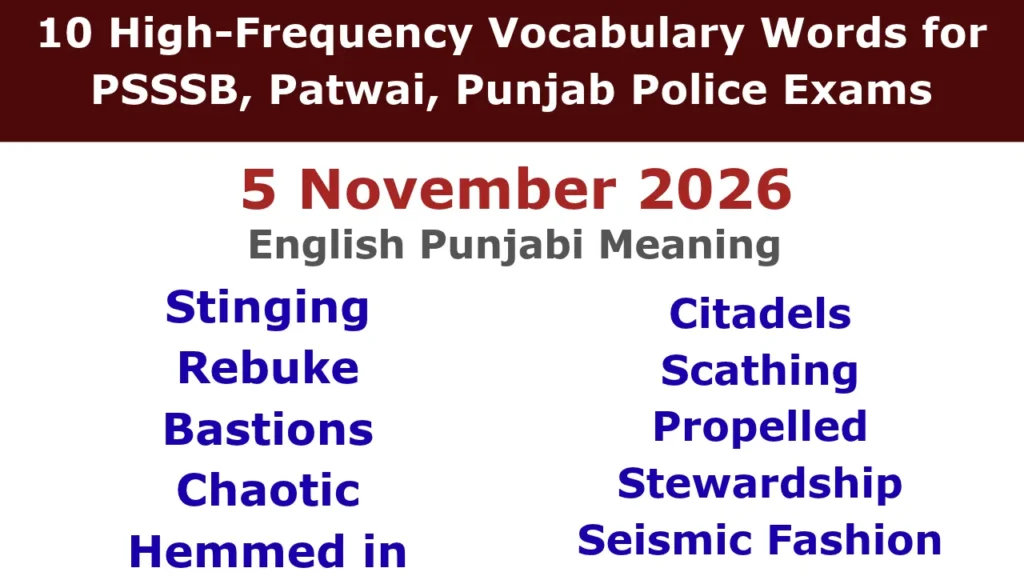
10 English Vocabulary Words (5 November 2026) Daily with Meaning in English & Punjabi
1. Stinging (ਚੁੱਭਣ ਵਾਲਾ, ਤੀਖਾ, ਕੜਵਾ)
The vocabulary word ‘Stinging’ is an Adjective. It means causing a sharp pain or a burning sensation. It can also mean severely critical or harsh in nature.
In English, stinging is commonly used in contexts related to physical pain, harsh weather conditions, severe criticism, sharp words, and painful defeat. It can also be used for describing the physical effect of certain plants like nettles.
In Punjabi, ‘Stinging’ meaning is: ਚੁੱਭਣ ਵਾਲਾ, ਤੀਖਾ, ਕੜਵਾ।
Contextual Example
Now, understand the vocabulary word “Stinging” with the sentence:
- e.g. The cold wind had a stinging effect on his face.
ਠੰਢੀ ਹਵਾ ਦਾ ਉਸਦੇ ਚਿਹਰੇ ‘ਤੇ ਚੁੱਭਣ ਵਾਲਾ (stinging) ਅਸਰ ਪਿਆ।
So, in the above sentence the contextual meaning of the vocabulary word ‘Stinging’ is “ਚੁੱਭਣ ਵਾਲਾ ਦਰਦ”।
ਉਪਰੋਕਤ ਵਾਕ ਵਿੱਚ ‘Stinging’ ਸ਼ਬਦ ਦਾ ਸੰਦਰਭਗਤ ਅਰਥ ‘ਠੰਢ ਕਾਰਨ ਚੁੱਭਣ ਵਾਲਾ ਦਰਦ’ ਹੈ।
Passage Guide (ਸੰਦਰਭਗਤ ਅਰਥ)
ਜਦੋਂ ਵੀ Stinging ਸ਼ਬਦ ਕਿਸੇ passage ਵਿੱਚ ਆਵੇ:
- ਜੇ ਗੱਲ physical pain ਦੀ ਹੋਵੇ, ਤਾਂ stinging = ਚੁੱਭਣ ਵਾਲਾ ਦਰਦ
- ਜੇ ਗੱਲ criticism ਦੀ ਹੋਵੇ, ਤਾਂ stinging = ਤੀਖੀ ਅਲੋਚਨਾ
- ਜੇ ਗੱਲ weather ਦੀ ਹੋਵੇ, ਤਾਂ stinging = ਕੱਟਣ ਵਾਲੀ ਠੰਢ ਜਾਂ ਗਰਮੀ
- ਜੇ ਗੱਲ defeat ਦੀ ਹੋਵੇ, ਤਾਂ stinging = ਮੁਹਾਂਮਾਰਾ ਵਾਲੀ ਹਾਰ
Exam Tip
Stinging, Biting, Piercing, ਅਤੇ Sharp ਵਿੱਚ ਫ਼ਰਕ ਯਾਦ ਰੱਖੋ:
- Stinging = ਚੁੱਭਣ ਵਾਲਾ ਜਾਂ ਤੀਖਾ ਦਰਦ/ਅਲੋਚਨਾ
- Biting = ਕੱਟਣ ਵਾਲਾ, ਬਹੁਤ ਠੰਢਾ ਜਾਂ ਤਿੱਖਾ
- Piercing = ਛੇਦਣ ਵਾਲਾ, ਬਹੁਤ ਤੀਖੀ ਆਵਾਜ਼ ਜਾਂ ਨਜ਼ਰ
- Sharp = ਤਿੱਖਾ, ਸਪੱਸ਼ਟ ਜਾਂ ਅਚਾਨਕ
Common Phrases
- stinging criticism = ਤੀਖੀ ਅਲੋਚਨਾ
- stinging pain = ਚੁੱਭਣ ਵਾਲਾ ਦਰਦ
- stinging rebuke = ਕੜੀ ਝਿੜਕ
- stinging defeat = ਮੁਹਾਂਮਾਰਾ ਵਾਲੀ ਹਾਰ
- stinging nettle = ਚੁੱਭਣ ਵਾਲਾ ਪੌਦਾ
Examples
- The politician faced stinging criticism from the media.
- ਸਿਆਸਤਦਾਨ ਨੂੰ ਮੀਡੀਆ ਵੱਲੋਂ ਤੀਖੀ ਅਲੋਚਨਾ (stinging criticism) ਦਾ ਸਾਹਮਣਾ ਕਰਨਾ ਪਿਆ।
- She felt a stinging pain in her eye after the dust blew in.
- ਧੱਕੇ ਨਾਲ ਉਸਦੀ ਅੱਖ ਵਿੱਚ ਚੁੱਭਣ ਵਾਲਾ ਦਰਦ (stinging pain) ਮਹਿਸੂਸ ਹੋਇਆ।
- The team suffered a stinging defeat in the final match.
ਟੀਮ ਨੂੰ ਫਾਈਨਲ ਮੁਕਾਬਲੇ ਵਿੱਚ ਮੁਹਾਂਮਾਰਾ ਵਾਲੀ ਹਾਰ (stinging defeat) ਦਾ ਸਾਹਮਣਾ ਕਰਨਾ ਪਿਆ।
Synonyms
Biting (ਕੱਟਣ ਵਾਲਾ), Piercing (ਛੇਦਣ ਵਾਲਾ), Sharp (ਤਿੱਖਾ), Severe (ਗੰਭੀਰ), Harsh (ਕਠੋਰ)
Antonyms
Soothing (ਸਕੂਨ ਦੇਣ ਵਾਲਾ), Gentle (ਕੋਮਲ), Mild (ਹਲਕਾ), Pleasant (ਸੁਹਾਵਣਾ), Comforting (ਤਸੱਲੀ ਦੇਣ ਵਾਲਾ)
2. Rebuke (ਝਿੜਕ, ਫਟਕਾਰ, ਤਿਰਸਕਾਰ)
The vocabulary word ‘Rebuke’ is a Verb and Noun. It means to express sharp disapproval or criticism of someone’s behavior. It can also refer to the act of reprimanding someone formally.
In English, rebuke is commonly used in contexts related to formal reprimands, parental discipline, workplace corrections, public criticism, and moral scolding. It can also be used for describing a stern warning.
In Punjabi, ‘Rebuke’ meaning is: ਝਿੜਕ, ਫਟਕਾਰ, ਤਿਰਸਕਾਰ।
Contextual Example
Now, understand the vocabulary word “Rebuke” with the sentence:
- e.g. The teacher gave him a sharp rebuke for being late.
ਅਧਿਆਪਕ ਨੇ ਦੇਰ ਨਾਲ ਆਉਣ ਲਈ ਉਸਨੂੰ ਤੀਖੀ ਝਿੜਕ (rebuke) ਦਿੱਤੀ।
So, in the above sentence the contextual meaning of the vocabulary word ‘Rebuke’ is “ਕੜੀ ਫਟਕਾਰ”।
ਉਪਰੋਕਤ ਵਾਕ ਵਿੱਚ ‘Rebuke’ ਸ਼ਬਦ ਦਾ ਸੰਦਰਭਗਤ ਅਰਥ ‘ਅਧਿਆਪਕ ਦੁਆਰਾ ਦਿੱਤੀ ਗਈ ਕੜੀ ਫਟਕਾਰ’ ਹੈ।
Passage Guide (ਸੰਦਰਭਗਤ ਅਰਥ)
ਜਦੋਂ ਵੀ Rebuke ਸ਼ਬਦ ਕਿਸੇ passage ਵਿੱਚ ਆਵੇ:
- ਜੇ ਗੱਲ formal setting ਦੀ ਹੋਵੇ, ਤਾਂ rebuke = ਕੜੀ ਨਿੰਦਾ
- ਜੇ ਗੱਲ informal setting ਦੀ ਹੋਵੇ, ਤਾਂ rebuke = ਝਿੜਕ
- ਜੇ ਗੱਲ public criticism ਦੀ ਹੋਵੇ, ਤਾਂ rebuke = ਬੇਇੱਜ਼ਤੀ ਜਾਂ ਤਿਰਸਕਾਰ
- ਜੇ ਗੱਲ mild warning ਦੀ ਹੋਵੇ, ਤਾਂ rebuke = ਹਲਕੀ ਤਾੜਨਾ
Exam Tip
Rebuke, Reprimand, Scold, ਅਤੇ Chide ਵਿੱਚ ਫ਼ਰਕ ਯਾਦ ਰੱਖੋ:
- Rebuke = ਸ਼ਿਸਟਾਪੂਰਵਕ ਅਤੇ ਤੀਖੀ ਫਟਕਾਰ
- Reprimand = ਅਧਿਕਾਰਤ ਜਾਂ ਔਪਚਾਰਿਕ ਤੌਰ ‘ਤੇ ਝਿੜਕਣਾ
- Scold = ਗੁੱਸੇ ਵਿੱਚ ਆਮ ਜਿਹੀ ਝਿੜਕ
- Chide = ਹਲਕੀ ਜਿਹੀ ਨਿੰਦਾ ਜਾਂ ਤਾੜਨਾ
Common Phrases
- sharp rebuke = ਤੀਖੀ ਝਿੜਕ
- public rebuke = ਜਨਤਕ ਫਟਕਾਰ stern
- rebuke = ਕਠੋਰ ਤਾੜਨਾ
- deserve a rebuke = ਫਟਕਾਰ ਦੇ ਹੱਕਦਾਰ
- face a rebuke = ਫਟਕਾਰ ਦਾ ਸਾਹਮਣਾ ਕਰਨਾ
Examples
- The manager issued a public rebuke to the negligent employee.
ਮੈਨੇਜਰ ਨੇ ਲਾਪਰਵਾਹ ਕਰਮਚਾਰੀ ਨੂੰ ਜਨਤਕ ਫਟਕਾਰ (public rebuke) ਦਿੱਤੀ। - He did not expect such a stern rebuke from his father.
ਉਸਨੂੰ ਆਪਣੇ ਪਿਤਾ ਤੋਂ ਅਜਿਹੀ ਕਠੋਰ ਤਾੜਨਾ (stern rebuke) ਦੀ ਉਮੀਦ ਨਹੀਂ ਸੀ। - Her careless mistake drew a sharp rebuke from the committee.
ਉਸਦੀ ਲਾਪਰਵਾਹੀ ਭਰੀ ਗਲਤੀ ਕਾਰਨ ਕਮੇਟੀ ਵੱਲੋਂ ਤੀਖੀ ਝਿੜਕ (sharp rebuke) ਹੋਈ।
Synonyms
Reprimand (ਫਟਕਾਰ), Scold (ਝਿੜਕ), Chide (ਤਾੜਨਾ), Reprove (ਨਿੰਦਾ ਕਰਨਾ), Admonish (ਚੇਤਾਵਨੀ ਦੇਣਾ)
Antonyms
Praise (ਤਾਰੀਫ), Commend (ਸ਼ਲਾਘਾ), Applaud (ਵਾਹਵਾ), Compliment (ਵਧਾਈ), Approve (ਮਨਜ਼ੂਰੀ)
3. Bastions (ਕਿਲ੍ਹੇ ਦੀ ਬੁਰਜੀ, ਗੜ੍ਹ, ਪਨਾਹ)
The vocabulary word ‘Bastions’ is a Noun (plural). It means a projecting part of a fortification having a similar outline to an arrowhead. It can also mean an institution or place that strongly defends particular principles or attitudes.
In English, bastions is commonly used in contexts related to military defense, protection of rights, preservation of traditions, democracy, and freedom. It can also be used metaphorically for strongholds of knowledge or culture.
In Punjabi, ‘Bastions’ meaning is: ਕਿਲ੍ਹੇ ਦੀ ਬੁਰਜੀ, ਗੜ੍ਹ, ਪਨਾਹ।
Contextual Example
Now, understand the vocabulary word “Bastions” with the sentence:
- e.g. Universities are considered bastions of free thought.
ਯੂਨੀਵਰਸਿਟੀਆਂ ਨੂੰ ਮੁਕਤ ਵਿਚਾਰਾਂ ਦੇ ਗੜ੍ਹ (bastions) ਮੰਨਿਆ ਜਾਂਦਾ ਹੈ।
So, in the above sentence the contextual meaning of the vocabulary word ‘Bastions’ is “ਰੱਖਿਅਕ ਥਾਂਵਾਂ”।
ਉਪਰੋਕਤ ਵਾਕ ਵਿੱਚ ‘Bastions’ ਸ਼ਬਦ ਦਾ ਸੰਦਰਭਗਤ ਅਰਥ ‘ਮੁਕਤ ਵਿਚਾਰਾਂ ਦੀ ਰੱਖਿਆ ਕਰਨ ਵਾਲੀਆਂ ਥਾਂਵਾਂ’ ਹੈ।
Passage Guide (ਸੰਦਰਭਗਤ ਅਰਥ)
ਜਦੋਂ ਵੀ Bastions ਸ਼ਬਦ ਕਿਸੇ passage ਵਿੱਚ ਆਵੇ:
- ਜੇ ਗੱਲ military ਦੀ ਹੋਵੇ, ਤਾਂ bastions = ਕਿਲ੍ਹੇ ਦੀ ਬੁਰਜੀ
- ਜੇ ਗੱਲ principles ਦੀ ਹੋਵੇ, ਤਾਂ bastions = ਸਿਧਾਂਤਾਂ ਦਾ ਗੜ੍ਹ
- ਜੇ ਗੱਲ defense ਦੀ ਹੋਵੇ, ਤਾਂ bastions = ਬਚਾਅ ਦਾ ਥੰਮ੍ਹ
- ਜੇ ਗੱਲ tradition ਦੀ ਹੋਵੇ, ਤਾਂ bastions = ਪਰੰਪਰਾਵਾਂ ਦੀ ਪਨਾਹ
Exam Tip
Bastion, Citadel, Fortress, ਅਤੇ Stronghold ਵਿੱਚ ਫ਼ਰਕ ਯਾਦ ਰੱਖੋ:
- Bastion = ਸਿਧਾਂਤਾਂ ਜਾਂ ਵਿਚਾਰਾਂ ਦੀ ਰੱਖਿਆ ਕਰਨ ਵਾਲੀ ਥਾਂ
- Citadel = ਸ਼ਹਿਰ ਦੇ ਅੰਦਰ ਉੱਚੀ ਥਾਂ ‘ਤੇ ਬਣਿਆ ਮੁੱਖ ਕਿਲ੍ਹਾ
- Fortress = ਵੱਡਾ ਅਤੇ ਮਜ਼ਬੂਤ ਸੈਨਿਕ ਕਿਲ੍ਹਾ
- Stronghold = ਕਿਸੇ ਵਿਸ਼ੇਸ਼ ਵਿਚਾਰਧਾਰਾ ਦਾ ਮਜ਼ਬੂਤ ਕੇਂਦਰ
Common Phrases
- bastions of democracy = ਲੋਕਤੰਤਰ ਦੇ ਗੜ੍ਹ
- bastions of freedom = ਆਜ਼ਾਦੀ ਦੇ ਗੜ੍ਹ
- last bastion = ਆਖਰੀ ਗੜ੍ਹ
- bastions of tradition = ਪਰੰਪਰਾਵਾਂ ਦੇ ਗੜ੍ਹ
- bastions of the old order = ਪੁਰਾਣੇ ਪ੍ਰਬੰਧ ਦੇ ਗੜ੍ਹ
Examples
- The press is often seen as a bastion of free speech.
ਪ੍ਰੈਸ ਨੂੰ ਅਕਸਰ ਮੁਕਤ ਬੋਲਣ ਦੇ ਗੜ੍ਹ (bastion of free speech) ਵਜੋਂ ਦੇਖਿਆ ਜਾਂਦਾ ਹੈ। - They fought to protect the last bastion of their resistance.
ਉਹ ਆਪਣੇ ਵਿਰੋਧ ਦੇ ਆਖਰੀ ਗੜ੍ਹ (last bastion) ਦੀ ਰੱਖਿਆ ਲਈ ਲੜੇ। - These old institutions are the bastions of our culture.
ਇਹ ਪੁਰਾਣੇ ਸੰਸਥਾਨ ਸਾਡੀ ਸੱਭਿਆਚਾਰ ਦੇ ਗੜ੍ਹ (bastions of our culture) ਹਨ।
Synonyms
Strongholds (ਗੜ੍ਹ), Citadels (ਕਿਲ੍ਹੇ), Fortresses (ਕਿਲ੍ਹੇ), Bulwarks (ਬਚਾਅ ਦੀ ਦੀਵਾਰ), Redoubts (ਮੋਰਚੇ)
Antonyms
Weaknesses (ਕਮਜ਼ੋਰੀਆਂ), Vulnerabilities (ਅਸੁਰੱਖਿਅਤ ਥਾਂਵਾਂ), Openings (ਖੁੱਲ੍ਹ), Breaches (ਦਰਾਰਾਂ), Surrenders (ਹਥਿਆਰ ਸੁੱਟਣਾ)
4. Chaotic (ਅਫ਼ਰਾ-ਤਫ਼ਰੀ ਵਾਲਾ, ਗੜਬੜ ਵਾਲਾ)
The vocabulary word ‘Chaotic’ is an Adjective. It means in a state of complete confusion and disorder. It can also describe a situation that lacks any organization or predictability.
In English, chaotic is commonly used in contexts related to traffic jams, disorganized events, confused states of mind, failing economies, and broken systems. It can also be used for describing messy rooms or unpredictable weather.
In Punjabi, ‘Chaotic’ meaning is: ਅਫ਼ਰਾ-ਤਫ਼ਰੀ ਵਾਲਾ, ਅਵ्यवसਥਿਤ, ਗੜਬੜ ਵਾਲਾ।
Contextual Example
Now, understand the vocabulary word “Chaotic” with the sentence:
- e.g. The traffic in the city was completely chaotic during the strike
ਹੜਤਾਲ ਦੌਰਾਨ ਸ਼ਹਿਰ ਵਿੱਚ ਟ੍ਰੈਫਿਕ ਪੂਰੀ ਤਰ੍ਹਾਂ ਅਫ਼ਰਾ-ਤਫ਼ਰੀ ਵਾਲਾ (chaotic) ਸੀ।
Passage Guide (ਸੰਦਰਭਗਤ ਅਰਥ)
ਜਦੋਂ ਵੀ Chaotic ਸ਼ਬਦ ਕਿਸੇ passage ਵਿੱਚ ਆਵੇ:
- ਜੇ ਗੱਲ situation ਦੀ ਹੋਵੇ, ਤਾਂ chaotic = ਅਫ਼ਰਾ-ਤਫ਼ਰੀ
- ਜੇ ਗੱਲ mind ਦੀ ਹੋਵੇ, ਤਾਂ chaotic = ਉਲਝਿਆ ਹੋਇਆ
- ਜੇ ਗੱਲ system ਦੀ ਹੋਵੇ, ਤਾਂ chaotic = ਵਿਗੜਿਆ ਹੋਇਆ
- ਜੇ ਗੱਲ economy ਦੀ ਹੋਵੇ, ਤਾਂ chaotic = ਅਰਾਜਕਤਾ ਵਾਲਾ
Exam Tip
Anarchic, Turbulent, ਅਤੇ Disorderly ਵਿੱਚ ਫ਼ਰਕ ਯਾਦ ਰੱਖੋ:
- Anarchic = ਨਿਯਮਾਂ ਤੋਂ ਬਿਨਾਂ, ਅਰਾਜਕਤਾ ਵਾਲਾ
- Turbulent = ਅਸ਼ਾਂਤ, ਹਲਚਲ ਵਾਲਾ
- Disorderly = ਬੇਤਰਤੀਬਾ, ਸ਼ਾਂਤੀ ਭੰਗ ਕਰਨ ਵਾਲਾ
Common Phrases
- chaotic situation = ਅਫ਼ਰਾ-ਤਫ਼ਰੀ ਵਾਲੀ ਸਥਿਤੀ
- chaotic scene = ਗੜਬੜ ਵਾਲਾ ਦ੍ਰਿਸ਼
- chaotic state = ਅਰਾਜਕ ਸਥਿਤੀ
Examples
- The evacuation process was chaotic and poorly organized.
ਬਾਹਰ ਕੱਢਣ ਦੀ ਪ੍ਰਕਿਰਿਆ ਅਫ਼ਰਾ-ਤਫ਼ਰੀ ਵਾਲੀ (chaotic) ਅਤੇ ਮਾੜੀ ਤਰ੍ਹਾਂ ਨਾਲ ਪ੍ਰਬੰਧਿਤ ਸੀ। - Her mind was in a chaotic state after hearing the bad news.
ਮਾੜੀ ਖ਼ਬਰ ਸੁਣਨ ਤੋਂ ਬਾਅਦ ਉਸਦਾ ਦਿਮਾਗ ਉਲਝਿਆ ਹੋਇਆ (chaotic state) ਸੀ। - The economy is in a chaotic condition due to inflation.
ਮਹਿੰਗਾਈ ਕਾਰਨ ਅਰਥਚਾਰਾ ਅਵ्यवसਥਿਤ (chaotic condition) ਹਾਲਤ ਵਿੱਚ ਹੈ।
Synonyms
Disordered, Confused (ਉਲਝਿਆ ਹੋਇਆ), Turbulent (ਅਸ਼ਾਂਤ), Anarchic (ਅਰਾਜਕ), Messy (ਗੰਦਾ)
Antonyms
Orderly (ਤਰਤੀਬਵਾਰ), Organized (ਪ੍ਰਬੰਧਿਤ), Calm (ਸ਼ਾਂਤ), Peaceful (ਅਮਨ-ਪੂਰਨ), Systematic (ਵਿਵਸਥਿਤ)
5. Hemmed in (ਘਿਰਿਆ ਹੋਇਆ, ਰੋਕਿਆ ਹੋਇਆ, ਕੈਦ)
The vocabulary word ‘Hemmed in’ is a Phrasal Verb / Adjective. It means surrounded and unable to move or escape freely. It can also mean restricted by rules or circumstances.
In English, hemmed in is commonly used in contexts related to physical surroundings, feeling emotionally trapped, being restricted by strict rules, enclosed spaces, and being surrounded by enemies. It can also be used for describing a lack of personal freedom.
In Punjabi, ‘Hemmed in’ meaning is: ਘਿਰਿਆ ਹੋਇਆ, ਰੋਕਿਆ ਹੋਇਆ, ਕੈਦ।
Contextual Example
Now, understand the vocabulary word “Hemmed in” with the sentence:
- e.g. The small village was hemmed in by dense forests on all sides.
ਛੋਟਾ ਪਿੰਡ ਚਾਰੇ ਪਾਸਿਓਂ ਘਣੇ ਜੰਗਲਾਂ ਨਾਲ ਘਿਰਿਆ (hemmed in) ਹੋਇਆ ਸੀ।
So, in the above sentence the contextual meaning of the vocabulary word ‘Hemmed in’ is “ਚਾਰੇ ਪਾਸਿਓਂ ਘਿਰਿਆ ਹੋਇਆ”।
ਉਪਰੋਕਤ ਵਾਕ ਵਿੱਚ ‘Hemmed in’ ਸ਼ਬਦ ਦਾ ਸੰਦਰਭਗਤ ਅਰਥ ‘ਜੰਗਲਾਂ ਦੁਆਰਾ ਚਾਰੇ ਪਾਸਿਓਂ ਘਿਰਿਆ ਹੋਇਆ’ ਹੈ।
Passage Guide (ਸੰਦਰਭਗਤ ਅਰਥ)
ਜਦੋਂ ਵੀ Hemmed in ਸ਼ਬਦ ਕਿਸੇ passage ਵਿੱਚ ਆਵੇ:
- ਜੇ ਗੱਲ physical surroundings ਦੀ ਹੋਵੇ, ਤਾਂ hemmed in = ਚਾਰੇ ਪਾਸਿਓਂ ਘਿਰਿਆ
- ਜੇ ਗੱਲ emotional state ਦੀ ਹੋਵੇ, ਤਾਂ hemmed in = ਘੁਟਣ ਮਹਿਸੂਸ ਹੋਣਾ
- ਜੇ ਗੱਲ rules ਦੀ ਹੋਵੇ, ਤਾਂ hemmed in = ਨਿਯਮਾਂ ਵਿੱਚ ਜਕੜਿਆ
- ਜੇ ਗੱਲ enemies ਦੀ ਹੋਵੇ, ਤਾਂ hemmed in = ਦੁਸ਼ਮਣਾਂ ਦੁਆਰਾ ਘੇਰਾਬੰਦੀ
Exam Tip
Hemmed in, Trapped, Cornered, ਅਤੇ Surrounded ਵਿੱਚ ਫ਼ਰਕ ਯਾਦ ਰੱਖੋ:
- Hemmed in = ਚਾਰੇ ਪਾਸਿਓਂ ਘਿਰਿਆ ਹੋਇਆ, ਬਾਹਰ ਨਿਕਲਣ ਦਾ ਰਸਤਾ ਬੰਦ
- Trapped = ਫਸਿਆ ਹੋਇਆ, ਜਿੱਥੋਂ ਬਚਣਾ ਮੁਸ਼ਕਲ
- Cornered = ਕਿਸੇ ਕੋਨੇ ਵਿੱਚ ਫਸਿਆ ਹੋਇਆ, ਬਚਣ ਦੀ ਕੋਈ ਥਾਂ ਨਹੀਂ
- Surrounded = ਘਿਰਿਆ ਹੋਇਆ, ਪਰ ਬਾਹਰ ਨਿਕਲਣ ਦੀ ਸੰਭਾਵਨਾ ਹੋ ਸਕਦੀ ਹੈ
Common Phrases
- hemmed in by = ਦੁਆਰਾ ਘਿਰਿਆ ਹੋਇਆ
- feel hemmed in = ਘਿਰਿਆ ਹੋਇਆ ਮਹਿਸੂਸ ਕਰਨਾ
- hemmed in on all sides = ਚਾਰੇ ਪਾਸਿਓਂ ਘਿਰਿਆ ਹੋਇਆ
- hemmed in by rules = ਨਿਯਮਾਂ ਵਿੱਚ ਜਕੜਿਆ ਹੋਇਆ
- hemmed in by mountains = ਪਹਾੜਾਂ ਨਾਲ ਘਿਰਿਆ ਹੋਇਆ
Examples
- She felt hemmed in by the strict rules of the boarding school.
ਉਸਨੂੰ ਬੋਰਡਿੰਗ ਸਕੂਲ ਦੇ ਸਖ਼ਤ ਨਿਯਮਾਂ ਕਾਰਨ ਜਕੜਿਆ ਹੋਇਆ (hemmed in) ਮਹਿਸੂਸ ਹੋਇਆ। - The enemy troops were hemmed in by the advancing army.
ਦੁਸ਼ਮਣ ਦੇ ਸੈਨਿਕ ਅੱਗੇ ਵਧ ਰਹੀ ਫੌਜ ਦੁਆਰਾ ਚਾਰੇ ਪਾਸਿਓਂ ਘਿਰੇ (hemmed in) ਹੋਏ ਸਨ। - He wanted to travel but felt hemmed in by his financial obligations.
ਉਹ ਯਾਤਰਾ ਕਰਨਾ ਚਾਹੁੰਦਾ ਸੀ ਪਰ ਆਪਣੀਆਂ ਵਿੱਤੀ ਜ਼ਿੰਮੇਵਾਰੀਆਂ ਕਾਰਨ ਜਕੜਿਆ (hemmed in) ਹੋਇਆ ਸੀ।
Synonyms
Surrounded (ਘਿਰਿਆ ਹੋਇਆ), Enclosed (ਬੰਦ ਕੀਤਾ ਹੋਇਆ), Trapped (ਫਸਿਆ ਹੋਇਆ), Confined (ਸੀਮਿਤ), Restricted (ਪ੍ਰਤਿਬੰਧਿਤ)
Antonyms
Freed (ਆਜ਼ਾਦ), Liberated (ਮੁਕਤ), Unrestricted (ਬਿਨਾਂ ਪਾਬੰਦੀ), Open (ਖੁੱਲ੍ਹਾ), Released (ਰਿਹਾ)
6. Citadels (ਕਿਲ੍ਹੇ, ਗੜ੍ਹ, ਸੁਰੱਖਿਅਤ ਥਾਂ)
The vocabulary word ‘Citadels’ is a Noun (plural). It means a fortress, typically on high ground, protecting or dominating a city. It can also mean a strong refuge or a place of safety and power.
In English, citadels is commonly used in contexts related to military strongholds, places of safety, centers of knowledge, seats of power, and impenetrable defenses. It can also be used metaphorically for institutions that guard important values.
In Punjabi, ‘Citadels’ meaning is: ਕਿਲ੍ਹੇ, ਗੜ੍ਹ, ਸੁਰੱਖਿਅਤ ਥਾਂ।
Contextual Example
Now, understand the vocabulary word “Citadels” with the sentence:
e.g. The ancient citadels stood tall against the invading armies.
ਪ੍ਰਾਚੀਨ ਕਿਲ੍ਹੇ (citadels) ਹਮਲਾਵਰ ਫੌਜਾਂ ਖਿਲਾਫ਼ ਮਜ਼ਬੂਤੀ ਨਾਲ ਖੜ੍ਹੇ ਸਨ।
So, in the above sentence the contextual meaning of the vocabulary word ‘Citadels’ is “ਮਜ਼ਬੂਤ ਕਿਲ੍ਹੇ”।
ਉਪਰੋਕਤ ਵਾਕ ਵਿੱਚ ‘Citadels’ ਸ਼ਬਦ ਦਾ ਸੰਦਰਭਗਤ ਅਰਥ ‘ਹਮਲਾਵਰਾਂ ਤੋਂ ਬਚਾਅ ਲਈ ਮਜ਼ਬੂਤ ਕਿਲ੍ਹੇ’ ਹੈ।
Passage Guide (ਸੰਦਰਭਗਤ ਅਰਥ)
ਜਦੋਂ ਵੀ Citadels ਸ਼ਬਦ ਕਿਸੇ passage ਵਿੱਚ ਆਵੇ:
- ਜੇ ਗੱਲ military ਦੀ ਹੋਵੇ, ਤਾਂ citadels = ਮਜ਼ਬੂਤ ਕਿਲ੍ਹੇ
- ਜੇ ਗੱਲ safety ਦੀ ਹੋਵੇ, ਤਾਂ citadels = ਸੁਰੱਖਿਅਤ ਪਨਾਹ
- ਜੇ ਗੱਲ knowledge ਦੀ ਹੋਵੇ, ਤਾਂ citadels = ਗਿਆਨ ਦਾ ਗੜ੍ਹ
- ਜੇ ਗੱਲ power ਦੀ ਹੋਵੇ, ਤਾਂ citadels = ਸੱਤਾ ਦਾ ਕੇਂਦਰ
Exam Tip
Citadel, Bastion, Fortress, ਅਤੇ Sanctuary ਵਿੱਚ ਫ਼ਰਕ ਯਾਦ ਰੱਖੋ:
- Citadel = ਸ਼ਹਿਰ ਦੀ ਰੱਖਿਆ ਲਈ ਉੱਚੀ ਥਾਂ ‘ਤੇ ਬਣਿਆ ਮੁੱਖ ਕਿਲ੍ਹਾ
- Bastion = ਸਿਧਾਂਤਾਂ ਜਾਂ ਵਿਚਾਰਾਂ ਦੀ ਰੱਖਿਆ ਕਰਨ ਵਾਲੀ ਥਾਂ
- Fortress = ਵੱਡਾ ਅਤੇ ਮਜ਼ਬੂਤ ਸੈਨਿਕ ਕਿਲ੍ਹਾ
- Sanctuary = ਸੁਰੱਖਿਅਤ ਪਨਾਹ, ਜਿੱਥੇ ਕੋਈ ਨੁਕਸਾਨ ਨਹੀਂ ਪਹੁੰਚਾ ਸਕਦਾ
Common Phrases
- ancient citadels = ਪ੍ਰਾਚੀਨ ਕਿਲ੍ਹੇ
- citadels of power = ਸੱਤਾ ਦੇ ਗੜ੍ਹ
- citadels of learning = ਗਿਆਨ ਦੇ ਗੜ੍ਹ
- impregnable citadels = ਨਾ-ਟੁੱਟਣਯੋਗ ਕਿਲ੍ਹੇ
- citadels of freedom = ਆਜ਼ਾਦੀ ਦੇ ਗੜ੍ਹ
Examples
- The library is considered a citadel of knowledge for the students.
ਲਾਇਬਰੇਰੀ ਨੂੰ ਵਿਦਿਆਰਥੀਆਂ ਲਈ ਗਿਆਨ ਦਾ ਗੜ੍ਹ (citadel of knowledge) ਮੰਨਿਆ ਜਾਂਦਾ ਹੈ। - The rebels captured the enemy’s main citadel.
ਬਾਗੀਆਂ ਨੇ ਦੁਸ਼ਮਣ ਦੇ ਮੁੱਖ ਕਿਲ੍ਹੇ (main citadel) ‘ਤੇ ਕਬਜ਼ਾ ਕਰ ਲਿਆ। - These mountains served as natural citadels for the defenders.
ਇਹ ਪਹਾੜ ਰੱਖਿਅਕਾਂ ਲਈ ਕੁਦਰਤੀ ਕਿਲ੍ਹਿਆਂ (natural citadels) ਵਜੋਂ ਕੰਮ ਕਰਦੇ ਸਨ।
Synonyms
Fortresses (ਕਿਲ੍ਹੇ), Strongholds (ਗੜ੍ਹ), Castles (ਮਹਿਲ), Keeps (ਮੁੱਖ ਬੁਰਜ), Redoubts (ਮੋਰਚੇ)
Antonyms
Open fields (ਖੁੱਲ੍ਹੇ ਮੈਦਾਨ), Vulnerabilities (ਅਸੁਰੱਖਿਅਤ ਥਾਂਵਾਂ), Weaknesses (ਕਮਜ਼ੋਰੀਆਂ), Surrenders (ਹਥਿਆਰ ਸੁੱਟਣਾ), Defeats (ਹਾਰ)
7. Scathing (ਤੀਖੀ, ਕਟੂ, ਨਿੰਦਾਯੋਗ)
The vocabulary word ‘Scathing’ is an Adjective. It means witheringly harsh or severely critical. It can also describe remarks or reviews that are intended to destroy or severely damage someone’s reputation.
In English, scathing is commonly used in contexts related to harsh criticism, negative reviews, severe reports, bitter remarks, and verbal attacks. It can also be used for describing a withering look or tone.
In Punjabi, ‘Scathing’ meaning is: ਤੀਖੀ, ਕਟੂ, ਨਿੰਦਾਯੋਗ।
Contextual Example
Now, understand the vocabulary word “Scathing” with the sentence:
- e.g. The film critic gave a scathing review of the new movie.
ਫ਼ਿਲਮ ਆਲੋਚਕ ਨੇ ਨਵੀਂ ਫ਼ਿਲਮ ਦੀ ਤੀਖੀ (scathing) ਸਮੀਖਿਆ ਕੀਤੀ।
So, in the above sentence the contextual meaning of the vocabulary word ‘Scathing’ is “ਬਹੁਤ ਹੀ ਤੀਖੀ ਅਲੋਚਨਾ”।
ਉਪਰੋਕਤ ਵਾਕ ਵਿੱਚ ‘Scathing’ ਸ਼ਬਦ ਦਾ ਸੰਦਰਭਗਤ ਅਰਥ ‘ਫ਼ਿਲਮ ਦੀ ਬਹੁਤ ਹੀ ਤੀਖੀ ਅਤੇ ਨਿੰਦਾਯੋਗ ਸਮੀਖਿਆ’ ਹੈ।
Passage Guide (ਸੰਦਰਭਗਤ ਅਰਥ)
ਜਦੋਂ ਵੀ Scathing ਸ਼ਬਦ ਕਿਸੇ passage ਵਿੱਚ ਆਵੇ:
- ਜੇ ਗੱਲ review ਦੀ ਹੋਵੇ, ਤਾਂ scathing = ਤੀਖੀ ਸਮੀਖਿਆ
- ਜੇ ਗੱਲ remarks ਦੀ ਹੋਵੇ, ਤਾਂ scathing = ਕਟੂ ਬੋਲ
- ਜੇ ਗੱਲ report ਦੀ ਹੋਵੇ, ਤਾਂ scathing = ਨਿੰਦਾਯੋਗ ਰਿਪੋਰਟ
- ਜੇ ਗੱਲ attack ਦੀ ਹੋਵੇ, ਤਾਂ scathing = ਜ਼ਬਰਦਸਤ ਹਮਲਾ
Exam Tip
Scathing, Stinging, Biting, ਅਤੇ Caustic ਵਿੱਚ ਫ਼ਰਕ ਯਾਦ ਰੱਖੋ:
- Scathing = ਤਬਾਹ ਕਰਨ ਵਾਲੀ, ਬਹੁਤ ਹੀ ਤੀਖੀ ਅਲੋਚਨਾ
- Stinging = ਚੁੱਭਣ ਵਾਲਾ ਦਰਦ ਜਾਂ ਤੀਖਾਪਣ
- Biting = ਕੱਟਣ ਵਾਲਾ, ਤਿੱਖਾ ਜਾਂ ਠੰਢਾ
- Caustic = ਜਲਾਉਣ ਵਾਲਾ, ਬਹੁਤ ਹੀ ਕੌੜਾ ਜਾਂ ਤਿੱਖਾ
Common Phrases
scathing criticism = ਤੀਖੀ ਅਲੋਚਨਾ scathing review = ਤੀਖੀ ਸਮੀਖਿਆ scathing attack = ਜ਼ਬਰਦਸਤ ਹਮਲਾ scathing remarks = ਕਟੂ ਬੋਲ scathing report = ਨਿੰਦਾਯੋਗ ਰਿਪੋਰਟ
Examples
- She launched a scathing attack on the government’s new policy.
ਉਸਨੇ ਸਰਕਾਰ ਦੀ ਨਵੀਂ ਨੀਤੀ ‘ਤੇ ਜ਼ਬਰਦਸਤ ਹਮਲਾ (scathing attack) ਬੋਲਿਆ। - His scathing remarks hurt her feelings deeply.
ਉਸਦੇ ਕਟੂ ਬੋਲਾਂ (scathing remarks) ਨੇ ਉਸਦੀਆਂ ਭਾਵਨਾਵਾਂ ਨੂੰ ਡੂੰਘਾ ਸੱਟ ਮਾਰੀ। - The committee issued a scathing report on the corruption scandal.
ਕਮੇਟੀ ਨੇ ਭ੍ਰਿਸ਼ਟਾਚਾਰ ਦੇ ਘਪਲੇ ‘ਤੇ ਨਿੰਦਾਯੋਗ ਰਿਪੋਰਟ (scathing report) ਜਾਰੀ ਕੀਤੀ।
Synonyms
Harsh (ਕਠੋਰ), Severe (ਗੰਭੀਰ), Bitter (ਕੌੜਾ), Caustic (ਜਲਾਉਣ ਵਾਲਾ), Acerbic (ਤਿੱਖਾ)
Antonyms
Praising (ਤਾਰੀਫ ਕਰਨ ਵਾਲਾ), Complimentary (ਵਧਾਈ ਦੇਣ ਵਾਲਾ), Mild (ਹਲਕਾ), Gentle (ਕੋਮਲ), Favorable (ਪੱਖੀ)
8. Propelled (ਅੱਗੇ ਵਧਾਇਆ, ਧੱਕਿਆ, ਪ੍ਰੇਰਿਤ ਕੀਤਾ)
The vocabulary word ‘Propelled’ is a Verb (past tense). It means drove, pushed, or caused to move in a particular direction. It can also mean motivated or forced someone to achieve something.
In English, propelled is commonly used in contexts related to physical movement, career advancement, ambition, vehicle propulsion, and being driven by emotions or events. It can also be used for describing rapid progress.
In Punjabi, ‘Propelled’ meaning is: ਅੱਗੇ ਵਧਾਇਆ, ਧੱਕਿਆ, ਪ੍ਰੇਰਿਤ ਕੀਤਾ।
Contextual Example
Now, understand the vocabulary word “Propelled” with the sentence:
- e.g. His relentless hard work propelled him to the top of the company.
ਉਸਦੀ ਲਗਾਤਾਰ ਮਿਹਨਤ ਨੇ ਉਸਨੂੰ ਕੰਪਨੀ ਦੇ ਸਿਖਰ ‘ਤੇ ਪਹੁੰਚਾਇਆ (propelled)।
So, in the above sentence the contextual meaning of the vocabulary word ‘Propelled’ is “ਅੱਗੇ ਵਧਾਇਆ”।
ਉਪਰੋਕਤ ਵਾਕ ਵਿੱਚ ‘Propelled’ ਸ਼ਬਦ ਦਾ ਸੰਦਰਭਗਤ ਅਰਥ ‘ਮਿਹਨਤ ਦੁਆਰਾ ਸਿਖਰ ‘ਤੇ ਅੱਗੇ ਵਧਾਇਆ’ ਹੈ।
Passage Guide (ਸੰਦਰਭਗਤ ਅਰਥ)
ਜਦੋਂ ਵੀ Propelled ਸ਼ਬਦ ਕਿਸੇ passage ਵਿੱਚ ਆਵੇ:
- ਜੇ ਗੱਲ physical movement ਦੀ ਹੋਵੇ, ਤਾਂ propelled = ਧੱਕ ਕੇ ਅੱਗੇ ਲਿਜਾਇਆ
- ਜੇ ਗੱਲ career ਦੀ ਹੋਵੇ, ਤਾਂ propelled = ਕੈਰੀਅਰ ਵਿੱਚ ਅੱਗੇ ਵਧਾਇਆ
- ਜੇ ਗੱਲ emotion ਦੀ ਹੋਵੇ, ਤਾਂ propelled = ਭਾਵਨਾਤਮਕ ਤੌਰ ‘ਤੇ ਪ੍ਰੇਰਿਤ ਕੀਤਾ
- ਜੇ ਗੱਲ vehicle ਦੀ ਹੋਵੇ, ਤਾਂ propelled = ਇੰਜਣ ਦੁਆਰਾ ਚਲਾਇਆ
Exam Tip
Propelled, Driven, Pushed, ਅਤੇ Forced ਵਿੱਚ ਫ਼ਰਕ ਯਾਦ ਰੱਖੋ:
- Propelled = ਕਿਸੇ ਸ਼ਕਤੀ ਜਾਂ ਪ੍ਰੇਰਨਾ ਦੁਆਰਾ ਅੱਗੇ ਵਧਾਇਆ
- Driven = ਕਿਸੇ ਮਕਸਦ ਜਾਂ ਭਾਵਨਾ ਦੁਆਰਾ ਚਲਾਇਆ
- Pushed = ਜ਼ੋਰ ਲਗਾ ਕੇ ਅੱਗੇ ਕੀਤਾ
- Forced = ਮਜਬੂਰ ਕੀਤਾ, ਬਿਨਾਂ ਮਰਜ਼ੀ ਦੇ ਕਰਵਾਇਆ
Common Phrases
- propelled forward = ਅੱਗੇ ਵਧਾਇਆ
- propelled by = ਦੁਆਰਾ ਪ੍ਰੇਰਿਤ
- propelled to fame = ਪ੍ਰਸਿੱਧੀ ਵੱਲ ਅੱਗੇ ਵਧਾਇਆ
- propelled into action = ਕਾਰਵਾਈ ਲਈ ਪ੍ਰੇਰਿਤ ਕੀਤਾ
- propelled by ambition = ਮਹਿਨਕਾਂਸ਼ਾ ਦੁਆਰਾ ਪ੍ਰੇਰਿਤ
Examples
- The rocket was propelled into space by powerful engines.
ਰਾਕਟ ਨੂੰ ਸ਼ਕਤੀਸ਼ਾਲੀ ਇੰਜਣਾਂ ਦੁਆਰਾ ਪੁਲਾੜ ਵਿੱਚ ਅੱਗੇ ਵਧਾਇਆ (propelled) ਗਿਆ। - The scandal propelled the issue into the national spotlight.
ਘਪਲੇ ਨੇ ਮੁੱਦੇ ਨੂੰ ਕੌਮੀ ਸੁਰਖੀਆਂ ਵਿੱਚ ਲਿਆਉਣ ਲਈ ਅੱਗੇ ਵਧਾਇਆ (propelled)। - She was propelled by a strong desire to help the poor.
ਉਸਨੂੰ ਗਰੀਬਾਂ ਦੀ ਮਦਦ ਕਰਨ ਦੀ ਮਜ਼ਬੂਤ ਇੱਛਾ ਦੁਆਰਾ ਪ੍ਰੇਰਿਤ (propelled) ਕੀਤਾ ਗਿਆ ਸੀ।
Synonyms
Driven (ਚਲਾਇਆ), Pushed (ਧੱਕਿਆ), Thrust (ਜ਼ੋਰ ਨਾਲ ਅੱਗੇ ਕੀਤਾ), Forced (ਮਜਬੂਰ ਕੀਤਾ), Impelled (ਪ੍ਰੇਰਿਤ ਕੀਤਾ)
Antonyms
Halted (ਰੋਕਿਆ), Stopped (ਰੁਕਿਆ), Restrained (ਰੋਕਿਆ ਹੋਇਆ), Hindered (ਰੁਕਾਵਟ ਪਾਈ), Deterred (ਹੌਂਸਲਾ ਤੋੜਿਆ)
9. Stewardship (ਦੇਖਭਾਲ, ਪ੍ਰਬੰਧ, ਸੰਭਾਲ)
The vocabulary word ‘Stewardship’ is a Noun. It means the job of supervising or taking care of something, such as an organization, property, or environment. It can also mean the responsible management of resources entrusted to one’s care.
In English, stewardship is commonly used in contexts related to environmental protection, financial management, responsible leadership, resource conservation, and heritage preservation. It can also be used for describing ethical management in business.
In Punjabi, ‘Stewardship’ meaning is: ਦੇਖਭਾਲ, ਪ੍ਰਬੰਧ, ਸੰਭਾਲ।
Contextual Example
Now, understand the vocabulary word “Stewardship” with the sentence:
- e.g. Good stewardship of the environment is crucial for future generations.
ਵਾਤਾਵਰਣ ਦੀ ਚੰਗੀ ਦੇਖਭਾਲ (stewardship) ਆਉਣ ਵਾਲੀਆਂ ਪੀੜ੍ਹੀਆਂ ਲਈ ਬਹੁਤ ਜ਼ਰੂਰੀ ਹੈ।
So, in the above sentence the contextual meaning of the vocabulary word ‘Stewardship’ is “ਜ਼ਿੰਮੇਵਾਰੀ ਨਾਲ ਦੇਖਭਾਲ”।
ਉਪਰੋਕਤ ਵਾਕ ਵਿੱਚ ‘Stewardship’ ਸ਼ਬਦ ਦਾ ਸੰਦਰਭਗਤ ਅਰਥ ‘ਵਾਤਾਵਰਣ ਦੀ ਜ਼ਿੰਮੇਵਾਰੀ ਨਾਲ ਕੀਤੀ ਜਾਂਦੀ ਦੇਖਭਾਲ’ ਹੈ।
Passage Guide (ਸੰਦਰਭਗਤ ਅਰਥ)
ਜਦੋਂ ਵੀ Stewardship ਸ਼ਬਦ ਕਿਸੇ passage ਵਿੱਚ ਆਵੇ:
- ਜੇ ਗੱਲ environment ਦੀ ਹੋਵੇ, ਤਾਂ stewardship = ਵਾਤਾਵਰਣ ਦੀ ਸੰਭਾਲ
- ਜੇ ਗੱਲ finance ਦੀ ਹੋਵੇ, ਤਾਂ stewardship = ਵਿੱਤੀ ਪ੍ਰਬੰਧ
- ਜੇ ਗੱਲ leadership ਦੀ ਹੋਵੇ, ਤਾਂ stewardship = ਜ਼ਿੰਮੇਵਾਰ ਅਗਵਾਈ
- ਜੇ ਗੱਲ resources ਦੀ ਹੋਵੇ, ਤਾਂ stewardship = ਸਰੋਤਾਂ ਦੀ ਦੇਖਭਾਲ
Exam Tip
Stewardship, Management, Leadership, ਅਤੇ Custody ਵਿੱਚ ਫ਼ਰਕ ਯਾਦ ਰੱਖੋ:
- Stewardship = ਜ਼ਿੰਮੇਵਾਰੀ ਅਤੇ ਨੈਤਿਕਤਾ ਨਾਲ ਕੀਤੀ ਜਾਂਦੀ ਦੇਖਭਾਲ
- Management = ਪ੍ਰਬੰਧਨ, ਚੀਜ਼ਾਂ ਨੂੰ ਚਲਾਉਣ ਦੀ ਕਲਾ
- Leadership = ਅਗਵਾਈ ਕਰਨਾ ਅਤੇ ਲੋਕਾਂ ਨੂੰ ਰਾਹ ਦਿਖਾਉਣਾ
- Custody = ਕਾਨੂੰਨੀ ਜਾਂ ਸਰੀਰਕ ਹਿਰਾਸਤ ਜਾਂ ਸੰਭਾਲ
Common Phrases
- environmental stewardship = ਵਾਤਾਵਰਣ ਦੀ ਸੰਭਾਲ
- financial stewardship = ਵਿੱਤੀ ਪ੍ਰਬੰਧ
- good stewardship = ਚੰਗੀ ਦੇਖਭਾਲ
- responsible stewardship = ਜ਼ਿੰਮੇਵਾਰ ਸੰਭਾਲ
- stewardship of the land = ਜ਼ਮੀਨ ਦੀ ਦੇਖਭਾਲ
Examples
- The CEO was praised for his excellent stewardship of the company.
ਕੰਪਨੀ ਦੀ ਉਸਦੀ ਵਧੀਆ ਦੇਖਭਾਲ (stewardship) ਲਈ CEO ਦੀ ਤਾਰੀਫ ਕੀਤੀ ਗਈ। - Farmers practice good stewardship of the land by using organic methods.
ਕਿਸਾਨ ਜੈਵਿਕ ਤਰੀਕਿਆਂ ਨਾਲ ਜ਼ਮੀਨ ਦੀ ਚੰਗੀ ਸੰਭਾਲ (stewardship) ਕਰਦੇ ਹਨ। - The foundation is dedicated to the stewardship of historical artifacts.
ਫਾਊਂਡੇਸ਼ਨ ਇਤਿਹਾਸਕ ਕਲਾਕ੍ਰਿਤੀਆਂ ਦੀ ਦੇਖਭਾਲ (stewardship) ਲਈ ਸਮਰਪਿਤ ਹੈ।
Synonyms
Management (ਪ੍ਰਬੰਧ), Custody (ਹਿਰਾਸਤ), Care (ਦੇਖਭਾਲ), Supervision (ਨਿਗਰਾਨੀ), Guardianship (ਸਰਪ੍ਰਸਤੀ)
Antonyms
Neglect (ਲਾਪਰਵਾਹੀ), Mismanagement (ਕੁਪ੍ਰਬੰਧ), Irresponsibility (ਗੈਰ-ਜ਼ਿੰਮੇਵਾਰੀ), Abandonment (ਤਿਆਗ), Ruin (ਬਰਬਾਦੀ)
10. Seismic (ਭੂਚਾਲ ਵਾਲਾ, ਬਹੁਤ ਵੱਡਾ, ਜ਼ਬਰਦਸਤ)
The vocabulary word ‘Seismic’ is an Adjective. It means relating to earthquakes or vibrations of the earth. It can also mean a change or event that is very great and has a widespread, profound effect. (Note: Often used in phrases like “seismic fashion” to describe massive shifts in trends).
In English, seismic is commonly used in contexts related to geology, massive changes, profound shifts, widespread impacts, and dramatic trends in fashion or society. It can also be used for describing earth-shattering news.
In Punjabi, ‘Seismic’ meaning is: ਭੂਚਾਲ ਵਾਲਾ, ਬਹੁਤ ਵੱਡਾ, ਜ਼ਬਰਦਸਤ।
Contextual Example
Now, understand the vocabulary word “Seismic” with the sentence:
- e.g. The new technology caused a seismic shift in the fashion industry.
ਨਵੀਂ ਤਕਨੀਕ ਨਾਲ ਫੈਸ਼ਨ ਉਦਯੋਗ ਵਿੱਚ ਬਹੁਤ ਵੱਡਾ (seismic) ਬਦਲਾਅ ਆਇਆ।
So, in the above sentence the contextual meaning of the vocabulary word ‘Seismic’ is “ਬਹੁਤ ਵੱਡਾ ਅਤੇ ਦੂਰਗਾਮੀ ਪ੍ਰਭਾਵ ਪਾਉਣ ਵਾਲਾ”।
ਉਪਰੋਕਤ ਵਾਕ ਵਿੱਚ ‘Seismic’ ਸ਼ਬਦ ਦਾ ਸੰਦਰਭਗਤ ਅਰਥ ‘ਫੈਸ਼ਨ ਉਦਯੋਗ ਵਿੱਚ ਬਹੁਤ ਵੱਡਾ ਅਤੇ ਦੂਰਗਾਮੀ ਪ੍ਰਭਾਵ ਪਾਉਣ ਵਾਲਾ ਬਦਲਾਅ’ ਹੈ।
Passage Guide (ਸੰਦਰਭਗਤ ਅਰਥ)
ਜਦੋਂ ਵੀ Seismic ਸ਼ਬਦ ਕਿਸੇ passage ਵਿੱਚ ਆਵੇ:
- ਜੇ ਗੱਲ earthquake ਦੀ ਹੋਵੇ, ਤਾਂ seismic = ਭੂਚਾਲ ਨਾਲ ਸਬੰਧਤ
- ਜੇ ਗੱਲ change ਦੀ ਹੋਵੇ, ਤਾਂ seismic = ਬਹੁਤ ਵੱਡਾ ਬਦਲਾਅ
- ਜੇ ਗੱਲ impact ਦੀ ਹੋਵੇ, ਤਾਂ seismic = ਜ਼ਬਰਦਸਤ ਅਸਰ
- ਜੇ ਗੱਲ fashion ਦੀ ਹੋਵੇ, ਤਾਂ seismic = ਫੈਸ਼ਨ ਵਿੱਚ ਵੱਡੀ ਤਬਦੀਲੀ
Exam Tip
Seismic, Tremendous, Massive, ਅਤੇ Monumental ਵਿੱਚ ਫ਼ਰਕ ਯਾਦ ਰੱਖੋ:
- Seismic = ਭੂਚਾਲ ਵਰਗਾ ਵੱਡਾ, ਦੂਰਗਾਮੀ ਪ੍ਰਭਾਵ ਪਾਉਣ ਵਾਲਾ
- Tremendous = ਬਹੁਤ ਵੱਡਾ, ਜ਼ਬਰਦਸਤ ਮਾਤਰਾ ਵਿੱਚ
- Massive = ਆਕਾਰ ਜ ਮਾਤਰਾ ਵਿੱਚ ਬਹੁਤ ਵੱਡਾ
- Monumental = ਇਤਿਹਾਸਕ ਮਹੱਤਵ ਵਾਲਾ, ਬਹੁਤ ਵੱਡੀ ਪ੍ਰਾਪਤੀ
Common Phrases
- seismic shift = ਬਹੁਤ ਵੱਡਾ ਬਦਲਾਅ
- seismic change = ਜ਼ਬਰਦਸਤ ਤਬਦੀਲੀ
- seismic impact = ਜ਼ਬਰਦਸਤ ਅਸਰ
- seismic fashion = ਫੈਸ਼ਨ ਵਿੱਚ ਵੱਡੀ ਤਬਦੀਲੀ
- seismic activity = ਭੂਚਾਲੀ ਗਤੀਵਿਧੀ
Examples
- The election results caused a seismic shift in the political landscape.
ਚੋਣਾਂ ਦੇ ਨਤੀਜਿਆਂ ਨੇ ਰਾਜਨੀਤਿਕ ਦ੍ਰਿਸ਼ ਵਿੱਚ ਬਹੁਤ ਵੱਡਾ ਬਦਲਾਅ (seismic shift) ਲਿਆਂਦਾ। - Scientists are monitoring the seismic activity near the volcano.
ਵਿਗਿਆਨੀ ਜਵਾਲਾਮੁਖੀ ਦੇ ਨੇੜੇ ਭੂਚਾਲੀ ਗਤੀਵਿਧੀ (seismic activity) ‘ਤੇ ਨਜ਼ਰ ਰੱਖ ਰਹੇ ਹਨ। - The internet had a seismic impact on global communication.
ਇੰਟਰਨੈਟ ਨੇ ਵਿਸ਼ਵ ਸੰਚਾਰ ‘ਤੇ ਜ਼ਬਰਦਸਤ ਅਸਰ (seismic impact) ਪਾਇਆ।
Synonyms
Tremendous (ਜ਼ਬਰਦਸਤ), Massive (ਵਿਸ਼ਾਲ), Monumental (ਇਤਿਹਾਸਕ), Earth-shattering (ਧਰਤੀ ਹਿਲਾ ਦੇਣ ਵਾਲਾ), Profound (ਡੂੰਘਾ)
Antonyms
Minor (ਛੋਟਾ), Insignificant (ਮਾਮੂਲੀ), Trivial (ਤੁੱਛ), Negligible (ਨਾ-ਮਾਤਰ), Slight (ਹਲਕਾ)
Mastering these words will give you a significant edge in your upcoming PSSSB, Patwari, Punjab Police and Clerk exams. Try to use these words in your daily conversations and mock tests to retain them permanently. Keep practicing and stay consistent with your preparation!
In the previous article, published on 04 November 2026, you learned 10 important English vocabulary words: Explicit, Deafening, Complacent, Agonisingly, Excruciatingly, Snooze, Jolt, Funk, Elude, Pivoting, Lob, Repertoire. If you missed that article, you can read it here.
Keep this learning streak going! Come back tomorrow, 06 November 2026 for the next set of 10 must-know words: Usher in, Rein in, Overhauling, Path, Absorption, Optimistic, Underwent, Unrest, Escalated and Complexity.