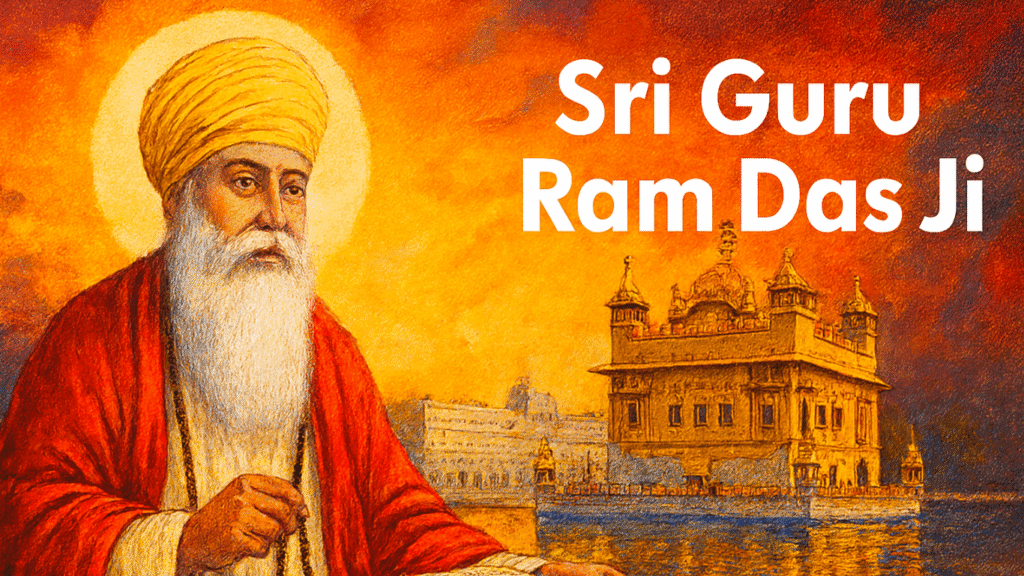
The martyrdom of Sri Guru Tegh Bahadur Ji in 1675 was a landmark event in Indian history. His supreme sacrifice was not only for the Sikh community but for the protection of religious freedom across the country. It carried deep social, political, and spiritual meaning, shaping the destiny of Punjab and India.
A Great Historical Event
The world has witnessed many sacrifices, often made for one’s own religion or country. However, Guru Tegh Bahadur Ji’s martyrdom was unique. He gave his life for the protection of Hinduism, a faith he did not personally practice, and for the downtrodden who were suffering under Mughal tyranny. This act of selflessness has no parallel in history. It is for this reason that he is remembered as Hind Di Chadar (Shield of India), a protector of freedom and dignity.
Awakening of Resistance
The execution of Guru Ji sent shockwaves across Punjab. It created a strong feeling of anger and revenge among Sikhs and ordinary people. His martyrdom became the spark that ignited resistance against Aurangzeb’s oppressive rule. The people swore to end Mughal tyranny, and this spirit of defiance eventually weakened Aurangzeb’s empire, which fell like a dead leaf on the road.
Protection of Hinduism
Aurangzeb’s policy was to convert the entire country to Islam. He unleashed a reign of terror, killing Hindus daily and forcing conversions. Hinduism was on the verge of collapse. In this dark time, Guru Tegh Bahadur Ji gave his life to protect the Hindu faith. His martyrdom awakened Hindus who had been dormant for centuries, giving them courage to resist and challenge Aurangzeb’s tyranny.
Foundation of the Khalsa
The martyrdom made it clear to Sikhs that survival required strength and unity. To prepare Sikhs for future struggles, Guru Gobind Singh Ji created the Khalsa Panth in 1699. The Khalsa was a fearless community of saint‑soldiers who fought bravely against Mughals and Afghans. This transformation gave Sikhs the power to defend their faith and ultimately dismantle foreign rule in Punjab.
Tradition of Sacrifice
Guru Ji’s martyrdom began a sacred tradition of sacrifice in Sikh history. Guru Gobind Singh Ji himself endured immense suffering, and his four Sahibzadas gave their lives for the faith. The elder Sahibzadas, Ajit Singh Ji and Jujhar Singh Ji, fell in battle, while the younger Sahibzadas, Zorawar Singh Ji and Fateh Singh Ji, were bricked alive at Sirhind. Banda Singh Bahadur and countless Sikhs also embraced martyrdom. This tradition of sacrifice became the spiritual strength of the Sikh community, inspiring confidence and resilience.
Battles Against the Mughals
The martyrdom triggered decades of battles between Sikhs and Mughals. Despite limited resources, Sikhs fought with unmatched bravery and determination. Their courage shook the very foundations of the Mughal empire. These battles were not only military struggles but also moral ones, proving that faith and sacrifice could overcome tyranny.
The martyrdom of Sri Guru Tegh Bahadur Ji was a turning point in Indian history. It protected religious freedom, awakened Hindus, inspired Sikhs, and paved the way for the creation of the Khalsa. His sacrifice established a permanent tradition of courage and resistance that shaped the destiny of Punjab and India. Guru Ji’s legacy continues to remind humanity of the power of selfless sacrifice and the importance of standing up for justice.
The great martyrdom of Sri Guru Tegh Bahadur Ji shook the whole humanity. This martyrdom marked the beginning of a new era not only in the history of Punjab, but also in the history of India.
When Bhai Jaita Ji tried to bring the Guru’s sacred head from Delhi, he was intercepted by Mughal forces near Gathi Kushala (Budh Khalsa) village Sonepat. There, an ardent devotee, Bhai Kushal Singh Br Dahiya offered his own head to distract the army & Jaita Ji took thru Taraori & Ambala to Anandpur Sahib
1. Great Historical Event : The history of the world is replete with sacrifices. These sacrifices were made either for the protection of one’s religion or for the sake of the country. But Sri Guru Tegh Bahadur Ji made supreme sacrifice for the protection of the downtrodden and for the protection of that religion to which, he himself did not belong. This example has no parallel in the history of the world. That is, why Sri Guru Tegh Bahadur Ji is called ‘Hind Di Chadar‘.
2. Feeling of Revenge among Sikhs : The martyrdom of Sri Guru Tegh Bahadur Ji sent a wave of hatred and revenge in the whole Punjab against the Mughal empire. The people swore to put an end to the tyrannical rule of the Mughals. In fact, after the martyrdom of Sri Guru Tegh Bahadur Ji, a storm arose in the Punjab that carried off the empire of Aurangzeb, as if it were a dead leaf lying on the road.
3. Protection of Hinduism : Aurangzeb wanted to convert the whole of India to Islam. With this end in view he had let loose a reign of terror. A large number of Hindus were daily put to death. Consequently, many Hindus had started adopting Islam. The very existence of the Hindu religion was exposed to a great danger. Under such times, Sri Guru Tegh Bahadur Ji gave his own sacrifice in order to protect the Hindu faith. This martyrdom also awakened the Hindu community that had been lying dormant for centuries together. The Hindus were now prepared to pose a challenge to Aurangzeb.
4. Creation of the Khalsa : The martyrdom of Sri Guru Tegh Bahadur Ji made it clear to the Sikhs that in order to defend their religion it was most essential for them to wear arms. With this end in view and to infuse a new spirit in the Sikhs, Sri Guru Gobind Singh Ji performed a great deed by creating the Khalsa Panth on the day of Baisakhi in 1699 A.D. The creation of the Khalsa gave birth to such a fearless community, which thoroughly smashed the powerful rule of the Mughals and the Afghans in Punjab.
5. Beginning of the Tradition of Sacrifice : After the martyrdom of Sri Guru Tegh Bahadur Ji, a tradition of making sacrifice for religion started among the Sikhs. While treading this path, Sri Guru Gobind Singh Ji underwent several untold sufferings. The two elder Sahibzadas (Sahibzada Ajit Singh Ji and Sahibzada Jujhar Singh Ji) and many devoted Sikhs, fell martyrs in battles. His two younger Sahibzadas (Sahibzada Zorawar Singh Ji and Sahibzada Fateh Singh Ji) were bricked up alive in a wall at Sirhind. After Sri Guru Gobind Singh Ji, Banda Singh Bahadur along with hundreds of Sikhs gave their sacrifices. The blood of the martyrs infused a new confidence amongst the Sikhs.
6. Battles between the Sikhs and the Mughals : A long drawn battle started between the Sikhs and the Mughals in the wake of Sri Guru Tegh Bahadur Ji’s martyrdom. In these battles, the Sikhs had to face innumerable hardships but they stood firm like a rock. Despite their limited resources, the Sikhs with their matchless bravery shook the very foundations of the great Mughal empire.