In this article, you will learn another 10 important vocabulary words: Psalm, Agony, Orwellian year, Foresaw, Enactment, Pogrom, Archipelago, Quake, Ethnographic and Vivid.
10 English The Most Important Vocabulary Words for 09 June Upcoming Exams with Punjabi Meanings
1. Psalm (ਭਜਨ, ਸਤਿਕਾਰ-ਗੀਤ, ਪ੍ਰਭੂ ਦੀ ਮਹਿਮਾ ਦਾ ਗੀਤ)
The new vocabulary word ‘Psalm’ literally means “a sacred song, hymn, or poem of praise and worship to God.” It is especially associated with the Book of Psalms in the Bible and is often sung or recited during religious worship.
In Punjabi, psalm meaning is: ਭਜਨ, ਸਤਿਕਾਰ-ਗੀਤ, ਪ੍ਰਭੂ ਦੀ ਮਹਿਮਾ ਦਾ ਗੀਤ
Now, understand the vocabulary word “Psalm” with the sentence:
e.g. The congregation sang a psalm during the church service.
ਚਰਚ ਦੀ ਅਰਦਾਸ ਦੌਰਾਨ ਸੰਗਤ ਨੇ ਇੱਕ ਭਜਨ (psalm) ਗਾਇਆ।
So, in the above sentence the contextual meaning of the vocabulary word ‘Psalm’ that:
Psalm, which literally means a sacred song of praise, is often used in situations involving religion, worship, prayer, churches, spirituality, and sacred literature. In this case, it highlights a devotional song sung to honor and worship God. The word ‘psalm’ emphasizes faith, devotion, praise, worship, and spirituality.
ਉਪਰੋਕਤ ਵਾਕ ਵਿੱਚ ‘Psalm’ ਸ਼ਬਦ ਦਾ ਸੰਦਰਭਗਤ ਅਰਥ ‘ਭਜਨ ਜਾਂ ਪ੍ਰਭੂ ਦੀ ਮਹਿਮਾ ਦਾ ਗੀਤ’ ਹੈ। ਇਸ ਵਾਕ ਵਿੱਚ ਦਰਸਾਇਆ ਗਿਆ ਹੈ ਕਿ ਸੰਗਤ ਨੇ ਪਰਮਾਤਮਾ ਦੀ ਸਤਿਕਾਰ ਵਿੱਚ ਇੱਕ ਧਾਰਮਿਕ ਗੀਤ ਗਾਇਆ। ‘Psalm’ ਸ਼ਬਦ ਇੱਥੇ ਭਗਤੀ, ਸ਼ਰਧਾ, ਉਪਾਸਨਾ ਅਤੇ ਆਧਿਆਤਮਿਕਤਾ ਨੂੰ ਦਰਸਾਉਂਦਾ ਹੈ।
ਜਦੋਂ ਵੀ psalm ਸ਼ਬਦ ਕਿਸੇ passage ਵਿੱਚ ਆਵੇ:
ਤਾਂ ਉਸਨੂੰ “ਪ੍ਰਭੂ ਦੀ ਸਤਿਕਾਰ, ਭਗਤੀ ਜਾਂ ਉਪਾਸਨਾ ਲਈ ਗਾਇਆ ਜਾਂ ਪੜ੍ਹਿਆ ਜਾਣ ਵਾਲਾ ਪਵਿੱਤਰ ਗੀਤ ਜਾਂ ਕਵਿਤਾ” ਨਾਲ ਜੋੜ ਕੇ ਸਮਝੋ। ਇਹ ਅਕਸਰ ਉਹਨਾਂ ਸਥਿਤੀਆਂ ਵਿੱਚ ਵਰਤਿਆ ਜਾਂਦਾ ਹੈ—ਜਿੱਥੇ ਧਾਰਮਿਕ ਸਮਾਗਮਾਂ, ਚਰਚ ਸੇਵਾਵਾਂ, ਪ੍ਰਾਰਥਨਾਵਾਂ, ਬਾਈਬਲ ਜਾਂ ਆਧਿਆਤਮਿਕ ਸਾਹਿਤ ਦੀ ਗੱਲ ਕੀਤੀ ਜਾ ਰਹੀ ਹੋਵੇ।
Synonyms: Hymn (ਭਜਨ), Chant (ਧਾਰਮਿਕ ਗਾਇਨ), Sacred Song (ਪਵਿੱਤਰ ਗੀਤ), Spiritual Song (ਆਧਿਆਤਮਿਕ ਗੀਤ), Praise Song (ਸਤਿਕਾਰ-ਗੀਤ)
Antonyms: Blasphemy (ਈਸ਼-ਨਿੰਦਾ), Criticism of Faith (ਧਰਮ ਦੀ ਆਲੋਚਨਾ), Profanity (ਅਪਵਿੱਤਰ ਬੋਲ), Irreverence (ਅਸ਼ਰਧਾ)
2. Agony (ਤਿੱਖਾ ਦਰਦ, ਭਿਆਨਕ ਪੀੜਾ, ਗਹਿਰਾ ਦੁੱਖ, ਯਾਤਨਾ)
The new vocabulary word ‘Agony’ literally means “extreme physical pain or intense mental suffering.” It refers to a state of severe pain, distress, anguish, or torment, either in the body or in the mind.
In Punjabi, agony meaning is: ਤਿੱਖਾ ਦਰਦ, ਭਿਆਨਕ ਪੀੜਾ, ਗਹਿਰਾ ਦੁੱਖ, ਯਾਤਨਾ
Now, understand the vocabulary word “Agony” with the sentence:
e.g. He was in agony after breaking his leg in the accident.
ਹਾਦਸੇ ਵਿੱਚ ਲੱਤ ਟੁੱਟਣ ਤੋਂ ਬਾਅਦ ਉਹ ਭਿਆਨਕ ਦਰਦ (agony) ਵਿੱਚ ਸੀ।
So, in the above sentence the contextual meaning of the vocabulary word ‘Agony’ that:
Agony, which literally means intense pain or suffering, is often used in situations involving injuries, illness, emotional heartbreak, grief, disappointment, and tragic experiences. In this case, it highlights the severe physical pain caused by the broken leg. The word ‘agony’ emphasizes suffering, torment, anguish, distress, and misery.
ਉਪਰੋਕਤ ਵਾਕ ਵਿੱਚ ‘Agony’ ਸ਼ਬਦ ਦਾ ਸੰਦਰਭਗਤ ਅਰਥ ‘ਭਿਆਨਕ ਦਰਦ ਜਾਂ ਪੀੜਾ’ ਹੈ। ਇਸ ਵਾਕ ਵਿੱਚ ਦਰਸਾਇਆ ਗਿਆ ਹੈ ਕਿ ਹਾਦਸੇ ਕਾਰਨ ਉਸਨੂੰ ਬਹੁਤ ਜ਼ਿਆਦਾ ਦਰਦ ਹੋ ਰਿਹਾ ਸੀ। ‘Agony’ ਸ਼ਬਦ ਇੱਥੇ ਯਾਤਨਾ, ਕਲੇਸ਼, ਤਿੱਖੇ ਦਰਦ ਅਤੇ ਗਹਿਰੇ ਦੁੱਖ ਨੂੰ ਦਰਸਾਉਂਦਾ ਹੈ।
ਜਦੋਂ ਵੀ agony ਸ਼ਬਦ ਕਿਸੇ passage ਵਿੱਚ ਆਵੇ:
ਤਾਂ ਉਸਨੂੰ “ਸਰੀਰਕ ਜਾਂ ਮਾਨਸਿਕ ਤੌਰ ’ਤੇ ਬਹੁਤ ਜ਼ਿਆਦਾ ਦਰਦ, ਦੁੱਖ ਜਾਂ ਯਾਤਨਾ” ਨਾਲ ਜੋੜ ਕੇ ਸਮਝੋ। ਇਹ ਅਕਸਰ ਉਹਨਾਂ ਸਥਿਤੀਆਂ ਵਿੱਚ ਵਰਤਿਆ ਜਾਂਦਾ ਹੈ—ਜਿੱਥੇ ਹਾਦਸਿਆਂ, ਬਿਮਾਰੀਆਂ, ਦਿਲ ਟੁੱਟਣ, ਸੋਗ, ਨਿਰਾਸ਼ਾ ਜਾਂ ਗੰਭੀਰ ਕਲੇਸ਼ ਦੀ ਗੱਲ ਕੀਤੀ ਜਾ ਰਹੀ ਹੋਵੇ।
Synonyms: Anguish (ਗਹਿਰੀ ਪੀੜਾ), Torment (ਯਾਤਨਾ), Suffering (ਕਲੇਸ਼), Misery (ਦੁੱਖ), Distress (ਕਸ਼ਟ)
Antonyms: Comfort (ਆਰਾਮ), Relief (ਰਾਹਤ), Pleasure (ਖੁਸ਼ੀ), Joy (ਆਨੰਦ), Happiness (ਸੁੱਖ)
3. Orwellian Year (ਓਰਵੈਲੀਅਨ ਸਾਲ, ਤਾਨਾਸ਼ਾਹੀ ਨਿਗਰਾਨੀ ਅਤੇ ਨਿਯੰਤਰਣ ਵਾਲਾ ਸਮਾਂ)
The phrase ‘Orwellian Year’ is derived from George Orwell’s famous novel “Nineteen Eighty-Four (1984)”, which depicts a society under constant surveillance, censorship, propaganda, and authoritarian control.
In Punjabi, Orwellian Year meaning is:
ਅਜਿਹਾ ਸਾਲ ਜਾਂ ਸਮਾਂ ਜਿਸ ਵਿੱਚ ਸਰਕਾਰ ਜਾਂ ਅਧਿਕਾਰੀਆਂ ਵੱਲੋਂ ਲੋਕਾਂ ’ਤੇ ਬਹੁਤ ਜ਼ਿਆਦਾ ਨਿਗਰਾਨੀ, ਜਾਣਕਾਰੀ ਦਾ ਨਿਯੰਤਰਣ, ਪ੍ਰਚਾਰ (propaganda) ਜਾਂ ਆਜ਼ਾਦੀ ’ਤੇ ਪਾਬੰਦੀਆਂ ਹੋਣ।
e.g. Many critics described the period of mass surveillance as an Orwellian year.
ਬਹੁਤ ਜ਼ਿਆਦਾ ਨਿਗਰਾਨੀ ਵਾਲੇ ਉਸ ਸਮੇਂ ਨੂੰ ਕਈ ਆਲੋਚਕਾਂ ਨੇ ਇੱਕ Orwellian year ਕਿਹਾ।
So, in the above sentence the contextual meaning of ‘Orwellian Year’ is:
Orwellian Year refers to a period characterized by excessive surveillance, control of information, censorship, manipulation of truth, or restrictions on personal freedoms. It is often used in discussions about politics, technology, privacy, and civil liberties.
ਉਪਰੋਕਤ ਵਾਕ ਵਿੱਚ ‘Orwellian Year’ ਦਾ ਸੰਦਰਭਗਤ ਅਰਥ ਅਜਿਹੇ ਸਮੇਂ ਨਾਲ ਹੈ ਜਿੱਥੇ ਲੋਕਾਂ ਦੀ ਨਿੱਜਤਾ ਅਤੇ ਆਜ਼ਾਦੀ ’ਤੇ ਵਧੇਰੇ ਨਿਯੰਤਰਣ ਹੋਵੇ। ਇਹ ਸ਼ਬਦ ਨਿਗਰਾਨੀ, ਸੈਂਸਰਸ਼ਿਪ, ਪ੍ਰਚਾਰ ਅਤੇ ਤਾਨਾਸ਼ਾਹੀ ਰੁਝਾਨਾਂ ਨੂੰ ਦਰਸਾਉਂਦਾ ਹੈ।
ਜਦੋਂ ਵੀ Orwellian Year ਸ਼ਬਦ ਕਿਸੇ passage ਵਿੱਚ ਆਵੇ:
ਤਾਂ ਉਸਨੂੰ “ਜਾਰਜ ਔਰਵੈਲ ਦੇ ਨਾਵਲ 1984 ਵਰਗੇ ਮਾਹੌਲ ਵਾਲਾ ਸਮਾਂ, ਜਿੱਥੇ ਲੋਕਾਂ ਦੀਆਂ ਗਤੀਵਿਧੀਆਂ ’ਤੇ ਨਿਗਰਾਨੀ ਰੱਖੀ ਜਾਂਦੀ ਹੋਵੇ ਅਤੇ ਜਾਣਕਾਰੀ ਨੂੰ ਨਿਯੰਤਰਿਤ ਕੀਤਾ ਜਾਂਦਾ ਹੋਵੇ” ਨਾਲ ਜੋੜ ਕੇ ਸਮਝੋ।
Synonyms: Authoritarian Period (ਤਾਨਾਸ਼ਾਹੀ ਦੌਰ), Surveillance State (ਨਿਗਰਾਨੀ ਵਾਲਾ ਰਾਜ), Repressive Era (ਦਮਨਕਾਰੀ ਯੁੱਗ), Controlled Society (ਨਿਯੰਤਰਿਤ ਸਮਾਜ)
Antonyms: Democratic Era (ਲੋਕਤੰਤਰਕ ਯੁੱਗ), Free Society (ਆਜ਼ਾਦ ਸਮਾਜ), Open Government (ਖੁੱਲ੍ਹਾ ਸ਼ਾਸਨ), Civil Liberty (ਨਾਗਰਿਕ ਆਜ਼ਾਦੀ)
4. Foresaw (ਪਹਿਲਾਂ ਹੀ ਅੰਦਾਜ਼ਾ ਲਗਾ ਲਿਆ, ਭਵਿੱਖਬਾਣੀ ਕੀਤੀ, ਪਹਿਲਾਂ ਤੋਂ ਦੇਖ ਲਿਆ)
The new vocabulary word ‘Foresaw’ is the past tense of ‘Foresee’ and literally means “saw or predicted something before it happened.” It refers to anticipating or expecting a future event based on knowledge, experience, or insight.
In Punjabi, foresaw meaning is: ਪਹਿਲਾਂ ਹੀ ਅੰਦਾਜ਼ਾ ਲਗਾ ਲਿਆ, ਭਵਿੱਖਬਾਣੀ ਕੀਤੀ, ਪਹਿਲਾਂ ਤੋਂ ਦੇਖ ਲਿਆ
Now, understand the vocabulary word “Foresaw” with the sentence:
e.g. She foresaw the difficulties that the project would face in the future.
ਉਸਨੇ ਪਹਿਲਾਂ ਹੀ ਅੰਦਾਜ਼ਾ ਲਗਾ ਲਿਆ ਸੀ (foresaw) ਕਿ ਭਵਿੱਖ ਵਿੱਚ ਇਸ ਪ੍ਰੋਜੈਕਟ ਨੂੰ ਕਿਹੜੀਆਂ ਮੁਸ਼ਕਲਾਂ ਦਾ ਸਾਹਮਣਾ ਕਰਨਾ ਪਵੇਗਾ।
So, in the above sentence the contextual meaning of the vocabulary word ‘Foresaw’ that:
Foresaw, which literally means predicted in advance, is often used in situations involving planning, business, politics, science, economics, and personal decision-making. In this case, it highlights that she anticipated the future challenges before they actually occurred. The word ‘foresaw’ emphasizes prediction, anticipation, foresight, expectation, and insight.
ਉਪਰੋਕਤ ਵਾਕ ਵਿੱਚ ‘Foresaw’ ਸ਼ਬਦ ਦਾ ਸੰਦਰਭਗਤ ਅਰਥ ‘ਪਹਿਲਾਂ ਹੀ ਅੰਦਾਜ਼ਾ ਲਗਾ ਲਿਆ’ ਹੈ। ਇਸ ਵਾਕ ਵਿੱਚ ਦਰਸਾਇਆ ਗਿਆ ਹੈ ਕਿ ਉਸਨੇ ਭਵਿੱਖ ਵਿੱਚ ਆਉਣ ਵਾਲੀਆਂ ਮੁਸ਼ਕਲਾਂ ਨੂੰ ਪਹਿਲਾਂ ਹੀ ਸਮਝ ਲਿਆ ਸੀ। ‘Foresaw’ ਸ਼ਬਦ ਇੱਥੇ ਦੂਰਅੰਦੇਸ਼ੀ, ਅਗਾਊਂ ਸੋਚ, ਅਨੁਮਾਨ ਅਤੇ ਭਵਿੱਖ ਦੀ ਸਮਝ ਨੂੰ ਦਰਸਾਉਂਦਾ ਹੈ।
ਜਦੋਂ ਵੀ foresaw ਸ਼ਬਦ ਕਿਸੇ passage ਵਿੱਚ ਆਵੇ:
ਤਾਂ ਉਸਨੂੰ “ਕਿਸੇ ਘਟਨਾ ਜਾਂ ਸਥਿਤੀ ਦੇ ਵਾਪਰਨ ਤੋਂ ਪਹਿਲਾਂ ਉਸਦਾ ਅੰਦਾਜ਼ਾ ਲਗਾ ਲੈਣਾ ਜਾਂ ਭਵਿੱਖਬਾਣੀ ਕਰਨਾ” ਨਾਲ ਜੋੜ ਕੇ ਸਮਝੋ। ਇਹ ਅਕਸਰ ਉਹਨਾਂ ਸਥਿਤੀਆਂ ਵਿੱਚ ਵਰਤਿਆ ਜਾਂਦਾ ਹੈ—ਜਿੱਥੇ ਯੋਜਨਾਬੰਦੀ, ਕਾਰੋਬਾਰ, ਰਾਜਨੀਤੀ, ਵਿਗਿਆਨ, ਅਰਥਵਿਵਸਥਾ ਜਾਂ ਨਿੱਜੀ ਫੈਸਲਿਆਂ ਦੀ ਗੱਲ ਕੀਤੀ ਜਾ ਰਹੀ ਹੋਵੇ।
Synonyms: Predicted (ਭਵਿੱਖਬਾਣੀ ਕੀਤੀ), Anticipated (ਅਗਾਊਂ ਅੰਦਾਜ਼ਾ ਲਗਾਇਆ), Expected (ਉਮੀਦ ਕੀਤੀ), Envisioned (ਕਲਪਨਾ ਕੀਤੀ), Forecast (ਪੂਰਵ ਅਨੁਮਾਨ ਲਗਾਇਆ)
Antonyms: Overlooked (ਧਿਆਨ ਨਾ ਦਿੱਤਾ), Ignored (ਅਣਡਿੱਠਾ ਕੀਤਾ), Misjudged (ਗਲਤ ਅੰਦਾਜ਼ਾ ਲਗਾਇਆ), Missed (ਖੁੰਝ ਗਿਆ), Unanticipated (ਅਣਉਮੀਦ)
5. Enactment (ਲਾਗੂ ਕਰਨਾ, ਕਾਨੂੰਨ ਬਣਾਉਣਾ, ਅਮਲ ਵਿੱਚ ਲਿਆਉਣਾ, ਅਧਿਨਿਯਮ)
The new vocabulary word ‘Enactment’ literally means “the process of making a law official and putting it into effect.” It can also mean the act of performing or acting out something, but in exams and newspapers it is most commonly used in the legal and governmental sense.
In Punjabi, enactment meaning is: ਲਾਗੂ ਕਰਨਾ, ਕਾਨੂੰਨ ਬਣਾਉਣਾ, ਅਮਲ ਵਿੱਚ ਲਿਆਉਣਾ, ਅਧਿਨਿਯਮ
Now, understand the vocabulary word “Enactment” with the sentence:
e.g. The enactment of the new education policy brought significant changes to the school system.
ਨਵੀਂ ਸਿੱਖਿਆ ਨੀਤੀ ਦੇ ਲਾਗੂ ਹੋਣ (enactment) ਨਾਲ ਸਕੂਲੀ ਪ੍ਰਣਾਲੀ ਵਿੱਚ ਮਹੱਤਵਪੂਰਨ ਬਦਲਾਅ ਆਏ।
So, in the above sentence the contextual meaning of the vocabulary word ‘Enactment’ that:
Enactment, which literally means making a law, rule, or policy effective, is often used in situations involving governments, legislatures, public policies, regulations, and legal reforms. In this case, it highlights that the education policy officially came into force and began affecting the school system. The word ‘enactment’ emphasizes implementation, legislation, authorization, execution, and enforcement.
ਉਪਰੋਕਤ ਵਾਕ ਵਿੱਚ ‘Enactment’ ਸ਼ਬਦ ਦਾ ਸੰਦਰਭਗਤ ਅਰਥ ‘ਲਾਗੂ ਕਰਨਾ ਜਾਂ ਕਾਨੂੰਨ ਨੂੰ ਅਮਲ ਵਿੱਚ ਲਿਆਉਣਾ’ ਹੈ। ਇਸ ਵਾਕ ਵਿੱਚ ਦਰਸਾਇਆ ਗਿਆ ਹੈ ਕਿ ਨਵੀਂ ਸਿੱਖਿਆ ਨੀਤੀ ਦੇ ਲਾਗੂ ਹੋਣ ਤੋਂ ਬਾਅਦ ਸਿੱਖਿਆ ਪ੍ਰਣਾਲੀ ਵਿੱਚ ਬਦਲਾਅ ਆਏ। ‘Enactment’ ਸ਼ਬਦ ਇੱਥੇ ਕਾਨੂੰਨ ਬਣਾਉਣ, ਨੀਤੀ ਲਾਗੂ ਕਰਨ ਅਤੇ ਅਧਿਕਾਰਕ ਤੌਰ ’ਤੇ ਅਮਲ ਸ਼ੁਰੂ ਕਰਨ ਦੀ ਭਾਵਨਾ ਨੂੰ ਦਰਸਾਉਂਦਾ ਹੈ।
ਜਦੋਂ ਵੀ enactment ਸ਼ਬਦ ਕਿਸੇ passage ਵਿੱਚ ਆਵੇ:
ਤਾਂ ਉਸਨੂੰ “ਕਿਸੇ ਕਾਨੂੰਨ, ਨੀਤੀ, ਨਿਯਮ ਜਾਂ ਅਧਿਨਿਯਮ ਨੂੰ ਅਧਿਕਾਰਕ ਤੌਰ ’ਤੇ ਮਨਜ਼ੂਰ ਕਰਕੇ ਲਾਗੂ ਕਰਨ ਦੀ ਪ੍ਰਕਿਰਿਆ” ਨਾਲ ਜੋੜ ਕੇ ਸਮਝੋ। ਇਹ ਅਕਸਰ ਉਹਨਾਂ ਸਥਿਤੀਆਂ ਵਿੱਚ ਵਰਤਿਆ ਜਾਂਦਾ ਹੈ—ਜਿੱਥੇ ਸੰਸਦ, ਸਰਕਾਰ, ਕਾਨੂੰਨੀ ਸੁਧਾਰਾਂ, ਨਵੀਆਂ ਨੀਤੀਆਂ ਜਾਂ ਨਿਯਮਾਂ ਦੀ ਗੱਲ ਕੀਤੀ ਜਾ ਰਹੀ ਹੋਵੇ।
Synonyms: Implementation (ਲਾਗੂਕਰਨ), Legislation (ਵਿਧਾਨ), Authorization (ਮਨਜ਼ੂਰੀ), Enforcement (ਲਾਗੂ ਕਰਨਾ), Execution (ਅਮਲ)
Antonyms: Repeal (ਰੱਦ ਕਰਨਾ), Abolition (ਖਤਮ ਕਰਨਾ), Cancellation (ਰੱਦਗੀ), Revocation (ਵਾਪਸ ਲੈਣਾ), Suspension (ਮੁਅੱਤਲ ਕਰਨਾ)
6. Pogrom (ਕਿਸੇ ਖ਼ਾਸ ਭਾਈਚਾਰੇ ਉੱਤੇ ਸੰਗਠਿਤ ਹਿੰਸਕ ਹਮਲਾ, ਕਤਲੇਆਮ, ਦੰਗਾਈ ਹਮਲਾ)
The new vocabulary word ‘Pogrom’ literally means “an organized and violent attack against a particular ethnic, religious, or social group, often with the aim of persecution.”
In Punjabi, pogrom meaning is: ਕਿਸੇ ਖ਼ਾਸ ਭਾਈਚਾਰੇ ਉੱਤੇ ਸੰਗਠਿਤ ਹਿੰਸਕ ਹਮਲਾ, ਕਤਲੇਆਮ, ਦੰਗਾਈ ਹਮਲਾ
Now, understand the vocabulary word “Pogrom” with the sentence:
e.g. Historians studied the pogrom that forced thousands of people to flee their homes.
ਇਤਿਹਾਸਕਾਰਾਂ ਨੇ ਉਸ ਸੰਗਠਿਤ ਹਿੰਸਕ ਹਮਲੇ (pogrom) ਦਾ ਅਧਿਐਨ ਕੀਤਾ ਜਿਸ ਕਾਰਨ ਹਜ਼ਾਰਾਂ ਲੋਕਾਂ ਨੂੰ ਆਪਣੇ ਘਰ ਛੱਡਣੇ ਪਏ।
So, in the above sentence the contextual meaning of the vocabulary word ‘Pogrom’ that:
Pogrom, which literally means a targeted violent attack on a specific group, is often used in discussions of history, ethnic conflict, religious persecution, riots, and human rights abuses. In this case, it highlights a coordinated outbreak of violence that displaced many people. The word ‘pogrom’ emphasizes persecution, mob violence, discrimination, oppression, and forced displacement.
ਉਪਰੋਕਤ ਵਾਕ ਵਿੱਚ ‘Pogrom’ ਸ਼ਬਦ ਦਾ ਸੰਦਰਭਗਤ ਅਰਥ ‘ਕਿਸੇ ਖ਼ਾਸ ਭਾਈਚਾਰੇ ਉੱਤੇ ਸੰਗਠਿਤ ਹਿੰਸਕ ਹਮਲਾ’ ਹੈ। ਇਸ ਵਾਕ ਵਿੱਚ ਦਰਸਾਇਆ ਗਿਆ ਹੈ ਕਿ ਹਿੰਸਾ ਦੇ ਕਾਰਨ ਬਹੁਤ ਸਾਰੇ ਲੋਕਾਂ ਨੂੰ ਆਪਣੇ ਘਰ ਛੱਡਣੇ ਪਏ। ‘Pogrom’ ਸ਼ਬਦ ਇੱਥੇ ਜ਼ੁਲਮ, ਪੀੜਨ, ਭੀੜ ਦੀ ਹਿੰਸਾ ਅਤੇ ਭਾਈਚਾਰਕ ਨਿਸ਼ਾਨਾਬੰਦੀ ਨੂੰ ਦਰਸਾਉਂਦਾ ਹੈ।
ਜਦੋਂ ਵੀ pogrom ਸ਼ਬਦ ਕਿਸੇ passage ਵਿੱਚ ਆਵੇ:
ਤਾਂ ਉਸਨੂੰ “ਕਿਸੇ ਧਾਰਮਿਕ, ਨਸਲੀ ਜਾਂ ਸਮਾਜਿਕ ਭਾਈਚਾਰੇ ਵਿਰੁੱਧ ਕੀਤੇ ਗਏ ਯੋਜਨਾਬੱਧ ਅਤੇ ਹਿੰਸਕ ਹਮਲੇ” ਨਾਲ ਜੋੜ ਕੇ ਸਮਝੋ। ਇਹ ਅਕਸਰ ਉਹਨਾਂ ਸਥਿਤੀਆਂ ਵਿੱਚ ਵਰਤਿਆ ਜਾਂਦਾ ਹੈ—ਜਿੱਥੇ ਇਤਿਹਾਸਕ ਦੰਗਿਆਂ, ਧਾਰਮਿਕ ਪੀੜਨ, ਨਸਲੀ ਟਕਰਾਅ ਜਾਂ ਮਨੁੱਖੀ ਅਧਿਕਾਰਾਂ ਦੇ ਉਲੰਘਣ ਦੀ ਗੱਲ ਕੀਤੀ ਜਾ ਰਹੀ ਹੋਵੇ।
Synonyms: Massacre (ਕਤਲੇਆਮ), Persecution (ਪੀੜਨ), Riot Against a Community (ਭਾਈਚਾਰੇ ਵਿਰੁੱਧ ਦੰਗਾ), Ethnic Violence (ਨਸਲੀ ਹਿੰਸਾ), Organized Attack (ਸੰਗਠਿਤ ਹਮਲਾ)
Antonyms: Peace (ਸ਼ਾਂਤੀ), Harmony (ਸਦਭਾਵਨਾ), Tolerance (ਸਹਿਣਸ਼ੀਲਤਾ), Protection (ਸੁਰੱਖਿਆ), Coexistence (ਸਹਿ-ਅਸਤਿਤਵ)
7. Archipelago (ਟਾਪੂ-ਸਮੂਹ, ਟਾਪੂਆਂ ਦਾ ਗੁੱਛਾ)
The new vocabulary word ‘Archipelago’ literally means “a group or chain of islands located close together in a sea or ocean.” It refers to a collection of many islands that form a geographical region.
In Punjabi, archipelago meaning is: ਟਾਪੂ-ਸਮੂਹ, ਟਾਪੂਆਂ ਦਾ ਗੁੱਛਾ
Now, understand the vocabulary word “Archipelago” with the sentence:
e.g. Indonesia is the world’s largest archipelago, consisting of thousands of islands.
ਇੰਡੋਨੇਸ਼ੀਆ ਦੁਨੀਆ ਦਾ ਸਭ ਤੋਂ ਵੱਡਾ ਟਾਪੂ-ਸਮੂਹ (archipelago) ਹੈ, ਜਿਸ ਵਿੱਚ ਹਜ਼ਾਰਾਂ ਟਾਪੂ ਹਨ।
So, in the above sentence the contextual meaning of the vocabulary word ‘Archipelago’ that:
Archipelago, which literally means a cluster of islands, is often used in geography, travel, environmental studies, and world history. In this case, it highlights a nation made up of numerous islands spread across the sea. The word ‘archipelago’ emphasizes island groups, maritime geography, ocean regions, and interconnected islands.
ਉਪਰੋਕਤ ਵਾਕ ਵਿੱਚ ‘Archipelago’ ਸ਼ਬਦ ਦਾ ਸੰਦਰਭਗਤ ਅਰਥ ‘ਟਾਪੂਆਂ ਦਾ ਸਮੂਹ’ ਹੈ। ਇਸ ਵਾਕ ਵਿੱਚ ਦਰਸਾਇਆ ਗਿਆ ਹੈ ਕਿ ਇੰਡੋਨੇਸ਼ੀਆ ਬਹੁਤ ਸਾਰੇ ਟਾਪੂਆਂ ਤੋਂ ਬਣਿਆ ਹੋਇਆ ਦੇਸ਼ ਹੈ। ‘Archipelago’ ਸ਼ਬਦ ਇੱਥੇ ਸਮੁੰਦਰ ਵਿੱਚ ਇਕੱਠੇ ਸਥਿਤ ਟਾਪੂਆਂ ਦੇ ਸਮੂਹ ਨੂੰ ਦਰਸਾਉਂਦਾ ਹੈ।
ਜਦੋਂ ਵੀ archipelago ਸ਼ਬਦ ਕਿਸੇ passage ਵਿੱਚ ਆਵੇ:
ਤਾਂ ਉਸਨੂੰ “ਸਮੁੰਦਰ ਜਾਂ ਮਹਾਂਸਾਗਰ ਵਿੱਚ ਇਕੱਠੇ ਸਥਿਤ ਕਈ ਟਾਪੂਆਂ ਦੇ ਸਮੂਹ” ਨਾਲ ਜੋੜ ਕੇ ਸਮਝੋ। ਇਹ ਅਕਸਰ ਉਹਨਾਂ ਸਥਿਤੀਆਂ ਵਿੱਚ ਵਰਤਿਆ ਜਾਂਦਾ ਹੈ—ਜਿੱਥੇ ਭੂਗੋਲ, ਸਮੁੰਦਰੀ ਖੇਤਰਾਂ, ਟਾਪੂ-ਦੇਸ਼ਾਂ ਜਾਂ ਯਾਤਰਾ ਸਥਾਨਾਂ ਦੀ ਗੱਲ ਕੀਤੀ ਜਾ ਰਹੀ ਹੋਵੇ।
Synonyms: Island Group (ਟਾਪੂ-ਸਮੂਹ), Island Chain (ਟਾਪੂਆਂ ਦੀ ਲੜੀ), Cluster of Islands (ਟਾਪੂਆਂ ਦਾ ਗੁੱਛਾ)
Antonyms: Mainland (ਮੁੱਖ ਭੂਖੰਡ), Continent (ਮਹਾਂਦੀਪ), Landmass (ਵੱਡਾ ਭੂਖੰਡ)
8. Quake (ਭੂਚਾਲ, ਕੰਬਣਾ, ਥਰਥਰਾਉਣਾ, ਕੰਬ ਉੱਠਣਾ)
The new vocabulary word ‘Quake’ can be used as both a noun and a verb.
1. As a Noun: Quake
Quake means “an earthquake or a sudden shaking of the ground.”
Punjabi meaning: ਭੂਚਾਲ, ਧਰਤੀ ਦਾ ਕੰਬਣਾ
e.g. A powerful quake struck the region early in the morning.
ਸਵੇਰੇ ਤੜਕੇ ਇੱਕ ਸ਼ਕਤੀਸ਼ਾਲੀ ਭੂਚਾਲ (quake) ਨੇ ਇਸ ਖੇਤਰ ਨੂੰ ਹਿਲਾ ਦਿੱਤਾ।
2. As a Verb: Quake
Quake means “to shake or tremble because of fear, cold, excitement, or another strong emotion.”
Punjabi meaning: ਕੰਬਣਾ, ਥਰਥਰਾਉਣਾ
e.g. The child quaked with fear during the storm.
ਤੂਫ਼ਾਨ ਦੌਰਾਨ ਬੱਚਾ ਡਰ ਨਾਲ ਕੰਬ ਰਿਹਾ ਸੀ (quaked)।
So, in the above sentences the contextual meaning of the word ‘Quake’ that:
Quake, as a noun, refers to an earthquake, while as a verb, it refers to trembling or shaking. It is often used in discussions about natural disasters, fear, anxiety, excitement, and strong emotions. The word ‘quake’ emphasizes shaking, trembling, vibration, fear, and sudden movement.
ਉਪਰੋਕਤ ਵਾਕਾਂ ਵਿੱਚ ‘Quake’ ਦਾ ਅਰਥ ਸੰਦਰਭ ਅਨੁਸਾਰ ਬਦਲਦਾ ਹੈ। ਨਾਂਵ (noun) ਵਜੋਂ ਇਸਦਾ ਅਰਥ ‘ਭੂਚਾਲ’ ਹੈ, ਜਦਕਿ ਕ੍ਰਿਆ (verb) ਵਜੋਂ ਇਸਦਾ ਅਰਥ ‘ਕੰਬਣਾ ਜਾਂ ਥਰਥਰਾਉਣਾ’ ਹੈ।
ਜਦੋਂ ਵੀ quake ਸ਼ਬਦ ਕਿਸੇ passage ਵਿੱਚ ਆਵੇ:
ਤਾਂ ਸੰਦਰਭ ਦੇਖੋ। ਜੇ ਕੁਦਰਤੀ ਆਫ਼ਤ ਦੀ ਗੱਲ ਹੋ ਰਹੀ ਹੋਵੇ ਤਾਂ ਇਸਦਾ ਅਰਥ ‘ਭੂਚਾਲ’ ਹੋਵੇਗਾ। ਜੇ ਡਰ, ਠੰਢ ਜਾਂ ਭਾਵਨਾਵਾਂ ਕਾਰਨ ਕੰਬਣ ਦੀ ਗੱਲ ਹੋਵੇ ਤਾਂ ਇਸਦਾ ਅਰਥ ‘ਥਰਥਰਾਉਣਾ’ ਹੋਵੇਗਾ।
Synonyms (Noun): Earthquake (ਭੂਚਾਲ), Tremor (ਝਟਕਾ), Seismic Shock (ਭੂਚਾਲੀ ਝਟਕਾ)
Synonyms (Verb): Tremble (ਕੰਬਣਾ), Shake (ਹਿਲਣਾ), Shiver (ਥਰਥਰਾਉਣਾ), Vibrate (ਕੰਪਨ ਕਰਨਾ)
Antonyms (Verb): Remain Steady (ਸਥਿਰ ਰਹਿਣਾ), Calm Down (ਸ਼ਾਂਤ ਰਹਿਣਾ), Stabilize (ਸਥਿਰ ਹੋਣਾ)
9. Ethnographic (ਨਸਲੀ-ਸੰਸਕ੍ਰਿਤਿਕ ਅਧਿਐਨ ਨਾਲ ਸੰਬੰਧਿਤ, ਜਨਜਾਤੀ-ਵਿਗਿਆਨਕ, ਸਮਾਜਿਕ-ਸੱਭਿਆਚਾਰਕ ਅਧਿਐਨਕ)
The new vocabulary word ‘Ethnographic’ literally means “relating to the scientific study and detailed description of people, cultures, communities, customs, and ways of life.”
In Punjabi, ethnographic meaning is: ਨਸਲੀ-ਸੰਸਕ੍ਰਿਤਿਕ ਅਧਿਐਨ ਨਾਲ ਸੰਬੰਧਿਤ, ਜਨਜਾਤੀ-ਵਿਗਿਆਨਕ, ਸਮਾਜਿਕ-ਸੱਭਿਆਚਾਰਕ ਅਧਿਐਨਕ
Now, understand the vocabulary word “Ethnographic” with the sentence:
e.g. The researcher conducted an ethnographic study of the tribal community.
ਖੋਜਕਰਤਾ ਨੇ ਆਦਿਵਾਸੀ ਭਾਈਚਾਰੇ ਦਾ ਇੱਕ ਨਸਲੀ-ਸੰਸਕ੍ਰਿਤਿਕ ਅਧਿਐਨ (ethnographic study) ਕੀਤਾ।
So, in the above sentence the contextual meaning of the vocabulary word ‘Ethnographic’ that:
Ethnographic, which literally means relating to the study of human cultures and societies, is often used in anthropology, sociology, history, cultural studies, and field research. In this case, it highlights a detailed study of the lifestyle, traditions, beliefs, and social practices of a tribal community. The word ‘ethnographic’ emphasizes observation, culture, customs, traditions, communities, and human behavior.
ਉਪਰੋਕਤ ਵਾਕ ਵਿੱਚ ‘Ethnographic’ ਸ਼ਬਦ ਦਾ ਸੰਦਰਭਗਤ ਅਰਥ ‘ਕਿਸੇ ਭਾਈਚਾਰੇ ਦੀ ਸੰਸਕ੍ਰਿਤੀ, ਰੀਤੀ-ਰਿਵਾਜਾਂ ਅਤੇ ਜੀਵਨ-ਸ਼ੈਲੀ ਦੇ ਅਧਿਐਨ ਨਾਲ ਸੰਬੰਧਿਤ’ ਹੈ। ਇਸ ਵਾਕ ਵਿੱਚ ਦਰਸਾਇਆ ਗਿਆ ਹੈ ਕਿ ਖੋਜਕਰਤਾ ਨੇ ਆਦਿਵਾਸੀ ਸਮਾਜ ਦਾ ਡੂੰਘਾਈ ਨਾਲ ਅਧਿਐਨ ਕੀਤਾ। ‘Ethnographic’ ਸ਼ਬਦ ਇੱਥੇ ਸੱਭਿਆਚਾਰ, ਰਿਵਾਜਾਂ, ਸਮਾਜਕ ਜੀਵਨ ਅਤੇ ਮਨੁੱਖੀ ਵਿਹਾਰ ਦੇ ਅਧਿਐਨ ਨੂੰ ਦਰਸਾਉਂਦਾ ਹੈ।
ਜਦੋਂ ਵੀ ethnographic ਸ਼ਬਦ ਕਿਸੇ passage ਵਿੱਚ ਆਵੇ:
ਤਾਂ ਉਸਨੂੰ “ਲੋਕਾਂ, ਭਾਈਚਾਰਿਆਂ, ਜਾਤੀਆਂ ਜਾਂ ਸਮਾਜਾਂ ਦੇ ਜੀਵਨ-ਢੰਗ, ਸੰਸਕ੍ਰਿਤੀ, ਪਰੰਪਰਾਵਾਂ ਅਤੇ ਵਿਹਾਰ ਦੇ ਵਿਗਿਆਨਕ ਅਧਿਐਨ” ਨਾਲ ਜੋੜ ਕੇ ਸਮਝੋ। ਇਹ ਅਕਸਰ ਉਹਨਾਂ ਸਥਿਤੀਆਂ ਵਿੱਚ ਵਰਤਿਆ ਜਾਂਦਾ ਹੈ—ਜਿੱਥੇ ਮਾਨਵ-ਵਿਗਿਆਨ (Anthropology), ਸਮਾਜ-ਵਿਗਿਆਨ (Sociology), ਇਤਿਹਾਸ ਜਾਂ ਸੱਭਿਆਚਾਰਕ ਖੋਜ ਦੀ ਗੱਲ ਕੀਤੀ ਜਾ ਰਹੀ ਹੋਵੇ।
Synonyms: Anthropological (ਮਾਨਵ-ਵਿਗਿਆਨਕ), Cultural (ਸੱਭਿਆਚਾਰਕ), Sociological (ਸਮਾਜ-ਵਿਗਿਆਨਕ), Ethnological (ਜਾਤੀ-ਵਿਗਿਆਨਕ), Field-based (ਖੇਤਰੀ ਅਧਿਐਨਕ)
Antonyms: Non-cultural (ਗੈਰ-ਸੱਭਿਆਚਾਰਕ), Unscientific (ਗੈਰ-ਵਿਗਿਆਨਕ), Generalized (ਆਮਕ੍ਰਿਤ), Theoretical Only (ਕੇਵਲ ਸਿਧਾਂਤਕ)
10. Vivid (ਜੀਵੰਤ, ਸਪਸ਼ਟ, ਚਮਕਦਾਰ, ਬਹੁਤ ਪ੍ਰਭਾਵਸ਼ਾਲੀ)
The new vocabulary word ‘Vivid’ literally means “very clear, detailed, bright, and easy to imagine or remember.” It is used to describe images, memories, descriptions, colors, dreams, or experiences that appear extremely real and striking.
In Punjabi, vivid meaning is: ਜੀਵੰਤ, ਸਪਸ਼ਟ, ਚਮਕਦਾਰ, ਬਹੁਤ ਪ੍ਰਭਾਵਸ਼ਾਲੀ
Now, understand the vocabulary word “Vivid” with the sentence:
e.g. She gave a vivid description of her childhood village.
ਉਸਨੇ ਆਪਣੇ ਬਚਪਨ ਦੇ ਪਿੰਡ ਦਾ ਬਹੁਤ ਹੀ ਸਪਸ਼ਟ ਅਤੇ ਜੀਵੰਤ ਵਰਣਨ (vivid description) ਕੀਤਾ।
So, in the above sentence the contextual meaning of the vocabulary word ‘Vivid’ that:
Vivid, which literally means clear and lifelike, is often used in situations involving memories, dreams, stories, descriptions, colors, imagination, and experiences. In this case, it highlights that the description was so detailed and expressive that listeners could easily imagine the village. The word ‘vivid’ emphasizes clarity, brightness, realism, detail, and strong impression.
ਉਪਰੋਕਤ ਵਾਕ ਵਿੱਚ ‘Vivid’ ਸ਼ਬਦ ਦਾ ਸੰਦਰਭਗਤ ਅਰਥ ‘ਜੀਵੰਤ ਅਤੇ ਸਪਸ਼ਟ’ ਹੈ। ਇਸ ਵਾਕ ਵਿੱਚ ਦਰਸਾਇਆ ਗਿਆ ਹੈ ਕਿ ਵਰਣਨ ਇੰਨਾ ਪ੍ਰਭਾਵਸ਼ਾਲੀ ਸੀ ਕਿ ਸੁਣਨ ਵਾਲਿਆਂ ਦੇ ਮਨ ਵਿੱਚ ਪਿੰਡ ਦੀ ਤਸਵੀਰ ਬਣ ਗਈ। ‘Vivid’ ਸ਼ਬਦ ਇੱਥੇ ਸਪਸ਼ਟਤਾ, ਜੀਵੰਤਾ, ਚਮਕ ਅਤੇ ਪ੍ਰਭਾਵਸ਼ਾਲੀ ਅਭਿਵਿਅਕਤੀ ਨੂੰ ਦਰਸਾਉਂਦਾ ਹੈ।
ਜਦੋਂ ਵੀ vivid ਸ਼ਬਦ ਕਿਸੇ passage ਵਿੱਚ ਆਵੇ:
ਤਾਂ ਉਸਨੂੰ “ਅਜਿਹੀ ਚੀਜ਼ ਜੋ ਬਹੁਤ ਸਪਸ਼ਟ, ਚਮਕਦਾਰ, ਵਿਸਥਾਰਪੂਰਵਕ ਜਾਂ ਅਸਲੀ ਜਿਹੀ ਲੱਗੇ” ਨਾਲ ਜੋੜ ਕੇ ਸਮਝੋ। ਇਹ ਅਕਸਰ ਉਹਨਾਂ ਸਥਿਤੀਆਂ ਵਿੱਚ ਵਰਤਿਆ ਜਾਂਦਾ ਹੈ—ਜਿੱਥੇ ਯਾਦਾਂ, ਸੁਪਨੇ, ਰੰਗਾਂ, ਕਹਾਣੀਆਂ, ਤਜਰਬਿਆਂ ਜਾਂ ਵਰਣਨਾਂ ਦੀ ਗੱਲ ਕੀਤੀ ਜਾ ਰਹੀ ਹੋਵੇ।
Synonyms: Graphic (ਸਪਸ਼ਟ), Lifelike (ਜੀਵੰਤ), Detailed (ਵਿਸਥਾਰਪੂਰਵਕ), Striking (ਪ੍ਰਭਾਵਸ਼ਾਲੀ), Bright (ਚਮਕਦਾਰ)
Antonyms: Vague (ਅਸਪਸ਼ਟ), Dull (ਫਿੱਕਾ), Dim (ਮੱਧਮ), Faint (ਧੁੰਦਲਾ), Unclear (ਅਸਪਸ਼ਟ)
In the next article, you will learn another 10 important English vocabulary words: Provoking, Restive, Invokes, Aficionados, Protégés, Chip in, Ramshackle, Rams, Mangled and Retreat.
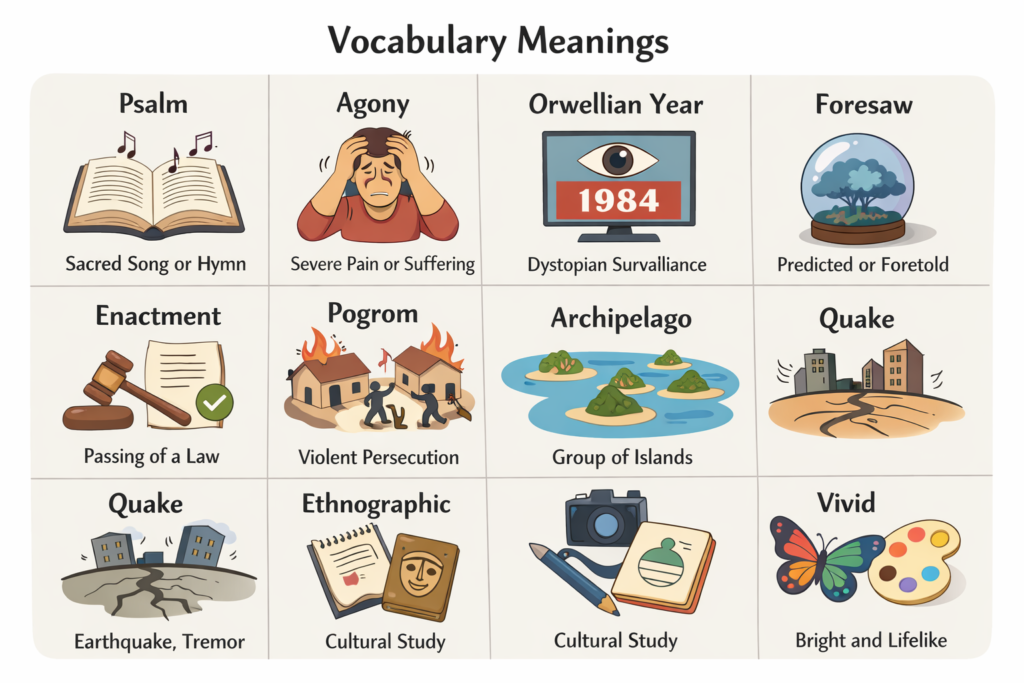
| Word | English Meaning | Punjabi Meaning (ਪੰਜਾਬੀ ਅਰਥ) |
|---|---|---|
| Psalm | Sacred song or hymn | ਪਵਿੱਤਰ ਗੀਤ ਜਾਂ ਭਜਨ |
| Agony | Severe pain or suffering | ਤੀਵ੍ਰ ਪੀੜਾ ਜਾਂ ਦੁੱਖ |
| Orwellian Year | Dystopian surveillance era | ਨਿਗਰਾਨੀ ਵਾਲਾ ਤਾਨਾਸ਼ਾਹੀ ਯੁੱਗ |
| Foresaw | Predicted or foretold | ਪਹਿਲਾਂ ਹੀ ਅਨੁਮਾਨ ਲਾਇਆ |
| Enactment | Passing of a law | ਕਾਨੂੰਨ ਬਣਾਉਣ ਦੀ ਪ੍ਰਕਿਰਿਆ |
| Pogrom | Organized violent persecution | ਹਿੰਸਕ ਤਰੀਕੇ ਨਾਲ ਪੀੜਨਾ |
| Archipelago | Group of islands | ਟਾਪੂਆਂ ਦਾ ਸਮੂਹ |
| Quake | Earthquake or tremor | ਭੂਚਾਲ ਜਾਂ ਕੰਬਣ |
| Ethnographic | Cultural study or description | ਸੱਭਿਆਚਾਰਕ ਅਧਿਐਨ ਜਾਂ ਵਰਣਨ |
| Vivid | Bright and lifelike | ਚਮਕਦਾਰ ਅਤੇ ਜੀਵੰਤ |