In this article, you will learn another 10 important vocabulary words: Provoking, Restive, Invokes, Aficionados, Protégés, Chip in, Ramshackle, Rams, Mangled and Retreat.
10 English The Most Important Vocabulary Words for 10 June Upcoming Exams with Punjabi Meanings
1. Provoking (ਉਕਸਾਉਣ ਵਾਲਾ, ਭੜਕਾਉਣ ਵਾਲਾ, ਤੀਬਰ ਪ੍ਰਤੀਕਿਰਿਆ ਪੈਦਾ ਕਰਨ ਵਾਲਾ, ਸੋਚਣ ਲਈ ਮਜਬੂਰ ਕਰਨ ਵਾਲਾ)
The new vocabulary word ‘Provoking’ literally means “causing a reaction, especially anger, irritation, controversy, or deep thought.” It refers to something that stimulates a strong emotional, mental, or behavioral response.
In Punjabi, provoking meaning is: ਉਕਸਾਉਣ ਵਾਲਾ, ਭੜਕਾਉਣ ਵਾਲਾ, ਤੀਬਰ ਪ੍ਰਤੀਕਿਰਿਆ ਪੈਦਾ ਕਰਨ ਵਾਲਾ, ਸੋਚਣ ਲਈ ਮਜਬੂਰ ਕਰਨ ਵਾਲਾ
Now, understand the vocabulary word “Provoking” with the sentence:
e.g. His provoking remarks sparked a heated debate among the audience.
ਉਸ ਦੀਆਂ ਉਕਸਾਉਣ ਵਾਲੀਆਂ (provoking) ਟਿੱਪਣੀਆਂ ਨੇ ਦਰਸ਼ਕਾਂ ਵਿਚਕਾਰ ਤਿੱਖੀ ਬਹਿਸ ਛੇੜ ਦਿੱਤੀ।
So, in the above sentence the contextual meaning of the vocabulary word ‘Provoking’ that:
Provoking, which literally means causing a strong reaction, is often used in situations involving discussions, politics, media, art, social issues, and personal interactions. In this case, it highlights that his remarks triggered an intense response from the audience. The word ‘provoking’ emphasizes stimulation, controversy, agitation, challenge, and emotional response.
ਉਪਰੋਕਤ ਵਾਕ ਵਿੱਚ ‘Provoking’ ਸ਼ਬਦ ਦਾ ਸੰਦਰਭਗਤ ਅਰਥ ‘ਉਕਸਾਉਣ ਵਾਲਾ ਜਾਂ ਤੀਬਰ ਪ੍ਰਤੀਕਿਰਿਆ ਪੈਦਾ ਕਰਨ ਵਾਲਾ’ ਹੈ। ਇਸ ਵਾਕ ਵਿੱਚ ਦਰਸਾਇਆ ਗਿਆ ਹੈ ਕਿ ਉਸ ਦੀਆਂ ਟਿੱਪਣੀਆਂ ਨੇ ਲੋਕਾਂ ਨੂੰ ਤੁਰੰਤ ਅਤੇ ਜ਼ੋਰਦਾਰ ਪ੍ਰਤੀਕਿਰਿਆ ਦੇਣ ਲਈ ਮਜਬੂਰ ਕਰ ਦਿੱਤਾ। ‘Provoking’ ਸ਼ਬਦ ਇੱਥੇ ਉਕਸਾਵਾ, ਭਾਵਨਾਤਮਕ ਪ੍ਰਭਾਵ, ਚੁਣੌਤੀ ਅਤੇ ਵਿਵਾਦ ਨੂੰ ਦਰਸਾਉਂਦਾ ਹੈ।
ਜਦੋਂ ਵੀ provoking ਸ਼ਬਦ ਕਿਸੇ passage ਵਿੱਚ ਆਵੇ:
ਤਾਂ ਉਸਨੂੰ “ਅਜਿਹੀ ਗੱਲ, ਕਿਰਿਆ ਜਾਂ ਸਥਿਤੀ ਜੋ ਲੋਕਾਂ ਵਿੱਚ ਗੁੱਸਾ, ਬਹਿਸ, ਵਿਵਾਦ ਜਾਂ ਡੂੰਘੀ ਸੋਚ ਪੈਦਾ ਕਰੇ” ਨਾਲ ਜੋੜ ਕੇ ਸਮਝੋ। ਇਹ ਅਕਸਰ ਉਹਨਾਂ ਸਥਿਤੀਆਂ ਵਿੱਚ ਵਰਤਿਆ ਜਾਂਦਾ ਹੈ—ਜਿੱਥੇ ਰਾਜਨੀਤਿਕ ਬਿਆਨ, ਸਮਾਜਿਕ ਮੁੱਦੇ, ਕਲਾਤਮਕ ਰਚਨਾਵਾਂ, ਮੀਡੀਆ ਚਰਚਾਵਾਂ ਜਾਂ ਨਿੱਜੀ ਟਿੱਪਣੀਆਂ ਦੀ ਗੱਲ ਕੀਤੀ ਜਾ ਰਹੀ ਹੋਵੇ।
Synonyms: Stimulating (ਉਤੇਜਿਤ ਕਰਨ ਵਾਲਾ), Inciting (ਭੜਕਾਉਣ ਵਾਲਾ), Agitating (ਉਕਸਾਉਣ ਵਾਲਾ), Challenging (ਚੁਣੌਤੀਪੂਰਨ), Thought-provoking (ਸੋਚਣ ਲਈ ਮਜਬੂਰ ਕਰਨ ਵਾਲਾ)
Antonyms: Calming (ਸ਼ਾਂਤ ਕਰਨ ਵਾਲਾ), Soothing (ਸਕੂਨ ਦੇਣ ਵਾਲਾ), Reassuring (ਭਰੋਸਾ ਦੇਣ ਵਾਲਾ), Comforting (ਤਸੱਲੀ ਦੇਣ ਵਾਲਾ), Uninspiring (ਬਿਨਾਂ ਪ੍ਰਤੀਕਿਰਿਆ ਪੈਦਾ ਕਰਨ ਵਾਲਾ)
2. Restive (ਬੇਚੈਨ, ਬੇਸਬਰ, ਕਾਬੂ ਵਿੱਚ ਨਾ ਰਹਿਣ ਵਾਲਾ, ਅਧੀਰ)
The new vocabulary word ‘Restive’ literally means “unable to remain still, impatient, uneasy, or resistant to control.” It refers to a person, group, or even an animal that is restless and difficult to manage because of dissatisfaction, impatience, or nervousness.
In Punjabi, restive meaning is: ਬੇਚੈਨ, ਬੇਸਬਰ, ਕਾਬੂ ਵਿੱਚ ਨਾ ਰਹਿਣ ਵਾਲਾ, ਅਧੀਰ
Now, understand the vocabulary word “Restive” with the sentence:
e.g. The audience became restive after waiting for more than an hour for the program to begin.
ਕਾਰਜਕ੍ਰਮ ਸ਼ੁਰੂ ਹੋਣ ਲਈ ਇੱਕ ਘੰਟੇ ਤੋਂ ਵੱਧ ਉਡੀਕ ਕਰਨ ਤੋਂ ਬਾਅਦ ਦਰਸ਼ਕ ਬੇਚੈਨ (restive) ਹੋ ਗਏ।
So, in the above sentence the contextual meaning of the vocabulary word ‘Restive’ that:
Restive, which literally means restless and impatient, is often used in situations involving crowds, employees, students, political groups, animals, and people who are dissatisfied or tired of waiting. In this case, it highlights that the audience grew impatient and uneasy because of the delay. The word ‘restive’ emphasizes impatience, agitation, dissatisfaction, resistance, and uneasiness.
ਉਪਰੋਕਤ ਵਾਕ ਵਿੱਚ ‘Restive’ ਸ਼ਬਦ ਦਾ ਸੰਦਰਭਗਤ ਅਰਥ ‘ਬੇਚੈਨ ਅਤੇ ਬੇਸਬਰ’ ਹੈ। ਇਸ ਵਾਕ ਵਿੱਚ ਦਰਸਾਇਆ ਗਿਆ ਹੈ ਕਿ ਲੰਬੀ ਉਡੀਕ ਕਾਰਨ ਦਰਸ਼ਕ ਅਧੀਰ ਹੋ ਗਏ ਸਨ। ‘Restive’ ਸ਼ਬਦ ਇੱਥੇ ਬੇਚੈਨੀ, ਅਸੰਤੁਸ਼ਟੀ, ਉਡੀਕ ਤੋਂ ਪੈਦਾ ਹੋਈ ਖਿਝ ਅਤੇ ਕਾਬੂ ਤੋਂ ਬਾਹਰ ਹੋਣ ਦੀ ਭਾਵਨਾ ਨੂੰ ਦਰਸਾਉਂਦਾ ਹੈ।
ਜਦੋਂ ਵੀ restive ਸ਼ਬਦ ਕਿਸੇ passage ਵਿੱਚ ਆਵੇ:
ਤਾਂ ਉਸਨੂੰ “ਬੇਚੈਨ, ਅਧੀਰ, ਅਸੰਤੁਸ਼ਟ ਜਾਂ ਕਾਬੂ ਵਿੱਚ ਰਹਿਣ ਲਈ ਤਿਆਰ ਨਾ ਹੋਣ ਵਾਲਾ” ਨਾਲ ਜੋੜ ਕੇ ਸਮਝੋ। ਇਹ ਅਕਸਰ ਉਹਨਾਂ ਸਥਿਤੀਆਂ ਵਿੱਚ ਵਰਤਿਆ ਜਾਂਦਾ ਹੈ—ਜਿੱਥੇ ਲੋਕਾਂ ਦੀ ਭੀੜ, ਕਰਮਚਾਰੀ, ਵਿਦਿਆਰਥੀ, ਰਾਜਨੀਤਿਕ ਸਮੂਹ ਜਾਂ ਜਾਨਵਰ ਕਿਸੇ ਕਾਰਨ ਕਰਕੇ ਬੇਸਬਰ ਜਾਂ ਅਸੰਤੁਸ਼ਟ ਹੋ ਜਾਂਦੇ ਹਨ।
Synonyms: Restless (ਬੇਚੈਨ), Impatient (ਬੇਸਬਰ), Uneasy (ਬੇਆਰਾਮ), Agitated (ਉਤੇਜਿਤ), Rebellious (ਵਿਰੋਧੀ ਸੁਭਾਅ ਵਾਲਾ)
Antonyms: Calm (ਸ਼ਾਂਤ), Patient (ਧੀਰਜਵਾਨ), Content (ਸੰਤੁਸ਼ਟ), Obedient (ਆਗਿਆਕਾਰੀ), Relaxed (ਆਰਾਮਦਾਇਕ)
3. Invokes (ਸੱਦਾ ਦਿੰਦਾ ਹੈ, ਆਹਵਾਨ ਕਰਦਾ ਹੈ, ਹਵਾਲਾ ਦਿੰਦਾ ਹੈ, ਲਾਗੂ ਕਰਦਾ ਹੈ)
The new vocabulary word ‘Invokes’ literally means “calls upon, appeals to, refers to, or brings into effect something such as a law, authority, principle, memory, or emotion.” The exact meaning depends on the context.
In Punjabi, invokes meaning is: ਸੱਦਾ ਦਿੰਦਾ ਹੈ, ਆਹਵਾਨ ਕਰਦਾ ਹੈ, ਹਵਾਲਾ ਦਿੰਦਾ ਹੈ, ਲਾਗੂ ਕਰਦਾ ਹੈ
Now, understand the vocabulary word “Invokes” with the sentence:
e.g. The lawyer invokes a constitutional provision to support his argument.
ਵਕੀਲ ਆਪਣੀ ਦਲੀਲ ਦੇ ਸਮਰਥਨ ਲਈ ਸੰਵਿਧਾਨ ਦੀ ਇੱਕ ਧਾਰਾ ਦਾ ਹਵਾਲਾ ਦਿੰਦਾ ਹੈ (invokes)।
So, in the above sentence the contextual meaning of the vocabulary word ‘Invokes’ that:
Invokes, which literally means calling upon or referring to something, is often used in situations involving law, religion, authority, traditions, emotions, memories, and formal arguments. In this case, it highlights that the lawyer is referring to a constitutional provision to strengthen his case. The word ‘invokes’ emphasizes reference, appeal, reliance, activation, and authority.
ਉਪਰੋਕਤ ਵਾਕ ਵਿੱਚ ‘Invokes’ ਸ਼ਬਦ ਦਾ ਸੰਦਰਭਗਤ ਅਰਥ ‘ਹਵਾਲਾ ਦੇਣਾ ਜਾਂ ਸਹਾਰਾ ਲੈਣਾ’ ਹੈ। ਇਸ ਵਾਕ ਵਿੱਚ ਦਰਸਾਇਆ ਗਿਆ ਹੈ ਕਿ ਵਕੀਲ ਆਪਣੀ ਦਲੀਲ ਨੂੰ ਮਜ਼ਬੂਤ ਕਰਨ ਲਈ ਸੰਵਿਧਾਨ ਦੀ ਧਾਰਾ ਦਾ ਸਹਾਰਾ ਲੈਂਦਾ ਹੈ। ‘Invokes’ ਸ਼ਬਦ ਇੱਥੇ ਹਵਾਲਾ, ਅਪੀਲ, ਅਧਿਕਾਰ ਅਤੇ ਸਹਿਯੋਗ ਨੂੰ ਦਰਸਾਉਂਦਾ ਹੈ।
ਜਦੋਂ ਵੀ invokes ਸ਼ਬਦ ਕਿਸੇ passage ਵਿੱਚ ਆਵੇ:
ਤਾਂ ਉਸਨੂੰ “ਕਿਸੇ ਕਾਨੂੰਨ, ਅਧਿਕਾਰ, ਸਿਧਾਂਤ, ਭਾਵਨਾ, ਯਾਦ ਜਾਂ ਸ਼ਕਤੀ ਦਾ ਸਹਾਰਾ ਲੈਣਾ, ਹਵਾਲਾ ਦੇਣਾ ਜਾਂ ਉਸਨੂੰ ਪ੍ਰਭਾਵ ਵਿੱਚ ਲਿਆਉਣਾ” ਨਾਲ ਜੋੜ ਕੇ ਸਮਝੋ। ਇਹ ਅਕਸਰ ਉਹਨਾਂ ਸਥਿਤੀਆਂ ਵਿੱਚ ਵਰਤਿਆ ਜਾਂਦਾ ਹੈ—ਜਿੱਥੇ ਕਾਨੂੰਨੀ ਦਲੀਲਾਂ, ਧਾਰਮਿਕ ਪ੍ਰਾਰਥਨਾਵਾਂ, ਸਰਕਾਰੀ ਅਧਿਕਾਰ, ਇਤਿਹਾਸਕ ਹਵਾਲੇ ਜਾਂ ਭਾਵਨਾਤਮਕ ਯਾਦਾਂ ਦੀ ਗੱਲ ਕੀਤੀ ਜਾ ਰਹੀ ਹੋਵੇ।
Synonyms: Calls Upon (ਸੱਦਾ ਦਿੰਦਾ ਹੈ), Cites (ਹਵਾਲਾ ਦਿੰਦਾ ਹੈ), Appeals To (ਅਪੀਲ ਕਰਦਾ ਹੈ), Refers To (ਜ਼ਿਕਰ ਕਰਦਾ ਹੈ), Uses (ਵਰਤਦਾ ਹੈ)
Antonyms: Ignores (ਅਣਡਿੱਠਾ ਕਰਦਾ ਹੈ), Rejects (ਰੱਦ ਕਰਦਾ ਹੈ), Disregards (ਧਿਆਨ ਨਹੀਂ ਦਿੰਦਾ), Avoids (ਪਰਹੇਜ਼ ਕਰਦਾ ਹੈ), Dismisses (ਖਾਰਜ ਕਰਦਾ ਹੈ)
4. Aficionados (ਸ਼ੌਕੀਨ, ਪ੍ਰੇਮੀ, ਕਿਸੇ ਵਿਸ਼ੇ ਦੇ ਗਹਿਰੇ ਰੁਚੀਕਾਰ, ਉਤਸ਼ਾਹੀ ਪ੍ਰਸ਼ੰਸਕ)
The new vocabulary word ‘Aficionados’ literally means “people who are very knowledgeable about and enthusiastic about a particular activity, subject, art, sport, or hobby.” It refers to devoted fans or enthusiasts with a deep interest in something.
In Punjabi, aficionados meaning is: ਸ਼ੌਕੀਨ, ਪ੍ਰੇਮੀ, ਕਿਸੇ ਵਿਸ਼ੇ ਦੇ ਗਹਿਰੇ ਰੁਚੀਕਾਰ, ਉਤਸ਼ਾਹੀ ਪ੍ਰਸ਼ੰਸਕ
Now, understand the vocabulary word “Aficionados” with the sentence:
e.g. Cricket aficionados eagerly followed every match of the tournament.
ਕ੍ਰਿਕਟ ਦੇ ਸ਼ੌਕੀਨਾਂ (aficionados) ਨੇ ਟੂਰਨਾਮੈਂਟ ਦੇ ਹਰ ਮੈਚ ਨੂੰ ਬੜੇ ਉਤਸ਼ਾਹ ਨਾਲ ਦੇਖਿਆ।
So, in the above sentence the contextual meaning of the vocabulary word ‘Aficionados’ that:
Aficionados, which literally means enthusiastic admirers or experts in a field, is often used in situations involving sports, music, art, literature, food, movies, technology, and hobbies. In this case, it highlights people who are passionate about cricket and closely follow the sport. The word ‘aficionados’ emphasizes enthusiasm, expertise, passion, dedication, and admiration.
ਉਪਰੋਕਤ ਵਾਕ ਵਿੱਚ ‘Aficionados’ ਸ਼ਬਦ ਦਾ ਸੰਦਰਭਗਤ ਅਰਥ ‘ਸ਼ੌਕੀਨ ਜਾਂ ਉਤਸ਼ਾਹੀ ਪ੍ਰਸ਼ੰਸਕ’ ਹੈ। ਇਸ ਵਾਕ ਵਿੱਚ ਦਰਸਾਇਆ ਗਿਆ ਹੈ ਕਿ ਕ੍ਰਿਕਟ ਨੂੰ ਪਿਆਰ ਕਰਨ ਵਾਲੇ ਲੋਕ ਹਰ ਮੈਚ ਨੂੰ ਧਿਆਨ ਨਾਲ ਦੇਖ ਰਹੇ ਸਨ। ‘Aficionados’ ਸ਼ਬਦ ਇੱਥੇ ਰੁਚੀ, ਜਜ਼ਬਾ, ਸਮਰਪਣ ਅਤੇ ਗਹਿਰੇ ਗਿਆਨ ਨੂੰ ਦਰਸਾਉਂਦਾ ਹੈ।
ਜਦੋਂ ਵੀ aficionados ਸ਼ਬਦ ਕਿਸੇ passage ਵਿੱਚ ਆਵੇ:
ਤਾਂ ਉਸਨੂੰ “ਅਜਿਹੇ ਲੋਕ ਜੋ ਕਿਸੇ ਖੇਤਰ, ਖੇਡ, ਕਲਾ, ਸੰਗੀਤ, ਭੋਜਨ, ਫ਼ਿਲਮ ਜਾਂ ਸ਼ੌਕ ਵਿੱਚ ਡੂੰਘੀ ਰੁਚੀ ਅਤੇ ਗਿਆਨ ਰੱਖਦੇ ਹੋਣ” ਨਾਲ ਜੋੜ ਕੇ ਸਮਝੋ। ਇਹ ਅਕਸਰ ਉਹਨਾਂ ਸਥਿਤੀਆਂ ਵਿੱਚ ਵਰਤਿਆ ਜਾਂਦਾ ਹੈ—ਜਿੱਥੇ ਕਿਸੇ ਵਿਸ਼ੇ ਦੇ ਸਮਰਪਿਤ ਪ੍ਰਸ਼ੰਸਕਾਂ ਜਾਂ ਮਾਹਿਰ ਰੁਚੀਕਾਰਾਂ ਦੀ ਗੱਲ ਕੀਤੀ ਜਾ ਰਹੀ ਹੋਵੇ।
Synonyms: Enthusiasts (ਉਤਸ਼ਾਹੀ ਲੋਕ), Fans (ਪ੍ਰਸ਼ੰਸਕ), Admirers (ਚਾਹੁਣ ਵਾਲੇ), Devotees (ਸਮਰਪਿਤ ਅਨੁਯਾਈ), Connoisseurs (ਮਾਹਿਰ ਰਸੀਆ)
Antonyms: Critics (ਆਲੋਚਕ), Detractors (ਵਿਰੋਧੀ), Indifferent People (ਬੇਰੁਚੀ ਲੋਕ), Novices (ਨਵੇਂ ਸਿਖਿਆਰਥੀ), Outsiders (ਬਾਹਰੀ ਲੋਕ)
5. Protégés (ਸ਼ਾਗਿਰਦ, ਚੇਲੇ, ਮਾਰਗਦਰਸ਼ਨ ਹੇਠ ਸਿੱਖਣ ਵਾਲੇ ਵਿਅਕਤੀ, ਸਰਪ੍ਰਸਤੀ ਪ੍ਰਾਪਤ ਵਿਅਕਤੀ)
The new vocabulary word ‘Protégés’ literally means “people who are guided, trained, supported, or mentored by a more experienced and influential person.” It refers to individuals who receive special guidance and help in developing their skills or careers.
In Punjabi, protégés meaning is: ਸ਼ਾਗਿਰਦ, ਚੇਲੇ, ਮਾਰਗਦਰਸ਼ਨ ਹੇਠ ਸਿੱਖਣ ਵਾਲੇ ਵਿਅਕਤੀ, ਸਰਪ੍ਰਸਤੀ ਪ੍ਰਾਪਤ ਵਿਅਕਤੀ
Now, understand the vocabulary word “Protégés” with the sentence:
e.g. Many of the professor’s protégés went on to become successful scientists.
ਪ੍ਰੋਫੈਸਰ ਦੇ ਕਈ ਸ਼ਾਗਿਰਦਾਂ (protégés) ਨੇ ਅੱਗੇ ਚੱਲ ਕੇ ਸਫਲ ਵਿਗਿਆਨੀ ਬਣਨ ਵਿੱਚ ਕਾਮਯਾਬੀ ਹਾਸਲ ਕੀਤੀ।
So, in the above sentence the contextual meaning of the vocabulary word ‘Protégés’ that:
Protégés, which literally means people under the guidance of a mentor, is often used in situations involving education, business, politics, arts, sports, and professional development. In this case, it highlights students who benefited from the professor’s mentorship and later achieved success. The word ‘protégés’ emphasizes learning, mentorship, guidance, support, development, and growth.
ਉਪਰੋਕਤ ਵਾਕ ਵਿੱਚ ‘Protégés’ ਸ਼ਬਦ ਦਾ ਸੰਦਰਭਗਤ ਅਰਥ ‘ਸ਼ਾਗਿਰਦ ਜਾਂ ਮਾਰਗਦਰਸ਼ਨ ਹੇਠ ਸਿੱਖਣ ਵਾਲੇ ਵਿਅਕਤੀ’ ਹੈ। ਇਸ ਵਾਕ ਵਿੱਚ ਦਰਸਾਇਆ ਗਿਆ ਹੈ ਕਿ ਪ੍ਰੋਫੈਸਰ ਦੀ ਰਹਿਨੁਮਾਈ ਹੇਠ ਸਿੱਖਣ ਵਾਲੇ ਵਿਦਿਆਰਥੀ ਬਾਅਦ ਵਿੱਚ ਸਫਲ ਹੋਏ। ‘Protégés’ ਸ਼ਬਦ ਇੱਥੇ ਸਿੱਖਿਆ, ਮਾਰਗਦਰਸ਼ਨ, ਸਰਪ੍ਰਸਤੀ ਅਤੇ ਵਿਕਾਸ ਨੂੰ ਦਰਸਾਉਂਦਾ ਹੈ।
ਜਦੋਂ ਵੀ protégés ਸ਼ਬਦ ਕਿਸੇ passage ਵਿੱਚ ਆਵੇ:
ਤਾਂ ਉਸਨੂੰ “ਅਜਿਹੇ ਲੋਕ ਜੋ ਕਿਸੇ ਤਜਰਬੇਕਾਰ ਵਿਅਕਤੀ ਦੀ ਰਹਿਨੁਮਾਈ, ਸਹਾਇਤਾ ਜਾਂ ਸਰਪ੍ਰਸਤੀ ਹੇਠ ਸਿੱਖਦੇ ਅਤੇ ਅੱਗੇ ਵਧਦੇ ਹਨ” ਨਾਲ ਜੋੜ ਕੇ ਸਮਝੋ। ਇਹ ਅਕਸਰ ਉਹਨਾਂ ਸਥਿਤੀਆਂ ਵਿੱਚ ਵਰਤਿਆ ਜਾਂਦਾ ਹੈ—ਜਿੱਥੇ ਅਧਿਆਪਕਾਂ, ਕੋਚਾਂ, ਕਾਰੋਬਾਰੀ ਨੇਤਾਵਾਂ, ਕਲਾਕਾਰਾਂ, ਰਾਜਨੀਤਿਕ ਆਗੂਆਂ ਜਾਂ ਮਾਰਗਦਰਸ਼ਕਾਂ ਦੀ ਸਹਾਇਤਾ ਨਾਲ ਵਿਕਸਤ ਹੋਣ ਵਾਲੇ ਲੋਕਾਂ ਦੀ ਗੱਲ ਕੀਤੀ ਜਾ ਰਹੀ ਹੋਵੇ।
Synonyms: Apprentices (ਸਿਖਿਆਰਥੀ), Disciples (ਚੇਲੇ), Mentees (ਮਾਰਗਦਰਸ਼ਨ ਲੈਣ ਵਾਲੇ), Trainees (ਪ੍ਰਸ਼ਿਕਸ਼ੂ), Students (ਵਿਦਿਆਰਥੀ)
Antonyms: Mentors (ਮਾਰਗਦਰਸ਼ਕ), Teachers (ਅਧਿਆਪਕ), Trainers (ਪ੍ਰਸ਼ਿਕਸ਼ਕ), Guides (ਰਾਹ-ਦਿਖਾਉਣ ਵਾਲੇ), Instructors (ਸਿੱਖਿਆ ਦੇਣ ਵਾਲੇ)
6. Chip in (ਯੋਗਦਾਨ ਪਾਉਣਾ, ਮਦਦ ਕਰਨਾ, ਆਪਣਾ ਹਿੱਸਾ ਪਾਉਣਾ, ਸਹਿਯੋਗ ਦੇਣਾ)
The phrasal verb ‘Chip in’ literally means “to contribute money, effort, ideas, or help toward a common purpose.” It refers to joining others in helping or contributing something.
In Punjabi, chip in meaning is: ਯੋਗਦਾਨ ਪਾਉਣਾ, ਮਦਦ ਕਰਨਾ, ਆਪਣਾ ਹਿੱਸਾ ਪਾਉਣਾ, ਸਹਿਯੋਗ ਦੇਣਾ
Now, understand the phrasal verb “Chip in” with the sentence:
e.g. Everyone chipped in to buy a farewell gift for their teacher.
ਆਪਣੇ ਅਧਿਆਪਕ ਲਈ ਵਿਦਾਇਗੀ ਤੋਹਫ਼ਾ ਖਰੀਦਣ ਵਾਸਤੇ ਹਰ ਕਿਸੇ ਨੇ ਆਪਣਾ ਯੋਗਦਾਨ ਪਾਇਆ (chipped in)।
So, in the above sentence the contextual meaning of the phrasal verb ‘Chip in’ that:
Chip in, which literally means contributing or helping, is often used in situations involving group activities, fundraising, teamwork, community projects, family events, and shared responsibilities. In this case, it highlights that everyone contributed money or support toward buying the gift. The phrase ‘chip in’ emphasizes cooperation, participation, contribution, teamwork, and support.
ਉਪਰੋਕਤ ਵਾਕ ਵਿੱਚ ‘Chip in’ ਸ਼ਬਦ-ਸਮੂਹ ਦਾ ਸੰਦਰਭਗਤ ਅਰਥ ‘ਯੋਗਦਾਨ ਪਾਉਣਾ ਜਾਂ ਸਹਿਯੋਗ ਦੇਣਾ’ ਹੈ। ਇਸ ਵਾਕ ਵਿੱਚ ਦਰਸਾਇਆ ਗਿਆ ਹੈ ਕਿ ਤੋਹਫ਼ਾ ਖਰੀਦਣ ਲਈ ਹਰ ਵਿਅਕਤੀ ਨੇ ਆਪਣਾ ਹਿੱਸਾ ਪਾਇਆ। ‘Chip in’ ਸ਼ਬਦ-ਸਮੂਹ ਇੱਥੇ ਸਹਿਯੋਗ, ਭਾਗੀਦਾਰੀ, ਮਦਦ ਅਤੇ ਸਾਂਝੇ ਯਤਨਾਂ ਨੂੰ ਦਰਸਾਉਂਦਾ ਹੈ।
ਜਦੋਂ ਵੀ chip in ਸ਼ਬਦ ਕਿਸੇ passage ਵਿੱਚ ਆਵੇ:
ਤਾਂ ਉਸਨੂੰ “ਕਿਸੇ ਸਾਂਝੇ ਕੰਮ, ਖਰਚੇ ਜਾਂ ਮਕਸਦ ਲਈ ਆਪਣਾ ਯੋਗਦਾਨ, ਪੈਸਾ, ਮਦਦ ਜਾਂ ਵਿਚਾਰ ਦੇਣਾ” ਨਾਲ ਜੋੜ ਕੇ ਸਮਝੋ। ਇਹ ਅਕਸਰ ਉਹਨਾਂ ਸਥਿਤੀਆਂ ਵਿੱਚ ਵਰਤਿਆ ਜਾਂਦਾ ਹੈ—ਜਿੱਥੇ ਦੋਸਤ, ਪਰਿਵਾਰ, ਸਹਿਕਰਮੀ ਜਾਂ ਸਮੂਹ ਦੇ ਮੈਂਬਰ ਮਿਲ ਕੇ ਕਿਸੇ ਕੰਮ ਵਿੱਚ ਸਹਿਯੋਗ ਕਰਦੇ ਹਨ।
Synonyms: Contribute (ਯੋਗਦਾਨ ਪਾਉਣਾ), Donate (ਦਾਨ ਦੇਣਾ), Help (ਮਦਦ ਕਰਨਾ), Participate (ਭਾਗ ਲੈਣਾ), Assist (ਸਹਾਇਤਾ ਕਰਨਾ)
Antonyms: Withhold (ਰੋਕ ਕੇ ਰੱਖਣਾ), Refuse (ਇਨਕਾਰ ਕਰਨਾ), Ignore (ਅਣਡਿੱਠਾ ਕਰਨਾ), Abstain (ਹਿੱਸਾ ਨਾ ਲੈਣਾ), Take Instead of Give (ਦੇਣ ਦੀ ਬਜਾਏ ਲੈਣਾ)
7. Ramshackle (ਜਰਜਰ, ਖਸਤਾ-ਹਾਲ, ਟੁੱਟਾ-ਫੁੱਟਾ, ਬਹੁਤ ਮਾੜੀ ਹਾਲਤ ਵਾਲਾ)
The new vocabulary word ‘Ramshackle’ literally means “in a very poor condition, likely to collapse, or badly built and neglected.” It is commonly used to describe buildings, houses, vehicles, structures, or systems that are old, unstable, and poorly maintained.
In Punjabi, ramshackle meaning is: ਜਰਜਰ, ਖਸਤਾ-ਹਾਲ, ਟੁੱਟਾ-ਫੁੱਟਾ, ਬਹੁਤ ਮਾੜੀ ਹਾਲਤ ਵਾਲਾ
Now, understand the vocabulary word “Ramshackle” with the sentence:
e.g. The family lived in a ramshackle house on the edge of the village.
ਉਹ ਪਰਿਵਾਰ ਪਿੰਡ ਦੇ ਕਿਨਾਰੇ ਇੱਕ ਜਰਜਰ (ramshackle) ਘਰ ਵਿੱਚ ਰਹਿੰਦਾ ਸੀ।
So, in the above sentence the contextual meaning of the vocabulary word ‘Ramshackle’ that:
Ramshackle, which literally means old and falling apart, is often used in situations involving buildings, roads, vehicles, organizations, and systems that are poorly maintained or badly organized. In this case, it highlights that the house was in a dilapidated and unsafe condition. The word ‘ramshackle’ emphasizes decay, neglect, instability, weakness, and poor maintenance.
ਉਪਰੋਕਤ ਵਾਕ ਵਿੱਚ ‘Ramshackle’ ਸ਼ਬਦ ਦਾ ਸੰਦਰਭਗਤ ਅਰਥ ‘ਜਰਜਰ ਜਾਂ ਖਸਤਾ-ਹਾਲ’ ਹੈ। ਇਸ ਵਾਕ ਵਿੱਚ ਦਰਸਾਇਆ ਗਿਆ ਹੈ ਕਿ ਘਰ ਦੀ ਹਾਲਤ ਬਹੁਤ ਮਾੜੀ ਸੀ ਅਤੇ ਉਹ ਟੁੱਟ-ਫੁੱਟ ਚੁੱਕਾ ਸੀ। ‘Ramshackle’ ਸ਼ਬਦ ਇੱਥੇ ਜਰਜਰਤਾ, ਅਣਦੇਖੀ, ਕਮਜ਼ੋਰੀ ਅਤੇ ਖ਼ਰਾਬ ਹਾਲਤ ਨੂੰ ਦਰਸਾਉਂਦਾ ਹੈ।
ਜਦੋਂ ਵੀ ramshackle ਸ਼ਬਦ ਕਿਸੇ passage ਵਿੱਚ ਆਵੇ:
ਤਾਂ ਉਸਨੂੰ “ਅਜਿਹੀ ਇਮਾਰਤ, ਵਸਤੂ ਜਾਂ ਪ੍ਰਣਾਲੀ ਜੋ ਪੁਰਾਣੀ, ਟੁੱਟੀ-ਫੁੱਟੀ, ਅਸਥਿਰ ਜਾਂ ਬਹੁਤ ਮਾੜੀ ਹਾਲਤ ਵਿੱਚ ਹੋਵੇ” ਨਾਲ ਜੋੜ ਕੇ ਸਮਝੋ। ਇਹ ਅਕਸਰ ਉਹਨਾਂ ਸਥਿਤੀਆਂ ਵਿੱਚ ਵਰਤਿਆ ਜਾਂਦਾ ਹੈ—ਜਿੱਥੇ ਪੁਰਾਣੇ ਘਰਾਂ, ਜਰਜਰ ਇਮਾਰਤਾਂ, ਖ਼ਰਾਬ ਵਾਹਨਾਂ ਜਾਂ ਬੇਤਰਤੀਬ ਪ੍ਰਣਾਲੀਆਂ ਦੀ ਗੱਲ ਕੀਤੀ ਜਾ ਰਹੀ ਹੋਵੇ।
Synonyms: Dilapidated (ਜਰਜਰ), Run-down (ਖਸਤਾ-ਹਾਲ), Shabby (ਫੱਟਾ-ਪੁਰਾਣਾ), Rickety (ਹਿਲਦਾ-ਡੁੱਲਦਾ), Decrepit (ਬਹੁਤ ਪੁਰਾਣਾ ਅਤੇ ਕਮਜ਼ੋਰ)
Antonyms: Sturdy (ਮਜ਼ਬੂਤ), Well-built (ਵਧੀਆ ਬਣਿਆ ਹੋਇਆ), Solid (ਠੋਸ), Modern (ਆਧੁਨਿਕ), Well-maintained (ਚੰਗੀ ਤਰ੍ਹਾਂ ਸੰਭਾਲਿਆ ਹੋਇਆ)
8. Rams (ਨਰ ਭੇਡਾਂ, ਜ਼ੋਰ ਨਾਲ ਟੱਕਰ ਮਾਰਦਾ ਹੈ, ਠੇਲ ਕੇ ਅੰਦਰ ਕਰਦਾ ਹੈ)
The word ‘Rams’ can be used as both a noun and a verb.
1. As a Noun: Rams
A ram is an adult male sheep.
Punjabi meaning: ਨਰ ਭੇਡ, ਮੇਂਡਾ
e.g. The rams were grazing in the field.
ਮੇਂਡੇ (rams) ਖੇਤ ਵਿੱਚ ਚਰ ਰਹੇ ਸਨ।
2. As a Verb: Rams
Rams means to hit something with great force or to force something into a place.
Punjabi meaning: ਜ਼ੋਰ ਨਾਲ ਟੱਕਰ ਮਾਰਦਾ ਹੈ, ਠੇਲ ਕੇ ਅੰਦਰ ਕਰਦਾ ਹੈ
e.g. The car rams into the wall.
ਕਾਰ ਕੰਧ ਨਾਲ ਜ਼ੋਰ ਦੀ ਟੱਕਰ ਮਾਰਦੀ ਹੈ (rams)।
So, in the above sentence the contextual meaning of the word ‘Rams’ is:
Rams, when used as a verb, often describes a forceful collision, impact, or act of pushing something strongly. It is commonly used in contexts involving vehicles, animals, sports, attacks, and physical force.
ਉਪਰੋਕਤ ਵਾਕ ਵਿੱਚ ‘Rams’ ਦਾ ਅਰਥ ‘ਜ਼ੋਰ ਨਾਲ ਟੱਕਰ ਮਾਰਨਾ’ ਹੈ। ਇਹ ਸ਼ਬਦ ਆਮ ਤੌਰ ’ਤੇ ਕਿਸੇ ਚੀਜ਼ ਨਾਲ ਤਾਕਤ ਨਾਲ ਟਕਰਾਉਣ ਜਾਂ ਉਸਨੂੰ ਜ਼ਬਰਦਸਤੀ ਧੱਕਣ ਲਈ ਵਰਤਿਆ ਜਾਂਦਾ ਹੈ।
ਜਦੋਂ ਵੀ rams ਸ਼ਬਦ ਕਿਸੇ passage ਵਿੱਚ ਆਵੇ:
ਤਾਂ ਸੰਦਰਭ ਦੇਖੋ। ਜੇ ਭੇਡਾਂ ਦੀ ਗੱਲ ਹੋ ਰਹੀ ਹੋਵੇ ਤਾਂ ਇਸਦਾ ਅਰਥ ‘ਮੇਂਡੇ’ ਹੋਵੇਗਾ। ਜੇ ਟੱਕਰ ਜਾਂ ਜ਼ੋਰ ਨਾਲ ਧੱਕਣ ਦੀ ਗੱਲ ਹੋਵੇ ਤਾਂ ਇਸਦਾ ਅਰਥ ‘ਜ਼ੋਰ ਨਾਲ ਟੱਕਰ ਮਾਰਨਾ’ ਹੋਵੇਗਾ।
Synonyms (Verb): Crashes Into (ਟੱਕਰ ਮਾਰਦਾ ਹੈ), Smashes (ਜ਼ੋਰ ਨਾਲ ਵੱਜਦਾ ਹੈ), Hits (ਵੱਜਦਾ ਹੈ), Collides With (ਟਕਰਾਉਂਦਾ ਹੈ), Drives Into (ਧੱਕ ਕੇ ਵੱਜਦਾ ਹੈ)
Antonyms (Verb): Avoids (ਬਚਦਾ ਹੈ), Withdraws (ਪਿੱਛੇ ਹਟਦਾ ਹੈ), Retreats (ਵਾਪਸ ਮੁੜਦਾ ਹੈ), Misses (ਖੁੰਝ ਜਾਂਦਾ ਹੈ), Evades (ਬਚ ਨਿਕਲਦਾ ਹੈ)
9. Mangled (ਬੁਰੀ ਤਰ੍ਹਾਂ ਨੁਕਸਾਨਿਆ ਹੋਇਆ, ਚੀਰ-ਫਾੜਿਆ ਹੋਇਆ, ਵਿਗੜਿਆ ਹੋਇਆ, ਤਬਾਹ ਹੋਇਆ)
The new vocabulary word ‘Mangled’ is the past tense and past participle of ‘Mangle’ and literally means “severely damaged, mutilated, crushed, or distorted.” It can refer to physical damage to a person or object, or to something that has been badly mispronounced, misrepresented, or mishandled.
In Punjabi, mangled meaning is: ਬੁਰੀ ਤਰ੍ਹਾਂ ਨੁਕਸਾਨਿਆ ਹੋਇਆ, ਚੀਰ-ਫਾੜਿਆ ਹੋਇਆ, ਵਿਗੜਿਆ ਹੋਇਆ, ਤਬਾਹ ਹੋਇਆ
Now, understand the vocabulary word “Mangled” with the sentence:
e.g. The car was badly mangled in the collision.
ਟੱਕਰ ਵਿੱਚ ਕਾਰ ਬੁਰੀ ਤਰ੍ਹਾਂ ਨੁਕਸਾਨੀ ਗਈ (mangled) ਸੀ।
So, in the above sentence the contextual meaning of the vocabulary word ‘Mangled’ that:
Mangled, which literally means badly damaged or deformed, is often used in situations involving accidents, machinery, injuries, disasters, and even language mistakes. In this case, it highlights that the car suffered severe damage in the collision. The word ‘mangled’ emphasizes destruction, deformation, crushing, mutilation, and serious damage.
ਉਪਰੋਕਤ ਵਾਕ ਵਿੱਚ ‘Mangled’ ਸ਼ਬਦ ਦਾ ਸੰਦਰਭਗਤ ਅਰਥ ‘ਬੁਰੀ ਤਰ੍ਹਾਂ ਨੁਕਸਾਨਿਆ ਹੋਇਆ’ ਹੈ। ਇਸ ਵਾਕ ਵਿੱਚ ਦਰਸਾਇਆ ਗਿਆ ਹੈ ਕਿ ਟੱਕਰ ਕਾਰਨ ਕਾਰ ਦੀ ਹਾਲਤ ਬਹੁਤ ਖ਼ਰਾਬ ਹੋ ਗਈ ਸੀ। ‘Mangled’ ਸ਼ਬਦ ਇੱਥੇ ਭਾਰੀ ਨੁਕਸਾਨ, ਤਬਾਹੀ, ਵਿਗਾੜ ਅਤੇ ਟੁੱਟ-ਫੁੱਟ ਨੂੰ ਦਰਸਾਉਂਦਾ ਹੈ।
ਜਦੋਂ ਵੀ mangled ਸ਼ਬਦ ਕਿਸੇ passage ਵਿੱਚ ਆਵੇ:
ਤਾਂ ਉਸਨੂੰ “ਅਜਿਹੀ ਚੀਜ਼ ਜਾਂ ਵਿਅਕਤੀ ਜੋ ਬੁਰੀ ਤਰ੍ਹਾਂ ਨੁਕਸਾਨਿਆ, ਵਿਗੜਿਆ ਜਾਂ ਤਬਾਹ ਹੋਇਆ ਹੋਵੇ” ਨਾਲ ਜੋੜ ਕੇ ਸਮਝੋ। ਇਹ ਅਕਸਰ ਉਹਨਾਂ ਸਥਿਤੀਆਂ ਵਿੱਚ ਵਰਤਿਆ ਜਾਂਦਾ ਹੈ—ਜਿੱਥੇ ਹਾਦਸਿਆਂ, ਮਸ਼ੀਨਾਂ, ਜੰਗਾਂ, ਕੁਦਰਤੀ ਆਫ਼ਤਾਂ ਜਾਂ ਗਲਤ ਉਚਾਰਨ ਅਤੇ ਗਲਤ ਪੇਸ਼ਕਾਰੀ ਦੀ ਗੱਲ ਕੀਤੀ ਜਾ ਰਹੀ ਹੋਵੇ।
Synonyms: Damaged (ਨੁਕਸਾਨਿਆ ਹੋਇਆ), Mutilated (ਚੀਰ-ਫਾੜਿਆ ਹੋਇਆ), Crushed (ਕੁਚਲਿਆ ਹੋਇਆ), Deformed (ਵਿਗੜਿਆ ਹੋਇਆ), Wrecked (ਤਬਾਹ ਹੋਇਆ)
Antonyms: Repaired (ਮੁਰੰਮਤ ਕੀਤਾ ਹੋਇਆ), Restored (ਮੁੜ ਠੀਕ ਕੀਤਾ ਹੋਇਆ), Intact (ਸਹੀ-ਸਲਾਮਤ), Preserved (ਸੰਭਾਲਿਆ ਹੋਇਆ), Undamaged (ਬਿਨਾਂ ਨੁਕਸਾਨ ਵਾਲਾ)
10. Retreat (ਪਿੱਛੇ ਹਟਣਾ, ਵਾਪਸ ਮੁੜਨਾ, ਪਨਾਹ-ਸਥਾਨ, ਇਕਾਂਤ ਥਾਂ)
The new vocabulary word ‘Retreat’ can be used as both a verb and a noun.
1. As a Verb: Retreat
Retreat means “to move back, withdraw, or go away from a difficult, dangerous, or unfavorable situation.”
Punjabi meaning: ਪਿੱਛੇ ਹਟਣਾ, ਵਾਪਸ ਮੁੜਨਾ, ਪਿੱਛੇ ਖਿਸਕਣਾ
e.g. The soldiers were forced to retreat after heavy fighting.
ਭਾਰੀ ਲੜਾਈ ਤੋਂ ਬਾਅਦ ਸੈਨਿਕਾਂ ਨੂੰ ਪਿੱਛੇ ਹਟਣਾ (retreat) ਪਿਆ।
2. As a Noun: Retreat
Retreat means “a place of privacy, safety, rest, or a period of withdrawal from normal activities.”
Punjabi meaning: ਪਨਾਹ-ਸਥਾਨ, ਆਰਾਮ ਦੀ ਥਾਂ, ਇਕਾਂਤ ਥਾਂ
e.g. The mountains became a peaceful retreat for the writer.
ਪਹਾੜ ਲੇਖਕ ਲਈ ਇੱਕ ਸ਼ਾਂਤ ਇਕਾਂਤ ਥਾਂ (retreat) ਬਣ ਗਏ।
So, in the above sentence the contextual meaning of the word ‘Retreat’ that:
Retreat, which literally means withdrawing or moving away, is often used in situations involving military operations, business decisions, politics, sports, negotiations, and personal life. As a noun, it can refer to a peaceful place where a person relaxes or escapes from daily pressures. The word ‘retreat’ emphasizes withdrawal, escape, refuge, rest, and strategic repositioning.
ਉਪਰੋਕਤ ਵਾਕਾਂ ਵਿੱਚ ‘Retreat’ ਦਾ ਅਰਥ ਸੰਦਰਭ ਅਨੁਸਾਰ ਬਦਲਦਾ ਹੈ। ਕ੍ਰਿਆ (verb) ਵਜੋਂ ਇਸਦਾ ਅਰਥ ‘ਪਿੱਛੇ ਹਟਣਾ’ ਹੈ, ਜਦਕਿ ਨਾਂਵ (noun) ਵਜੋਂ ਇਸਦਾ ਅਰਥ ‘ਸ਼ਾਂਤ ਜਾਂ ਸੁਰੱਖਿਅਤ ਪਨਾਹ-ਸਥਾਨ’ ਹੈ। ਇਹ ਸ਼ਬਦ ਪਿੱਛੇ ਹਟਣ, ਬਚਾਅ, ਆਰਾਮ ਅਤੇ ਸੁਰੱਖਿਆ ਦੀ ਭਾਵਨਾ ਨੂੰ ਦਰਸਾਉਂਦਾ ਹੈ।
ਜਦੋਂ ਵੀ retreat ਸ਼ਬਦ ਕਿਸੇ passage ਵਿੱਚ ਆਵੇ:
ਤਾਂ ਸੰਦਰਭ ਦੇਖੋ। ਜੇ ਜੰਗ, ਮੁਕਾਬਲੇ ਜਾਂ ਟਕਰਾਅ ਦੀ ਗੱਲ ਹੋਵੇ ਤਾਂ ਇਸਦਾ ਅਰਥ ‘ਪਿੱਛੇ ਹਟਣਾ’ ਹੋਵੇਗਾ। ਜੇ ਸ਼ਾਂਤ ਸਥਾਨ, ਆਰਾਮ ਜਾਂ ਇਕਾਂਤ ਦੀ ਗੱਲ ਹੋਵੇ ਤਾਂ ਇਸਦਾ ਅਰਥ ‘ਪਨਾਹ-ਸਥਾਨ ਜਾਂ ਆਰਾਮ ਦੀ ਥਾਂ’ ਹੋਵੇਗਾ।
Synonyms (Verb): Withdraw (ਪਿੱਛੇ ਹਟਣਾ), Recede (ਪਿੱਛੇ ਜਾਣਾ), Back Away (ਪਿੱਛੇ ਹਟ ਜਾਣਾ), Pull Back (ਵਾਪਸ ਖਿੱਚਣਾ), Fall Back (ਪਿੱਛੇ ਮੁੜਨਾ)
Antonyms (Verb): Advance (ਅੱਗੇ ਵਧਣਾ), Proceed (ਅੱਗੇ ਜਾਣਾ), Attack (ਹਮਲਾ ਕਰਨਾ), Approach (ਨੇੜੇ ਆਉਣਾ), Confront (ਸਾਹਮਣਾ ਕਰਨਾ)
Synonyms (Noun): Refuge (ਪਨਾਹ), Sanctuary (ਸੁਰੱਖਿਅਤ ਥਾਂ), Haven (ਆਸਰਾ), Hideaway (ਇਕਾਂਤ ਥਾਂ), Shelter (ਸ਼ਰਨ)
Antonyms (Noun): Exposure (ਖੁੱਲ੍ਹਾ ਖਤਰਾ), Battlefield (ਜੰਗ ਦਾ ਮੈਦਾਨ), Public Place (ਜਨਤਕ ਥਾਂ), Danger Zone (ਖਤਰੇ ਵਾਲਾ ਖੇਤਰ)
In the next article, you will learn another 10 important English vocabulary words: Stark, Jog, Relishes, Delicacies, Sobbing, Caveat, Tapped, Flagged, Loopholes and Turbulent.
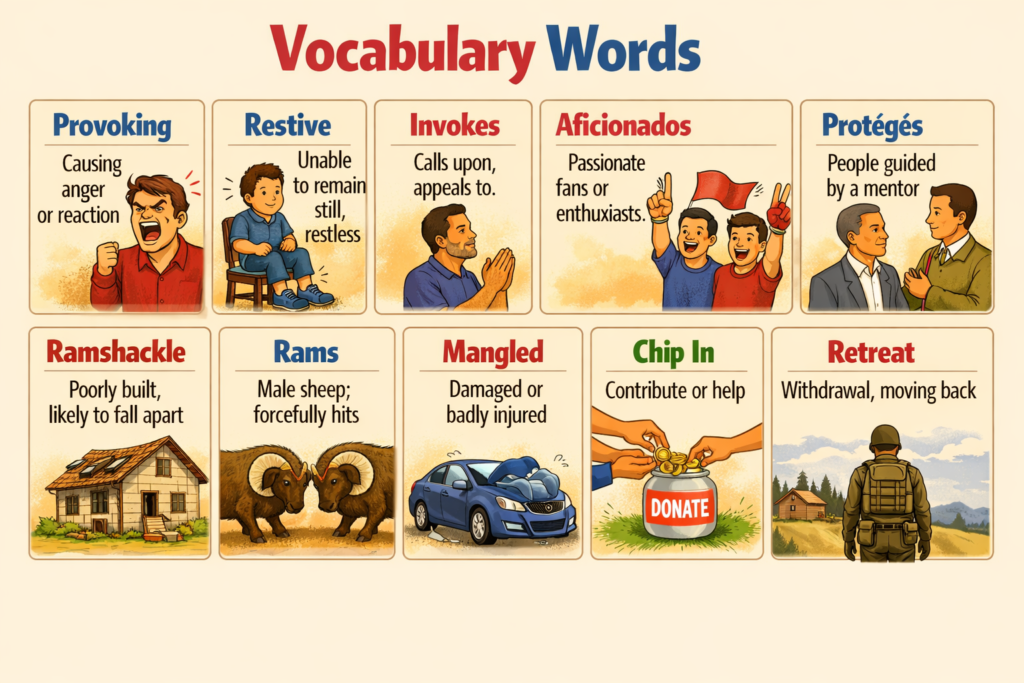
| Word | English Meaning | Punjabi Meaning (ਪੰਜਾਬੀ ਅਰਥ) |
|---|---|---|
| Provoking | Causing anger or reaction | ਭੜਕਾਉਣ ਵਾਲਾ / ਗੁੱਸਾ ਪੈਦਾ ਕਰਨ ਵਾਲਾ |
| Restive | Unable to remain still, restless | ਬੇਚੈਨ / ਅਸ਼ਾਂਤ |
| Invokes | Calls upon, appeals to | ਅਰਜ਼ ਕਰਦਾ / ਸੱਦਾ ਦਿੰਦਾ |
| Aficionados | Passionate fans or enthusiasts | ਸ਼ੌਕੀਨ / ਪ੍ਰੇਮੀ |
| Protégés | People guided or supported by a mentor | ਚੇਲੇ / ਸਿੱਖਿਆਰਥੀ |
| Chip in | Contribute or help | ਯੋਗਦਾਨ ਦੇਣਾ / ਸਹਾਇਤਾ ਕਰਨਾ |
| Ramshackle | Poorly built, likely to fall apart | ਟੁੱਟ-ਫੁੱਟ ਵਾਲਾ / ਕਮਜ਼ੋਰ |
| Rams | Male sheep; also forcefully hits | ਭੇਡ ਦਾ ਨਰ / ਜ਼ੋਰ ਨਾਲ ਟਕਰਾਉਣਾ |
| Mangled | Damaged, twisted, or badly injured | ਬੁਰੇ ਤਰੀਕੇ ਨਾਲ ਖਰਾਬ / ਕੁਚਲਿਆ |
| Retreat | Withdrawal, moving back | ਪਿੱਛੇ ਹਟਣਾ / ਵਾਪਸੀ |