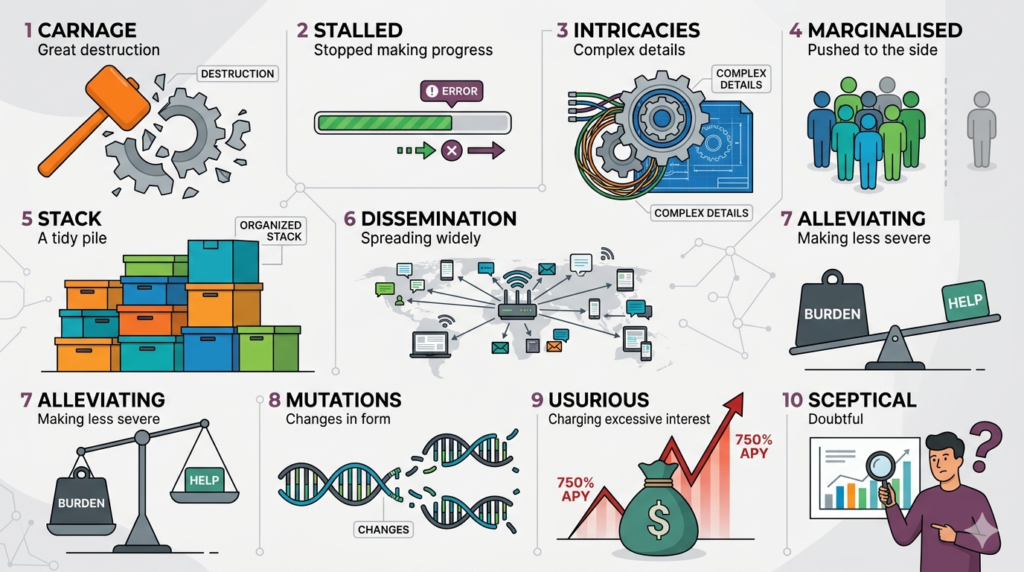
In this article, you will learn another 10 important vocabulary words: Carnage, Stalled, Intricacies, Marginalised, Stack, Dissemination, Alleviating, Mutations, Usurious and Sceptical.
10 English The Most Important Vocabulary Words for 12 June Upcoming Exams with Punjabi Meanings
1. Carnage (ਭਿਆਨਕ ਕਤਲੇਆਮ, ਵਿਆਪਕ ਖੂਨ-ਖਰਾਬਾ, ਭਾਰੀ ਤਬਾਹੀ, ਨਰਸੰਘਾਰ)
The new vocabulary word ‘Carnage’ literally means “the killing of a large number of people or animals, especially in a violent event such as a war, riot, attack, or accident.” It can also refer to widespread destruction and devastation.
In Punjabi, carnage meaning is: ਭਿਆਨਕ ਕਤਲੇਆਮ, ਵਿਆਪਕ ਖੂਨ-ਖਰਾਬਾ, ਭਾਰੀ ਤਬਾਹੀ, ਨਰਸੰਘਾਰ
Now, understand the vocabulary word “Carnage” with the sentence:
e.g. The earthquake left a trail of carnage across the region.
ਭੂਚਾਲ ਨੇ ਪੂਰੇ ਖੇਤਰ ਵਿੱਚ ਭਾਰੀ ਤਬਾਹੀ (carnage) ਛੱਡ ਦਿੱਤੀ।
So, in the above sentence the contextual meaning of the vocabulary word ‘Carnage’ that:
Carnage, which literally means large-scale death or destruction, is often used in situations involving wars, terrorist attacks, riots, natural disasters, accidents, and violent conflicts. In this case, it highlights the severe destruction and loss caused by the earthquake. The word ‘carnage’ emphasizes bloodshed, devastation, slaughter, destruction, and tragedy.
ਉਪਰੋਕਤ ਵਾਕ ਵਿੱਚ ‘Carnage’ ਸ਼ਬਦ ਦਾ ਸੰਦਰਭਗਤ ਅਰਥ ‘ਭਾਰੀ ਤਬਾਹੀ ਜਾਂ ਵਿਆਪਕ ਖੂਨ-ਖਰਾਬਾ’ ਹੈ। ਇਸ ਵਾਕ ਵਿੱਚ ਦਰਸਾਇਆ ਗਿਆ ਹੈ ਕਿ ਭੂਚਾਲ ਨੇ ਬਹੁਤ ਵੱਡਾ ਨੁਕਸਾਨ ਕੀਤਾ। ‘Carnage’ ਸ਼ਬਦ ਇੱਥੇ ਤਬਾਹੀ, ਮੌਤ, ਨਰਸੰਘਾਰ ਅਤੇ ਵਿਨਾਸ਼ ਨੂੰ ਦਰਸਾਉਂਦਾ ਹੈ।
ਜਦੋਂ ਵੀ carnage ਸ਼ਬਦ ਕਿਸੇ passage ਵਿੱਚ ਆਵੇ:
ਤਾਂ ਉਸਨੂੰ “ਵੱਡੇ ਪੱਧਰ ’ਤੇ ਹੋਈ ਮੌਤ, ਖੂਨ-ਖਰਾਬੇ ਜਾਂ ਤਬਾਹੀ” ਨਾਲ ਜੋੜ ਕੇ ਸਮਝੋ। ਇਹ ਅਕਸਰ ਉਹਨਾਂ ਸਥਿਤੀਆਂ ਵਿੱਚ ਵਰਤਿਆ ਜਾਂਦਾ ਹੈ—ਜਿੱਥੇ ਜੰਗਾਂ, ਦਹਿਸ਼ਤਗਰਦ ਹਮਲਿਆਂ, ਦੰਗਿਆਂ, ਕੁਦਰਤੀ ਆਫ਼ਤਾਂ ਜਾਂ ਭਿਆਨਕ ਹਾਦਸਿਆਂ ਦੀ ਗੱਲ ਕੀਤੀ ਜਾ ਰਹੀ ਹੋਵੇ।
Synonyms: Massacre (ਕਤਲੇਆਮ), Bloodshed (ਖੂਨ-ਖਰਾਬਾ), Slaughter (ਨਰਸੰਘਾਰ), Devastation (ਤਬਾਹੀ), Destruction (ਵਿਨਾਸ਼)
Antonyms: Peace (ਸ਼ਾਂਤੀ), Safety (ਸੁਰੱਖਿਆ), Harmony (ਸਦਭਾਵਨਾ), Preservation (ਸੰਭਾਲ), Protection (ਰੱਖਿਆ)
2. Stalled (ਰੁਕਿਆ ਹੋਇਆ, ਠੱਪ ਪਿਆ, ਅੱਗੇ ਨਾ ਵੱਧ ਸਕਿਆ, ਰੋਕਿਆ ਗਿਆ)
The new vocabulary word ‘Stalled’ literally means “to stop making progress, to come to a standstill, or to be delayed from moving forward.” It can also refer to a vehicle, project, discussion, plan, or process that has stopped moving ahead.
In Punjabi, stalled meaning is: ਰੁਕਿਆ ਹੋਇਆ, ਠੱਪ ਪਿਆ, ਅੱਗੇ ਨਾ ਵੱਧ ਸਕਿਆ, ਰੋਕਿਆ ਗਿਆ
Now, understand the vocabulary word “Stalled” with the sentence:
e.g. The peace talks stalled due to disagreements between the two countries.
ਦੋਵੇਂ ਦੇਸ਼ਾਂ ਵਿਚਕਾਰ ਅਸਹਿਮਤੀਆਂ ਕਾਰਨ ਸ਼ਾਂਤੀ ਵਾਰਤਾਵਾਂ ਠੱਪ ਪੈ ਗਈਆਂ (stalled)।
So, in the above sentence the contextual meaning of the vocabulary word ‘Stalled’ that:
Stalled, which literally means stopped or delayed from progressing, is often used in situations involving negotiations, projects, plans, economic growth, discussions, vehicles, and other activities that have temporarily stopped moving forward. In this case, it highlights that the peace talks could not continue because the two countries failed to agree on important issues. The word ‘stalled’ emphasizes delay, standstill, interruption, lack of progress, and temporary stoppage.
ਉਪਰੋਕਤ ਵਾਕ ਵਿੱਚ ‘Stalled’ ਸ਼ਬਦ ਦਾ ਸੰਦਰਭਗਤ ਅਰਥ ‘ਠੱਪ ਪੈ ਜਾਣਾ ਜਾਂ ਅੱਗੇ ਨਾ ਵੱਧ ਸਕਣਾ’ ਹੈ। ਇਸ ਵਾਕ ਵਿੱਚ ਦਰਸਾਇਆ ਗਿਆ ਹੈ ਕਿ ਦੋਵੇਂ ਦੇਸ਼ਾਂ ਵਿਚਕਾਰ ਅਸਹਿਮਤੀਆਂ ਕਾਰਨ ਸ਼ਾਂਤੀ ਵਾਰਤਾਵਾਂ ਅੱਗੇ ਨਹੀਂ ਵੱਧ ਸਕੀਆਂ। ‘Stalled’ ਸ਼ਬਦ ਇੱਥੇ ਦੇਰੀ, ਰੁਕਾਵਟ, ਠਹਿਰਾਅ ਅਤੇ ਪ੍ਰਗਤੀ ਨਾ ਹੋਣ ਨੂੰ ਦਰਸਾਉਂਦਾ ਹੈ।
ਜਦੋਂ ਵੀ stalled ਸ਼ਬਦ ਕਿਸੇ passage ਵਿੱਚ ਆਵੇ:
ਤਾਂ ਉਸਨੂੰ “ਰੁਕ ਜਾਣਾ, ਠੱਪ ਪੈ ਜਾਣਾ ਜਾਂ ਅੱਗੇ ਵਧਣ ਵਿੱਚ ਅਸਫਲ ਰਹਿਣਾ” ਨਾਲ ਜੋੜ ਕੇ ਸਮਝੋ। ਇਹ ਅਕਸਰ ਉਹਨਾਂ ਸਥਿਤੀਆਂ ਵਿੱਚ ਵਰਤਿਆ ਜਾਂਦਾ ਹੈ—ਜਿੱਥੇ ਗੱਲਬਾਤਾਂ, ਪ੍ਰੋਜੈਕਟਾਂ, ਯੋਜਨਾਵਾਂ, ਕਾਰੋਬਾਰੀ ਗਤੀਵਿਧੀਆਂ, ਆਰਥਿਕ ਵਿਕਾਸ ਜਾਂ ਕਿਸੇ ਕੰਮ ਦੀ ਪ੍ਰਗਤੀ ਰੁਕ ਗਈ ਹੋਵੇ।
Synonyms: Delayed (ਦੇਰੀ ਨਾਲ ਰੁਕਿਆ), Halted (ਰੋਕਿਆ ਗਿਆ), Stopped (ਰੁਕਿਆ), Suspended (ਅਸਥਾਈ ਤੌਰ ’ਤੇ ਰੋਕਿਆ ਗਿਆ), Standstill (ਠਹਿਰਾਅ)
Antonyms: Progressed (ਅੱਗੇ ਵਧਿਆ), Continued (ਜਾਰੀ ਰਿਹਾ), Advanced (ਤਰੱਕੀ ਕੀਤੀ), Proceeded (ਅੱਗੇ ਵਧਿਆ), Accelerated (ਤੇਜ਼ੀ ਨਾਲ ਅੱਗੇ ਵਧਿਆ)
3. Intricacies (ਜਟਿਲਤਾਵਾਂ, ਪੇਚੀਦਗੀਆਂ, ਬਾਰੀਕ ਵੇਰਵੇ, ਗੁੰਝਲਦਾਰ ਪੱਖ)
The new vocabulary word ‘Intricacies’ literally means “the complicated details, complex elements, or subtle aspects of something that are difficult to understand or deal with.” It can also refer to the fine and detailed parts of a system, process, subject, or situation.
In Punjabi, intricacies meaning is: ਜਟਿਲਤਾਵਾਂ, ਪੇਚੀਦਗੀਆਂ, ਬਾਰੀਕ ਵੇਰਵੇ, ਗੁੰਝਲਦਾਰ ਪੱਖ
Now, understand the vocabulary word “Intricacies” with the sentence:
e.g. The lawyer explained the intricacies of the legal system to his clients.
ਵਕੀਲ ਨੇ ਆਪਣੇ ਮਕਦਮਾਕਾਰਾਂ ਨੂੰ ਕਾਨੂੰਨੀ ਪ੍ਰਣਾਲੀ ਦੀਆਂ ਜਟਿਲਤਾਵਾਂ (intricacies) ਬਾਰੇ ਸਮਝਾਇਆ।
So, in the above sentence the contextual meaning of the vocabulary word ‘Intricacies’ that:
Intricacies, which literally means complex details or complicated aspects, is often used in situations involving laws, technology, science, business, politics, systems, processes, and subjects that require careful understanding. In this case, it highlights the complicated and detailed aspects of the legal system that the lawyer explained to his clients. The word ‘intricacies’ emphasizes complexity, detailed elements, subtle features, complications, and fine points.
ਉਪਰੋਕਤ ਵਾਕ ਵਿੱਚ ‘Intricacies’ ਸ਼ਬਦ ਦਾ ਸੰਦਰਭਗਤ ਅਰਥ ‘ਜਟਿਲਤਾਵਾਂ ਜਾਂ ਬਾਰੀਕ ਪੇਚੀਦਗੀਆਂ’ ਹੈ। ਇਸ ਵਾਕ ਵਿੱਚ ਦਰਸਾਇਆ ਗਿਆ ਹੈ ਕਿ ਵਕੀਲ ਨੇ ਕਾਨੂੰਨੀ ਪ੍ਰਣਾਲੀ ਦੇ ਗੁੰਝਲਦਾਰ ਅਤੇ ਵਿਸਥਾਰਪੂਰਵਕ ਪੱਖਾਂ ਨੂੰ ਸਮਝਾਇਆ। ‘Intricacies’ ਸ਼ਬਦ ਇੱਥੇ ਜਟਿਲਤਾ, ਬਾਰੀਕ ਵੇਰਵੇ, ਪੇਚੀਦਗੀ ਅਤੇ ਗਹਿਰਾਈ ਨੂੰ ਦਰਸਾਉਂਦਾ ਹੈ।
ਜਦੋਂ ਵੀ intricacies ਸ਼ਬਦ ਕਿਸੇ passage ਵਿੱਚ ਆਵੇ:
ਤਾਂ ਉਸਨੂੰ “ਕਿਸੇ ਵਿਸ਼ੇ, ਪ੍ਰਣਾਲੀ ਜਾਂ ਸਥਿਤੀ ਦੀਆਂ ਜਟਿਲ ਅਤੇ ਬਾਰੀਕ ਪੇਚੀਦਗੀਆਂ” ਨਾਲ ਜੋੜ ਕੇ ਸਮਝੋ। ਇਹ ਅਕਸਰ ਉਹਨਾਂ ਸਥਿਤੀਆਂ ਵਿੱਚ ਵਰਤਿਆ ਜਾਂਦਾ ਹੈ—ਜਿੱਥੇ ਕਾਨੂੰਨ, ਵਿਗਿਆਨ, ਤਕਨਾਲੋਜੀ, ਵਪਾਰ, ਰਾਜਨੀਤੀ ਜਾਂ ਕਿਸੇ ਗੁੰਝਲਦਾਰ ਵਿਸ਼ੇ ਦੀ ਵਿਸਥਾਰ ਨਾਲ ਗੱਲ ਕੀਤੀ ਜਾ ਰਹੀ ਹੋਵੇ।
Synonyms: Complexities (ਜਟਿਲਤਾਵਾਂ), Complications (ਪੇਚੀਦਗੀਆਂ), Details (ਵੇਰਵੇ), Nuances (ਸੂਖਮ ਪੱਖ), Sophistications (ਗੁੰਝਲਦਾਰ ਵਿਸ਼ੇਸ਼ਤਾਵਾਂ)
Antonyms: Simplicity (ਸਰਲਤਾ), Clarity (ਸਪੱਸ਼ਟਤਾ), Plainness (ਸਾਦਗੀ), Straightforwardness (ਸਿੱਧਾਪਣ), Ease (ਸੌਖਾਪਣ)
4. Marginalised (ਹਾਸ਼ੀਏ ’ਤੇ ਧੱਕਿਆ ਹੋਇਆ, ਉਪੇਖਿਆ ਗਿਆ, ਸਮਾਜ ਤੋਂ ਵੱਖ ਕੀਤਾ ਹੋਇਆ, ਪਿੱਛੇ ਛੱਡਿਆ ਗਿਆ)
The new vocabulary word ‘Marginalised’ literally means “treated as insignificant, excluded from mainstream society, or deprived of opportunities, rights, and resources.” It can also refer to individuals or groups who are pushed to the edge of society and are not given equal importance.
In Punjabi, marginalised meaning is: ਹਾਸ਼ੀਏ ’ਤੇ ਧੱਕਿਆ ਹੋਇਆ, ਉਪੇਖਿਆ ਗਿਆ, ਸਮਾਜ ਤੋਂ ਵੱਖ ਕੀਤਾ ਹੋਇਆ, ਪਿੱਛੇ ਛੱਡਿਆ ਗਿਆ
Now, understand the vocabulary word “Marginalised” with the sentence:
e.g. The government introduced new policies to support marginalised communities.
ਸਰਕਾਰ ਨੇ ਹਾਸ਼ੀਏ ’ਤੇ ਧੱਕੀਆਂ ਗਈਆਂ (marginalised) ਭਾਈਚਾਰਿਆਂ ਦੀ ਮਦਦ ਲਈ ਨਵੀਆਂ ਨੀਤੀਆਂ ਲਾਗੂ ਕੀਤੀਆਂ।
So, in the above sentence the contextual meaning of the vocabulary word ‘Marginalised’ that:
Marginalised, which literally means excluded, disadvantaged, or pushed to the edge of society, is often used in situations involving social inequality, poverty, discrimination, education, employment, human rights, and community welfare. In this case, it highlights those communities that have historically received fewer opportunities and less support than others. The word ‘marginalised’ emphasizes exclusion, neglect, disadvantage, inequality, and social discrimination.
ਉਪਰੋਕਤ ਵਾਕ ਵਿੱਚ ‘Marginalised’ ਸ਼ਬਦ ਦਾ ਸੰਦਰਭਗਤ ਅਰਥ ‘ਹਾਸ਼ੀਏ ’ਤੇ ਧੱਕਿਆ ਹੋਇਆ ਜਾਂ ਉਪੇਖਿਆ ਗਿਆ’ ਹੈ। ਇਸ ਵਾਕ ਵਿੱਚ ਦਰਸਾਇਆ ਗਿਆ ਹੈ ਕਿ ਕੁਝ ਭਾਈਚਾਰਿਆਂ ਨੂੰ ਸਮਾਜ ਵਿੱਚ ਬਰਾਬਰ ਮੌਕੇ ਅਤੇ ਸਹੂਲਤਾਂ ਨਹੀਂ ਮਿਲੀਆਂ, ਇਸ ਲਈ ਸਰਕਾਰ ਨੇ ਉਨ੍ਹਾਂ ਦੀ ਮਦਦ ਲਈ ਨਵੀਆਂ ਨੀਤੀਆਂ ਬਣਾਈਆਂ। ‘Marginalised’ ਸ਼ਬਦ ਇੱਥੇ ਅਸਮਾਨਤਾ, ਉਪੇਖਾ, ਵੰਚਿਤਤਾ ਅਤੇ ਸਮਾਜਿਕ ਭੇਦਭਾਵ ਨੂੰ ਦਰਸਾਉਂਦਾ ਹੈ।
ਜਦੋਂ ਵੀ marginalised ਸ਼ਬਦ ਕਿਸੇ passage ਵਿੱਚ ਆਵੇ:
ਤਾਂ ਉਸਨੂੰ “ਸਮਾਜ ਵਿੱਚ ਉਪੇਖਿਆ ਗਿਆ, ਹਾਸ਼ੀਏ ’ਤੇ ਧੱਕਿਆ ਗਿਆ ਜਾਂ ਬਰਾਬਰ ਮੌਕਿਆਂ ਤੋਂ ਵੰਚਿਤ” ਨਾਲ ਜੋੜ ਕੇ ਸਮਝੋ। ਇਹ ਅਕਸਰ ਉਹਨਾਂ ਸਥਿਤੀਆਂ ਵਿੱਚ ਵਰਤਿਆ ਜਾਂਦਾ ਹੈ—ਜਿੱਥੇ ਸਮਾਜਿਕ ਅਸਮਾਨਤਾ, ਗਰੀਬੀ, ਭੇਦਭਾਵ, ਮਨੁੱਖੀ ਅਧਿਕਾਰਾਂ ਜਾਂ ਵੰਚਿਤ ਵਰਗਾਂ ਦੀ ਗੱਲ ਕੀਤੀ ਜਾ ਰਹੀ ਹੋਵੇ।
Synonyms: Excluded (ਬਾਹਰ ਰੱਖਿਆ ਗਿਆ), Disadvantaged (ਵੰਚਿਤ), Neglected (ਉਪੇਖਿਆ ਗਿਆ), Oppressed (ਦਬਾਇਆ ਗਿਆ), Underprivileged (ਘੱਟ ਸਹੂਲਤਾਂ ਵਾਲਾ)
Antonyms: Included (ਸ਼ਾਮਲ ਕੀਤਾ ਗਿਆ), Empowered (ਸਸ਼ਕਤ ਕੀਤਾ ਗਿਆ), Privileged (ਵਿਸ਼ੇਸ਼ ਅਧਿਕਾਰ ਪ੍ਰਾਪਤ), Accepted (ਸਵੀਕਾਰਿਆ ਗਿਆ), Supported (ਸਹਾਇਤਾ ਪ੍ਰਾਪਤ)
5. Stack (ਢੇਰ, ਥੱਪੀ, ਇਕ ਦੂਜੇ ਉੱਤੇ ਰੱਖੀਆਂ ਚੀਜ਼ਾਂ ਦਾ ਸਮੂਹ, ਸੰਗ੍ਰਹਿ)
The new vocabulary word ‘Stack’ literally means “a pile of objects placed one on top of another.” It can also refer to a collection of items, materials, or things arranged in layers or accumulated together.
In Punjabi, stack meaning is: ਢੇਰ, ਥੱਪੀ, ਇਕ ਦੂਜੇ ਉੱਤੇ ਰੱਖੀਆਂ ਚੀਜ਼ਾਂ ਦਾ ਸਮੂਹ, ਸੰਗ੍ਰਹਿ
Now, understand the vocabulary word “Stack” with the sentence:
e.g. There was a stack of books on the table.
ਮੇਜ਼ ਉੱਤੇ ਕਿਤਾਬਾਂ ਦਾ ਇੱਕ ਢੇਰ (stack) ਪਿਆ ਹੋਇਆ ਸੀ।
So, in the above sentence the contextual meaning of the vocabulary word ‘Stack’ that:
Stack, which literally means a pile or collection of objects placed one above another, is often used in situations involving books, papers, boxes, documents, plates, wood, and other items that are arranged or accumulated together. In this case, it highlights that many books were placed one on top of another on the table. The word ‘stack’ emphasizes arrangement, accumulation, layering, collection, and grouping.
ਉਪਰੋਕਤ ਵਾਕ ਵਿੱਚ ‘Stack’ ਸ਼ਬਦ ਦਾ ਸੰਦਰਭਗਤ ਅਰਥ ‘ਢੇਰ ਜਾਂ ਇਕ ਦੂਜੇ ਉੱਤੇ ਰੱਖੀਆਂ ਚੀਜ਼ਾਂ ਦਾ ਸਮੂਹ’ ਹੈ। ਇਸ ਵਾਕ ਵਿੱਚ ਦਰਸਾਇਆ ਗਿਆ ਹੈ ਕਿ ਮੇਜ਼ ਉੱਤੇ ਕਈ ਕਿਤਾਬਾਂ ਇਕ ਦੂਜੇ ਉੱਤੇ ਰੱਖੀਆਂ ਹੋਈਆਂ ਸਨ। ‘Stack’ ਸ਼ਬਦ ਇੱਥੇ ਸੰਗ੍ਰਹਿ, ਢੇਰ, ਵਿਵਸਥਾ ਅਤੇ ਸਮੂਹ ਨੂੰ ਦਰਸਾਉਂਦਾ ਹੈ।
ਜਦੋਂ ਵੀ stack ਸ਼ਬਦ ਕਿਸੇ passage ਵਿੱਚ ਆਵੇ:
ਤਾਂ ਉਸਨੂੰ “ਚੀਜ਼ਾਂ ਦੇ ਢੇਰ ਜਾਂ ਇਕ ਦੂਜੇ ਉੱਤੇ ਰੱਖੇ ਸਮੂਹ” ਨਾਲ ਜੋੜ ਕੇ ਸਮਝੋ। ਇਹ ਅਕਸਰ ਉਹਨਾਂ ਸਥਿਤੀਆਂ ਵਿੱਚ ਵਰਤਿਆ ਜਾਂਦਾ ਹੈ—ਜਿੱਥੇ ਕਿਤਾਬਾਂ, ਕਾਗਜ਼ਾਂ, ਡੱਬਿਆਂ, ਦਸਤਾਵੇਜ਼ਾਂ, ਲੱਕੜ ਜਾਂ ਹੋਰ ਵਸਤੂਆਂ ਦੇ ਇਕੱਠੇ ਰੱਖੇ ਹੋਣ ਦੀ ਗੱਲ ਕੀਤੀ ਜਾ ਰਹੀ ਹੋਵੇ।
Synonyms: Pile (ਢੇਰ), Heap (ਢੇਰੀ), Collection (ਸੰਗ੍ਰਹਿ), Bundle (ਗੱਠਰ), Group (ਸਮੂਹ)
Antonyms: Scatter (ਖਿਲਾਰਨਾ), Dispersion (ਫੈਲਾਅ), Separation (ਵੱਖਰਾ ਹੋਣਾ), Distribution (ਵੰਡ), Dispersal (ਖਿਲਾਰਾ)
6. Dissemination (ਪ੍ਰਸਾਰ, ਫੈਲਾਅ, ਵੰਡ, ਜਾਣਕਾਰੀ ਦਾ ਪ੍ਰਚਾਰ)
The new vocabulary word ‘Dissemination’ literally means “the act of spreading information, knowledge, ideas, or facts to a large number of people.” It can also refer to the distribution or circulation of information so that it reaches a wider audience.
In Punjabi, dissemination meaning is: ਪ੍ਰਸਾਰ, ਫੈਲਾਅ, ਵੰਡ, ਜਾਣਕਾਰੀ ਦਾ ਪ੍ਰਚਾਰ
Now, understand the vocabulary word “Dissemination” with the sentence:
e.g. The internet has greatly improved the dissemination of information around the world.
ਇੰਟਰਨੈੱਟ ਨੇ ਦੁਨੀਆ ਭਰ ਵਿੱਚ ਜਾਣਕਾਰੀ ਦੇ ਪ੍ਰਸਾਰ (dissemination) ਨੂੰ ਬਹੁਤ ਸੁਧਾਰਿਆ ਹੈ।
So, in the above sentence the contextual meaning of the vocabulary word ‘Dissemination’ that:
Dissemination, which literally means the spreading or distribution of information, is often used in situations involving education, media, research, technology, public awareness campaigns, and communication. In this case, it highlights how the internet helps information reach a large number of people quickly and efficiently. The word ‘dissemination’ emphasizes distribution, circulation, propagation, transmission, and sharing of knowledge.
ਉਪਰੋਕਤ ਵਾਕ ਵਿੱਚ ‘Dissemination’ ਸ਼ਬਦ ਦਾ ਸੰਦਰਭਗਤ ਅਰਥ ‘ਜਾਣਕਾਰੀ ਦਾ ਪ੍ਰਸਾਰ ਜਾਂ ਫੈਲਾਅ’ ਹੈ। ਇਸ ਵਾਕ ਵਿੱਚ ਦਰਸਾਇਆ ਗਿਆ ਹੈ ਕਿ ਇੰਟਰਨੈੱਟ ਨੇ ਜਾਣਕਾਰੀ ਨੂੰ ਵੱਡੀ ਗਿਣਤੀ ਵਿੱਚ ਲੋਕਾਂ ਤੱਕ ਪਹੁੰਚਾਉਣਾ ਆਸਾਨ ਬਣਾ ਦਿੱਤਾ ਹੈ। ‘Dissemination’ ਸ਼ਬਦ ਇੱਥੇ ਜਾਣਕਾਰੀ ਦੀ ਵੰਡ, ਪ੍ਰਚਾਰ, ਫੈਲਾਅ ਅਤੇ ਸਾਂਝ ਨੂੰ ਦਰਸਾਉਂਦਾ ਹੈ।
ਜਦੋਂ ਵੀ dissemination ਸ਼ਬਦ ਕਿਸੇ passage ਵਿੱਚ ਆਵੇ:
ਤਾਂ ਉਸਨੂੰ “ਜਾਣਕਾਰੀ, ਵਿਚਾਰਾਂ ਜਾਂ ਗਿਆਨ ਦੇ ਵਿਆਪਕ ਪ੍ਰਸਾਰ” ਨਾਲ ਜੋੜ ਕੇ ਸਮਝੋ। ਇਹ ਅਕਸਰ ਉਹਨਾਂ ਸਥਿਤੀਆਂ ਵਿੱਚ ਵਰਤਿਆ ਜਾਂਦਾ ਹੈ—ਜਿੱਥੇ ਸਿੱਖਿਆ, ਮੀਡੀਆ, ਖੋਜ, ਤਕਨਾਲੋਜੀ, ਜਨਤਕ ਜਾਗਰੂਕਤਾ ਜਾਂ ਸੰਚਾਰ ਰਾਹੀਂ ਜਾਣਕਾਰੀ ਲੋਕਾਂ ਤੱਕ ਪਹੁੰਚਾਉਣ ਦੀ ਗੱਲ ਕੀਤੀ ਜਾ ਰਹੀ ਹੋਵੇ।
Synonyms: Distribution (ਵੰਡ), Spread (ਫੈਲਾਅ), Circulation (ਪ੍ਰਚਾਰ), Propagation (ਪ੍ਰਸਾਰ), Transmission (ਸੰਚਾਰ)
Antonyms: Suppression (ਦਬਾਉਣਾ), Concealment (ਲੁਕਾਉਣਾ), Withholding (ਰੋਕ ਕੇ ਰੱਖਣਾ), Secrecy (ਗੁਪਤਤਾ), Restriction (ਪਾਬੰਦੀ)
7. Alleviating (ਘਟਾਉਣਾ, ਰਾਹਤ ਦੇਣਾ, ਕਮ ਕਰਨਾ, ਹਲਕਾ ਕਰਨਾ)
The new vocabulary word ‘Alleviating’ literally means “making something less severe, serious, painful, or difficult.” It can also refer to reducing suffering, problems, hardships, or unpleasant conditions.
In Punjabi, alleviating meaning is: ਘਟਾਉਣਾ, ਰਾਹਤ ਦੇਣਾ, ਕਮ ਕਰਨਾ, ਹਲਕਾ ਕਰਨਾ
Now, understand the vocabulary word “Alleviating” with the sentence:
e.g. The new medicine is effective in alleviating pain.
ਨਵੀਂ ਦਵਾਈ ਦਰਦ ਨੂੰ ਘਟਾਉਣ (alleviating) ਵਿੱਚ ਪ੍ਰਭਾਵਸ਼ਾਲੀ ਹੈ।
So, in the above sentence the contextual meaning of the vocabulary word ‘Alleviating’ that:
Alleviating, which literally means reducing or easing the severity of something, is often used in situations involving pain, suffering, poverty, stress, hardships, social issues, and difficult conditions. In this case, it highlights that the medicine helps make the pain less severe and provides relief. The word ‘alleviating’ emphasizes relief, reduction, easing, mitigation, and improvement.
ਉਪਰੋਕਤ ਵਾਕ ਵਿੱਚ ‘Alleviating’ ਸ਼ਬਦ ਦਾ ਸੰਦਰਭਗਤ ਅਰਥ ‘ਰਾਹਤ ਦੇਣਾ ਜਾਂ ਘਟਾਉਣਾ’ ਹੈ। ਇਸ ਵਾਕ ਵਿੱਚ ਦਰਸਾਇਆ ਗਿਆ ਹੈ ਕਿ ਨਵੀਂ ਦਵਾਈ ਦਰਦ ਦੀ ਤੀਬਰਤਾ ਨੂੰ ਘਟਾਉਣ ਵਿੱਚ ਮਦਦ ਕਰਦੀ ਹੈ। ‘Alleviating’ ਸ਼ਬਦ ਇੱਥੇ ਰਾਹਤ, ਕਮੀ, ਸੁਧਾਰ ਅਤੇ ਮੁਸ਼ਕਲਾਂ ਨੂੰ ਹਲਕਾ ਕਰਨ ਨੂੰ ਦਰਸਾਉਂਦਾ ਹੈ।
ਜਦੋਂ ਵੀ alleviating ਸ਼ਬਦ ਕਿਸੇ passage ਵਿੱਚ ਆਵੇ:
ਤਾਂ ਉਸਨੂੰ “ਕਿਸੇ ਸਮੱਸਿਆ, ਦਰਦ, ਦੁੱਖ ਜਾਂ ਮੁਸ਼ਕਲ ਨੂੰ ਘਟਾਉਣ ਜਾਂ ਹਲਕਾ ਕਰਨ” ਨਾਲ ਜੋੜ ਕੇ ਸਮਝੋ। ਇਹ ਅਕਸਰ ਉਹਨਾਂ ਸਥਿਤੀਆਂ ਵਿੱਚ ਵਰਤਿਆ ਜਾਂਦਾ ਹੈ—ਜਿੱਥੇ ਦਰਦ, ਗਰੀਬੀ, ਤਣਾਅ, ਪਰੇਸ਼ਾਨੀ, ਸਮਾਜਿਕ ਸਮੱਸਿਆਵਾਂ ਜਾਂ ਹੋਰ ਕਠਿਨ ਹਾਲਾਤਾਂ ਨੂੰ ਘਟਾਉਣ ਦੀ ਗੱਲ ਕੀਤੀ ਜਾ ਰਹੀ ਹੋਵੇ।
Synonyms: Relieving (ਰਾਹਤ ਦੇਣਾ), Easing (ਹਲਕਾ ਕਰਨਾ), Reducing (ਘਟਾਉਣਾ), Mitigating (ਤੀਬਰਤਾ ਘਟਾਉਣਾ), Lessening (ਕਮ ਕਰਨਾ)
Antonyms: Aggravating (ਹੋਰ ਗੰਭੀਰ ਬਣਾਉਣਾ), Worsening (ਖਰਾਬ ਕਰਨਾ), Intensifying (ਤੀਬਰ ਕਰਨਾ), Increasing (ਵਧਾਉਣਾ), Exacerbating (ਹੋਰ ਵਿਗਾੜਨਾ)
8. Mutations (ਪਰਿਵਰਤਨ, ਜੈਨੇਟਿਕ ਬਦਲਾਅ, ਉਤਪਰਿਵਰਤਨ, ਵੰਸ਼ਾਣੁਕ ਤਬਦੀਲੀਆਂ)
The new vocabulary word ‘Mutations’ literally means “changes in the genetic material (DNA) of an organism that can result in altered characteristics or traits.” It can also refer to unexpected or natural changes that occur in genes over time.
In Punjabi, mutations meaning is: ਪਰਿਵਰਤਨ, ਜੈਨੇਟਿਕ ਬਦਲਾਅ, ਉਤਪਰਿਵਰਤਨ, ਵੰਸ਼ਾਣੁਕ ਤਬਦੀਲੀਆਂ
Now, understand the vocabulary word “Mutations” with the sentence:
e.g. Scientists are studying genetic mutations to better understand certain diseases.
ਵਿਗਿਆਨੀ ਕੁਝ ਬਿਮਾਰੀਆਂ ਨੂੰ ਬਿਹਤਰ ਢੰਗ ਨਾਲ ਸਮਝਣ ਲਈ ਜੈਨੇਟਿਕ ਪਰਿਵਰਤਨਾਂ (mutations) ਦਾ ਅਧਿਐਨ ਕਰ ਰਹੇ ਹਨ।
So, in the above sentence the contextual meaning of the vocabulary word ‘Mutations’ that:
Mutations, which literally means changes in genes or DNA, is often used in situations involving genetics, biology, medicine, evolution, viruses, and scientific research. In this case, it highlights that scientists are examining genetic changes to understand how certain diseases develop or are inherited. The word ‘mutations’ emphasizes genetic alterations, variations, modifications, changes, and evolutionary developments.
ਉਪਰੋਕਤ ਵਾਕ ਵਿੱਚ ‘Mutations’ ਸ਼ਬਦ ਦਾ ਸੰਦਰਭਗਤ ਅਰਥ ‘ਜੈਨੇਟਿਕ ਪਰਿਵਰਤਨ ਜਾਂ ਵੰਸ਼ਾਣੁਕ ਤਬਦੀਲੀਆਂ’ ਹੈ। ਇਸ ਵਾਕ ਵਿੱਚ ਦਰਸਾਇਆ ਗਿਆ ਹੈ ਕਿ ਵਿਗਿਆਨੀ ਜੀਨਾਂ ਵਿੱਚ ਹੋਣ ਵਾਲੇ ਬਦਲਾਵਾਂ ਦਾ ਅਧਿਐਨ ਕਰਕੇ ਕੁਝ ਬਿਮਾਰੀਆਂ ਨੂੰ ਸਮਝਣ ਦੀ ਕੋਸ਼ਿਸ਼ ਕਰ ਰਹੇ ਹਨ। ‘Mutations’ ਸ਼ਬਦ ਇੱਥੇ ਜੈਨੇਟਿਕ ਬਦਲਾਅ, ਉਤਪਰਿਵਰਤਨ, ਤਬਦੀਲੀਆਂ ਅਤੇ ਵਿਕਾਸੀ ਪਰਿਵਰਤਨਾਂ ਨੂੰ ਦਰਸਾਉਂਦਾ ਹੈ।
ਜਦੋਂ ਵੀ mutations ਸ਼ਬਦ ਕਿਸੇ passage ਵਿੱਚ ਆਵੇ:
ਤਾਂ ਉਸਨੂੰ “ਜੀਨਾਂ ਜਾਂ DNA ਵਿੱਚ ਹੋਣ ਵਾਲੀਆਂ ਤਬਦੀਲੀਆਂ” ਨਾਲ ਜੋੜ ਕੇ ਸਮਝੋ। ਇਹ ਅਕਸਰ ਉਹਨਾਂ ਸਥਿਤੀਆਂ ਵਿੱਚ ਵਰਤਿਆ ਜਾਂਦਾ ਹੈ—ਜਿੱਥੇ ਜੈਨੇਟਿਕਸ, ਜੀਵ ਵਿਗਿਆਨ, ਚਿਕਿਤਸਾ ਵਿਗਿਆਨ, ਵਿਕਾਸਵਾਦ, ਵਾਇਰਸਾਂ ਜਾਂ ਵਿਗਿਆਨਕ ਖੋਜ ਦੀ ਗੱਲ ਕੀਤੀ ਜਾ ਰਹੀ ਹੋਵੇ।
Synonyms: Genetic Changes (ਜੈਨੇਟਿਕ ਬਦਲਾਅ), Alterations (ਤਬਦੀਲੀਆਂ), Variations (ਫਰਕ), Modifications (ਸੋਧ), Transformations (ਰੂਪਾਂਤਰਨ)
Antonyms: Stability (ਸਥਿਰਤਾ), Consistency (ਇਕਸਾਰਤਾ), Uniformity (ਸਮਾਨਤਾ), Permanence (ਸਥਾਇਤਾ), Constancy (ਅਡੋਲਤਾ)
9. Usurious (ਬੇਹੱਦ ਉੱਚੇ ਵਿਆਜ ਵਾਲਾ, ਸੂਦਖੋਰੀ ਸੰਬੰਧੀ, ਅਤਿਅਧਿਕ ਵਿਆਜ ਲੈਣ ਵਾਲਾ, ਸ਼ੋਸ਼ਣਕਾਰੀ ਵਿਆਜ ਵਾਲਾ)
The new vocabulary word ‘Usurious’ literally means “charging an excessively high or unfair rate of interest on a loan.” It can also refer to lending practices that exploit borrowers by demanding unreasonable interest payments.
In Punjabi, usurious meaning is: ਬੇਹੱਦ ਉੱਚੇ ਵਿਆਜ ਵਾਲਾ, ਸੂਦਖੋਰੀ ਸੰਬੰਧੀ, ਅਤਿਅਧਿਕ ਵਿਆਜ ਲੈਣ ਵਾਲਾ, ਸ਼ੋਸ਼ਣਕਾਰੀ ਵਿਆਜ ਵਾਲਾ
Now, understand the vocabulary word “Usurious” with the sentence:
e.g. The villagers were trapped in usurious loans that they could never fully repay.
ਪਿੰਡ ਵਾਸੀ ਬੇਹੱਦ ਉੱਚੇ ਵਿਆਜ ਵਾਲੇ (usurious) ਕਰਜ਼ਿਆਂ ਵਿੱਚ ਫਸੇ ਹੋਏ ਸਨ, ਜਿਨ੍ਹਾਂ ਨੂੰ ਉਹ ਕਦੇ ਪੂਰੀ ਤਰ੍ਹਾਂ ਚੁਕਾ ਨਹੀਂ ਸਕਦੇ ਸਨ।
So, in the above sentence the contextual meaning of the vocabulary word ‘Usurious’ that:
Usurious, which literally means involving excessively high or exploitative interest rates, is often used in situations involving loans, moneylending, debt, finance, banking, and economic exploitation. In this case, it highlights that the borrowers were burdened by unfairly high interest charges, making it extremely difficult for them to repay their debts. The word ‘usurious’ emphasizes exploitation, excessive interest, financial burden, unfair lending, and indebtedness.
ਉਪਰੋਕਤ ਵਾਕ ਵਿੱਚ ‘Usurious’ ਸ਼ਬਦ ਦਾ ਸੰਦਰਭਗਤ ਅਰਥ ‘ਬੇਹੱਦ ਉੱਚੇ ਵਿਆਜ ਵਾਲਾ ਜਾਂ ਸੂਦਖੋਰੀ ਸੰਬੰਧੀ’ ਹੈ। ਇਸ ਵਾਕ ਵਿੱਚ ਦਰਸਾਇਆ ਗਿਆ ਹੈ ਕਿ ਪਿੰਡ ਵਾਸੀ ਅਜਿਹੇ ਕਰਜ਼ਿਆਂ ਵਿੱਚ ਫਸੇ ਹੋਏ ਸਨ ਜਿਨ੍ਹਾਂ ਉੱਤੇ ਬਹੁਤ ਜ਼ਿਆਦਾ ਵਿਆਜ ਲੱਗਦਾ ਸੀ, ਜਿਸ ਕਾਰਨ ਕਰਜ਼ਾ ਚੁਕਾਉਣਾ ਬਹੁਤ ਮੁਸ਼ਕਲ ਸੀ। ‘Usurious’ ਸ਼ਬਦ ਇੱਥੇ ਸ਼ੋਸ਼ਣ, ਅਤਿਅਧਿਕ ਵਿਆਜ, ਆਰਥਿਕ ਬੋਝ ਅਤੇ ਗੈਰ-ਨਿਆਂਪੂਰਨ ਕਰਜ਼ਾ ਪ੍ਰਥਾਵਾਂ ਨੂੰ ਦਰਸਾਉਂਦਾ ਹੈ।
ਜਦੋਂ ਵੀ usurious ਸ਼ਬਦ ਕਿਸੇ passage ਵਿੱਚ ਆਵੇ:
ਤਾਂ ਉਸਨੂੰ “ਬੇਹੱਦ ਉੱਚੇ ਜਾਂ ਸ਼ੋਸ਼ਣਕਾਰੀ ਵਿਆਜ ਨਾਲ ਸੰਬੰਧਿਤ” ਨਾਲ ਜੋੜ ਕੇ ਸਮਝੋ। ਇਹ ਅਕਸਰ ਉਹਨਾਂ ਸਥਿਤੀਆਂ ਵਿੱਚ ਵਰਤਿਆ ਜਾਂਦਾ ਹੈ—ਜਿੱਥੇ ਕਰਜ਼ਿਆਂ, ਸੂਦਖੋਰੀ, ਵਿੱਤੀ ਸ਼ੋਸ਼ਣ, ਕਰਜ਼ੇ ਦੇ ਬੋਝ ਜਾਂ ਗੈਰ-ਨਿਆਂਪੂਰਨ ਧਨ ਉਧਾਰ ਪ੍ਰਥਾਵਾਂ ਦੀ ਗੱਲ ਕੀਤੀ ਜਾ ਰਹੀ ਹੋਵੇ।
Synonyms: Exploitative (ਸ਼ੋਸ਼ਣਕਾਰੀ), Extortionate (ਬੇਹੱਦ ਮਹਿੰਗਾ), Excessive (ਅਤਿਅਧਿਕ), Predatory (ਸ਼ਿਕਾਰੀ ਸੁਭਾਵ ਵਾਲਾ), Unfair (ਗੈਰ-ਨਿਆਂਪੂਰਨ)
Antonyms: Fair (ਨਿਆਂਪੂਰਨ), Reasonable (ਉਚਿਤ), Moderate (ਦਰਮਿਆਨਾ), Equitable (ਬਰਾਬਰੀ ਵਾਲਾ), Just (ਨਿਰਪੱਖ)
10. Sceptical (ਸ਼ੱਕੀ, ਸੰਦੇਹਪੂਰਨ, ਅਵਿਸ਼ਵਾਸੀ, ਯਕੀਨ ਨਾ ਕਰਨ ਵਾਲਾ)
The new vocabulary word ‘Sceptical’ literally means “having doubts about something, not easily convinced, or questioning whether something is true or genuine.” It can also refer to a person who is reluctant to accept claims without evidence.
In Punjabi, sceptical meaning is: ਸ਼ੱਕੀ, ਸੰਦੇਹਪੂਰਨ, ਅਵਿਸ਼ਵਾਸੀ, ਯਕੀਨ ਨਾ ਕਰਨ ਵਾਲਾ
Now, understand the vocabulary word “Sceptical” with the sentence:
e.g. Many people were sceptical about the company’s promises of rapid growth.
ਬਹੁਤ ਸਾਰੇ ਲੋਕ ਕੰਪਨੀ ਦੇ ਤੇਜ਼ੀ ਨਾਲ ਵਿਕਾਸ ਦੇ ਵਾਅਦਿਆਂ ਬਾਰੇ ਸ਼ੱਕੀ (sceptical) ਸਨ।
So, in the above sentence the contextual meaning of the vocabulary word ‘Sceptical’ that:
Sceptical, which literally means doubtful or unconvinced, is often used in situations involving claims, promises, news reports, theories, advertisements, scientific findings, and opinions that people are unsure about. In this case, it highlights that many people were not fully convinced by the company’s promises and wanted stronger evidence before believing them. The word ‘sceptical’ emphasizes doubt, disbelief, uncertainty, questioning, and hesitation to accept something as true.
ਉਪਰੋਕਤ ਵਾਕ ਵਿੱਚ ‘Sceptical’ ਸ਼ਬਦ ਦਾ ਸੰਦਰਭਗਤ ਅਰਥ ‘ਸ਼ੱਕੀ ਜਾਂ ਸੰਦੇਹਪੂਰਨ’ ਹੈ। ਇਸ ਵਾਕ ਵਿੱਚ ਦਰਸਾਇਆ ਗਿਆ ਹੈ ਕਿ ਬਹੁਤ ਸਾਰੇ ਲੋਕ ਕੰਪਨੀ ਦੇ ਵਾਅਦਿਆਂ ਉੱਤੇ ਪੂਰਾ ਵਿਸ਼ਵਾਸ ਨਹੀਂ ਕਰਦੇ ਸਨ ਅਤੇ ਉਨ੍ਹਾਂ ਨੂੰ ਹੋਰ ਸਬੂਤਾਂ ਦੀ ਲੋੜ ਸੀ। ‘Sceptical’ ਸ਼ਬਦ ਇੱਥੇ ਸ਼ੱਕ, ਅਵਿਸ਼ਵਾਸ, ਅਨਿਸ਼ਚਿਤਤਾ ਅਤੇ ਕਿਸੇ ਗੱਲ ਨੂੰ ਤੁਰੰਤ ਸੱਚ ਨਾ ਮੰਨਣ ਦੀ ਭਾਵਨਾ ਨੂੰ ਦਰਸਾਉਂਦਾ ਹੈ।
ਜਦੋਂ ਵੀ sceptical ਸ਼ਬਦ ਕਿਸੇ passage ਵਿੱਚ ਆਵੇ:
ਤਾਂ ਉਸਨੂੰ “ਸ਼ੱਕ ਕਰਨ ਵਾਲਾ, ਆਸਾਨੀ ਨਾਲ ਯਕੀਨ ਨਾ ਕਰਨ ਵਾਲਾ ਜਾਂ ਸਬੂਤ ਮੰਗਣ ਵਾਲਾ” ਨਾਲ ਜੋੜ ਕੇ ਸਮਝੋ। ਇਹ ਅਕਸਰ ਉਹਨਾਂ ਸਥਿਤੀਆਂ ਵਿੱਚ ਵਰਤਿਆ ਜਾਂਦਾ ਹੈ—ਜਿੱਥੇ ਦਾਅਵਿਆਂ, ਵਾਅਦਿਆਂ, ਖ਼ਬਰਾਂ, ਸਿਧਾਂਤਾਂ, ਇਸ਼ਤਿਹਾਰਾਂ ਜਾਂ ਕਿਸੇ ਜਾਣਕਾਰੀ ਦੀ ਸੱਚਾਈ ਉੱਤੇ ਸਵਾਲ ਉਠਾਇਆ ਜਾ ਰਿਹਾ ਹੋਵੇ।
Synonyms: Doubtful (ਸੰਦੇਹਪੂਰਨ), Suspicious (ਸ਼ੱਕੀ), Unconvinced (ਯਕੀਨ ਨਾ ਕਰਨ ਵਾਲਾ), Questioning (ਸਵਾਲ ਕਰਨ ਵਾਲਾ), Cynical (ਅਵਿਸ਼ਵਾਸੀ)
Antonyms: Trusting (ਵਿਸ਼ਵਾਸ ਕਰਨ ਵਾਲਾ), Confident (ਭਰੋਸੇਮੰਦ), Convinced (ਯਕੀਨ ਕੀਤਾ ਹੋਇਆ), Certain (ਨਿਸ਼ਚਿਤ), Believing (ਮੰਨਣ ਵਾਲਾ)
In the next article, you will learn another 10 important English vocabulary words: Exacerbate, Drought, Scenario, Ambient, Vicious, Pivot, Embedded, Pariah, Topple and Exile.