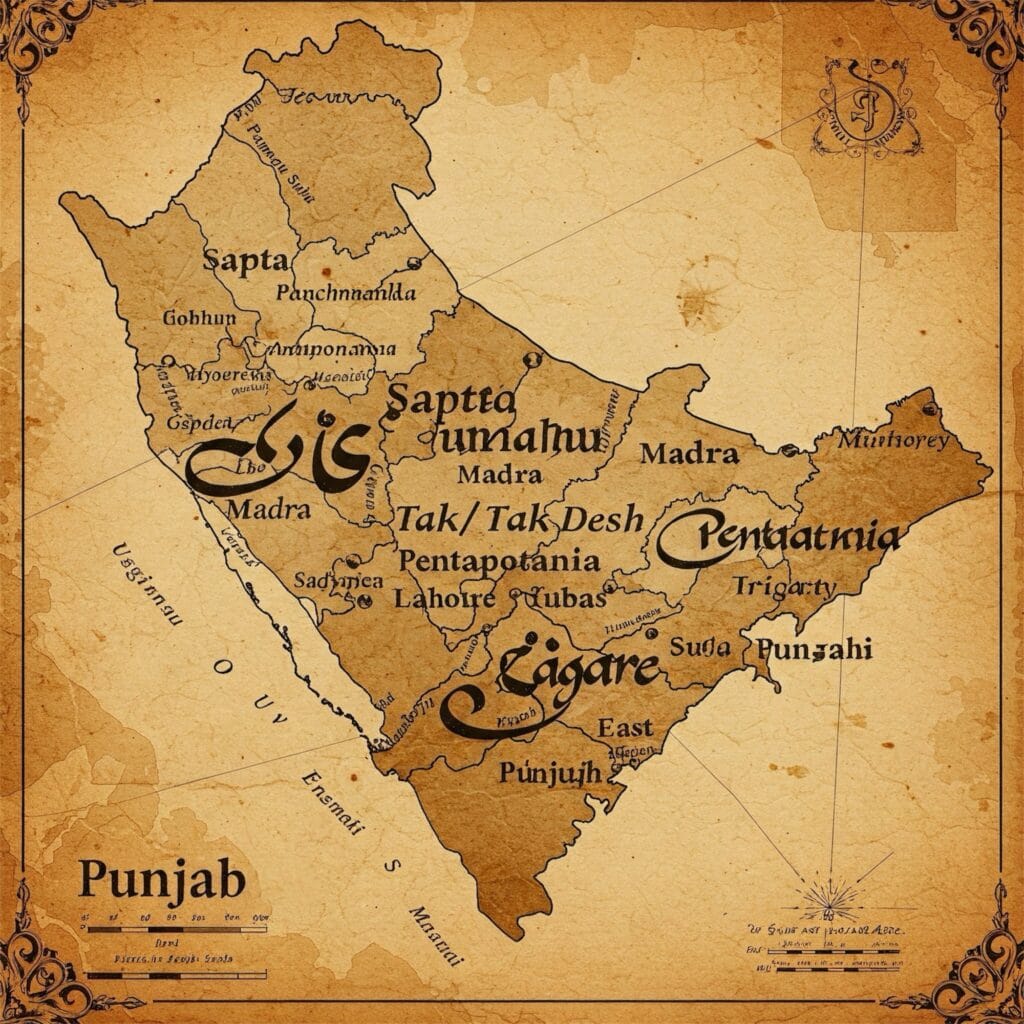
The late eighteenth century was a very important period in the history of Punjab. It was a time of political instability, changing alliances, military struggles and the decline of old powers. The Mughal Empire had lost its control over Punjab, the Afghan rulers were finding it difficult to maintain their authority, and several local rulers had established independent territories.
The Sikhs had also become a major political and military force in the region. They had organised themselves into twelve important groups known as the Sikh Misls. Each Misl had its own leader, army and territory. Although these Misls had played an important role in protecting Sikh political interests, they gradually became divided because of internal disputes and struggles for power.
In these circumstances, Maharaja Ranjit Singh, the leader of the Sukarchakia misl, emerged as a powerful ruler. He took advantage of the political situation, strengthened his position and eventually united large parts of Punjab under his rule.
To understand the rise of Maharaja Ranjit Singh, it is important to understand the political condition of Punjab and the position of the twelve Sikh Misls during the second half of the eighteenth century.
Political Condition of Punjab Before the Rise of Ranjit Singh
When Ranjit Singh began to establish his authority over the Sukarchakia misl Punjab was passing through a period of political instability. There was no single powerful ruler who could control the entire region. Different political groups, local chiefs and foreign powers were trying to increase their influence.
The decline of Mughal authority, the weakness of the Afghan rulers and the internal disputes among the Sikh Misls created a political situation in which a capable and ambitious leader could establish a strong state.
The major features of the political condition of Punjab were as follows.
Decline of Mughal Rule
The Mughal Empire had once exercised considerable control over Punjab. However, during the eighteenth century, its political and military strength gradually declined.
The death of Emperor Aurangzeb in 1707 further weakened the Mughal Empire. Later, repeated invasions by Persian and Afghan rulers, internal conflicts and the rise of regional powers made it increasingly difficult for the Mughal government to maintain its authority.
As Mughal control weakened, different local groups began to establish their own political power in Punjab.
The Sikhs gradually expanded their influence, while several Muslim and Rajput rulers also controlled independent territories.
Importance for Ranjit Singh: The decline of Mughal authority created a political vacuum in Punjab. Ranjit Singh used this situation to establish a powerful kingdom.
Political Division Among the Sikh Misls
The Sikhs had established twelve important Misls in different parts of Punjab. Each Misl was led by a Sardar who controlled a particular territory and maintained his own military force.
During the invasions of Ahmad Shah Abdali (1747–1767), the Sikh Misls often worked together to fight against the Afghan forces. Their unity was important for protecting their territories and political interests.
However, when the external danger decreased, the Sardars gradually began to focus on expanding their individual territories. They started fighting with one another for political influence, land and power.
As a result, the Sikh Misls lost much of their collective strength.
By the end of the eighteenth century, several important Sikh leaders had died, while others had become too old to offer strong resistance to Ranjit Singh.
Importance for Ranjit Singh: The lack of unity among the Sikh Misls provided him with an opportunity to bring different Sikh territories under one central authority.
Independent Muslim States in North-Western Punjab
Several Muslim rulers had established independent states in the north-western parts of Punjab.
These rulers controlled their respective territories but did not work together under a common political leadership. Their lack of unity weakened their collective position.
This political division made it difficult for them to present a united challenge to the growing power of Ranjit Singh.
The Ambitions of Sansar Chand Katoch
Among the Rajput rulers of Punjab, Sansar Chand Katoch, the ruler of Kangra, was one of the most ambitious personalities. He wanted to increase his political influence and expand his territories. His ambitions made him an important regional power during this period. However, the political situation of Punjab was changing rapidly, and several rulers were competing with one another to establish their authority.
The Gurkha Ambitions
The Gurkhas of Nepal were also looking towards Punjab and wanted to extend their influence towards the region. Their ambitions added another dimension to the political situation. Punjab was not only facing internal disputes but was also attracting the attention of powerful groups from outside the region.
George Thomas at Hansi
George Thomas was an English adventurer who took advantage of the political instability in the south-eastern region of Punjab. He established an independent political territory at Hansi. His rise showed that the absence of a strong central government allowed military adventurers to establish their own authority. His activities were another example of the political uncertainty prevailing in the region.
British and Maratha Rivalry
The British and the Marathas were two major political powers in India during the late eighteenth century. Both were trying to increase their political influence, but they were also involved in struggles against each other in northern India. Because of these conflicts, they could not give their full attention to Punjab at that time. This situation provided Ranjit Singh with an opportunity to strengthen his position without facing their immediate political and military pressure.
Shah Zaman’s Occupation of Lahore
Shah Zaman, the ruler of Afghanistan and grandson of Ahmad Shah Abdali, also tried to establish Afghan control over Punjab. He occupied Lahore during his campaigns in the region. However, a rebellion in Kabul created serious problems for him, forcing him to return to Afghanistan. His departure weakened the Afghan position in Punjab and created another opportunity for local Sikh leaders to increase their influence.
Importance for Ranjit Singh: The weakening of Afghan authority and the political uncertainty in Lahore helped Ranjit Singh establish his control over the city in 1799.
The Sikh Misls
The Sikh Misls played a central role in the political history of eighteenth-century Punjab. They were organised groups of Sikh warriors and their followers who gradually established control over different territories.
The word Misl referred to a group or organised body. Each Misl had its own Sardar, military force and territorial influence. The leader was generally known as the Misldar or Sardar.
The Misls were important because they helped the Sikhs develop their military and political power during a period when Mughal and Afghan authority was declining.
Formation and Development of the Sikh Misls
During the eighteenth century, the Sikhs faced repeated attacks and persecution under different rulers. They organised themselves into military groups to protect their community, religious institutions and territories.
Gradually, these groups became more organised and developed into the Sikh Misls.
The Misls became particularly important during the invasions of Ahmad Shah Abdali. Their leaders and warriors often joined forces to resist Afghan attacks.
Their collective military organisation was associated with the Dal Khalsa, which included two important divisions:
- Buddha Dal
- Taruna Dal
Nawab Kapoor Singh played an important role in organising these two groups in 1734.
The Buddha Dal mainly consisted of experienced and older Sikh warriors, while the Taruna Dal included younger warriors. Together, they strengthened the military organisation of the Sikhs.
In 1748, the Sikh forces were reorganised under a more structured Dal Khalsa arrangement, marking an important stage in the development of Sikh military organisation. Saanjh+2
Unity During Foreign Invasions
During the invasions of Ahmad Shah Abdali between 1747 and 1767, the Sikh Misls frequently cooperated with one another. Their common objective was to resist foreign attacks and protect Sikh territories. However, their unity was mainly based on the need to face a common enemy. Once the immediate danger decreased, the Sardars began to concentrate on their own political ambitions.
Internal Conflicts Among the Misls
By the second half of the eighteenth century, the Sikh Misls had become powerful in different parts of Punjab. However, they did not have a single ruler who could exercise authority over all of them. Each Sardar wanted to increase his territory and influence. This resulted in disputes and military conflicts among different Misls.
Some Misls became powerful, while others gradually lost their influence because of weak leadership, internal disputes and the death of important Sardars.
By the end of the eighteenth century, no single Misl was powerful enough to establish control over the whole of Punjab. This situation provided Ranjit Singh with an opportunity to unite the divided Sikh territories under his leadership.
An important point: The Sikh Misls were not simply twelve armies fighting against one another. They had played a major role in the growth of Sikh political power. However, their independent political ambitions made it difficult to maintain a united government.
The Twelve Important Sikh Misls
The twelve principal Sikh Misls were important political and military powers in eighteenth-century Punjab. Their territories, leaders and military strength varied over time. Some controlled large territories, while others had comparatively limited influence.
The following sections explain the important Misls and their role during the rise of Ranjit Singh.
Bhangi Misl
The Bhangi Misl was one of the most powerful Sikh Misls before the rise of Maharaja Ranjit Singh. It controlled several important territories in the north-western part of Punjab. Its influence extended over important cities such as Lahore and Amritsar, along with Gujarat and Sialkot.
The Bhangi Misl had become particularly powerful because of its military strength and control over important towns. However, by the end of the eighteenth century, internal disputes and weak leadership had greatly reduced its political influence.
Important Territories of the Bhangi Misl
- Lahore
- Amritsar
- Gujarat
- Sialkot
Important Leaders and Rulers
In 1797, Lahore was jointly ruled by three Bhangi Sardars:
- Chet Singh
- Sahib Singh
- Mohar Singh
Other important rulers mentioned in the historical account were:
- Gulab Singh – Amritsar
- Jiwan Singh – Sialkot
- Sahib Singh – Gujarat
Reasons for the Decline of the Bhangi Misl
The Bhangi Sardars gradually became involved in personal disputes and struggles for power. The historical account also describes their excessive consumption of bhang (hemp), which affected their ability to manage political affairs effectively.
Instead of working together to protect and expand their territories, they spent much of their time in personal activities and internal conflicts.
As a result, the Misl lost much of its earlier strength and influence.
Importance in the Rise of Ranjit Singh
The weakness of the Bhangi Misl was particularly important for Ranjit Singh because Lahore and Amritsar were among the most important political and religious centres of Punjab.
The internal disputes among the Bhangi rulers created an opportunity for Ranjit Singh to expand his influence. In 1799, Ranjit Singh captured Lahore and established it as the centre of his growing power.
Ahluwalia Misl
The Ahluwalia Misl was founded by Jassa Singh Ahluwalia, one of the most respected Sikh leaders of the eighteenth century. He was known for his bravery, military skills, leadership and ability to organise Sikh forces. Jassa Singh Ahluwalia played an important role in strengthening Sikh political and military power during a difficult period.
Important Contributions of Jassa Singh Ahluwalia
- He established the political strength of the Ahluwalia Misl.
- He brought territories between Jalandhar Doab and Bari Doab under his influence.
- He played an important role in resisting foreign invasions.
- He fought against the forces of Ahmad Shah Abdali on several occasions.
- He became one of the most respected leaders among the Sikhs.
Attack on Nadir Shah’s Returning Army (1739)
In 1739, Nadir Shah invaded India and defeated the Mughal forces. After plundering Delhi, he began returning towards Persia with enormous wealth and prisoners. Jassa Singh Ahluwalia and other Sikh warriors attacked his returning forces and recovered some of the captured wealth.
The Sikh warriors also helped rescue women who were being forcibly taken away to be sold in the markets of Ghazni. This incident became an important part of the history of Sikh resistance against foreign invasions.
Death of Jassa Singh Ahluwalia
Jassa Singh Ahluwalia died in 1783. After his death, Bhag Singh became the successor of the Misl. However, Bhag Singh did not possess the same military ability and leadership qualities as Jassa Singh Ahluwalia.
Importance in the Rise of Ranjit Singh
The death of Jassa Singh Ahluwalia was important because he had been one of the most influential Sikh Sardars. By the time Ranjit Singh began expanding his political power, the Ahluwalia Misl was no longer under the leadership of its most capable founder. This reduced the possibility of strong opposition from this quarter.
Kanahia Misl (Kanhaiya Misl)
The Kanhaiya Misl was founded by Jai Singh Kanahia, who was known for his bravery and military abilities. He established his authority over several territories in the northern part of Punjab and strengthened the political position of the Misl.
Important Territories
The Kanahia Misl controlled areas including:
- Mukerian
- Gurdaspur
- Datarpur
- Dhampur
- Pathankot
Jai Singh’s son, Gurbaksh Singh, was also a brave warrior. However, he died in 1785.
Marriage of Ranjit Singh and Mehtab Kaur (1796)
One of the most important political developments connected with the Kanahia Misl was the marriage of Ranjit Singh with Mehtab Kaur in 1796.
Mehtab Kaur was the daughter of Gurbaksh Singh and Sada Kaur.
This marriage established an important family and political relationship between the Sukarchakia misl and Kanahia Misl.
It was not merely a personal relationship. It also helped Ranjit Singh strengthen his political connections with one of the influential Sikh families of Punjab.
Role of Sada Kaur
Sada Kaur was one of the most important female political personalities of eighteenth-century Punjab.
She was the widow of Gurbaksh Singh and the mother of Mehtab Kaur. After the death of Jai Singh Kanahia in 1798, she took charge of the Kanahia Misl.
She was an ambitious, intelligent and politically capable woman. She wanted to establish her own authority over Punjab and played an important role in the political developments of the period. Her relationship with Ranjit Singh became a major factor in his rise. Initially, she supported his political ambitions and helped him strengthen his position against rival Sardars. Their alliance was based on mutual political interests.
However, their relationship later became complicated as both developed their own political ambitions.
Importance in the Rise of Ranjit Singh
The Kanahia Misl was particularly important because of Sada Kaur’s political influence and her relationship with Ranjit Singh. His marriage to Mehtab Kaur provided him with an important political alliance, while Sada Kaur’s support helped him strengthen his position during the early stages of his rise.
Sukarchakia Misl
The Sukarchakia misl was the most important Misl in the rise of Maharaja Ranjit Singh because it provided the foundation of his political power. It was founded by Charat Singh, the grandfather of Ranjit Singh. The Misl gradually increased its influence and became one of the important Sikh powers in Punjab.
Charat Singh: Founder of Sukarchakia Misl
Charat Singh was an important Sikh Sardar who established the political and military foundation of the Sukarchakia misl.
His territories included:
- Gujranwala
- Eminabad
- Sialkot
He strengthened his position through military activities and territorial expansion. Charat Singh died in 1774. After his death, his son Mahan Singh became the leader of the Misl.
Mahan Singh: Expansion of Sukarchakia Misl
Mahan Singh inherited the political and military organisation established by his father. He was an able and ambitious Sardar who further expanded the territories of the Sukarchakia misl.
He conquered important areas such as:
- Rasul Nagar
- Alipur
Through these conquests, he increased the strength and influence of his Misl. Mahan Singh died in 1792, leaving behind his young son, Ranjit Singh, as his successor.
Ranjit Singh Becomes the Leader of Sukarchakia Misl
Ranjit Singh was born in 1780. Therefore, when his father Mahan Singh died in 1792, he was only about twelve years old. Because of his young age, he could not immediately manage all the political and administrative responsibilities of the Misl independently.
During his early years, the affairs of the Sukarchakia misl were managed with the involvement of three important personalities:
- Raj Kaur: His mother, who played an important role in his early upbringing and political affairs.
- Diwan Lakhpat Rai: An important administrator associated with the Misl.
- Sada Kaur: His mother-in-law, who had considerable political influence through the Kanahia Misl.
As Ranjit Singh grew older, he gradually began taking greater control of the administration and military affairs. In 1797, he independently assumed control of the Sukarchakia misl.
This was an important turning point in his political career. He was no longer simply the young successor of Mahan Singh but an emerging leader with his own political ambitions.
Qualities of Ranjit Singh
Ranjit Singh possessed several qualities that helped him become a powerful ruler.
- Military ability: He was brave and capable of leading his forces.
- Political understanding: He understood the weaknesses and ambitions of other Sardars.
- Leadership: He could attract supporters and build political alliances.
- Patience: He did not depend only on military force but also used diplomacy.
- Ambition: He wanted to extend his authority beyond the Sukarchakia territories.
Importance of Sukarchakia misl
The Sukarchakia misl provided Ranjit Singh with his initial political authority, military resources and territorial base. His grandfather Charat Singh had established the foundation, his father Mahan Singh had expanded it, and Ranjit Singh used these advantages to build a much larger kingdom.
This is why the history of the Sukarchakia misl is directly connected with the establishment of the Sikh Empire.
Ramgarhia Misl
The Ramgarhia Misl was another important Sikh Misl known for its military strength and brave leadership. Its most famous leader was Jassa Singh Ramgarhia, who became widely respected among the Sikhs for his courage and military achievements.
He was known for his ability to attack powerful enemies and return successfully from difficult military operations.
Important Territories
The territories associated with Jassa Singh Ramgarhia included:
- Gurdaspur
- Kalanaur
- Batala
- Qadian
Military Achievements
Jassa Singh Ramgarhia was known for his attacks on the Durrani forces. According to the historical account, he would enter the enemy camps, carry out attacks and return safely. He also led an attack on Delhi, which demonstrated his military confidence and ambition. His bravery made him one of the prominent Sikh military leaders of the eighteenth century.
Position During the Rise of Ranjit Singh
By the time Ranjit Singh began expanding his power, Jassa Singh Ramgarhia had become quite old. His age reduced his ability to challenge the growing influence of Ranjit Singh.
Importance for Ranjit Singh: The Ramgarhia Misl was a significant military power, but the advanced age of its famous leader reduced the possibility of strong resistance during Ranjit Singh’s early expansion.
Faizalpuria Misl (Singhpuria Misl)
The Faizalpuria Misl, also known as the Singhpuria Misl, was founded by Nawab Kapoor Singh. He was one of the most important Sikh leaders of the eighteenth century and played a major role in organising the Sikh community during a difficult period.
Nawab Kapoor Singh and the Organisation of the Sikhs
In 1734, Nawab Kapoor Singh organised the Sikh forces into two important groups:
- Buddha Dal
- Taruna Dal
These groups were collectively associated with the Dal Khalsa. The organisation helped improve the military coordination of the Sikhs and strengthened their ability to resist external attacks. Nawab Kapoor Singh also played an important role in opposing the persecution carried out under Mughal governors Zakariya Khan and Yahiya Khan.
His leadership helped the Sikhs maintain their military organisation during a period of political difficulties.
Khushal Singh and Territorial Expansion
After the death of Nawab Kapoor Singh in 1753, his nephew Khushal Singh became the leader of the Misl.
Khushal Singh was a brave and capable Sardar. He expanded the territories of the Faizalpuria Misl and brought several areas under his influence.
These included:
- Jalandhar
- Nurpur
- Beharampur
- Patti
Khushal Singh died in 1795. After his death, his son Budh Singh succeeded him.
Decline of the Misl
Budh Singh was not considered as capable a ruler as his predecessor. As a result, the political and military position of the Faizalpuria Misl became weaker.
Importance for Ranjit Singh: The decline in the leadership and strength of this Misl reduced its ability to challenge the growing power of Ranjit Singh.
Dallewalia Misl
The Dallewalia Misl was founded by Gulab Singh. It controlled several territories in the central and eastern parts of Punjab and became known for its military activities.
Important Territories
- Phillaur
- Rahon
- Nakodar
Tara Singh Gheba
The most famous leader of the Dallewalia Misl was Tara Singh Gheba. He was an able military leader who considerably strengthened the military organisation of the Misl. He expanded the territories under his control and developed enough military strength to challenge other powerful Sardars. At the time of Ranjit Singh’s rise, Tara Singh Gheba was an important regional leader.
Relationship with Ranjit Singh
Unlike some other powerful Sardars, Tara Singh Gheba did not immediately become a major enemy of Ranjit Singh. Ranjit Singh established friendly relations with him. This shows that Ranjit Singh did not always depend on warfare to increase his influence. He also understood the importance of political friendship and alliances.
Importance for Ranjit Singh: Friendly relations with Tara Singh Gheba helped Ranjit Singh avoid unnecessary conflict with another influential Sikh leader.
Phulkian Misl
The Phulkian Misl was one of the prominent Sikh Misls of the eighteenth century. It was different from several other Misls because its influence was mainly associated with the Malwa region, south of the Sutlej River.
The Phulkian Misl gradually developed into three important princely states:
- Patiala
- Nabha
- Jind
These states became important political centres in the Malwa region.
Important Rulers
At the time of Ranjit Singh’s rise, the rulers mentioned in the historical account were:
| State | Ruler |
|---|---|
| Patiala | Sahib Singh |
| Nabha | Jaswant Singh |
| Jind | Bhag Singh |
Political Condition of the Phulkian States
Although the Phulkian Misl was prominent, the three states did not always work together. Their rulers were involved in internal disputes and political rivalries. These conflicts weakened their collective strength and reduced their ability to act as a united political power.
Importance for Ranjit Singh: The internal disputes among the Phulkian rulers weakened their collective political position. However, their territories and political interests remained important in the wider history of Punjab.
Other Sikh Misls
Apart from the eight Misls discussed above, four other important Misls were also part of the twelve principal Sikh Misls.
These were:
This was one of the recognised Sikh Misls. It formed part of the wider Sikh political organisation during the eighteenth century.
The Nishanwalia Misl was another important Sikh group. Its name was associated with the Nishan Sahib, the Sikh religious flag.
3. Nakkai Misl
The Nakkai Misl controlled territories in the Nakka region, south-west of Lahore. It was an important political group in the history of the Sikh Misls.
4. Shahid Misl
The Shahid Misl was also among the recognised Sikh Misls. It was associated with Sikh warriors known for their willingness to sacrifice their lives for the Sikh faith.