In this article, you will learn another 10 important vocabulary words: Patriarchy, Gauntlet, Cohabitation, Blot, Demurred, Unspooling, Badlands, Cult, Stabbed and Escapades.
10 English The Most Important Vocabulary Words for 15 June Upcoming Exams with Punjabi Meanings
1. Patriarchy (ਪਿਤ੍ਰਸੱਤਾ, ਪੁਰਸ਼-ਪ੍ਰਧਾਨ ਪ੍ਰਣਾਲੀ, ਪਿਤਾ ਜਾਂ ਪੁਰਸ਼ਾਂ ਦਾ ਪ੍ਰਭੁਤਵ ਵਾਲਾ ਸਮਾਜ)
The new vocabulary word ‘Patriarchy’ is a noun and literally means “a social system in which men hold primary power and authority in political, social, economic, and family life.”
In Punjabi, patriarchy meaning is: ਪਿਤ੍ਰਸੱਤਾ, ਪੁਰਸ਼-ਪ੍ਰਧਾਨ ਪ੍ਰਣਾਲੀ, ਪਿਤਾ ਜਾਂ ਪੁਰਸ਼ਾਂ ਦਾ ਪ੍ਰਭੁਤਵ ਵਾਲਾ ਸਮਾਜ
Now, understand the vocabulary word “Patriarchy” with the sentence:
e.g. The book examines how patriarchy influences gender roles in society.
ਇਹ ਕਿਤਾਬ ਇਸ ਗੱਲ ਦੀ ਪੜਚੋਲ ਕਰਦੀ ਹੈ ਕਿ ਪਿਤ੍ਰਸੱਤਾ (patriarchy) ਸਮਾਜ ਵਿੱਚ ਲਿੰਗ-ਅਧਾਰਿਤ ਭੂਮਿਕਾਵਾਂ ਨੂੰ ਕਿਵੇਂ ਪ੍ਰਭਾਵਿਤ ਕਰਦੀ ਹੈ।
So, in the above sentence the contextual meaning of the vocabulary word ‘Patriarchy’ is that:
Patriarchy, which literally means a male-dominated social system, is often used in discussions about society, culture, history, gender relations, family structures, and politics. In this case, it highlights how social institutions and traditions may give greater authority or influence to men, thereby shaping expectations and roles for different genders. The word ‘patriarchy’ emphasizes male dominance, authority structures, traditional power relations, and social hierarchy.
ਉਪਰੋਕਤ ਵਾਕ ਵਿੱਚ ‘Patriarchy’ ਸ਼ਬਦ ਦਾ ਸੰਦਰਭਗਤ ਅਰਥ ‘ਅਜਿਹੀ ਸਮਾਜਿਕ ਪ੍ਰਣਾਲੀ ਜਿਸ ਵਿੱਚ ਪੁਰਸ਼ਾਂ ਕੋਲ ਮੁੱਖ ਸੱਤਾ ਅਤੇ ਅਧਿਕਾਰ ਹੁੰਦੇ ਹਨ’ ਹੈ। ਇਸ ਵਾਕ ਵਿੱਚ ਦਰਸਾਇਆ ਗਿਆ ਹੈ ਕਿ ਪਿਤ੍ਰਸੱਤਾਤਮਕ ਢਾਂਚਾ ਸਮਾਜ ਵਿੱਚ ਔਰਤਾਂ ਅਤੇ ਮਰਦਾਂ ਦੀਆਂ ਭੂਮਿਕਾਵਾਂ ਨੂੰ ਪ੍ਰਭਾਵਿਤ ਕਰਦਾ ਹੈ। ‘Patriarchy’ ਸ਼ਬਦ ਇੱਥੇ ਪੁਰਸ਼-ਪ੍ਰਧਾਨਤਾ, ਸੱਤਾ ਦਾ ਅਸਮਾਨ ਵੰਡ, ਸਮਾਜਿਕ ਰਵਾਇਤਾਂ ਅਤੇ ਸ਼ਕਤੀ ਸੰਰਚਨਾਵਾਂ ਨੂੰ ਦਰਸਾਉਂਦਾ ਹੈ।
ਜਦੋਂ ਵੀ patriarchy ਸ਼ਬਦ ਕਿਸੇ passage ਵਿੱਚ ਆਵੇ:
ਤਾਂ ਉਸਨੂੰ “ਪੁਰਸ਼ਾਂ ਦੇ ਪ੍ਰਭੁਤਵ ਵਾਲੀ ਸਮਾਜਿਕ ਜਾਂ ਪਰਿਵਾਰਕ ਪ੍ਰਣਾਲੀ” ਨਾਲ ਜੋੜ ਕੇ ਸਮਝੋ। ਇਹ ਅਕਸਰ ਉਹਨਾਂ ਸਥਿਤੀਆਂ ਵਿੱਚ ਵਰਤਿਆ ਜਾਂਦਾ ਹੈ—ਜਿੱਥੇ ਲਿੰਗ ਸਮਾਨਤਾ, ਸਮਾਜਿਕ ਢਾਂਚੇ, ਪਰਿਵਾਰਕ ਅਧਿਕਾਰ, ਸੱਭਿਆਚਾਰਕ ਪਰੰਪਰਾਵਾਂ ਜਾਂ ਮਰਦਾਂ ਅਤੇ ਔਰਤਾਂ ਦੀਆਂ ਭੂਮਿਕਾਵਾਂ ਬਾਰੇ ਚਰਚਾ ਕੀਤੀ ਜਾ ਰਹੀ ਹੋਵੇ।
Synonyms: Male Dominance (ਪੁਰਸ਼ ਪ੍ਰਭੁਤਵ), Male Rule (ਪੁਰਸ਼ ਸ਼ਾਸਨ), Paternal System (ਪਿਤ੍ਰ-ਆਧਾਰਿਤ ਪ੍ਰਣਾਲੀ), Male Authority (ਪੁਰਸ਼ ਅਧਿਕਾਰ), Male-Centered Society (ਪੁਰਸ਼-ਕੇਂਦਰਿਤ ਸਮਾਜ)
Antonyms: Matriarchy (ਮਾਤ੍ਰਸੱਤਾ), Gender Equality (ਲਿੰਗ ਸਮਾਨਤਾ), Egalitarianism (ਸਮਾਨ ਅਧਿਕਾਰਾਂ ਦੀ ਪ੍ਰਣਾਲੀ), Equal Society (ਸਮਾਨਤਾ ਵਾਲਾ ਸਮਾਜ), Shared Authority (ਸਾਂਝਾ ਅਧਿਕਾਰ)
2. Gauntlet (ਕਠਿਨ ਚੁਣੌਤੀ, ਔਖੀ ਪਰਖ, ਸਖ਼ਤ ਇਮਤਿਹਾਨ, ਚੁਣੌਤੀ ਦਾ ਸੱਦਾ)
The new vocabulary word ‘Gauntlet’ is a noun and literally means “a severe test, difficult challenge, or a situation in which someone must face criticism, attacks, or hardships.”
In Punjabi, gauntlet meaning is: ਕਠਿਨ ਚੁਣੌਤੀ, ਔਖੀ ਪਰਖ, ਸਖ਼ਤ ਇਮਤਿਹਾਨ, ਚੁਣੌਤੀ ਦਾ ਸੱਦਾ
Now, understand the vocabulary word “Gauntlet” with the sentence:
e.g. The new policy had to run the gauntlet of public criticism before being approved.
ਨਵੀਂ ਨੀਤੀ ਨੂੰ ਮਨਜ਼ੂਰੀ ਮਿਲਣ ਤੋਂ ਪਹਿਲਾਂ ਜਨਤਕ ਆਲੋਚਨਾ ਦੀ ਕਠਿਨ ਪਰਖ (gauntlet) ਵਿੱਚੋਂ ਲੰਘਣਾ ਪਿਆ।
So, in the above sentence the contextual meaning of the vocabulary word ‘Gauntlet’ is that:
Gauntlet, which literally means a difficult test or challenge, is often used in situations involving criticism, competition, obstacles, pressure, politics, business, or personal struggles. In this case, it highlights that the policy faced intense public scrutiny and criticism before it could be accepted. The word ‘gauntlet’ emphasizes hardship, resistance, obstacles, pressure, and rigorous testing.
ਉਪਰੋਕਤ ਵਾਕ ਵਿੱਚ ‘Gauntlet’ ਸ਼ਬਦ ਦਾ ਸੰਦਰਭਗਤ ਅਰਥ ‘ਕਠਿਨ ਚੁਣੌਤੀ ਜਾਂ ਸਖ਼ਤ ਪਰਖ’ ਹੈ। ਇਸ ਵਾਕ ਵਿੱਚ ਦਰਸਾਇਆ ਗਿਆ ਹੈ ਕਿ ਨਵੀਂ ਨੀਤੀ ਨੂੰ ਮਨਜ਼ੂਰੀ ਤੋਂ ਪਹਿਲਾਂ ਕਾਫ਼ੀ ਆਲੋਚਨਾ ਅਤੇ ਵਿਰੋਧ ਦਾ ਸਾਹਮਣਾ ਕਰਨਾ ਪਿਆ। ‘Gauntlet’ ਸ਼ਬਦ ਇੱਥੇ ਔਖੀਆਂ ਪ੍ਰੀਖਿਆਵਾਂ, ਰੁਕਾਵਟਾਂ, ਦਬਾਅ ਅਤੇ ਸੰਘਰਸ਼ ਨੂੰ ਦਰਸਾਉਂਦਾ ਹੈ।
ਜਦੋਂ ਵੀ gauntlet ਸ਼ਬਦ ਕਿਸੇ passage ਵਿੱਚ ਆਵੇ:
ਤਾਂ ਉਸਨੂੰ “ਕਿਸੇ ਔਖੀ ਚੁਣੌਤੀ, ਸਖ਼ਤ ਇਮਤਿਹਾਨ ਜਾਂ ਤਿੱਖੀ ਆਲੋਚਨਾ ਦਾ ਸਾਹਮਣਾ ਕਰਨ ਵਾਲੀ ਸਥਿਤੀ” ਨਾਲ ਜੋੜ ਕੇ ਸਮਝੋ। ਇਹ ਅਕਸਰ ਉਹਨਾਂ ਸਥਿਤੀਆਂ ਵਿੱਚ ਵਰਤਿਆ ਜਾਂਦਾ ਹੈ—ਜਿੱਥੇ ਕਿਸੇ ਵਿਅਕਤੀ, ਯੋਜਨਾ, ਨੀਤੀ ਜਾਂ ਵਿਚਾਰ ਨੂੰ ਮਨਜ਼ੂਰੀ ਤੋਂ ਪਹਿਲਾਂ ਕਈ ਰੁਕਾਵਟਾਂ, ਵਿਰੋਧ ਜਾਂ ਕਠਿਨ ਪਰਖਾਂ ਵਿੱਚੋਂ ਲੰਘਣਾ ਪੈਂਦਾ ਹੋਵੇ।
Synonyms: Challenge (ਚੁਣੌਤੀ), Ordeal (ਕਠਿਨ ਅਨੁਭਵ), Trial (ਪਰਖ), Test (ਇਮਤਿਹਾਨ), Obstacle Course (ਰੁਕਾਵਟਾਂ ਭਰਿਆ ਰਸਤਾ)
Antonyms: Ease (ਆਸਾਨੀ), Comfort (ਸੁਖ), Advantage (ਫ਼ਾਇਦਾ), Relief (ਰਾਹਤ), Smooth Path (ਸੌਖਾ ਰਸਤਾ)
3. Cohabitation (ਇਕੱਠੇ ਰਹਿਣਾ, ਸਹਿ-ਨਿਵਾਸ, ਵਿਆਹ ਤੋਂ ਬਿਨਾਂ ਇਕੱਠੇ ਰਹਿਣ ਦੀ ਪ੍ਰਥਾ)
The new vocabulary word ‘Cohabitation’ is a noun and literally means “the state of living together in the same home, especially as a couple without being legally married.”
In Punjabi, cohabitation meaning is: ਇਕੱਠੇ ਰਹਿਣਾ, ਸਹਿ-ਨਿਵਾਸ, ਵਿਆਹ ਤੋਂ ਬਿਨਾਂ ਇਕੱਠੇ ਰਹਿਣ ਦੀ ਪ੍ਰਥਾ
Now, understand the vocabulary word “Cohabitation” with the sentence:
e.g. The study examined changing attitudes toward cohabitation among young adults.
ਇਸ ਅਧਿਐਨ ਨੇ ਨੌਜਵਾਨਾਂ ਵਿੱਚ ਵਿਆਹ ਤੋਂ ਬਿਨਾਂ ਇਕੱਠੇ ਰਹਿਣ ਦੀ ਪ੍ਰਥਾ (cohabitation) ਪ੍ਰਤੀ ਬਦਲਦੇ ਰਵੱਈਆਂ ਦੀ ਪੜਚੋਲ ਕੀਤੀ।
So, in the above sentence the contextual meaning of the vocabulary word ‘Cohabitation’ is that:
Cohabitation, which literally means living together in the same residence, is often used in discussions about relationships, family structures, sociology, law, and social change. In this case, it highlights how opinions and beliefs about unmarried couples living together are evolving among younger generations. The word ‘cohabitation’ emphasizes shared living arrangements, domestic partnership, and changing social norms.
ਉਪਰੋਕਤ ਵਾਕ ਵਿੱਚ ‘Cohabitation’ ਸ਼ਬਦ ਦਾ ਸੰਦਰਭਗਤ ਅਰਥ ‘ਦੋ ਵਿਅਕਤੀਆਂ ਦਾ ਇੱਕੋ ਘਰ ਵਿੱਚ ਇਕੱਠੇ ਰਹਿਣਾ, ਖ਼ਾਸ ਕਰਕੇ ਵਿਆਹ ਤੋਂ ਬਿਨਾਂ’ ਹੈ। ਇਸ ਵਾਕ ਵਿੱਚ ਦਰਸਾਇਆ ਗਿਆ ਹੈ ਕਿ ਨੌਜਵਾਨਾਂ ਦੇ ਵਿਚਾਰ ਇਸ ਤਰ੍ਹਾਂ ਦੀ ਰਹਿਣ-ਸਹਿਣ ਦੀ ਪ੍ਰਥਾ ਬਾਰੇ ਬਦਲ ਰਹੇ ਹਨ। ‘Cohabitation’ ਸ਼ਬਦ ਇੱਥੇ ਸਾਂਝੇ ਨਿਵਾਸ, ਘਰੇਲੂ ਸਾਥੀਪਨ ਅਤੇ ਸਮਾਜਿਕ ਰਵੱਈਆਂ ਵਿੱਚ ਆ ਰਹੇ ਬਦਲਾਵਾਂ ਨੂੰ ਦਰਸਾਉਂਦਾ ਹੈ।
ਜਦੋਂ ਵੀ cohabitation ਸ਼ਬਦ ਕਿਸੇ passage ਵਿੱਚ ਆਵੇ:
ਤਾਂ ਉਸਨੂੰ “ਇੱਕੋ ਘਰ ਵਿੱਚ ਇਕੱਠੇ ਰਹਿਣ ਦੀ ਵਿਵਸਥਾ” ਨਾਲ ਜੋੜ ਕੇ ਸਮਝੋ। ਇਹ ਅਕਸਰ ਉਹਨਾਂ ਸਥਿਤੀਆਂ ਵਿੱਚ ਵਰਤਿਆ ਜਾਂਦਾ ਹੈ—ਜਿੱਥੇ ਰਿਸ਼ਤਿਆਂ, ਪਰਿਵਾਰਕ ਢਾਂਚਿਆਂ, ਸਮਾਜਿਕ ਰਵਾਇਤਾਂ, ਕਾਨੂੰਨੀ ਮਸਲਿਆਂ ਜਾਂ ਜੀਵਨ-ਸ਼ੈਲੀ ਵਿੱਚ ਹੋ ਰਹੇ ਬਦਲਾਵਾਂ ਦੀ ਗੱਲ ਕੀਤੀ ਜਾ ਰਹੀ ਹੋਵੇ।
Synonyms: Living Together (ਇਕੱਠੇ ਰਹਿਣਾ), Shared Residence (ਸਾਂਝਾ ਨਿਵਾਸ), Domestic Partnership (ਘਰੇਲੂ ਸਾਥੀਪਨ), Joint Living (ਸਾਂਝੀ ਰਹਿਣ-ਸਹਿਣ), House Sharing (ਇੱਕੋ ਘਰ ਵਿੱਚ ਰਹਿਣਾ)
Antonyms: Separation (ਵੱਖਰਾ ਰਹਿਣਾ), Living Apart (ਅਲੱਗ ਰਹਿਣਾ), Divorce (ਤਲਾਕ), Isolation (ਇਕਾਂਤਵਾਸ), Individual Residence (ਅਲੱਗ ਨਿਵਾਸ)
4. Blot (ਦਾਗ਼, ਧੱਬਾ, ਕਲੰਕ; ਸੋਖ ਲੈਣਾ ਜਾਂ ਪੂੰਝ ਦੇਣਾ)
The new vocabulary word ‘Blot’ is a noun as well as a verb and literally means “a spot or stain made by ink, liquid, or another substance; or to absorb, wipe, or remove such a mark.” It can also be used figuratively to mean a stain on someone’s reputation or character.
In Punjabi, blot meaning is: ਦਾਗ਼, ਧੱਬਾ, ਕਲੰਕ; ਸੋਖ ਲੈਣਾ, ਪੂੰਝ ਦੇਣਾ
Now, understand the vocabulary word “Blot” with the sentence:
e.g. The corruption scandal was a blot on the reputation of the organization.
ਭ੍ਰਿਸ਼ਟਾਚਾਰ ਦਾ ਘੋਟਾਲਾ ਉਸ ਸੰਸਥਾ ਦੀ ਸਾਖ਼ ਉੱਤੇ ਇੱਕ ਕਲੰਕ (blot) ਸੀ।
So, in the above sentence the contextual meaning of the vocabulary word ‘Blot’ is that:
Blot, which literally means a stain or mark, is often used in situations involving reputation, character, history, mistakes, scandals, or dishonorable actions. In this case, it highlights that the corruption scandal damaged the organization’s good name and public image. The word ‘blot’ emphasizes disgrace, blemish, shame, and damage to reputation.
ਉਪਰੋਕਤ ਵਾਕ ਵਿੱਚ ‘Blot’ ਸ਼ਬਦ ਦਾ ਸੰਦਰਭਗਤ ਅਰਥ ‘ਕਲੰਕ ਜਾਂ ਬਦਨਾਮੀ ਦਾ ਦਾਗ਼’ ਹੈ। ਇਸ ਵਾਕ ਵਿੱਚ ਦਰਸਾਇਆ ਗਿਆ ਹੈ ਕਿ ਭ੍ਰਿਸ਼ਟਾਚਾਰ ਦੇ ਘੋਟਾਲੇ ਨੇ ਸੰਸਥਾ ਦੀ ਚੰਗੀ ਸਾਖ਼ ਨੂੰ ਨੁਕਸਾਨ ਪਹੁੰਚਾਇਆ। ‘Blot’ ਸ਼ਬਦ ਇੱਥੇ ਬਦਨਾਮੀ, ਦਾਗ਼, ਅਪਮਾਨ ਅਤੇ ਇੱਜ਼ਤ ਨੂੰ ਪਹੁੰਚੇ ਨੁਕਸਾਨ ਨੂੰ ਦਰਸਾਉਂਦਾ ਹੈ।
ਜਦੋਂ ਵੀ blot ਸ਼ਬਦ ਕਿਸੇ passage ਵਿੱਚ ਆਵੇ:
ਤਾਂ ਉਸਨੂੰ “ਦਾਗ਼, ਧੱਬਾ ਜਾਂ ਕਿਸੇ ਦੀ ਇੱਜ਼ਤ ਅਤੇ ਸਾਖ਼ ਉੱਤੇ ਲੱਗਾ ਕਲੰਕ” ਨਾਲ ਜੋੜ ਕੇ ਸਮਝੋ। ਇਹ ਅਕਸਰ ਉਹਨਾਂ ਸਥਿਤੀਆਂ ਵਿੱਚ ਵਰਤਿਆ ਜਾਂਦਾ ਹੈ—ਜਿੱਥੇ ਕਿਸੇ ਗਲਤੀ, ਘੋਟਾਲੇ, ਅਨੈਤਿਕ ਕੰਮ ਜਾਂ ਬਦਨਾਮੀ ਕਾਰਨ ਕਿਸੇ ਵਿਅਕਤੀ, ਸੰਸਥਾ ਜਾਂ ਇਤਿਹਾਸਕ ਘਟਨਾ ਦੀ ਛਵੀ ਖਰਾਬ ਹੋ ਗਈ ਹੋਵੇ।
Synonyms: Stain (ਦਾਗ਼), Blemish (ਖਾਮੀ/ਦਾਗ਼), Mark (ਨਿਸ਼ਾਨ), Smudge (ਧੱਬਾ), Disgrace (ਕਲੰਕ)
Antonyms: Honor (ਸਨਮਾਨ), Credit (ਯਸ਼), Glory (ਮਹਿਮਾ), Prestige (ਪ੍ਰਤਿਸ਼ਠਾ), Distinction (ਮਾਣ-ਮਰਿਆਦਾ)
5. Demurred (ਇਤਰਾਜ਼ ਕੀਤਾ, ਅਸਹਿਮਤੀ ਜਤਾਈ, ਝਿਜਕਦਿਆਂ ਇਨਕਾਰ ਕੀਤਾ, ਵਿਰੋਧ ਕੀਤਾ)
The new vocabulary word ‘Demurred’ is the past tense and past participle of ‘Demur’ and literally means “to raise an objection, express doubts, or politely refuse because of hesitation or disagreement.”
In Punjabi, demurred meaning is: ਇਤਰਾਜ਼ ਕੀਤਾ, ਅਸਹਿਮਤੀ ਜਤਾਈ, ਝਿਜਕਦਿਆਂ ਇਨਕਾਰ ਕੀਤਾ, ਵਿਰੋਧ ਕੀਤਾ
Now, understand the vocabulary word “Demurred” with the sentence:
e.g. When asked to take the leadership role, she demurred, saying she was not experienced enough.
ਜਦੋਂ ਉਸਨੂੰ ਨੇਤ੍ਰਿਤਵ ਦੀ ਭੂਮਿਕਾ ਸੰਭਾਲਣ ਲਈ ਕਿਹਾ ਗਿਆ, ਤਾਂ ਉਸਨੇ ਝਿਜਕਦਿਆਂ ਇਨਕਾਰ ਕੀਤਾ (demurred) ਅਤੇ ਕਿਹਾ ਕਿ ਉਸ ਕੋਲ ਕਾਫ਼ੀ ਤਜਰਬਾ ਨਹੀਂ ਹੈ।
So, in the above sentence the contextual meaning of the vocabulary word ‘Demurred’ is that:
Demurred, which literally means expressing objection or reluctance, is often used in situations involving offers, suggestions, requests, proposals, or opinions. In this case, it highlights that the woman politely declined the leadership role because she felt she lacked sufficient experience. The word ‘demurred’ emphasizes hesitation, modest refusal, reservation, and polite disagreement.
ਉਪਰੋਕਤ ਵਾਕ ਵਿੱਚ ‘Demurred’ ਸ਼ਬਦ ਦਾ ਸੰਦਰਭਗਤ ਅਰਥ ‘ਝਿਜਕ ਜਾਂ ਅਸਹਿਮਤੀ ਕਾਰਨ ਨਮਰਤਾ ਨਾਲ ਇਨਕਾਰ ਕਰਨਾ’ ਹੈ। ਇਸ ਵਾਕ ਵਿੱਚ ਦਰਸਾਇਆ ਗਿਆ ਹੈ ਕਿ ਉਸਨੇ ਆਪਣੇ ਆਪ ਨੂੰ ਅਣਅਨੁਭਵੀ ਸਮਝਦਿਆਂ ਨੇਤ੍ਰਿਤਵ ਦੀ ਜ਼ਿੰਮੇਵਾਰੀ ਲੈਣ ਤੋਂ ਇਨਕਾਰ ਕਰ ਦਿੱਤਾ। ‘Demurred’ ਸ਼ਬਦ ਇੱਥੇ ਝਿਜਕ, ਸੰਕੋਚ, ਨਮਰ ਵਿਰੋਧ ਅਤੇ ਅਸਹਿਮਤੀ ਨੂੰ ਦਰਸਾਉਂਦਾ ਹੈ।
ਜਦੋਂ ਵੀ demurred ਸ਼ਬਦ ਕਿਸੇ passage ਵਿੱਚ ਆਵੇ:
ਤਾਂ ਉਸਨੂੰ “ਕਿਸੇ ਸੁਝਾਅ, ਬੇਨਤੀ ਜਾਂ ਪੇਸ਼ਕਸ਼ ਉੱਤੇ ਝਿਜਕਦਿਆਂ ਇਤਰਾਜ਼ ਕਰਨਾ ਜਾਂ ਨਮਰਤਾ ਨਾਲ ਅਸਹਿਮਤੀ ਜਤਾਉਣਾ” ਨਾਲ ਜੋੜ ਕੇ ਸਮਝੋ। ਇਹ ਅਕਸਰ ਉਹਨਾਂ ਸਥਿਤੀਆਂ ਵਿੱਚ ਵਰਤਿਆ ਜਾਂਦਾ ਹੈ—ਜਿੱਥੇ ਕੋਈ ਵਿਅਕਤੀ ਕਿਸੇ ਗੱਲ ਨਾਲ ਸਹਿਮਤ ਨਾ ਹੋਵੇ, ਕੋਈ ਜ਼ਿੰਮੇਵਾਰੀ ਲੈਣ ਤੋਂ ਹਿਚਕਚਾਏ ਜਾਂ ਕਿਸੇ ਪ੍ਰਸਤਾਵ ਨੂੰ ਨਰਮ ਢੰਗ ਨਾਲ ਰੱਦ ਕਰੇ।
Synonyms: Objected (ਇਤਰਾਜ਼ ਕੀਤਾ), Protested (ਵਿਰੋਧ ਕੀਤਾ), Hesitated (ਝਿਜਕਿਆ), Declined (ਇਨਕਾਰ ਕੀਤਾ), Refused Politely (ਨਮਰਤਾ ਨਾਲ ਇਨਕਾਰ ਕੀਤਾ)
Antonyms: Agreed (ਸਹਿਮਤ ਹੋਇਆ), Accepted (ਸਵੀਕਾਰ ਕੀਤਾ), Consented (ਮਨਜ਼ੂਰੀ ਦਿੱਤੀ), Approved (ਮਨਜ਼ੂਰ ਕੀਤਾ), Complied (ਪਾਲਣਾ ਕੀਤੀ)
6. Unspooling (ਖੁਲ੍ਹਣਾ, ਹੌਲੀ-ਹੌਲੀ ਸਾਹਮਣੇ ਆਉਣਾ, ਲਪੇਟ ਖੁਲ੍ਹਣਾ, ਕ੍ਰਮਵਾਰ ਪ੍ਰਗਟ ਹੋਣਾ)
The new vocabulary word ‘Unspooling’ is the present participle of ‘Unspool’ and literally means “to unwind from a spool or roll; or to unfold, develop, or reveal gradually over time.”
In Punjabi, unspooling meaning is: ਖੁਲ੍ਹਣਾ, ਹੌਲੀ-ਹੌਲੀ ਸਾਹਮਣੇ ਆਉਣਾ, ਲਪੇਟ ਖੁਲ੍ਹਣਾ, ਕ੍ਰਮਵਾਰ ਪ੍ਰਗਟ ਹੋਣਾ
Now, understand the vocabulary word “Unspooling” with the sentence:
e.g. The story kept unspooling as new details emerged during the investigation.
ਜਾਂਚ ਦੌਰਾਨ ਨਵੇਂ ਤੱਥ ਸਾਹਮਣੇ ਆਉਂਦੇ ਰਹੇ ਅਤੇ ਕਹਾਣੀ ਹੌਲੀ-ਹੌਲੀ ਖੁਲ੍ਹਦੀ ਗਈ (unspooling)।
So, in the above sentence the contextual meaning of the vocabulary word ‘Unspooling’ is that:
Unspooling, which literally means unwinding or gradually revealing itself, is often used in situations involving stories, events, investigations, memories, films, or complex situations. In this case, it highlights that the full story was not known at once but was revealed step by step as more information became available. The word ‘unspooling’ emphasizes gradual development, unfolding events, revelation, and progression over time.
ਉਪਰੋਕਤ ਵਾਕ ਵਿੱਚ ‘Unspooling’ ਸ਼ਬਦ ਦਾ ਸੰਦਰਭਗਤ ਅਰਥ ‘ਹੌਲੀ-ਹੌਲੀ ਖੁਲ੍ਹਣਾ ਜਾਂ ਕ੍ਰਮਵਾਰ ਸਾਹਮਣੇ ਆਉਣਾ’ ਹੈ। ਇਸ ਵਾਕ ਵਿੱਚ ਦਰਸਾਇਆ ਗਿਆ ਹੈ ਕਿ ਜਾਂਚ ਦੌਰਾਨ ਨਵੇਂ ਤੱਥ ਮਿਲਦੇ ਗਏ ਅਤੇ ਪੂਰੀ ਕਹਾਣੀ ਧੀਰੇ-ਧੀਰੇ ਸਪੱਸ਼ਟ ਹੁੰਦੀ ਗਈ। ‘Unspooling’ ਸ਼ਬਦ ਇੱਥੇ ਘਟਨਾਵਾਂ ਦੇ ਕ੍ਰਮਵਾਰ ਵਿਕਾਸ, ਰਾਜ਼ ਖੁਲ੍ਹਣ ਅਤੇ ਜਾਣਕਾਰੀ ਦੇ ਹੌਲੀ-ਹੌਲੀ ਸਾਹਮਣੇ ਆਉਣ ਨੂੰ ਦਰਸਾਉਂਦਾ ਹੈ।
ਜਦੋਂ ਵੀ unspooling ਸ਼ਬਦ ਕਿਸੇ passage ਵਿੱਚ ਆਵੇ:
ਤਾਂ ਉਸਨੂੰ “ਕਿਸੇ ਘਟਨਾ, ਕਹਾਣੀ, ਯਾਦ ਜਾਂ ਸਥਿਤੀ ਦਾ ਹੌਲੀ-ਹੌਲੀ ਖੁਲ੍ਹਣਾ ਅਤੇ ਸਾਹਮਣੇ ਆਉਣਾ” ਨਾਲ ਜੋੜ ਕੇ ਸਮਝੋ। ਇਹ ਅਕਸਰ ਉਹਨਾਂ ਸਥਿਤੀਆਂ ਵਿੱਚ ਵਰਤਿਆ ਜਾਂਦਾ ਹੈ—ਜਿੱਥੇ ਕੋਈ ਰਾਜ਼, ਜਾਂਚ, ਕਹਾਣੀ, ਘਟਨਾਕ੍ਰਮ ਜਾਂ ਜਾਣਕਾਰੀ ਸਮੇਂ ਦੇ ਨਾਲ-ਨਾਲ ਪ੍ਰਗਟ ਹੋ ਰਹੀ ਹੋਵੇ।
Synonyms: Unfolding (ਖੁਲ੍ਹਣਾ), Developing (ਵਿਕਸਿਤ ਹੋਣਾ), Revealing (ਪ੍ਰਗਟ ਹੋਣਾ), Emerging (ਸਾਹਮਣੇ ਆਉਣਾ), Unraveling (ਗੁੱਥੀ ਸੁਲਝਣਾ)
Antonyms: Concealing (ਲੁਕਾਉਣਾ), Hiding (ਛੁਪਾਉਣਾ), Withholding (ਰੋਕ ਕੇ ਰੱਖਣਾ), Suppressing (ਦਬਾਉਣਾ), Obscuring (ਅਸਪਸ਼ਟ ਕਰਨਾ)
7. Badlands (ਬੰਜਰ ਅਤੇ ਉਬੜ-ਖਾਬੜ ਇਲਾਕਾ, ਬੇਕਾਰ ਜ਼ਮੀਨ, ਕੱਟਾਅ ਵਾਲਾ ਖੇਤਰ)
The new vocabulary word ‘Badlands’ is a plural noun and literally means “a dry, barren, and heavily eroded area of land with little vegetation, making it difficult to travel through or cultivate.”
In Punjabi, badlands meaning is: ਬੰਜਰ ਅਤੇ ਉਬੜ-ਖਾਬੜ ਇਲਾਕਾ, ਬੇਕਾਰ ਜ਼ਮੀਨ, ਕੱਟਾਅ ਵਾਲਾ ਖੇਤਰ
Now, understand the vocabulary word “Badlands” with the sentence:
e.g. The explorers crossed the badlands in search of ancient fossils.
ਖੋਜੀ ਪ੍ਰਾਚੀਨ ਜੀਵਾਸ਼ਮਾਂ ਦੀ ਭਾਲ ਵਿੱਚ ਬੰਜਰ ਅਤੇ ਉਬੜ-ਖਾਬੜ ਇਲਾਕੇ (badlands) ਨੂੰ ਪਾਰ ਕਰ ਗਏ।
So, in the above sentence the contextual meaning of the vocabulary word ‘Badlands’ is that:
Badlands, which literally means rough and barren terrain, is often used in situations involving geography, geology, exploration, deserts, and natural landscapes. In this case, it highlights that the explorers had to travel through a harsh and difficult region with little vegetation and uneven ground. The word ‘badlands’ emphasizes ruggedness, barrenness, erosion, and challenging terrain.
ਉਪਰੋਕਤ ਵਾਕ ਵਿੱਚ ‘Badlands’ ਸ਼ਬਦ ਦਾ ਸੰਦਰਭਗਤ ਅਰਥ ‘ਉਬੜ-ਖਾਬੜ ਅਤੇ ਬੰਜਰ ਭੂਮੀ’ ਹੈ। ਇਸ ਵਾਕ ਵਿੱਚ ਦਰਸਾਇਆ ਗਿਆ ਹੈ ਕਿ ਖੋਜੀਆਂ ਨੂੰ ਜੀਵਾਸ਼ਮਾਂ ਦੀ ਭਾਲ ਲਈ ਇੱਕ ਅਜਿਹੇ ਖੇਤਰ ਵਿੱਚੋਂ ਲੰਘਣਾ ਪਿਆ ਜੋ ਸੁੱਕਾ, ਕੱਟਾਅ ਵਾਲਾ ਅਤੇ ਯਾਤਰਾ ਲਈ ਔਖਾ ਸੀ। ‘Badlands’ ਸ਼ਬਦ ਇੱਥੇ ਬੰਜਰਤਾ, ਕਠੋਰ ਭੂ-ਆਕਾਰ, ਕੁਦਰਤੀ ਕੱਟਾਅ ਅਤੇ ਮੁਸ਼ਕਲ ਭੂਗੋਲਿਕ ਸਥਿਤੀਆਂ ਨੂੰ ਦਰਸਾਉਂਦਾ ਹੈ।
ਜਦੋਂ ਵੀ badlands ਸ਼ਬਦ ਕਿਸੇ passage ਵਿੱਚ ਆਵੇ:
ਤਾਂ ਉਸਨੂੰ “ਸੁੱਕੇ, ਬੰਜਰ, ਕੱਟਾਅ ਵਾਲੇ ਅਤੇ ਉਬੜ-ਖਾਬੜ ਭੂਮੀ ਖੇਤਰ” ਨਾਲ ਜੋੜ ਕੇ ਸਮਝੋ। ਇਹ ਅਕਸਰ ਉਹਨਾਂ ਸਥਿਤੀਆਂ ਵਿੱਚ ਵਰਤਿਆ ਜਾਂਦਾ ਹੈ—ਜਿੱਥੇ ਭੂਗੋਲ, ਭੂ-ਵਿਗਿਆਨ, ਰੇਗਿਸਤਾਨੀ ਖੇਤਰਾਂ, ਖੋਜ ਯਾਤਰਾਵਾਂ ਜਾਂ ਕੁਦਰਤੀ ਭੂ-ਆਕਾਰਾਂ ਦੀ ਗੱਲ ਕੀਤੀ ਜਾ ਰਹੀ ਹੋਵੇ।
Synonyms: Barren Land (ਬੰਜਰ ਜ਼ਮੀਨ), Wasteland (ਉਜਾੜ ਇਲਾਕਾ), Rugged Terrain (ਉਬੜ-ਖਾਬੜ ਭੂਮੀ), Deserted Region (ਸੁੰਨਾ ਖੇਤਰ), Eroded Land (ਕੱਟਾਅ ਵਾਲੀ ਜ਼ਮੀਨ)
Antonyms: Fertile Land (ਉਪਜਾਊ ਜ਼ਮੀਨ), Farmland (ਖੇਤੀਬਾੜੀ ਵਾਲੀ ਜ਼ਮੀਨ), Greenbelt (ਹਰਿਆ-ਭਰਿਆ ਖੇਤਰ), Oasis (ਹਰਿਆਲਾ ਮਰੂਦਿਆਨ), Productive Land (ਉਤਪਾਦਕ ਜ਼ਮੀਨ)
8. Cult (ਪੰਥ, ਸੰਪਰਦਾਇ, ਅੰਧ-ਅਨੁਯਾਈ ਸਮੂਹ, ਵਿਸ਼ੇਸ਼ ਉਪਾਸਨਾ ਜਾਂ ਵਿਚਾਰਧਾਰਾ ਵਾਲਾ ਗਰੁੱਪ)
The new vocabulary word ‘Cult’ is a noun and literally means “a group of people who strongly follow a particular leader, belief system, ideology, or set of practices, often viewed as unusual or extreme by others.”
In Punjabi, cult meaning is: ਪੰਥ, ਸੰਪਰਦਾਇ, ਅੰਧ-ਅਨੁਯਾਈ ਸਮੂਹ, ਵਿਸ਼ੇਸ਼ ਉਪਾਸਨਾ ਜਾਂ ਵਿਚਾਰਧਾਰਾ ਵਾਲਾ ਗਰੁੱਪ
Now, understand the vocabulary word “Cult” with the sentence:
e.g. The documentary examined how a cult influenced the lives of its followers.
ਡਾਕੂਮੈਂਟਰੀ ਨੇ ਇਹ ਪੜਚੋਲ ਕੀਤੀ ਕਿ ਇੱਕ ਪੰਥ (cult) ਨੇ ਆਪਣੇ ਅਨੁਯਾਈਆਂ ਦੀ ਜ਼ਿੰਦਗੀ ਨੂੰ ਕਿਵੇਂ ਪ੍ਰਭਾਵਿਤ ਕੀਤਾ।
So, in the above sentence the contextual meaning of the vocabulary word ‘Cult’ is that:
Cult, which literally means a group centered around a particular belief, practice, or leader, is often used in situations involving religion, ideology, social movements, or organizations with highly devoted followers. In this case, it highlights that the group had a strong influence on the thoughts, decisions, and lifestyles of its members. The word ‘cult’ emphasizes intense devotion, strong group identity, loyalty to a leader or belief, and sometimes isolation from mainstream society.
ਉਪਰੋਕਤ ਵਾਕ ਵਿੱਚ ‘Cult’ ਸ਼ਬਦ ਦਾ ਸੰਦਰਭਗਤ ਅਰਥ ‘ਇੱਕ ਅਜਿਹਾ ਸਮੂਹ ਜੋ ਕਿਸੇ ਵਿਸ਼ੇਸ਼ ਆਗੂ, ਵਿਚਾਰਧਾਰਾ ਜਾਂ ਵਿਸ਼ਵਾਸ ਨੂੰ ਬਹੁਤ ਗਹਿਰਾਈ ਨਾਲ ਮੰਨਦਾ ਹੋਵੇ’ ਹੈ। ਇਸ ਵਾਕ ਵਿੱਚ ਦਰਸਾਇਆ ਗਿਆ ਹੈ ਕਿ ਉਸ ਗਰੁੱਪ ਦਾ ਆਪਣੇ ਅਨੁਯਾਈਆਂ ਦੇ ਜੀਵਨ ਉੱਤੇ ਡੂੰਘਾ ਪ੍ਰਭਾਵ ਸੀ। ‘Cult’ ਸ਼ਬਦ ਇੱਥੇ ਗਹਿਰੀ ਨਿਸ਼ਠਾ, ਅਟੁੱਟ ਵਿਸ਼ਵਾਸ, ਸਮੂਹਕ ਪਛਾਣ ਅਤੇ ਕਿਸੇ ਖ਼ਾਸ ਵਿਚਾਰ ਜਾਂ ਆਗੂ ਪ੍ਰਤੀ ਸਮਰਪਣ ਨੂੰ ਦਰਸਾਉਂਦਾ ਹੈ।
ਜਦੋਂ ਵੀ cult ਸ਼ਬਦ ਕਿਸੇ passage ਵਿੱਚ ਆਵੇ:
ਤਾਂ ਉਸਨੂੰ “ਕਿਸੇ ਖ਼ਾਸ ਆਗੂ, ਧਾਰਨਾ, ਧਰਮ ਜਾਂ ਵਿਚਾਰਧਾਰਾ ਦੇ ਬਹੁਤ ਹੀ ਸਮਰਪਿਤ ਅਨੁਯਾਈਆਂ ਦੇ ਸਮੂਹ” ਨਾਲ ਜੋੜ ਕੇ ਸਮਝੋ। ਇਹ ਅਕਸਰ ਉਹਨਾਂ ਸਥਿਤੀਆਂ ਵਿੱਚ ਵਰਤਿਆ ਜਾਂਦਾ ਹੈ—ਜਿੱਥੇ ਧਾਰਮਿਕ ਗਰੁੱਪਾਂ, ਸਮਾਜਿਕ ਅੰਦੋਲਨਾਂ, ਵਿਸ਼ੇਸ਼ ਵਿਚਾਰਧਾਰਾਵਾਂ ਜਾਂ ਅਜਿਹੇ ਸਮੂਹਾਂ ਦੀ ਗੱਲ ਕੀਤੀ ਜਾ ਰਹੀ ਹੋਵੇ ਜਿਨ੍ਹਾਂ ਦੇ ਮੈਂਬਰ ਆਪਣੇ ਵਿਸ਼ਵਾਸਾਂ ਨਾਲ ਬਹੁਤ ਮਜ਼ਬੂਤੀ ਨਾਲ ਜੁੜੇ ਹੋਣ।
Synonyms: Sect (ਸੰਪਰਦਾਇ), Faction (ਧੜਾ), Movement (ਅੰਦੋਲਨ), Following (ਅਨੁਯਾਈ ਸਮੂਹ), Brotherhood (ਭਾਈਚਾਰਾ) (ਸੰਦਰਭ ਅਨੁਸਾਰ)
Antonyms: Mainstream Society (ਮੁੱਖਧਾਰਾ ਸਮਾਜ), Independent Thinking (ਸੁਤੰਤਰ ਸੋਚ), Individualism (ਵਿਅਕਤੀਵਾਦ), Open Community (ਖੁੱਲ੍ਹਾ ਭਾਈਚਾਰਾ), General Public (ਆਮ ਲੋਕ)
9. Stabbed (ਛੁਰਾ ਮਾਰਿਆ, ਚਾਕੂ ਨਾਲ ਵਾਰ ਕੀਤਾ, ਭੋਂਕਿਆ)
The new vocabulary word ‘Stabbed’ is the past tense and past participle of ‘Stab’ and literally means “to injure, wound, or attack someone or something with a knife or other sharp pointed object.”
In Punjabi, stabbed meaning is: ਛੁਰਾ ਮਾਰਿਆ, ਚਾਕੂ ਨਾਲ ਵਾਰ ਕੀਤਾ, ਭੋਂਕਿਆ
Now, understand the vocabulary word “Stabbed” with the sentence:
e.g. The victim was stabbed during the robbery.
ਲੁੱਟ-ਖੋਹ ਦੌਰਾਨ ਪੀੜਤ ਉੱਤੇ ਛੁਰਾ ਮਾਰਿਆ ਗਿਆ (stabbed)।
So, in the above sentence the contextual meaning of the vocabulary word ‘Stabbed’ is that:
Stabbed, which literally means being struck with a sharp weapon, is often used in situations involving crime, violence, self-defense, accidents, or physical attacks. In this case, it highlights that the victim was injured by a sharp object during the robbery. The word ‘stabbed’ emphasizes a forceful attack involving a pointed weapon and the resulting injury.
ਉਪਰੋਕਤ ਵਾਕ ਵਿੱਚ ‘Stabbed’ ਸ਼ਬਦ ਦਾ ਸੰਦਰਭਗਤ ਅਰਥ ‘ਚਾਕੂ ਜਾਂ ਕਿਸੇ ਨੁਕੀਲੀ ਵਸਤੂ ਨਾਲ ਵਾਰ ਕਰਨਾ’ ਹੈ। ਇਸ ਵਾਕ ਵਿੱਚ ਦਰਸਾਇਆ ਗਿਆ ਹੈ ਕਿ ਲੁੱਟ-ਖੋਹ ਦੌਰਾਨ ਪੀੜਤ ਨੂੰ ਨੁਕੀਲੇ ਹਥਿਆਰ ਨਾਲ ਜ਼ਖ਼ਮੀ ਕੀਤਾ ਗਿਆ। ‘Stabbed’ ਸ਼ਬਦ ਇੱਥੇ ਹਿੰਸਕ ਹਮਲੇ, ਸਰੀਰਕ ਚੋਟ ਅਤੇ ਨੁਕੀਲੇ ਹਥਿਆਰ ਨਾਲ ਕੀਤੇ ਗਏ ਵਾਰ ਨੂੰ ਦਰਸਾਉਂਦਾ ਹੈ।
ਜਦੋਂ ਵੀ stabbed ਸ਼ਬਦ ਕਿਸੇ passage ਵਿੱਚ ਆਵੇ:
ਤਾਂ ਉਸਨੂੰ “ਚਾਕੂ, ਛੁਰੇ ਜਾਂ ਕਿਸੇ ਨੁਕੀਲੀ ਚੀਜ਼ ਨਾਲ ਵਾਰ ਕਰਕੇ ਜ਼ਖ਼ਮੀ ਕਰਨਾ” ਨਾਲ ਜੋੜ ਕੇ ਸਮਝੋ। ਇਹ ਅਕਸਰ ਉਹਨਾਂ ਸਥਿਤੀਆਂ ਵਿੱਚ ਵਰਤਿਆ ਜਾਂਦਾ ਹੈ—ਜਿੱਥੇ ਅਪਰਾਧ, ਹਮਲਾ, ਸਵੈ-ਰੱਖਿਆ, ਝਗੜਾ ਜਾਂ ਹਿੰਸਕ ਘਟਨਾ ਦੀ ਗੱਲ ਕੀਤੀ ਜਾ ਰਹੀ ਹੋਵੇ।
Synonyms: Pierced (ਭੋਂਕਿਆ), Knifed (ਚਾਕੂ ਮਾਰਿਆ), Wounded (ਜ਼ਖ਼ਮੀ ਕੀਤਾ), Impaled (ਨੁਕੀਲੀ ਚੀਜ਼ ਨਾਲ ਭੋਂਕਿਆ), Injured (ਚੋਟ ਪਹੁੰਚਾਈ)
Antonyms: Healed (ਠੀਕ ਕੀਤਾ), Protected (ਸੁਰੱਖਿਆ ਦਿੱਤੀ), Saved (ਬਚਾਇਆ), Defended (ਬਚਾਅ ਕੀਤਾ), Cured (ਇਲਾਜ ਕੀਤਾ)
10. Escapades (ਦਿਲੇਰੀ ਭਰੀਆਂ ਸ਼ਰਾਰਤਾਂ, ਰੋਮਾਂਚਕ ਕਾਰਨਾਮੇ, ਸਾਹਸੀ ਮੁਹਿੰਮਾਂ, ਅਜੀਬੋ-ਗਰੀਬ ਹਰਕਤਾਂ)
The new vocabulary word ‘Escapades’ is the plural form of ‘Escapade’ and literally means “exciting, adventurous, unconventional, or sometimes mischievous actions and experiences.”
In Punjabi, escapades meaning is: ਦਿਲੇਰੀ ਭਰੀਆਂ ਸ਼ਰਾਰਤਾਂ, ਰੋਮਾਂਚਕ ਕਾਰਨਾਮੇ, ਸਾਹਸੀ ਮੁਹਿੰਮਾਂ, ਅਜੀਬੋ-ਗਰੀਬ ਹਰਕਤਾਂ
Now, understand the vocabulary word “Escapades” with the sentence:
e.g. He often tells stories about his youthful escapades during college days.
ਉਹ ਅਕਸਰ ਆਪਣੇ ਕਾਲਜ ਦੇ ਦਿਨਾਂ ਦੀਆਂ ਰੋਮਾਂਚਕ ਸ਼ਰਾਰਤਾਂ ਅਤੇ ਕਾਰਨਾਮਿਆਂ (escapades) ਦੀਆਂ ਕਹਾਣੀਆਂ ਸੁਣਾਉਂਦਾ ਹੈ।
So, in the above sentence the contextual meaning of the vocabulary word ‘Escapades’ is that:
Escapades, which literally means adventurous or mischievous exploits, is often used in situations involving travel, youth, adventure, risk-taking, fun activities, or unusual experiences. In this case, it highlights that the person had many memorable and exciting experiences during his college years. The word ‘escapades’ emphasizes adventure, excitement, mischief, daring actions, and memorable incidents.
ਉਪਰੋਕਤ ਵਾਕ ਵਿੱਚ ‘Escapades’ ਸ਼ਬਦ ਦਾ ਸੰਦਰਭਗਤ ਅਰਥ ‘ਰੋਮਾਂਚਕ, ਸਾਹਸੀ ਜਾਂ ਸ਼ਰਾਰਤੀ ਕਾਰਨਾਮੇ’ ਹੈ। ਇਸ ਵਾਕ ਵਿੱਚ ਦਰਸਾਇਆ ਗਿਆ ਹੈ ਕਿ ਉਹ ਆਪਣੇ ਜਵਾਨੀ ਦੇ ਦਿਨਾਂ ਵਿੱਚ ਕੀਤੀਆਂ ਦਿਲਚਸਪ ਅਤੇ ਯਾਦਗਾਰ ਹਰਕਤਾਂ ਬਾਰੇ ਗੱਲ ਕਰਦਾ ਹੈ। ‘Escapades’ ਸ਼ਬਦ ਇੱਥੇ ਸਾਹਸ, ਮੌਜ-ਮਸਤੀ, ਜੋਖ਼ਮ ਭਰੀਆਂ ਗਤੀਵਿਧੀਆਂ ਅਤੇ ਯਾਦਗਾਰ ਤਜਰਬਿਆਂ ਨੂੰ ਦਰਸਾਉਂਦਾ ਹੈ।
ਜਦੋਂ ਵੀ escapades ਸ਼ਬਦ ਕਿਸੇ passage ਵਿੱਚ ਆਵੇ:
ਤਾਂ ਉਸਨੂੰ “ਰੋਮਾਂਚਕ, ਸਾਹਸੀ, ਸ਼ਰਾਰਤੀ ਜਾਂ ਆਮ ਨਿਯਮਾਂ ਤੋਂ ਹਟ ਕੇ ਕੀਤੇ ਗਏ ਕਾਰਨਾਮਿਆਂ” ਨਾਲ ਜੋੜ ਕੇ ਸਮਝੋ। ਇਹ ਅਕਸਰ ਉਹਨਾਂ ਸਥਿਤੀਆਂ ਵਿੱਚ ਵਰਤਿਆ ਜਾਂਦਾ ਹੈ—ਜਿੱਥੇ ਜਵਾਨੀ ਦੀਆਂ ਸ਼ਰਾਰਤਾਂ, ਯਾਤਰਾਵਾਂ, ਸਾਹਸੀ ਮੁਹਿੰਮਾਂ, ਮੌਜ-ਮਸਤੀ ਵਾਲੀਆਂ ਘਟਨਾਵਾਂ ਜਾਂ ਅਸਾਧਾਰਣ ਤਜਰਬਿਆਂ ਦੀ ਗੱਲ ਕੀਤੀ ਜਾ ਰਹੀ ਹੋਵੇ।
Synonyms: Adventures (ਸਾਹਸੀ ਮੁਹਿੰਮਾਂ), Exploits (ਕਾਰਨਾਮੇ), Antics (ਸ਼ਰਾਰਤੀ ਹਰਕਤਾਂ), Mischief (ਸ਼ਰਾਰਤ), Ventures (ਜੋਖ਼ਮ ਭਰੇ ਯਤਨ)
Antonyms: Routine (ਰੁਟੀਨ ਜੀਵਨ), Discipline (ਅਨੁਸ਼ਾਸਨ), Caution (ਸਾਵਧਾਨੀ), Restraint (ਸੰਜਮ), Convention (ਰਵਾਇਤੀ ਵਿਹਾਰ)
In the next article, you will learn another 10 important English vocabulary words: Ginger Group, Honed, Foibles, Adversity, Calling Card, Imitates, Invoke, Cult, Stabbed and Escapades.
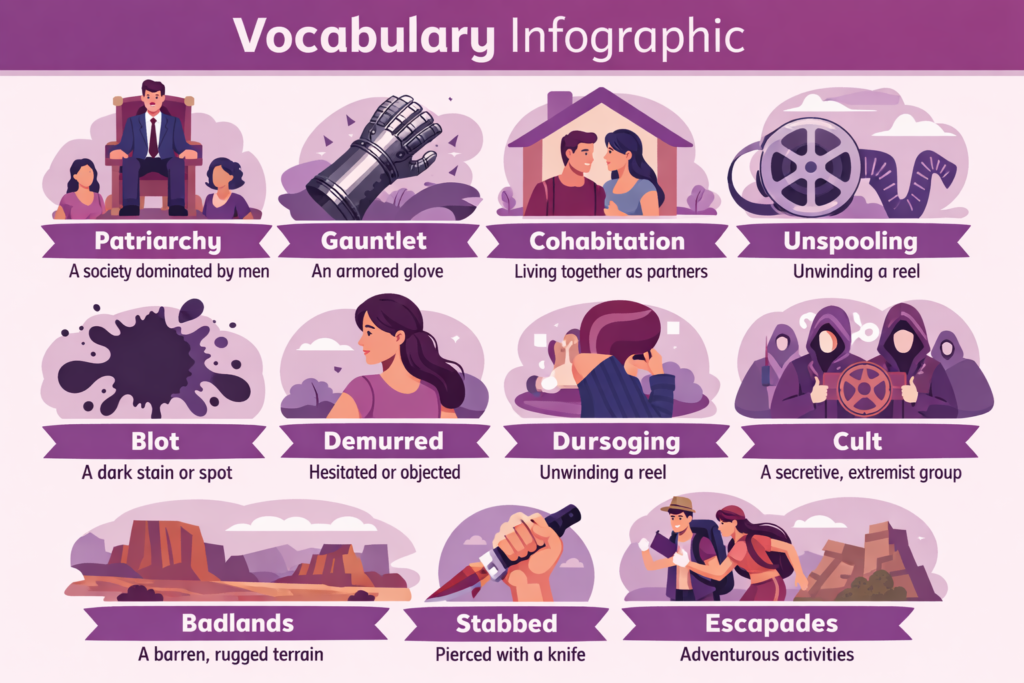
| English Word | Meaning (English) | Meaning (Punjabi) |
|---|---|---|
| Patriarchy | A society dominated by men | ਪੁਰਸ਼ ਪ੍ਰਧਾਨ ਸਮਾਜ |
| Gauntlet | An armored glove | ਲੋਹੇ ਦਾ ਦਸਤਾਨਾ |
| Cohabitation | Living together as partners | ਇਕੱਠੇ ਰਹਿਣਾ ਜਾਂ ਸਾਥੀ ਵਜੋਂ ਜੀਵਨ ਬਿਤਾਉਣਾ |
| Blot | A dark stain or spot | ਦਾਗ ਜਾਂ ਕਾਲਾ ਨਿਸ਼ਾਨ |
| Demurred | Hesitated or objected | ਹਿਚਕਿਚਾਇਆ ਜਾਂ ਵਿਰੋਧ ਕੀਤਾ |
| Unspooling | Unwinding a reel | ਰੀਲ ਖੋਲ੍ਹਣਾ ਜਾਂ ਖੁਲ੍ਹਣਾ |
| Badlands | A barren, rugged terrain | ਬੰਜਰ ਤੇ ਉਬੜ-ਖਾਬੜ ਜ਼ਮੀਨ |
| Cult | A secretive, extremist group | ਗੁਪਤ ਜਾਂ ਅਤਿਵਾਦੀ ਸਮੂਹ |
| Stabbed | Pierced with a knife | ਛੁਰੀ ਨਾਲ ਘੋਪਿਆ |
| Escapades | Adventurous activities | ਰੋਮਾਂਚਕ ਕਾਰਜ ਜਾਂ ਮੁਹਿੰਮਾਂ |