Religion in Mughal Punjab was marked by diversity and conflict. Hinduism, Islam, Sikhism and Sufism shaped society, while Akbar’s tolerance and Aurangzeb’s strict rule changed the course of history. During the Mughal period, many religions were present. Hinduism and Islam were the main faiths, while Sikhism was rising. Buddhism had almost vanished, Jainism was limited to traders, and Christianity had just started to grow. Most people followed rituals and superstitions instead of true religious values. The Sikh Gurus guided society toward the real spirit of religion.
Hinduism in Mughal Punjab
Hinduism is the oldest religion of India, and during the Mughal period it remained an important faith in Punjab. Hindus worshipped many gods and goddesses such as Rama, Krishna, Vishnu, Shiva, Hanuman, Durga, Kali, and Lakshmi. To honor these deities, temples were built and idols were placed inside them. In every religious ceremony, the role of Brahmans was considered essential. The holy books — Vedas, Ramayana, and Bhagavad Gita — were treated with great respect. Hindus also showed deep reverence for Brahmans and cows, which were seen as sacred.
The condition of Hindus under the Mughals depended largely on the ruler:
- Akbar’s Tolerance: Akbar followed a policy of religious freedom. He removed the pilgrimage tax in 1563 A.D. and the Jaziya tax in 1564 A.D., which had been burdens on Hindus. His policies created peace and allowed Hindus to practice their religion freely.
- Aurangzeb’s Fanaticism: Aurangzeb, a strict Sunni ruler, did not respect other religions. He forced Hindus to convert to Islam, demolished temples and idols, and placed many restrictions on Hindu practices. In 1679 A.D., he re‑imposed the Jaziya tax, which made Hindus feel oppressed and turned them into strong opponents of the Mughal empire.
Thus, Hinduism in Mughal Punjab reflected both tolerance and oppression. Under Akbar, Hindus enjoyed freedom and dignity, but under Aurangzeb, they faced persecution and hardship. This contrast shaped the religious and political tensions of the time.
Islam in Mughal Punjab
Islam spread widely in Punjab because the first Muslim invaders settled there. The followers of Islam believed in one God (Allah) and accepted Prophet Mohammad as His messenger. Their daily life was guided by religious duties:
- Namaz (prayer) five times a day.
- Fasting during Ramzan.
- Zakat (charity) to help the poor.
- Hajj pilgrimage for those who could afford it. They strongly opposed idol worship and focused on simple, direct devotion to Allah.
The spread of Islam was supported by the fact that the Delhi Sultans and Mughal emperors were Muslims. This gave Islam a strong environment to grow. Muslim rulers also offered benefits and facilities to those who converted, which encouraged many low‑caste Hindus to embrace Islam for social and economic relief.
However, under Aurangzeb, Islam was spread with force. He followed strict Sunni beliefs and compelled Hindus to convert under threat of death. This created fear, tension, and resentment in society, making religion a source of conflict rather than harmony.
Sufism in Mughal Punjab
Sufism was a spiritual branch of Islam that focused on love, tolerance, and brotherhood. The Sufis believed that serving humanity was the best way to serve God. They also used music and qawwali to spread their teachings, which made their message more appealing to ordinary people.
Sufi saints spoke against the social and religious evils of society and encouraged harmony among different communities. Because they welcomed people of all castes and creeds, Sufism attracted a large following in Punjab.
During the Mughal period, several famous Sufi orders (called Silsilas) were active in Punjab:
- Chishti – known for love and tolerance.
- Suharwardi – focused on spiritual discipline.
- Qadari – emphasized service and devotion.
- Naqshbandi – stricter and more orthodox.
While most Sufi groups promoted peace and unity, the Naqshbandis were very strict. They influenced Mughal emperors to take harsh actions against the Sikh Gurus, including Guru Arjan Dev Ji and Guru Tegh Bahadur Ji.
Thus, Sufism in Punjab was both a source of spiritual comfort and social reform, but it also had divisions within it — some groups were tolerant, while others supported Mughal orthodoxy.
Sikhism in Mughal Punjab
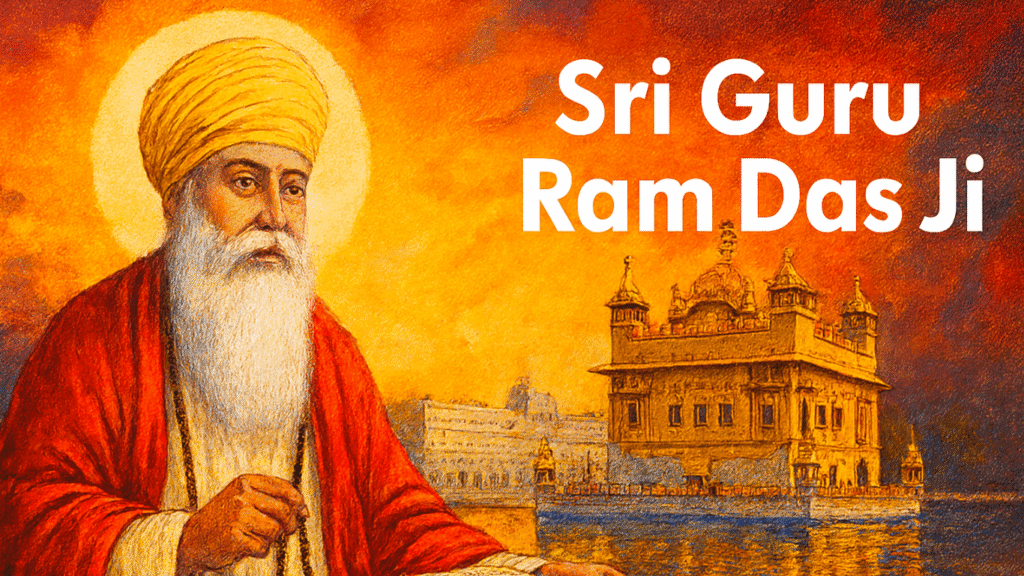
Sikhism began in the 15th century with the teachings of Sri Guru Nanak Dev Ji. He strongly opposed the social evils of his time, such as caste discrimination and meaningless rituals. Instead, he taught the worship of one God and spread the message of equality and universal brotherhood. To put these ideas into practice, he established two important institutions:
- Sangat – a community gathering where people prayed together.
- Pangat (Langar) – a system where everyone, regardless of caste or status, sat together and shared food.
These practices made Sikhism open to all and gave people a sense of dignity and unity. His nine successors continued this mission, strengthening Sikh values and guiding society toward truth and justice.
Under Akbar’s rule, Sikhism flourished because Akbar followed a policy of religious tolerance. However, the situation changed after Jahangir became emperor. In 1606 A.D., Guru Arjan Dev Ji was martyred, which deeply hurt the Sikh community and created tension with the Mughals. Later, under Aurangzeb, the persecution grew harsher. In 1675 A.D., Guru Tegh Bahadur Ji sacrificed his life to protect religious freedom, further intensifying Sikh resistance.
To defend the faith and confront Mughal cruelty, Sri Guru Gobind Singh Ji founded the Khalsa Panth in 1699 A.D.. The Khalsa gave Sikhs a distinct identity, discipline, and courage. It marked the beginning of a new era in Punjab’s history, where Sikhs became a strong, organized community ready to fight oppression and uphold justice.
Other Religions in Mughal Punjab
Besides Hinduism, Islam, Sufism, and Sikhism, a few other religions were also present in Punjab during the Mughal period, but their influence was very small.
- Buddhism: By this time, Buddhism had almost disappeared from Punjab. Only a few traces remained, and it had no major role in society.
- Jainism: Jainism survived mainly among the trading communities. Merchants and businessmen followed Jain practices, but their numbers were limited.
- Christianity: Christianity entered Punjab during Akbar’s reign. Akbar allowed Christians to build a church in Lahore, showing his policy of tolerance. However, Christianity did not spread widely and remained a minor faith in the region.
Overall, these religions existed but did not have a strong impact compared to Hinduism, Islam, Sufism, and Sikhism, which shaped the main religious life of Punjab under the Mughals.