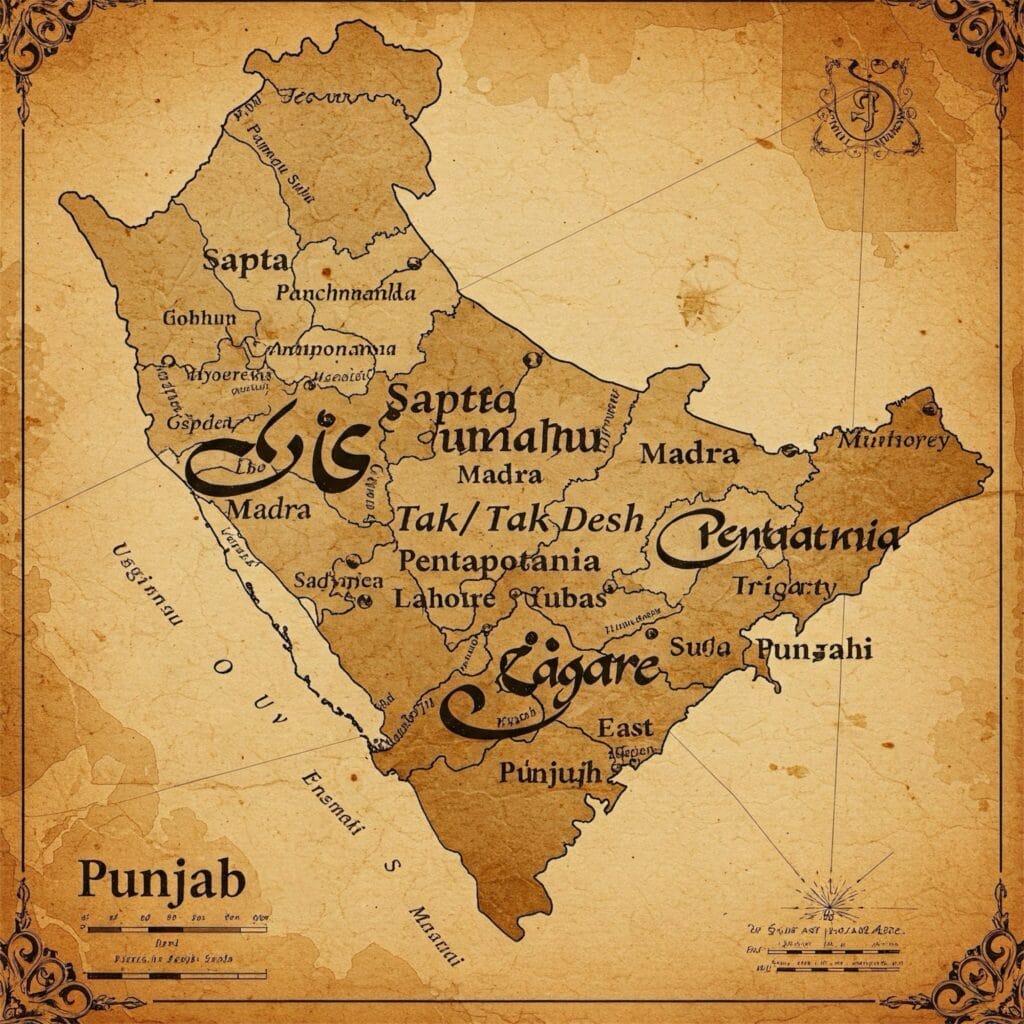
Mir Mannu governed Punjab for five years (1748–1753 A.D.) with a single aim—to crush the rising power of the Sikhs. He adopted harsh measures, imposed heavy taxes, rewarded soldiers for Sikh heads, and ordered massacres at Sikh gatherings. Women and children were subjected to severe atrocities in Lahore. Yet, despite his relentless persecution, Mir Mannu failed in his objective. The Sikhs, inspired by martyrdom and united under Dal Khalsa, grew stronger with every blow. His failure was the result of both internal weaknesses and the extraordinary resilience of the Sikh community.
Organisation of the Dal Khalsa
The Dal Khalsa was the supreme military and spiritual body of the Sikhs, reorganised in 1748 A.D.. Before this year, the Sikh community was divided into 65 small Jathas (bands), each fighting independently. This scattered structure limited their collective strength and made them vulnerable to Mughal attacks.
In 1748, the Sikhs regrouped themselves into 12 larger Jathas, forming the Dal Khalsa. This reorganisation was not just military—it was symbolic of unity, discipline, and sacrifice. The Dal Khalsa acted as a central command, issuing calls that Sikhs across Punjab respected and obeyed. Whenever the Dal Khalsa summoned them, Sikhs were ready to sacrifice their lives for the Panth.
This unity made the Sikh resistance far more effective. Instead of confronting scattered groups, Mir Mannu now faced a cohesive, disciplined, and determined force. His repeated campaigns and brutal persecution failed because the Dal Khalsa gave the Sikhs a collective identity and strength that could not be crushed by terror alone.
Uncommon Qualities of the Sikhs
Another major reason for Mir Mannu’s failure was the extraordinary qualities of the Sikh community. Unlike ordinary groups, the Sikhs possessed a rare combination of firm determination, unlimited zeal, bravery, and a spirit of sacrifice for their Panth (faith and nation).
- Unshakable Determination: Even in the face of brutal persecution, Sikhs never lost courage. Their faith in Guru and Khalsa ideals gave them inner strength.
- Unlimited Zeal and Bravery: Sikh fighters were fearless. They fought against overwhelming odds, often with limited resources, yet their courage made them formidable opponents.
- Spirit of Sacrifice: Martyrdom was not seen as defeat but as glory. Every Sikh was prepared to lay down his life for the Panth, which made Mughal terror ineffective.
- Women and Children’s Resilience: Mir Mannu subjected Sikh women and children to extreme atrocities—imprisonment, forced labour, and torture. Yet, they remained steadfast “like a rock,” inspiring the community to continue resisting.
This rare combination of qualities meant that no amount of cruelty could break Sikh spirit. Instead, persecution only strengthened their resolve, making it impossible for Mir Mannu to crush such a community.
Guerilla Tactics of the Sikhs
Another decisive factor behind Mir Mannu’s failure was the guerilla warfare tactics adopted by the Sikhs. Unlike the Mughal armies, which relied on large, organised battles in open fields, the Sikhs used hit‑and‑run strategies that suited their limited resources and intimate knowledge of Punjab’s terrain.
- Reason for Adoption: The Sikhs did not have the manpower or wealth to fight prolonged wars. Their strength lay in mobility, surprise, and familiarity with forests, hills, and rivers.
- Method of Attack: Whenever they found an opportunity, Sikh fighters would suddenly attack Mughal forces, loot supplies, and then retreat into forests, hills, or hidden hideouts.
- Avoidance of Open Battles: By refusing to confront Mir Mannu’s large armies in open fields, the Sikhs denied him decisive victories. His soldiers were left exhausted, chasing elusive opponents who struck unpredictably.
- Psychological Impact: These tactics created constant insecurity among Mughal forces. Even after victories, they could not maintain control, as Sikhs would re‑emerge and strike again.
Thus, guerilla warfare turned Sikh weakness into strength. It made Mir Mannu’s campaigns ineffective, as he could never fully eliminate Sikh resistance despite repeated massacres and military expeditions.
Cooperation of Diwan Kaura Mal to the Sikhs
Another important factor behind Mir Mannu’s failure was the role of Diwan Kaura Mal, one of his closest advisers.
- Background: Kaura Mal was a Sahijdhari Sikh (a follower of Sikhism who did not adopt the Khalsa form). This identity made him naturally sympathetic towards the Sikh community.
- Trust of Mir Mannu: Mir Mannu had deep faith in Kaura Mal and valued his counsel. Because of this trust, Kaura Mal’s advice often influenced Mir Mannu’s policies.
- Soft Attitude Towards Sikhs: Whenever Mir Mannu planned strict action against the Sikhs, Kaura Mal persuaded him to adopt a softer approach. His compassion prevented the complete annihilation of Sikh groups.
- Grant of Estate: It was on Kaura Mal’s suggestion that Mir Mannu granted the estate of Patti to the Sikhs, allowing them to settle peacefully instead of being constantly hunted.
- Nickname ‘Mitha Mal’: The Sikhs, grateful for his cooperation, affectionately called him ‘Mitha Mal’ (Sweet Mal). His support indirectly helped the Sikhs consolidate their strength during a period of persecution.
Thus, Kaura Mal’s cooperation weakened Mir Mannu’s harsh policies and gave the Sikhs breathing space to reorganise and grow stronger.
Dual Policy of Adina Beg
Another significant cause of Mir Mannu’s failure was the dual policy of Adina Beg, the Faujdar of Jalandhar Doab.
- Ambition for Power: Adina Beg was highly ambitious and dreamt of becoming the Governor of Punjab after Mir Mannu. His personal aspirations often clashed with his official duties.
- Incomplete Actions: Whenever Mir Mannu ordered him to take strict action against the Sikhs, Adina Beg deliberately left the campaigns incomplete. This allowed Sikh groups to survive and regroup.
- Secret Alliance with Sikhs: Adina Beg maintained a covert understanding with the Sikhs, occasionally supporting them to create disturbances. This ensured that Punjab remained unstable, weakening Mir Mannu’s authority.
- Political Calculation: He knew that if the Sikhs were completely crushed, peace would return to Punjab, and Mir Mannu’s position would be secure. By keeping unrest alive, Adina Beg hoped to discredit Mir Mannu and eventually replace him as governor.
Thus, Adina Beg’s opportunism and duplicity undermined Mir Mannu’s campaigns. His dual policy not only weakened Mughal efforts but also indirectly strengthened Sikh resistance.
Problems of Mir Mannu
A major reason for Mir Mannu’s failure was that his five‑year rule was constantly disturbed by external invasions and internal conspiracies, leaving him unable to devote full attention to crushing Sikh power.
- Invasions of Ahmad Shah Abdali:
- Abdali invaded Punjab multiple times between 1748–1752.
- These invasions forced Mir Mannu to divert his army and resources away from Sikh suppression.
- Fear of Abdali’s attacks often made him postpone campaigns against the Sikhs.
- Conspiracies from Delhi:
- The Wazir of Delhi, Safdarjang, was jealous of Mir Mannu’s growing influence.
- Safdarjang constantly plotted to dislodge him from the governorship.
- At his instigation, Nasir Khan and Shah Nawaz Khan raised revolts against Mir Mannu.
- Continuous Revolts:
- Mir Mannu had to spend much of his energy crushing these internal rebellions.
- This drained his resources and distracted him from his primary goal of eliminating Sikh resistance.
Thus, surrounded by Abdali’s invasions and Delhi conspiracies, Mir Mannu could not concentrate fully on the Sikhs. These problems weakened his authority and directly contributed to his failure.
Lack of Far‑sightedness in Mir Mannu
Another crucial cause of Mir Mannu’s failure was his lack of far‑sightedness. Instead of adopting a balanced or diplomatic approach, he relied solely on terror and persecution to suppress the Sikhs.
- Dependence on Terror: Mir Mannu believed that cruelty alone could crush Sikh power. He ordered mass killings, tortured innocent Sikhs, and subjected women and children to inhuman treatment.
- No Diplomatic Strategy: He never attempted negotiation or reconciliation. His policies lacked foresight, as he failed to realise that persecution would only strengthen Sikh unity and resolve.
- Heavy Taxation: To maintain his large army, Mir Mannu levied burdensome taxes on the people. This alienated the population, many of whom began sympathising with the Sikhs and even supporting them against Mughal authority.
- Strength Through Martyrdom: Despite the slaughter of thousands, Sikh strength continued to rise. Martyrdom became a source of inspiration, drawing more people into the Khalsa.
Thus, Mir Mannu’s short‑sighted reliance on terror backfired. Instead of destroying Sikh power, his cruelty accelerated their growth and resilience.