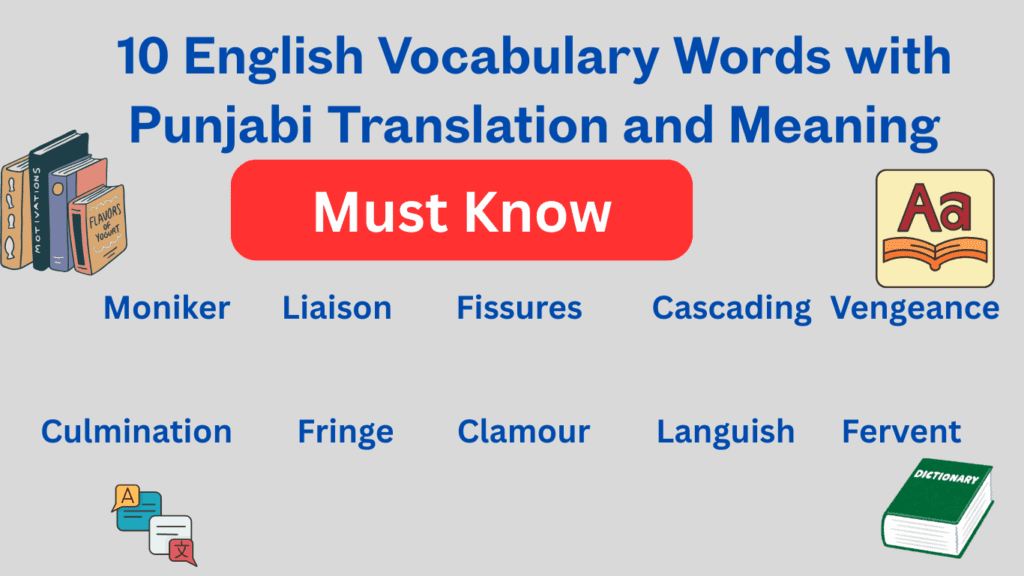
In this article, you will learn another 10 important vocabulary words: Prod, Atrocities, Ordeal, Innate, Crumble, Innumerable, Demitted, Serene, Clamour and Inevitably.
10 English The Most Important Vocabulary Words for 25 June Upcoming Exams with Punjabi Meanings
1. Prod (ਉਕਸਾਉਣਾ, ਪ੍ਰੇਰਿਤ ਕਰਨਾ, ਹੌਲੀ ਜਿਹੀ ਚੁਭਨ ਜਾਂ ਧੱਕਾ ਦੇਣਾ)
The new vocabulary word ‘Prod’ is a verb and literally means “to push someone gently, poke them, or encourage them to take action.”
In Punjabi, prod meaning is: ਉਕਸਾਉਣਾ, ਪ੍ਰੇਰਿਤ ਕਰਨਾ, ਹੌਲੀ ਜਿਹੀ ਚੁਭਨ ਜਾਂ ਧੱਕਾ ਦੇਣਾ
Now, understand the vocabulary word “Prod” with the sentence:
e.g. The teacher had to prod the students to complete their assignments on time.
ਅਧਿਆਪਕ ਨੂੰ ਵਿਦਿਆਰਥੀਆਂ ਨੂੰ ਆਪਣੀਆਂ ਅਸਾਈਨਮੈਂਟਾਂ ਸਮੇਂ ਸਿਰ ਪੂਰੀਆਂ ਕਰਨ ਲਈ ਪ੍ਰੇਰਿਤ ਕਰਨਾ (prod) ਪਿਆ।
So, in the above sentence the contextual meaning of the vocabulary word ‘Prod’ that:
Prod, which literally means to encourage, urge, or push someone into taking action, is often used in situations involving motivation, reminders, guidance, supervision, or prompting someone to do something. In this case, it highlights that the teacher encouraged and reminded the students to finish their assignments on time. The word ‘prod’ emphasizes encouragement, prompting, persuasion, and motivating action.
ਉਪਰੋਕਤ ਵਾਕ ਵਿੱਚ ‘Prod’ ਸ਼ਬਦ ਦਾ ਸੰਦਰਭਗਤ ਅਰਥ ‘ਪ੍ਰੇਰਿਤ ਕਰਨਾ’ ਹੈ। ਇਸ ਵਾਕ ਵਿੱਚ ਦਰਸਾਇਆ ਗਿਆ ਹੈ ਕਿ ਅਧਿਆਪਕ ਨੇ ਵਿਦਿਆਰਥੀਆਂ ਨੂੰ ਆਪਣਾ ਕੰਮ ਸਮੇਂ ਸਿਰ ਪੂਰਾ ਕਰਨ ਲਈ ਉਤਸ਼ਾਹਿਤ ਕੀਤਾ ਅਤੇ ਯਾਦ ਦਿਵਾਇਆ। ‘Prod’ ਸ਼ਬਦ ਇੱਥੇ ਉਤਸ਼ਾਹ, ਪ੍ਰੇਰਣਾ, ਯਾਦ ਦਿਵਾਉਣ ਅਤੇ ਕਿਸੇ ਨੂੰ ਕਾਰਵਾਈ ਕਰਨ ਲਈ ਉਕਸਾਉਣ ਨੂੰ ਦਰਸਾਉਂਦਾ ਹੈ।
ਜਦੋਂ ਵੀ prod ਸ਼ਬਦ ਕਿਸੇ passage ਵਿੱਚ ਆਵੇ:
ਤਾਂ ਉਸਨੂੰ “ਕਿਸੇ ਵਿਅਕਤੀ ਨੂੰ ਕੋਈ ਕੰਮ ਕਰਨ ਲਈ ਉਤਸ਼ਾਹਿਤ ਕਰਨਾ, ਯਾਦ ਦਿਵਾਉਣਾ ਜਾਂ ਹੌਲੀ ਜਿਹੇ ਦਬਾਅ ਨਾਲ ਕਾਰਵਾਈ ਵੱਲ ਧੱਕਣਾ” ਨਾਲ ਜੋੜ ਕੇ ਸਮਝੋ। ਇਹ ਅਕਸਰ ਉਹਨਾਂ ਸਥਿਤੀਆਂ ਵਿੱਚ ਵਰਤਿਆ ਜਾਂਦਾ ਹੈ—ਜਿੱਥੇ ਅਧਿਆਪਨ, ਪ੍ਰਬੰਧਨ, ਮਾਪਿਆਂ ਦੀ ਸਲਾਹ, ਨੇਤ੍ਰਿਤਵ, ਕੰਮਕਾਜ ਜਾਂ ਪ੍ਰੇਰਣਾ ਦੀ ਗੱਲ ਕੀਤੀ ਜਾ ਰਹੀ ਹੋਵੇ।
Synonyms: Encourage (ਉਤਸ਼ਾਹਿਤ ਕਰਨਾ), Urge (ਜ਼ੋਰ ਦੇਣਾ), Prompt (ਪ੍ਰੇਰਿਤ ਕਰਨਾ), Motivate (ਪ੍ਰੇਰਿਤ ਕਰਨਾ), Nudge (ਹੌਲੀ ਜਿਹੀ ਪ੍ਰੇਰਣਾ ਦੇਣਾ)
Antonyms: Discourage (ਨਿਰੁਤਸ਼ਾਹਿਤ ਕਰਨਾ), Deter (ਰੋਕਣਾ), Prevent (ਰੋਕਥਾਮ ਕਰਨਾ), Restrain (ਕਾਬੂ ਕਰਨਾ), Dissuade (ਮਨ੍ਹਾ ਕਰਨਾ)
2. Atrocities (ਅੱਤਿਆਚਾਰ, ਕ੍ਰੂਰ ਕਰਤੂਤਾਂ, ਘੋਰ ਜੁਲਮ)
The new vocabulary word ‘Atrocities’ is the plural form of ‘Atrocity’ and literally means “extremely cruel, violent, or shocking acts that cause great suffering to people.”
In Punjabi, atrocities meaning is: ਅੱਤਿਆਚਾਰ, ਕ੍ਰੂਰ ਕਰਤੂਤਾਂ, ਘੋਰ ਜੁਲਮ
Now, understand the vocabulary word “Atrocities” with the sentence:
e.g. The report documented several atrocities committed during the conflict.
ਰਿਪੋਰਟ ਵਿੱਚ ਸੰਘਰਸ਼ ਦੌਰਾਨ ਕੀਤੇ ਗਏ ਕਈ ਅੱਤਿਆਚਾਰਾਂ (atrocities) ਦਾ ਵੇਰਵਾ ਦਿੱਤਾ ਗਿਆ।
So, in the above sentence the contextual meaning of the vocabulary word ‘Atrocities’ that:
Atrocities, which literally means extremely cruel and inhumane acts, is often used in situations involving wars, conflicts, human rights violations, oppression, violence, or crimes against people. In this case, it highlights that severe acts of cruelty and suffering occurred during the conflict and were recorded in the report. The word ‘atrocities’ emphasizes brutality, cruelty, oppression, violence, and serious human suffering.
ਉਪਰੋਕਤ ਵਾਕ ਵਿੱਚ ‘Atrocities’ ਸ਼ਬਦ ਦਾ ਸੰਦਰਭਗਤ ਅਰਥ ‘ਅੱਤਿਆਚਾਰਾਂ’ ਹੈ। ਇਸ ਵਾਕ ਵਿੱਚ ਦਰਸਾਇਆ ਗਿਆ ਹੈ ਕਿ ਸੰਘਰਸ਼ ਦੌਰਾਨ ਲੋਕਾਂ ਨਾਲ ਬਹੁਤ ਹੀ ਕ੍ਰੂਰ ਅਤੇ ਅਮਾਨਵੀ ਵਰਤਾਅ ਕੀਤਾ ਗਿਆ, ਜਿਸਦਾ ਵੇਰਵਾ ਰਿਪੋਰਟ ਵਿੱਚ ਦਰਜ ਕੀਤਾ ਗਿਆ। ‘Atrocities’ ਸ਼ਬਦ ਇੱਥੇ ਬੇਰਹਿਮੀ, ਜੁਲਮ, ਹਿੰਸਾ, ਮਨੁੱਖੀ ਅਧਿਕਾਰਾਂ ਦੀ ਉਲੰਘਣਾ ਅਤੇ ਗੰਭੀਰ ਮਨੁੱਖੀ ਪੀੜਾ ਨੂੰ ਦਰਸਾਉਂਦਾ ਹੈ।
ਜਦੋਂ ਵੀ atrocities ਸ਼ਬਦ ਕਿਸੇ passage ਵਿੱਚ ਆਵੇ:
ਤਾਂ ਉਸਨੂੰ “ਬਹੁਤ ਹੀ ਕ੍ਰੂਰ, ਅਮਾਨਵੀ ਅਤੇ ਜੁਲਮ ਭਰੀਆਂ ਕਰਤੂਤਾਂ” ਨਾਲ ਜੋੜ ਕੇ ਸਮਝੋ। ਇਹ ਅਕਸਰ ਉਹਨਾਂ ਸਥਿਤੀਆਂ ਵਿੱਚ ਵਰਤਿਆ ਜਾਂਦਾ ਹੈ—ਜਿੱਥੇ ਜੰਗਾਂ, ਦੰਗਿਆਂ, ਮਨੁੱਖੀ ਅਧਿਕਾਰਾਂ ਦੀ ਉਲੰਘਣਾ, ਜ਼ੁਲਮ, ਹਿੰਸਾ ਜਾਂ ਬੇਗੁਨਾਹ ਲੋਕਾਂ ਉੱਤੇ ਹੋਏ ਅੱਤਿਆਚਾਰਾਂ ਦੀ ਗੱਲ ਕੀਤੀ ਜਾ ਰਹੀ ਹੋਵੇ।
Synonyms: Cruelties (ਕ੍ਰੂਰਤਾਵਾਂ), Brutalities (ਬੇਰਹਿਮੀਆਂ), Oppressions (ਜੁਲਮ), Abuses (ਅਤਿਆਚਾਰ), Inhumanities (ਅਮਾਨਵੀ ਕਰਤੂਤਾਂ)
Antonyms: Kindness (ਦਇਆ), Compassion (ਹਮਦਰਦੀ), Humanity (ਮਨੁੱਖਤਾ), Mercy (ਰਹਿਮ), Benevolence (ਭਲਾਈ)
3. Ordeal (ਕਠਿਨ ਅਜ਼ਮਾਇਸ਼, ਦੁਖਦਾਈ ਤਜਰਬਾ, ਸਖ਼ਤ ਪਰੀਖਿਆ)
The new vocabulary word ‘Ordeal’ is a noun and literally means “a very difficult, painful, or stressful experience that tests a person’s strength, patience, or courage.”
In Punjabi, ordeal meaning is: ਕਠਿਨ ਅਜ਼ਮਾਇਸ਼, ਦੁਖਦਾਈ ਤਜਰਬਾ, ਸਖ਼ਤ ਪਰੀਖਿਆ
Now, understand the vocabulary word “Ordeal” with the sentence:
e.g. Recovering from the accident was a long and painful ordeal for him.
ਹਾਦਸੇ ਤੋਂ ਠੀਕ ਹੋਣਾ ਉਸ ਲਈ ਇੱਕ ਲੰਬੀ ਅਤੇ ਦੁਖਦਾਈ ਅਜ਼ਮਾਇਸ਼ (ordeal) ਸੀ।
So, in the above sentence the contextual meaning of the vocabulary word ‘Ordeal’ that:
Ordeal, which literally means an extremely difficult or painful experience, is often used in situations involving illness, accidents, personal struggles, hardships, emotional trauma, or challenging life events. In this case, it highlights that recovering from the accident required great patience, strength, and endurance over a long period of time. The word ‘ordeal’ emphasizes suffering, hardship, endurance, struggle, and severe testing of one’s resilience.
ਉਪਰੋਕਤ ਵਾਕ ਵਿੱਚ ‘Ordeal’ ਸ਼ਬਦ ਦਾ ਸੰਦਰਭਗਤ ਅਰਥ ‘ਅਜ਼ਮਾਇਸ਼’ ਹੈ। ਇਸ ਵਾਕ ਵਿੱਚ ਦਰਸਾਇਆ ਗਿਆ ਹੈ ਕਿ ਹਾਦਸੇ ਤੋਂ ਬਾਅਦ ਠੀਕ ਹੋਣ ਦੀ ਪ੍ਰਕਿਰਿਆ ਬਹੁਤ ਮੁਸ਼ਕਲ, ਲੰਬੀ ਅਤੇ ਪੀੜਾਦਾਇਕ ਸੀ। ‘Ordeal’ ਸ਼ਬਦ ਇੱਥੇ ਦੁੱਖ, ਕਠਿਨਾਈ, ਸੰਘਰਸ਼, ਸਹਿਨਸ਼ੀਲਤਾ ਅਤੇ ਹੌਸਲੇ ਦੀ ਸਖ਼ਤ ਪਰੀਖਿਆ ਨੂੰ ਦਰਸਾਉਂਦਾ ਹੈ।
ਜਦੋਂ ਵੀ ordeal ਸ਼ਬਦ ਕਿਸੇ passage ਵਿੱਚ ਆਵੇ:
ਤਾਂ ਉਸਨੂੰ “ਅਜਿਹਾ ਬਹੁਤ ਹੀ ਮੁਸ਼ਕਲ, ਦੁਖਦਾਈ ਜਾਂ ਤਣਾਅਪੂਰਨ ਤਜਰਬਾ ਜੋ ਕਿਸੇ ਵਿਅਕਤੀ ਦੇ ਧੀਰਜ, ਹਿੰਮਤ ਜਾਂ ਸਹਿਨਸ਼ਕਤੀ ਦੀ ਪਰੀਖਿਆ ਲੈਂਦਾ ਹੋਵੇ” ਨਾਲ ਜੋੜ ਕੇ ਸਮਝੋ। ਇਹ ਅਕਸਰ ਉਹਨਾਂ ਸਥਿਤੀਆਂ ਵਿੱਚ ਵਰਤਿਆ ਜਾਂਦਾ ਹੈ—ਜਿੱਥੇ ਬਿਮਾਰੀ, ਹਾਦਸੇ, ਜੀਵਨ ਦੀਆਂ ਮੁਸ਼ਕਲਾਂ, ਭਾਵਨਾਤਮਕ ਸਦਮੇ, ਸੰਘਰਸ਼ ਜਾਂ ਕਠਿਨ ਚੁਣੌਤੀਆਂ ਦੀ ਗੱਲ ਕੀਤੀ ਜਾ ਰਹੀ ਹੋਵੇ।
Synonyms: Trial (ਅਜ਼ਮਾਇਸ਼), Hardship (ਕਠਿਨਾਈ), Suffering (ਪੀੜਾ), Tribulation (ਦੁੱਖਦਾਈ ਅਨੁਭਵ), Challenge (ਚੁਣੌਤੀ)
Antonyms: Comfort (ਆਰਾਮ), Ease (ਸੁਖਾਲਾਪਣ), Pleasure (ਖੁਸ਼ੀ), Relief (ਰਾਹਤ), Convenience (ਸੁਵਿਧਾ)
4. Innate (ਜਨਮਜਾਤ, ਕੁਦਰਤੀ, ਸੁਭਾਵਿਕ)
The new vocabulary word ‘Innate’ is an adjective and literally means “possessed from birth; natural and not learned or acquired through experience.”
In Punjabi, innate meaning is: ਜਨਮਜਾਤ, ਕੁਦਰਤੀ, ਸੁਭਾਵਿਕ
Now, understand the vocabulary word “Innate” with the sentence:
e.g. She has an innate ability to understand people’s emotions.
ਉਸ ਵਿੱਚ ਲੋਕਾਂ ਦੀਆਂ ਭਾਵਨਾਵਾਂ ਨੂੰ ਸਮਝਣ ਦੀ ਜਨਮਜਾਤ (innate) ਯੋਗਤਾ ਹੈ।
So, in the above sentence the contextual meaning of the vocabulary word ‘Innate’ that:
Innate, which literally means a quality, ability, or characteristic that a person is born with, is often used in situations involving talent, intelligence, behavior, instincts, personality traits, or natural abilities. In this case, it highlights that the woman naturally possesses the ability to understand emotions without having specifically learned it. The word ‘innate’ emphasizes natural talent, inborn qualities, instinctive abilities, and characteristics present from birth.
ਉਪਰੋਕਤ ਵਾਕ ਵਿੱਚ ‘Innate’ ਸ਼ਬਦ ਦਾ ਸੰਦਰਭਗਤ ਅਰਥ ‘ਜਨਮਜਾਤ’ ਹੈ। ਇਸ ਵਾਕ ਵਿੱਚ ਦਰਸਾਇਆ ਗਿਆ ਹੈ ਕਿ ਉਸ ਔਰਤ ਵਿੱਚ ਲੋਕਾਂ ਦੀਆਂ ਭਾਵਨਾਵਾਂ ਨੂੰ ਸਮਝਣ ਦੀ ਯੋਗਤਾ ਕੁਦਰਤੀ ਤੌਰ ’ਤੇ ਮੌਜੂਦ ਹੈ ਅਤੇ ਇਹ ਕੋਈ ਅਜਿਹੀ ਚੀਜ਼ ਨਹੀਂ ਜੋ ਉਸ ਨੇ ਸਿੱਖੀ ਹੋਵੇ। ‘Innate’ ਸ਼ਬਦ ਇੱਥੇ ਕੁਦਰਤੀ ਪ੍ਰਤਿਭਾ, ਜਨਮ ਤੋਂ ਮਿਲੇ ਗੁਣ, ਸੁਭਾਵਿਕ ਯੋਗਤਾਵਾਂ ਅਤੇ ਮੂਲ ਵਿਸ਼ੇਸ਼ਤਾਵਾਂ ਨੂੰ ਦਰਸਾਉਂਦਾ ਹੈ।
ਜਦੋਂ ਵੀ innate ਸ਼ਬਦ ਕਿਸੇ passage ਵਿੱਚ ਆਵੇ:
ਤਾਂ ਉਸਨੂੰ “ਅਜਿਹਾ ਗੁਣ, ਯੋਗਤਾ ਜਾਂ ਵਿਸ਼ੇਸ਼ਤਾ ਜੋ ਜਨਮ ਤੋਂ ਹੀ ਕਿਸੇ ਵਿਅਕਤੀ ਵਿੱਚ ਮੌਜੂਦ ਹੋਵੇ” ਨਾਲ ਜੋੜ ਕੇ ਸਮਝੋ। ਇਹ ਅਕਸਰ ਉਹਨਾਂ ਸਥਿਤੀਆਂ ਵਿੱਚ ਵਰਤਿਆ ਜਾਂਦਾ ਹੈ—ਜਿੱਥੇ ਪ੍ਰਤਿਭਾ, ਬੁੱਧੀਮੱਤਾ, ਸੁਭਾਅ, ਪ੍ਰਵਿਰਤੀ, ਜਨਮਜਾਤ ਗੁਣਾਂ ਜਾਂ ਕੁਦਰਤੀ ਯੋਗਤਾਵਾਂ ਦੀ ਗੱਲ ਕੀਤੀ ਜਾ ਰਹੀ ਹੋਵੇ।
Synonyms: Inborn (ਜਨਮ ਤੋਂ ਮਿਲਿਆ), Natural (ਕੁਦਰਤੀ), Inherent (ਅੰਤਰ-ਨਿਹਿਤ), Instinctive (ਸੁਭਾਵਿਕ), Congenital (ਜਨਮਜਾਤ)
Antonyms: Acquired (ਹਾਸਲ ਕੀਤਾ ਹੋਇਆ), Learned (ਸਿੱਖਿਆ ਹੋਇਆ), Developed (ਵਿਕਸਿਤ ਕੀਤਾ ਹੋਇਆ), Trained (ਪ੍ਰਸ਼ਿਕਸ਼ਿਤ), Artificial (ਕ੍ਰਿਤ੍ਰਿਮ)
5. Crumble (ਟੁੱਟ ਜਾਣਾ, ਖੁਰਦਰਾ ਹੋ ਕੇ ਬਿਖਰ ਜਾਣਾ, ਢਹਿ ਜਾਣਾ)
The new vocabulary word ‘Crumble’ is a verb and literally means “to break into small pieces, fall apart, or gradually collapse.”
In Punjabi, crumble meaning is: ਟੁੱਟ ਜਾਣਾ, ਖੁਰਦਰਾ ਹੋ ਕੇ ਬਿਖਰ ਜਾਣਾ, ਢਹਿ ਜਾਣਾ
Now, understand the vocabulary word “Crumble” with the sentence:
e.g. The old wall began to crumble after years of neglect.
ਸਾਲਾਂ ਦੀ ਅਣਗਹਿਲੀ ਤੋਂ ਬਾਅਦ ਪੁਰਾਣੀ ਕੰਧ ਢਹਿਣੀ ਸ਼ੁਰੂ ਹੋ ਗਈ (crumble)।
So, in the above sentence the contextual meaning of the vocabulary word ‘Crumble’ that:
Crumble, which literally means to break apart or fall into small pieces, is often used in situations involving buildings, walls, structures, plans, relationships, organizations, or emotional strength. In this case, it highlights that the old wall became weak over time and started falling apart because it had not been maintained properly. The word ‘crumble’ emphasizes deterioration, collapse, decay, weakness, and gradual disintegration.
ਉਪਰੋਕਤ ਵਾਕ ਵਿੱਚ ‘Crumble’ ਸ਼ਬਦ ਦਾ ਸੰਦਰਭਗਤ ਅਰਥ ‘ਢਹਿ ਜਾਣਾ’ ਹੈ। ਇਸ ਵਾਕ ਵਿੱਚ ਦਰਸਾਇਆ ਗਿਆ ਹੈ ਕਿ ਸਾਲਾਂ ਤੱਕ ਦੇਖਭਾਲ ਨਾ ਹੋਣ ਕਾਰਨ ਪੁਰਾਣੀ ਕੰਧ ਕਮਜ਼ੋਰ ਹੋ ਗਈ ਅਤੇ ਹੌਲੀ-ਹੌਲੀ ਟੁੱਟਣ ਲੱਗ ਪਈ। ‘Crumble’ ਸ਼ਬਦ ਇੱਥੇ ਖ਼ਰਾਬੀ, ਟੁੱਟ-ਫੁੱਟ, ਕਮਜ਼ੋਰੀ, ਪਤਨ ਅਤੇ ਹੌਲੀ-ਹੌਲੀ ਬਿਖਰ ਜਾਣ ਦੀ ਪ੍ਰਕਿਰਿਆ ਨੂੰ ਦਰਸਾਉਂਦਾ ਹੈ।
ਜਦੋਂ ਵੀ crumble ਸ਼ਬਦ ਕਿਸੇ passage ਵਿੱਚ ਆਵੇ:
ਤਾਂ ਉਸਨੂੰ “ਹੌਲੀ-ਹੌਲੀ ਟੁੱਟ ਜਾਣਾ, ਬਿਖਰ ਜਾਣਾ ਜਾਂ ਢਹਿ ਜਾਣਾ” ਨਾਲ ਜੋੜ ਕੇ ਸਮਝੋ। ਇਹ ਅਕਸਰ ਉਹਨਾਂ ਸਥਿਤੀਆਂ ਵਿੱਚ ਵਰਤਿਆ ਜਾਂਦਾ ਹੈ—ਜਿੱਥੇ ਇਮਾਰਤਾਂ, ਕੰਧਾਂ, ਸੰਸਥਾਵਾਂ, ਯੋਜਨਾਵਾਂ, ਰਿਸ਼ਤਿਆਂ ਜਾਂ ਕਿਸੇ ਵਿਅਕਤੀ ਦੇ ਹੌਸਲੇ ਦੇ ਟੁੱਟਣ ਦੀ ਗੱਲ ਕੀਤੀ ਜਾ ਰਹੀ ਹੋਵੇ।
Synonyms: Collapse (ਢਹਿ ਜਾਣਾ), Disintegrate (ਬਿਖਰ ਜਾਣਾ), Break apart (ਟੁੱਟ ਜਾਣਾ), Decay (ਖ਼ਰਾਬ ਹੋਣਾ), Deteriorate (ਬਦਤਰ ਹੋਣਾ)
Antonyms: Strengthen (ਮਜ਼ਬੂਤ ਕਰਨਾ), Build (ਬਣਾਉਣਾ), Repair (ਮੁਰੰਮਤ ਕਰਨਾ), Restore (ਮੁੜ ਸਥਾਪਿਤ ਕਰਨਾ), Stabilize (ਸਥਿਰ ਕਰਨਾ)
6. Innumerable (ਅਣਗਿਣਤ, ਬੇਸ਼ੁਮਾਰ, ਗਿਣਤੀ ਤੋਂ ਪਰੇ)
The new vocabulary word ‘Innumerable’ is an adjective and literally means “too many to be counted; extremely numerous.”
In Punjabi, innumerable meaning is: ਅਣਗਿਣਤ, ਬੇਸ਼ੁਮਾਰ, ਗਿਣਤੀ ਤੋਂ ਪਰੇ
Now, understand the vocabulary word “Innumerable” with the sentence:
e.g. Innumerable stars were shining in the night sky.
ਰਾਤ ਦੇ ਆਕਾਸ਼ ਵਿੱਚ ਅਣਗਿਣਤ (innumerable) ਤਾਰੇ ਚਮਕ ਰਹੇ ਸਨ।
So, in the above sentence the contextual meaning of the vocabulary word ‘Innumerable’ that:
Innumerable, which literally means too many to count, is often used in situations involving large quantities, countless objects, people, opportunities, achievements, problems, or natural phenomena. In this case, it highlights that the number of stars in the night sky was so great that it was impossible or impractical to count them. The word ‘innumerable’ emphasizes vast quantity, abundance, countlessness, and an extremely large number.
ਉਪਰੋਕਤ ਵਾਕ ਵਿੱਚ ‘Innumerable’ ਸ਼ਬਦ ਦਾ ਸੰਦਰਭਗਤ ਅਰਥ ‘ਅਣਗਿਣਤ’ ਹੈ। ਇਸ ਵਾਕ ਵਿੱਚ ਦਰਸਾਇਆ ਗਿਆ ਹੈ ਕਿ ਰਾਤ ਦੇ ਆਕਾਸ਼ ਵਿੱਚ ਇੰਨੇ ਜ਼ਿਆਦਾ ਤਾਰੇ ਸਨ ਕਿ ਉਨ੍ਹਾਂ ਦੀ ਗਿਣਤੀ ਕਰਨੀ ਸੰਭਵ ਨਹੀਂ ਸੀ। ‘Innumerable’ ਸ਼ਬਦ ਇੱਥੇ ਬਹੁਤ ਵੱਡੀ ਗਿਣਤੀ, ਭਰਮਾਰ, ਅਸੀਮ ਮਾਤਰਾ ਅਤੇ ਬੇਸ਼ੁਮਾਰ ਹੋਣ ਨੂੰ ਦਰਸਾਉਂਦਾ ਹੈ।
ਜਦੋਂ ਵੀ innumerable ਸ਼ਬਦ ਕਿਸੇ passage ਵਿੱਚ ਆਵੇ:
ਤਾਂ ਉਸਨੂੰ “ਇੰਨੀ ਵੱਡੀ ਗਿਣਤੀ ਵਿੱਚ ਹੋਣਾ ਕਿ ਉਸਨੂੰ ਗਿਣਿਆ ਨਾ ਜਾ ਸਕੇ” ਨਾਲ ਜੋੜ ਕੇ ਸਮਝੋ। ਇਹ ਅਕਸਰ ਉਹਨਾਂ ਸਥਿਤੀਆਂ ਵਿੱਚ ਵਰਤਿਆ ਜਾਂਦਾ ਹੈ—ਜਿੱਥੇ ਲੋਕਾਂ, ਤਾਰਿਆਂ, ਮੌਕਿਆਂ, ਉਪਲਬਧੀਆਂ, ਸਮੱਸਿਆਵਾਂ, ਵਸਤੂਆਂ ਜਾਂ ਕੁਦਰਤੀ ਚੀਜ਼ਾਂ ਦੀ ਬਹੁਤ ਵੱਡੀ ਗਿਣਤੀ ਦੀ ਗੱਲ ਕੀਤੀ ਜਾ ਰਹੀ ਹੋਵੇ।
Synonyms: Countless (ਬੇਸ਼ੁਮਾਰ), Numerous (ਬਹੁਤ ਸਾਰੇ), Infinite (ਅਨੰਤ), Myriad (ਅਣਗਿਣਤ), Abundant (ਭਰਪੂਰ)
Antonyms: Few (ਥੋੜੇ), Limited (ਸੀਮਿਤ), Scarce (ਦੁਰਲੱਭ), Countable (ਗਿਣੇ ਜਾ ਸਕਣ ਵਾਲੇ), Meager (ਬਹੁਤ ਘੱਟ)
7. Demitted (ਅਸਤੀਫਾ ਦਿੱਤਾ, ਅਹੁਦਾ ਛੱਡਿਆ, ਪਦ ਤਿਆਗ ਦਿੱਤਾ)
The new vocabulary word ‘Demitted’ is the past tense and past participle form of ‘Demit’ and literally means “to resign from, relinquish, or formally give up an office, position, or responsibility.”
In Punjabi, demitted meaning is: ਅਸਤੀਫਾ ਦਿੱਤਾ, ਅਹੁਦਾ ਛੱਡਿਆ, ਪਦ ਤਿਆਗ ਦਿੱਤਾ
Now, understand the vocabulary word “Demitted” with the sentence:
e.g. The minister demitted office after completing his term.
ਮੰਤਰੀ ਨੇ ਆਪਣਾ ਕਾਰਜਕਾਲ ਪੂਰਾ ਕਰਨ ਤੋਂ ਬਾਅਦ ਅਹੁਦਾ ਛੱਡ ਦਿੱਤਾ (demitted office)।
So, in the above sentence the contextual meaning of the vocabulary word ‘Demitted’ that:
Demitted, which literally means formally leaving or resigning from a position, office, or responsibility, is often used in situations involving government posts, leadership roles, official appointments, administrative positions, or public offices. In this case, it highlights that the minister officially vacated his position after the completion of his tenure. The word ‘demitted’ emphasizes resignation, relinquishment of authority, departure from office, and the formal ending of responsibilities.
ਉਪਰੋਕਤ ਵਾਕ ਵਿੱਚ ‘Demitted’ ਸ਼ਬਦ ਦਾ ਸੰਦਰਭਗਤ ਅਰਥ ‘ਅਹੁਦਾ ਛੱਡ ਦਿੱਤਾ’ ਹੈ। ਇਸ ਵਾਕ ਵਿੱਚ ਦਰਸਾਇਆ ਗਿਆ ਹੈ ਕਿ ਮੰਤਰੀ ਨੇ ਆਪਣਾ ਕਾਰਜਕਾਲ ਪੂਰਾ ਹੋਣ ਉਪਰੰਤ ਸਰਕਾਰੀ ਅਹੁਦੇ ਤੋਂ ਵਿਧੀਵਤ ਤੌਰ ’ਤੇ ਹਟ ਕੇ ਆਪਣੀਆਂ ਜ਼ਿੰਮੇਵਾਰੀਆਂ ਦਾ ਤਿਆਗ ਕਰ ਦਿੱਤਾ। ‘Demitted’ ਸ਼ਬਦ ਇੱਥੇ ਅਸਤੀਫਾ, ਅਹੁਦੇ ਦਾ ਤਿਆਗ, ਅਧਿਕਾਰਾਂ ਦਾ ਹਸਤਾਂਤਰਨ ਅਤੇ ਜ਼ਿੰਮੇਵਾਰੀਆਂ ਦੇ ਸਮਾਪਤ ਹੋਣ ਨੂੰ ਦਰਸਾਉਂਦਾ ਹੈ।
ਜਦੋਂ ਵੀ demitted ਸ਼ਬਦ ਕਿਸੇ passage ਵਿੱਚ ਆਵੇ:
ਤਾਂ ਉਸਨੂੰ “ਕਿਸੇ ਅਹੁਦੇ, ਪਦ ਜਾਂ ਜ਼ਿੰਮੇਵਾਰੀ ਨੂੰ ਵਿਧੀਵਤ ਤੌਰ ’ਤੇ ਛੱਡ ਦੇਣਾ ਜਾਂ ਤਿਆਗ ਦੇਣਾ” ਨਾਲ ਜੋੜ ਕੇ ਸਮਝੋ। ਇਹ ਅਕਸਰ ਉਹਨਾਂ ਸਥਿਤੀਆਂ ਵਿੱਚ ਵਰਤਿਆ ਜਾਂਦਾ ਹੈ—ਜਿੱਥੇ ਰਾਜਨੀਤਿਕ ਅਹੁਦੇ, ਸਰਕਾਰੀ ਨੌਕਰੀਆਂ, ਪ੍ਰਸ਼ਾਸਕੀ ਪਦ, ਨੇਤ੍ਰਿਤਵ ਭੂਮਿਕਾਵਾਂ ਜਾਂ ਕਾਰਜਕਾਲ ਸਮਾਪਤ ਹੋਣ ਦੀ ਗੱਲ ਕੀਤੀ ਜਾ ਰਹੀ ਹੋਵੇ।
Synonyms: Resigned (ਅਸਤੀਫਾ ਦਿੱਤਾ), Relinquished (ਤਿਆਗ ਦਿੱਤਾ), Vacated (ਖਾਲੀ ਕੀਤਾ), Surrendered (ਛੱਡ ਦਿੱਤਾ), Stepped down (ਅਹੁਦੇ ਤੋਂ ਹਟਿਆ)
Antonyms: Assumed (ਅਹੁਦਾ ਸੰਭਾਲਿਆ), Accepted (ਸਵੀਕਾਰ ਕੀਤਾ), Retained (ਬਰਕਰਾਰ ਰੱਖਿਆ), Continued (ਜਾਰੀ ਰੱਖਿਆ), Occupied (ਅਹੁਦੇ ’ਤੇ ਬਣਿਆ ਰਿਹਾ)
8. Serene (ਸ਼ਾਂਤ, ਸੁਖਦਾਇਕ, ਨਿਰਵਿਘਨ)
The new vocabulary word ‘Serene’ is an adjective and literally means “calm, peaceful, and free from worry, disturbance, or stress.”
In Punjabi, serene meaning is: ਸ਼ਾਂਤ, ਸੁਖਦਾਇਕ, ਨਿਰਵਿਘਨ
Now, understand the vocabulary word “Serene” with the sentence:
e.g. The lake looked serene in the early morning sunlight.
ਸਵੇਰ ਦੀ ਪਹਿਲੀ ਧੁੱਪ ਵਿੱਚ ਝੀਲ ਬਹੁਤ ਸ਼ਾਂਤ (serene) ਦਿਖਾਈ ਦੇ ਰਹੀ ਸੀ।
So, in the above sentence the contextual meaning of the vocabulary word ‘Serene’ that:
Serene, which literally means calm, peaceful, and undisturbed, is often used in situations involving nature, places, people, emotions, or environments that create a sense of tranquility. In this case, it highlights that the lake appeared peaceful and beautiful without any disturbance in the early morning. The word ‘serene’ emphasizes calmness, peace, tranquility, harmony, and freedom from stress or noise.
ਉਪਰੋਕਤ ਵਾਕ ਵਿੱਚ ‘Serene’ ਸ਼ਬਦ ਦਾ ਸੰਦਰਭਗਤ ਅਰਥ ‘ਸ਼ਾਂਤ’ ਹੈ। ਇਸ ਵਾਕ ਵਿੱਚ ਦਰਸਾਇਆ ਗਿਆ ਹੈ ਕਿ ਸਵੇਰ ਦੇ ਸਮੇਂ ਝੀਲ ਦਾ ਮਾਹੌਲ ਬਹੁਤ ਸੁਖਦਾਇਕ ਅਤੇ ਨਿਰਵਿਘਨ ਸੀ। ‘Serene’ ਸ਼ਬਦ ਇੱਥੇ ਸ਼ਾਂਤੀ, ਸੁਕੂਨ, ਨਿਰਮਲਤਾ, ਸਦਭਾਵਨਾ ਅਤੇ ਤਣਾਅ ਤੋਂ ਮੁਕਤ ਅਵਸਥਾ ਨੂੰ ਦਰਸਾਉਂਦਾ ਹੈ।
ਜਦੋਂ ਵੀ serene ਸ਼ਬਦ ਕਿਸੇ passage ਵਿੱਚ ਆਵੇ:
ਤਾਂ ਉਸਨੂੰ “ਅਜਿਹੀ ਸ਼ਾਂਤ ਅਤੇ ਸੁਖਦਾਇਕ ਅਵਸਥਾ ਜਾਂ ਮਾਹੌਲ ਜਿਸ ਵਿੱਚ ਕੋਈ ਵਿਘਨ, ਚਿੰਤਾ ਜਾਂ ਹੰਗਾਮਾ ਨਾ ਹੋਵੇ” ਨਾਲ ਜੋੜ ਕੇ ਸਮਝੋ। ਇਹ ਅਕਸਰ ਉਹਨਾਂ ਸਥਿਤੀਆਂ ਵਿੱਚ ਵਰਤਿਆ ਜਾਂਦਾ ਹੈ—ਜਿੱਥੇ ਕੁਦਰਤੀ ਦ੍ਰਿਸ਼, ਝੀਲਾਂ, ਪਹਾੜ, ਬਾਗ਼, ਮਨ ਦੀ ਸ਼ਾਂਤੀ, ਵਿਅਕਤੀ ਦੇ ਸੁਭਾਅ ਜਾਂ ਸੁਕੂਨ ਭਰੇ ਮਾਹੌਲ ਦੀ ਗੱਲ ਕੀਤੀ ਜਾ ਰਹੀ ਹੋਵੇ।
Synonyms: Peaceful (ਸ਼ਾਂਤਮਈ), Calm (ਸ਼ਾਂਤ), Tranquil (ਸੁਕੂਨ ਭਰਿਆ), Placid (ਨਿਰਵਿਘਨ), Composed (ਸੰਤੁਲਿਤ)
Antonyms: Turbulent (ਅਸ਼ਾਂਤ), Agitated (ਘਬਰਾਇਆ ਹੋਇਆ), Chaotic (ਹੰਗਾਮੇ ਵਾਲਾ), Disturbed (ਪਰੇਸ਼ਾਨ), Stressful (ਤਣਾਅਪੂਰਨ)
9. Clamour (ਰੌਲਾ-ਰੱਪਾ, ਸ਼ੋਰ-ਸ਼ਰਾਬਾ, ਜ਼ੋਰਦਾਰ ਮੰਗ)
The new vocabulary word ‘Clamour’ is a noun (and sometimes a verb) and literally means “a loud noise made by many people or a strong public demand or protest.”
In Punjabi, clamour meaning is: ਰੌਲਾ-ਰੱਪਾ, ਸ਼ੋਰ-ਸ਼ਰਾਬਾ, ਜ਼ੋਰਦਾਰ ਮੰਗ
Now, understand the vocabulary word “Clamour” with the sentence:
e.g. There was a clamour for justice after the incident.
ਘਟਨਾ ਤੋਂ ਬਾਅਦ ਇਨਸਾਫ਼ ਲਈ ਜ਼ੋਰਦਾਰ ਮੰਗ (clamour) ਉੱਠੀ।
So, in the above sentence the contextual meaning of the vocabulary word ‘Clamour’ that:
Clamour, which literally means a loud public outcry, demand, or noise, is often used in situations involving protests, public opinion, demonstrations, political issues, social movements, or large gatherings. In this case, it highlights that many people strongly demanded justice after the incident. The word ‘clamour’ emphasizes public pressure, loud demands, protest, agitation, and collective voices seeking action.
ਉਪਰੋਕਤ ਵਾਕ ਵਿੱਚ ‘Clamour’ ਸ਼ਬਦ ਦਾ ਸੰਦਰਭਗਤ ਅਰਥ ‘ਜ਼ੋਰਦਾਰ ਮੰਗ’ ਹੈ। ਇਸ ਵਾਕ ਵਿੱਚ ਦਰਸਾਇਆ ਗਿਆ ਹੈ ਕਿ ਘਟਨਾ ਤੋਂ ਬਾਅਦ ਬਹੁਤ ਸਾਰੇ ਲੋਕਾਂ ਨੇ ਇਨਸਾਫ਼ ਦੀ ਮੰਗ ਕੀਤੀ ਅਤੇ ਆਪਣੀ ਆਵਾਜ਼ ਬੁਲੰਦ ਕੀਤੀ। ‘Clamour’ ਸ਼ਬਦ ਇੱਥੇ ਜਨਤਕ ਦਬਾਅ, ਵਿਰੋਧ, ਸ਼ੋਰ-ਸ਼ਰਾਬੇ, ਸਾਂਝੀ ਮੰਗ ਅਤੇ ਕਾਰਵਾਈ ਦੀ ਮੰਗ ਨੂੰ ਦਰਸਾਉਂਦਾ ਹੈ।
ਜਦੋਂ ਵੀ clamour ਸ਼ਬਦ ਕਿਸੇ passage ਵਿੱਚ ਆਵੇ:
ਤਾਂ ਉਸਨੂੰ “ਕਿਸੇ ਮਸਲੇ ਲਈ ਲੋਕਾਂ ਵੱਲੋਂ ਕੀਤੀ ਗਈ ਜ਼ੋਰਦਾਰ ਮੰਗ, ਵਿਰੋਧ ਜਾਂ ਉੱਚੀ ਆਵਾਜ਼ ਵਿੱਚ ਉਠਾਈ ਗਈ ਅਪੀਲ” ਨਾਲ ਜੋੜ ਕੇ ਸਮਝੋ। ਇਹ ਅਕਸਰ ਉਹਨਾਂ ਸਥਿਤੀਆਂ ਵਿੱਚ ਵਰਤਿਆ ਜਾਂਦਾ ਹੈ—ਜਿੱਥੇ ਵਿਰੋਧ ਪ੍ਰਦਰਸ਼ਨ, ਜਨਤਕ ਮੰਗਾਂ, ਸਮਾਜਿਕ ਅੰਦੋਲਨਾਂ, ਰਾਜਨੀਤਿਕ ਮੁੱਦਿਆਂ ਜਾਂ ਭੀੜ ਦੇ ਸ਼ੋਰ-ਸ਼ਰਾਬੇ ਦੀ ਗੱਲ ਕੀਤੀ ਜਾ ਰਹੀ ਹੋਵੇ।
Synonyms: Uproar (ਹੰਗਾਮਾ), Outcry (ਜਨਤਕ ਵਿਰੋਧ), Protest (ਵਿਰੋਧ), Demand (ਮੰਗ), Commotion (ਸ਼ੋਰ-ਸ਼ਰਾਬਾ)
Antonyms: Silence (ਚੁੱਪ), Calm (ਸ਼ਾਂਤੀ), Peace (ਸੁਕੂਨ), Quietness (ਨਿਰਵਾਤਾ), Agreement (ਸਹਿਮਤੀ)
10. Inevitably (ਅਟੱਲ ਤੌਰ ‘ਤੇ, ਲਾਜ਼ਮੀ ਤੌਰ ‘ਤੇ, ਟਾਲਿਆ ਨਾ ਜਾ ਸਕਣ ਵਾਲੇ ਢੰਗ ਨਾਲ)
The new vocabulary word ‘Inevitably’ is an adverb and literally means “in a way that is certain to happen and cannot be avoided or prevented.”
In Punjabi, inevitably meaning is: ਅਟੱਲ ਤੌਰ ‘ਤੇ, ਲਾਜ਼ਮੀ ਤੌਰ ‘ਤੇ, ਟਾਲਿਆ ਨਾ ਜਾ ਸਕਣ ਵਾਲੇ ਢੰਗ ਨਾਲ
Now, understand the vocabulary word “Inevitably” with the sentence:
e.g. If we continue to waste natural resources, problems will inevitably arise in the future.
ਜੇ ਅਸੀਂ ਕੁਦਰਤੀ ਸਰੋਤਾਂ ਦੀ ਬਰਬਾਦੀ ਜਾਰੀ ਰੱਖੀ, ਤਾਂ ਭਵਿੱਖ ਵਿੱਚ ਸਮੱਸਿਆਵਾਂ ਲਾਜ਼ਮੀ ਤੌਰ ‘ਤੇ (inevitably) ਪੈਦਾ ਹੋਣਗੀਆਂ।
So, in the above sentence the contextual meaning of the vocabulary word ‘Inevitably’ that:
Inevitably, which literally means something that is certain to happen and cannot be avoided, is often used in situations involving consequences, future events, logical outcomes, predictions, or natural processes. In this case, it highlights that continued waste of natural resources will certainly lead to problems in the future. The word ‘inevitably’ emphasizes certainty, unavoidable consequences, inevitability, and outcomes that are bound to occur.
ਉਪਰੋਕਤ ਵਾਕ ਵਿੱਚ ‘Inevitably’ ਸ਼ਬਦ ਦਾ ਸੰਦਰਭਗਤ ਅਰਥ ‘ਲਾਜ਼ਮੀ ਤੌਰ ‘ਤੇ’ ਹੈ। ਇਸ ਵਾਕ ਵਿੱਚ ਦਰਸਾਇਆ ਗਿਆ ਹੈ ਕਿ ਜੇ ਕੁਦਰਤੀ ਸਰੋਤਾਂ ਦੀ ਬਰਬਾਦੀ ਜਾਰੀ ਰਹੀ ਤਾਂ ਭਵਿੱਖ ਵਿੱਚ ਸਮੱਸਿਆਵਾਂ ਦਾ ਪੈਦਾ ਹੋਣਾ ਨਿਸ਼ਚਿਤ ਹੈ ਅਤੇ ਇਸਨੂੰ ਟਾਲਿਆ ਨਹੀਂ ਜਾ ਸਕੇਗਾ। ‘Inevitably’ ਸ਼ਬਦ ਇੱਥੇ ਨਿਸ਼ਚਿਤਤਾ, ਅਟੱਲ ਨਤੀਜੇ, ਲਾਜ਼ਮੀ ਪ੍ਰਭਾਵ ਅਤੇ ਟਾਲੇ ਨਾ ਜਾ ਸਕਣ ਵਾਲੀਆਂ ਸਥਿਤੀਆਂ ਨੂੰ ਦਰਸਾਉਂਦਾ ਹੈ।
ਜਦੋਂ ਵੀ inevitably ਸ਼ਬਦ ਕਿਸੇ passage ਵਿੱਚ ਆਵੇ:
ਤਾਂ ਉਸਨੂੰ “ਅਜਿਹੀ ਘਟਨਾ ਜਾਂ ਨਤੀਜਾ ਜੋ ਨਿਸ਼ਚਿਤ ਤੌਰ ‘ਤੇ ਵਾਪਰਨਾ ਹੀ ਹੈ ਅਤੇ ਜਿਸਨੂੰ ਰੋਕਿਆ ਜਾਂ ਟਾਲਿਆ ਨਹੀਂ ਜਾ ਸਕਦਾ” ਨਾਲ ਜੋੜ ਕੇ ਸਮਝੋ। ਇਹ ਅਕਸਰ ਉਹਨਾਂ ਸਥਿਤੀਆਂ ਵਿੱਚ ਵਰਤਿਆ ਜਾਂਦਾ ਹੈ—ਜਿੱਥੇ ਕਾਰਨ ਅਤੇ ਪ੍ਰਭਾਵ (cause and effect), ਭਵਿੱਖਬਾਣੀਆਂ, ਤਰਕਸੰਗਤ ਨਤੀਜੇ, ਕੁਦਰਤੀ ਪ੍ਰਕਿਰਿਆਵਾਂ ਜਾਂ ਅਟੱਲ ਹਾਲਾਤਾਂ ਦੀ ਗੱਲ ਕੀਤੀ ਜਾ ਰਹੀ ਹੋਵੇ।
Synonyms: Unavoidably (ਅਟੱਲ ਤੌਰ ‘ਤੇ), Certainly (ਨਿਸ਼ਚਿਤ ਤੌਰ ‘ਤੇ), Necessarily (ਲਾਜ਼ਮੀ ਤੌਰ ‘ਤੇ), Surely (ਯਕੀਨੀ ਤੌਰ ‘ਤੇ), Inescapably (ਜਿਸ ਤੋਂ ਬਚਿਆ ਨਾ ਜਾ ਸਕੇ)
Antonyms: Avoidably (ਟਾਲਿਆ ਜਾ ਸਕਣ ਵਾਲੇ ਢੰਗ ਨਾਲ), Uncertainly (ਅਨਿਸ਼ਚਿਤ ਤੌਰ ‘ਤੇ), Possibly (ਸੰਭਵ ਤੌਰ ‘ਤੇ), Doubtfully (ਸ਼ੱਕ ਨਾਲ), Optionally (ਵਿਕਲਪਿਕ ਤੌਰ ‘ਤੇ)
In the next article, you will learn another 10 important English vocabulary words: Discredit, Accretion, Hamlets, Vow, Shed, Notoriety, Barrage, Candour, Untenable and Resentment.
| Word | Meaning (English) | Meaning (Punjabi) |
|---|---|---|
| Prod | To poke, push, or stimulate someone to act | ਠੇਲਣਾ, ਉਕਸਾਉਣਾ |
| Atrocities | Extremely cruel or violent acts | ਕੁਰੂਰਤਾ, ਜੁਲਮ |
| Ordeal | A very difficult or painful experience | ਕਠਿਨਾਈ, ਦੁੱਖਦਾਈ ਅਨੁਭਵ |
| Innate | Inborn, natural, existing from birth | ਜਨਮਜਾਤ, ਕੁਦਰਤੀ |
| Crumble | To break into small fragments or collapse | ਟੁੱਟਣਾ, ਢਹਿ ਜਾਣਾ |
| Innumerable | Too many to be counted | ਬੇਅੰਤ, ਅਗਣਤ |
| Demitted | To resign or step down from office | ਅਸਤੀਫਾ ਦੇਣਾ, ਪਦ ਛੱਡਣਾ |
| Serene | Calm, peaceful, and untroubled | ਸ਼ਾਂਤ, ਸੁਖਮਈ |
| Clamour | Loud and confused noise or demand | ਸ਼ੋਰ-ਗੁਲ, ਹੱਲਾ |
| Inevitably | Unavoidably, certain to happen | ਅਟੱਲ ਤੌਰ ਤੇ, ਲਾਜ਼ਮੀ |