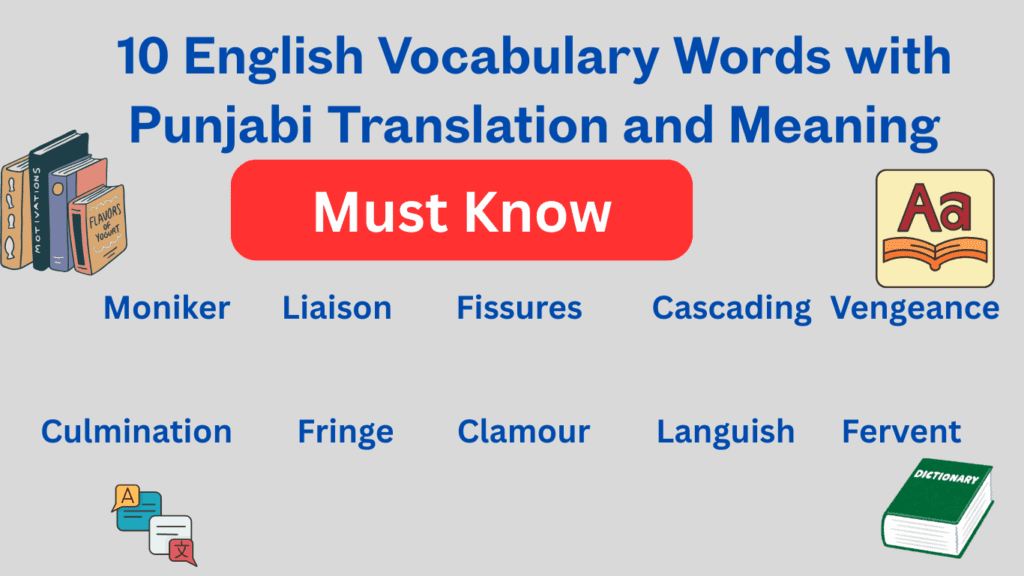
In this article, you will learn another 10 important vocabulary words: Lambast, Row, Double Down, Decoupling, Wary, Zigzagged, Bugbears, Vortex, Mystique and Inevitable.
10 English The Most Important Vocabulary Words for Upcoming Exams with Punjabi Meanings
1. Lambast (ਜ਼ੋਰਦਾਰ ਆਲੋਚਨਾ ਕਰਨਾ, ਬਹੁਤ ਬੁਰਾ ਲਾਹਣਾ, ਕੜੀ ਨਿੰਦਾ ਕਰਨਾ)
The new vocabulary word ‘Lambast’ literally means “to criticize someone or something very strongly and publicly.” It refers to harshly attacking with words, often in anger or disappointment.
In Punjabi, lambast meaning is: ਜ਼ੋਰਦਾਰ ਆਲੋਚਨਾ ਕਰਨਾ, ਬਹੁਤ ਬੁਰਾ ਲਾਹਣਾ, ਕੜੀ ਨਿੰਦਾ ਕਰਨਾ
Now, understand the vocabulary word “Lambast” with the sentence:
e.g. The journalist lambasted the government for its poor handling of the crisis.
ਪੱਤਰਕਾਰ ਨੇ ਸੰਕਟ ਨੂੰ ਖਰਾਬ ਤਰੀਕੇ ਨਾਲ ਸੰਭਾਲਣ ਲਈ ਸਰਕਾਰ ਦੀ ਜ਼ੋਰਦਾਰ ਆਲੋਚਨਾ ਕੀਤੀ (lambasted)।
So, in the above sentence the contextual meaning of the vocabulary word ‘Lambast’ that:
Lambast which literally means to strongly criticize or condemn, is often used in situations involving politics, media, public speeches, debates, or reviews. In this case, it highlights that the journalist severely criticized the government’s actions. The word ‘lambast’ emphasizes harsh criticism, anger, and public condemnation. It suggests a forceful verbal attack on someone’s actions or decisions.
ਉਪਰੋਕਤ ਵਾਕ ਵਿੱਚ ‘Lambast’ ਸ਼ਬਦ ਦਾ ਸੰਦਰਭਗਤ ਅਰਥ ‘ਕੜੀ ਨਿੰਦਾ ਕਰਨਾ’ ਹੈ। ਇਸ ਵਾਕ ਵਿੱਚ ਪੱਤਰਕਾਰ ਵੱਲੋਂ ਸਰਕਾਰ ਦੀ ਖ਼ਰਾਬ ਕਾਰਗੁਜ਼ਾਰੀ ਦੀ ਤਿੱਖੀ ਆਲੋਚਨਾ ਨੂੰ ਦਰਸਾਇਆ ਗਿਆ ਹੈ। ‘Lambast’ ਸ਼ਬਦ ਇੱਥੇ ਬਹੁਤ ਸਖ਼ਤ ਤਰੀਕੇ ਨਾਲ ਕੀਤੀ ਗਈ ਨਿੰਦਾ ਨੂੰ ਪ੍ਰਗਟ ਕਰਦਾ ਹੈ।
ਜਦੋਂ ਵੀ lambast ਸ਼ਬਦ ਕਿਸੇ passage ਵਿੱਚ ਆਵੇ:
ਤਾਂ ਉਸਨੂੰ “ਕੜੀ ਆਲੋਚਨਾ ਕਰਨਾ ਜਾਂ ਬੁਰਾ ਲਾਹਣਾ” ਨਾਲ ਜੋੜ ਕੇ ਸਮਝੋ। ਇਹ ਅਕਸਰ ਉਹਨਾਂ ਸੰਦਰਭਾਂ ਵਿੱਚ ਵਰਤਿਆ ਜਾਂਦਾ ਹੈ—ਜਿੱਥੇ ਕਿਸੇ ਵਿਅਕਤੀ ਜਾਂ ਕੰਮ ਦੀ ਜਨਤਕ ਤੌਰ ’ਤੇ ਤਿੱਖੀ ਨਿੰਦਾ ਕੀਤੀ ਜਾਵੇ।
Synonyms: Criticize (ਆਲੋਚਨਾ ਕਰਨਾ), Condemn (ਨਿੰਦਾ ਕਰਨਾ), Attack (ਹਮਲਾ ਕਰਨਾ), Rebuke (ਝਿੜਕਣਾ), Scold (ਡਾਂਟਣਾ)
Antonyms: Praise (ਪ੍ਰਸ਼ੰਸਾ ਕਰਨਾ), Applaud (ਤਾਲੀਆਂ ਨਾਲ ਸਰਾਹਨਾ), Support (ਸਮਰਥਨ ਕਰਨਾ), Approve (ਮਨਜ਼ੂਰ ਕਰਨਾ), Compliment (ਤਾਰੀਫ਼ ਕਰਨਾ)
2. Row (ਝਗੜਾ, ਬਹਿਸ, ਕਤਾਰ, ਲਾਈਨ ਵਿੱਚ ਸਫ਼)
The new vocabulary word ‘Row’ has two main meanings.
- A quarrel or loud argument
- A line of people or things arranged one after another
In Punjabi, row meaning is: ਝਗੜਾ, ਬਹਿਸ, ਕਤਾਰ, ਲਾਈਨ ਵਿੱਚ ਸਫ਼
Now, understand the vocabulary word “Row” with the sentence:
e.g. There was a row between the two neighbors over parking.
ਪਾਰਕਿੰਗ ਨੂੰ ਲੈ ਕੇ ਦੋ ਗੁਆਂਢੀਆਂ ਵਿਚਕਾਰ ਝਗੜਾ (row) ਹੋ ਗਿਆ।
e.g. The students stood in a row for the assembly.
ਵਿਦਿਆਰਥੀ ਅਸੈਂਬਲੀ ਲਈ ਇੱਕ ਕਤਾਰ (row) ਵਿੱਚ ਖੜੇ ਹੋਏ।
So, in the above sentence the contextual meaning of the vocabulary word ‘Row’ that:
Row which literally means either an argument or a line of things, is used in different contexts. In conflict situations, it refers to a noisy argument or dispute. In arrangement contexts, it refers to a straight line of people or objects. The word ‘row’ emphasizes either disagreement or orderly arrangement depending on usage.
ਉਪਰੋਕਤ ਵਾਕ ਵਿੱਚ ‘Row’ ਸ਼ਬਦ ਦੇ ਦੋ ਸੰਦਰਭਗਤ ਅਰਥ ਹਨ—ਝਗੜਾ ਅਤੇ ਕਤਾਰ। ਪਹਿਲੇ ਵਾਕ ਵਿੱਚ ਇਹ ਦੋ ਲੋਕਾਂ ਵਿਚਕਾਰ ਹੋਏ ਵਿਵਾਦ ਨੂੰ ਦਰਸਾਉਂਦਾ ਹੈ, ਜਦਕਿ ਦੂਜੇ ਵਾਕ ਵਿੱਚ ਵਿਦਿਆਰਥੀਆਂ ਦੀ ਲਾਈਨ ਨੂੰ ਪ੍ਰਗਟ ਕਰਦਾ ਹੈ। ‘Row’ ਸ਼ਬਦ ਸੰਦਰਭ ਅਨੁਸਾਰ ਝਗੜੇ ਜਾਂ ਸਫ਼ ਦੀ ਭਾਵਨਾ ਦੋਹਾਂ ਨੂੰ ਦਰਸਾ ਸਕਦਾ ਹੈ।
ਜਦੋਂ ਵੀ row ਸ਼ਬਦ ਕਿਸੇ passage ਵਿੱਚ ਆਵੇ:
ਤਾਂ ਸੰਦਰਭ ਦੇ ਅਨੁਸਾਰ ਇਸਨੂੰ “ਝਗੜਾ” ਜਾਂ “ਕਤਾਰ” ਨਾਲ ਜੋੜ ਕੇ ਸਮਝੋ। ਇਹ ਇੱਕ ਬਹੁ-ਅਰਥਕ ਸ਼ਬਦ ਹੈ ਜੋ ਵੱਖ-ਵੱਖ ਹਾਲਾਤਾਂ ਵਿੱਚ ਵੱਖਰੇ ਅਰਥ ਦਿੰਦਾ ਹੈ।
Synonyms:
- (argument) Quarrel (ਝਗੜਾ), Dispute (ਵਿਵਾਦ), Fight (ਲੜਾਈ)
- (line) Line (ਲਾਈਨ), Queue (ਕਤਾਰ), Series (ਲੜੀ)
Antonyms:
- (line) Disorder (ਬੇਤਰਤੀਬੀ), Chaos (ਅਫ਼ਰਾਤਫ਼ਰੀ)
- (argument) Peace (ਸ਼ਾਂਤੀ), Harmony (ਸਦਭਾਵਨਾ), Agreement (ਸਹਿਮਤੀ)
3. Double Down (ਆਪਣੇ ਫੈਸਲੇ ’ਤੇ ਹੋਰ ਜ਼ੋਰ ਦੇਣਾ, ਅੜੇ ਰਹਿਣਾ, ਆਪਣੀ ਗੱਲ ਹੋਰ ਪੱਕੀ ਕਰ ਦੇਣਾ)
The new vocabulary phrase ‘Double Down’ literally means “to intensify commitment to a decision or action, especially after facing criticism or risk.” It refers to sticking more firmly to a position instead of changing it.
In Punjabi, double down meaning is: ਆਪਣੇ ਫੈਸਲੇ ’ਤੇ ਹੋਰ ਜ਼ੋਰ ਦੇਣਾ, ਅੜੇ ਰਹਿਣਾ, ਆਪਣੀ ਗੱਲ ਹੋਰ ਪੱਕੀ ਕਰ ਦੇਣਾ
Now, understand the vocabulary phrase “Double Down” with the sentence:
e.g. The company doubled down on its strategy despite criticism.
ਆਲੋਚਨਾ ਦੇ ਬਾਵਜੂਦ ਕੰਪਨੀ ਨੇ ਆਪਣੀ ਰਣਨੀਤੀ ’ਤੇ ਹੋਰ ਮਜ਼ਬੂਤੀ ਨਾਲ ਅੜੇ ਰਹਿਣ ਦਾ ਫੈਸਲਾ ਕੀਤਾ (doubled down)।
So, in the above sentence the contextual meaning of the vocabulary phrase ‘Double Down’ that:
Double down which literally means to strengthen one’s position or effort, is often used in situations involving business decisions, politics, debates, strategies, or personal beliefs. In this case, it highlights that the company continued and strengthened its original strategy despite criticism. The phrase ‘double down’ emphasizes determination, firmness, and increased commitment. It suggests not backing away but reinforcing one’s stance.
ਉਪਰੋਕਤ ਵਾਕ ਵਿੱਚ ‘Double Down’ ਸ਼ਬਦ-ਸਮੂਹ ਦਾ ਸੰਦਰਭਗਤ ਅਰਥ ‘ਆਪਣੇ ਫੈਸਲੇ ’ਤੇ ਹੋਰ ਮਜ਼ਬੂਤ ਹੋਣਾ’ ਹੈ। ਇਸ ਵਾਕ ਵਿੱਚ ਕੰਪਨੀ ਵੱਲੋਂ ਆਲੋਚਨਾ ਦੇ ਬਾਵਜੂਦ ਆਪਣੀ ਰਣਨੀਤੀ ਨੂੰ ਹੋਰ ਪੱਕੇ ਤੌਰ ’ਤੇ ਅਪਣਾਉਣ ਦੀ ਭਾਵਨਾ ਨੂੰ ਦਰਸਾਇਆ ਗਿਆ ਹੈ। ‘Double Down’ ਸ਼ਬਦ ਇੱਥੇ ਆਪਣੇ ਫੈਸਲੇ ਨੂੰ ਹੋਰ ਮਜ਼ਬੂਤੀ ਨਾਲ ਜਾਰੀ ਰੱਖਣ ਨੂੰ ਪ੍ਰਗਟ ਕਰਦਾ ਹੈ।
ਜਦੋਂ ਵੀ double down ਸ਼ਬਦ ਕਿਸੇ passage ਵਿੱਚ ਆਵੇ:
ਤਾਂ ਉਸਨੂੰ “ਆਪਣੇ ਫੈਸਲੇ ’ਤੇ ਹੋਰ ਅੜੇ ਰਹਿਣਾ ਜਾਂ ਮਜ਼ਬੂਤ ਕਰਨਾ” ਨਾਲ ਜੋੜ ਕੇ ਸਮਝੋ। ਇਹ ਅਕਸਰ ਉਹਨਾਂ ਸੰਦਰਭਾਂ ਵਿੱਚ ਵਰਤਿਆ ਜਾਂਦਾ ਹੈ—ਜਿੱਥੇ ਕੋਈ ਵਿਅਕਤੀ ਜਾਂ ਸੰਸਥਾ ਵਿਰੋਧ ਦੇ ਬਾਵਜੂਦ ਆਪਣੀ ਗੱਲ ਹੋਰ ਪੱਕੀ ਕਰ ਲਵੇ।
Synonyms: Reinforce (ਹੋਰ ਮਜ਼ਬੂਤ ਕਰਨਾ), Persist (ਅੜੇ ਰਹਿਣਾ), Stick to (ਪੱਕੇ ਰਹਿਣਾ), Intensify (ਹੋਰ ਵਧਾਉਣਾ), Commit further (ਹੋਰ ਡੂੰਘਾ ਵਚਨਬੱਧ ਹੋਣਾ)
Antonyms: Withdraw (ਵਾਪਸ ਲੈਣਾ), Back down (ਪਿੱਛੇ ਹਟਣਾ), Retreat (ਹਟ ਜਾਣਾ), Yield (ਝੁਕ ਜਾਣਾ), Relent (ਨਰਮ ਪੈ ਜਾਣਾ)
4. Decoupling (ਵੱਖ ਕਰਨਾ, ਸੰਬੰਧ ਤੋੜਨਾ, ਆਪਸੀ ਨਿਰਭਰਤਾ ਘਟਾਉਣਾ)
The new vocabulary word ‘Decoupling’ literally means “to separate or disconnect things that were previously linked or dependent on each other.” It refers to reducing or removing interdependence between systems, ideas, economies, or components.
In Punjabi, decoupling meaning is: ਵੱਖ ਕਰਨਾ, ਸੰਬੰਧ ਤੋੜਨਾ, ਆਪਸੀ ਨਿਰਭਰਤਾ ਘਟਾਉਣਾ
Now, understand the vocabulary word “Decoupling” with the sentence:
e.g. The policy aims at decoupling economic growth from environmental damage.
ਨੀਤੀ ਦਾ ਉਦੇਸ਼ ਆਰਥਿਕ ਵਿਕਾਸ ਨੂੰ ਵਾਤਾਵਰਣੀ ਨੁਕਸਾਨ ਤੋਂ ਵੱਖ ਕਰਨਾ (decoupling) ਹੈ।
So, in the above sentence the contextual meaning of the vocabulary word ‘Decoupling’ that:
Decoupling which literally means separating linked systems or dependencies, is often used in economics, technology, politics, and environmental studies. It highlights reducing dependence between two connected factors so they can function independently. The word emphasizes separation, independence, and structural change.
ਉਪਰੋਕਤ ਵਾਕ ਵਿੱਚ ‘Decoupling’ ਸ਼ਬਦ ਦਾ ਸੰਦਰਭਗਤ ਅਰਥ ‘ਵੱਖ ਕਰਨਾ’ ਹੈ। ਇਸ ਵਾਕ ਵਿੱਚ ਆਰਥਿਕ ਵਿਕਾਸ ਅਤੇ ਵਾਤਾਵਰਣੀ ਨੁਕਸਾਨ ਦੇ ਆਪਸੀ ਸੰਬੰਧ ਨੂੰ ਘਟਾਉਣ ਦੀ ਭਾਵਨਾ ਨੂੰ ਦਰਸਾਇਆ ਗਿਆ ਹੈ। ‘Decoupling’ ਸ਼ਬਦ ਇੱਥੇ ਦੋ ਸੰਬੰਧਿਤ ਪ੍ਰਣਾਲੀਆਂ ਨੂੰ ਅਲੱਗ ਕਰਨ ਨੂੰ ਪ੍ਰਗਟ ਕਰਦਾ ਹੈ।
Synonyms: Separating (ਵੱਖ ਕਰਨਾ), Disconnecting (ਸੰਬੰਧ ਤੋੜਨਾ), Detaching (ਅਲੱਗ ਕਰਨਾ), Isolating (ਅਲੱਗ ਰੱਖਣਾ), Disassociating (ਸੰਬੰਧ ਖਤਮ ਕਰਨਾ)
Antonyms: Linking (ਜੋੜਨਾ), Connecting (ਜੋੜਨਾ), Integrating (ਇਕਠੇ ਕਰਨਾ), Coupling (ਜੋੜਨਾ), Associating (ਸੰਬੰਧ ਬਣਾਉਣਾ)
5. Wary (ਸਾਵਧਾਨ, ਚੌਕਸ, ਸ਼ੱਕੀ)
The new vocabulary word ‘Wary’ literally means “feeling or showing caution about possible dangers, problems, or unwanted situations.” It refers to being careful and alert because something may not be safe, trustworthy, or certain.
In Punjabi, wary meaning is: ਸਾਵਧਾਨ, ਚੌਕਸ, ਸ਼ੱਕੀ
Now, understand the vocabulary word “Wary” with the sentence:
e.g. She was wary of strangers in the new city.
ਉਹ ਨਵੇਂ ਸ਼ਹਿਰ ਵਿੱਚ ਅਣਜਾਣ ਲੋਕਾਂ ਤੋਂ ਸਾਵਧਾਨ ਸੀ।
So, in the above sentence the contextual meaning of the vocabulary word ‘Wary’ that:
Wary which literally means being cautious or careful, is often used in situations where trust is uncertain or there is a possibility of risk. In this case, it highlights that the person is careful around unknown people because she does not fully trust them or feels there could be danger. The word ‘wary’ emphasizes alertness, doubt, and careful judgment before taking action or trusting someone.
ਉਪਰੋਕਤ ਵਾਕ ਵਿੱਚ ‘Wary’ ਸ਼ਬਦ ਦਾ ਸੰਦਰਭਗਤ ਅਰਥ ‘ਸਾਵਧਾਨ ਜਾਂ ਚੌਕਸ ਹੋਣਾ’ ਹੈ। ਇਸ ਵਾਕ ਵਿੱਚ ਦਰਸਾਇਆ ਗਿਆ ਹੈ ਕਿ ਨਵੇਂ ਸ਼ਹਿਰ ਵਿੱਚ ਵਿਅਕਤੀ ਅਣਜਾਣ ਲੋਕਾਂ ਤੋਂ ਦੂਰ ਰਹਿ ਕੇ ਸੁਰੱਖਿਅਤ ਰਹਿਣ ਦੀ ਕੋਸ਼ਿਸ਼ ਕਰ ਰਹੀ ਹੈ। ‘Wary’ ਸ਼ਬਦ ਇੱਥੇ ਸ਼ੱਕ ਅਤੇ ਸੁਰੱਖਿਆ ਵਾਲੀ ਸੋਚ ਨੂੰ ਦਰਸਾਉਂਦਾ ਹੈ।
ਜਦੋਂ ਵੀ wary ਸ਼ਬਦ ਕਿਸੇ passage ਵਿੱਚ ਆਵੇ:
ਤਾਂ ਉਸਨੂੰ “ਸਾਵਧਾਨ, ਚੌਕਸ ਜਾਂ ਸ਼ੱਕੀ ਹੋਣਾ” ਨਾਲ ਜੋੜ ਕੇ ਸਮਝੋ। ਇਹ ਅਕਸਰ ਉਹਨਾਂ ਸਥਿਤੀਆਂ ਵਿੱਚ ਵਰਤਿਆ ਜਾਂਦਾ ਹੈ—ਜਿੱਥੇ ਕੋਈ ਵਿਅਕਤੀ ਕਿਸੇ ਚੀਜ਼ ਜਾਂ ਵਿਅਕਤੀ ’ਤੇ ਪੂਰਾ ਭਰੋਸਾ ਨਾ ਕਰੇ ਅਤੇ ਸਾਵਧਾਨੀ ਨਾਲ ਵਰਤਾਓ ਕਰੇ।
Synonyms: Cautious (ਸਾਵਧਾਨ), Alert (ਚੌਕਸ), Watchful (ਨਿਗਰਾਨ), Careful (ਧਿਆਨ ਨਾਲ), Skeptical (ਸ਼ੱਕੀ)
Antonyms: Careless (ਲਾਪਰਵਾਹ), Reckless (ਬੇਪਰਵਾਹ), Trusting (ਭਰੋਸੇਵਾਲਾ), Unconcerned (ਬੇਫਿਕਰ), Naive (ਸਾਦਾ/ਭੋਲਾ)
6. Zigzagged (ਟੇਢੇ-ਮੇਢੇ ਤਰੀਕੇ ਨਾਲ ਮੁੜਨਾ, ਜਿਗਜੈਗ ਰਸਤਾ ਬਣਾਉਣਾ, ਅਸਮਾਨ ਰਾਹ ਤੇ ਮੁੜਨਾ)
The new vocabulary word ‘Zigzagged’ literally means “to move forward by turning repeatedly to left and right in sharp angles.” It refers to a movement that is not straight but in a pattern of sharp turns.
In Punjabi, zigzagged meaning is: ਟੇਢੇ-ਮੇਢੇ ਤਰੀਕੇ ਨਾਲ ਮੁੜਨਾ, ਜਿਗਜੈਗ ਰਾਹ ਵਿੱਚ ਚਲਣਾ
Now, understand the vocabulary word “Zigzagged” with the sentence:
e.g. The cyclist zigzagged through the traffic to avoid the cars.
ਸਾਈਕਲ ਸਵਾਰ ਨੇ ਕਾਰਾਂ ਤੋਂ ਬਚਣ ਲਈ ਟ੍ਰੈਫਿਕ ਵਿੱਚ ਟੇਢੇ-ਮੇਢੇ ਤਰੀਕੇ ਨਾਲ ਸਾਈਕਲ ਚਲਾਈ।
So, in the above sentence the contextual meaning of the vocabulary word ‘Zigzagged’ that:
Zigzagged which literally means moving in sharp turns left and right, is often used in situations involving movement, driving, running, flying, or anything that does not follow a straight path. In this case, it highlights that the cyclist is not moving in a straight line but is quickly changing direction to avoid obstacles. The word ‘zigzagged’ emphasizes quick turns, irregular movement, and careful navigation through difficulty.
ਉਪਰੋਕਤ ਵਾਕ ਵਿੱਚ ‘Zigzagged’ ਸ਼ਬਦ ਦਾ ਸੰਦਰਭਗਤ ਅਰਥ ‘ਟੇਢੇ-ਮੇਢੇ ਤਰੀਕੇ ਨਾਲ ਚਲਣਾ’ ਹੈ। ਇਸ ਵਾਕ ਵਿੱਚ ਦਰਸਾਇਆ ਗਿਆ ਹੈ ਕਿ ਸਾਈਕਲ ਸਵਾਰ ਨੇ ਟ੍ਰੈਫਿਕ ਵਿੱਚ ਕਾਰਾਂ ਤੋਂ ਬਚਣ ਲਈ ਸਿੱਧੇ ਰਸਤੇ ਦੀ ਬਜਾਏ ਵਾਰ-ਵਾਰ ਦਿਸ਼ਾ ਬਦਲ ਕੇ ਸਫਰ ਕੀਤਾ। ‘Zigzagged’ ਸ਼ਬਦ ਇੱਥੇ ਅਸਮਾਨ ਅਤੇ ਤੇਜ਼ ਹਿਲਜੁਲ ਨੂੰ ਦਰਸਾਉਂਦਾ ਹੈ।
ਜਦੋਂ ਵੀ zigzagged ਸ਼ਬਦ ਕਿਸੇ passage ਵਿੱਚ ਆਵੇ:
ਤਾਂ ਉਸਨੂੰ “ਟੇਢੇ-ਮੇਢੇ ਤਰੀਕੇ ਨਾਲ ਮੁੜਨਾ ਜਾਂ ਜਿਗਜੈਗ ਰਾਹ ਵਿੱਚ ਚਲਣਾ” ਨਾਲ ਜੋੜ ਕੇ ਸਮਝੋ। ਇਹ ਅਕਸਰ ਉਹਨਾਂ ਸਥਿਤੀਆਂ ਵਿੱਚ ਵਰਤਿਆ ਜਾਂਦਾ ਹੈ—ਜਿੱਥੇ ਕੋਈ ਵਸਤੂ ਜਾਂ ਵਿਅਕਤੀ ਸਿੱਧੀ ਲਾਈਨ ਵਿੱਚ ਨਾ ਚੱਲ ਕੇ ਵਾਰ-ਵਾਰ ਦਿਸ਼ਾ ਬਦਲਦਾ ਹੈ।
Synonyms: Wove (ਗੁੰਝਲਦਾਰ ਤਰੀਕੇ ਨਾਲ ਚਲਣਾ), Weaved (ਇੱਧਰ-ਉੱਧਰ ਮੁੜਨਾ), Twisted (ਮੁੜਿਆ ਹੋਇਆ), Swerve (ਅਚਾਨਕ ਮੁੜਨਾ), Meandered (ਘੁੰਮਦਿਆਂ ਚਲਣਾ)
Antonyms: Straightened (ਸਿੱਧਾ ਹੋਣਾ), Proceeded straight (ਸਿੱਧੇ ਚਲਣਾ), Continued linearly (ਰੇਖੀ ਤਰੀਕੇ ਨਾਲ ਚਲਣਾ), Advanced directly (ਸਿੱਧਾ ਅੱਗੇ ਵਧਣਾ), Unturned (ਨਾ ਮੁੜਨਾ)
7. Bugbears (ਡਰ, ਚਿੰਤਾ ਦੇ ਕਾਰਨ, ਛੋਟੀਆਂ ਪਰ ਪਰੇਸ਼ਾਨ ਕਰਨ ਵਾਲੀਆਂ ਗੱਲਾਂ, ਮਨ ਦੀਆਂ ਛੁਪੀਆਂ ਫਿਕਰਾਂ)
The new vocabulary word ‘Bugbears’ literally means “something that causes constant worry, annoyance, or fear, often something small but mentally disturbing.” It refers to issues that may not be very big in reality but feel troubling in the mind.
In Punjabi, bugbears meaning is: ਡਰ ਦੇ ਕਾਰਨ ਬਣਨ ਵਾਲੀਆਂ ਚਿੰਤਾਵਾਂ, ਪਰੇਸ਼ਾਨ ਕਰਨ ਵਾਲੀਆਂ ਛੋਟੀਆਂ ਗੱਲਾਂ
Now, understand the vocabulary word “Bugbears” with the sentence:
e.g. Poor internet speed is one of his biggest bugbears.
ਧੀਮੀ ਇੰਟਰਨੈੱਟ ਸਪੀਡ ਉਸ ਦੀ ਸਭ ਤੋਂ ਵੱਡੀ ਪਰੇਸ਼ਾਨੀ (bugbear) ਹੈ।
So, in the above sentence the contextual meaning of the vocabulary word ‘Bugbears’ that:
Bugbears which literally means small but irritating worries or fears, is often used in situations involving personal annoyances, habits, or recurring problems. In this case, it highlights that slow internet is not a serious danger but still something that constantly annoys him. The word ‘bugbears’ emphasizes irritation, mental discomfort, and repeated frustration over small issues.
ਉਪਰੋਕਤ ਵਾਕ ਵਿੱਚ ‘Bugbears’ ਸ਼ਬਦ ਦਾ ਸੰਦਰਭਗਤ ਅਰਥ ‘ਛੋਟੀਆਂ ਪਰ ਲਗਾਤਾਰ ਪਰੇਸ਼ਾਨ ਕਰਨ ਵਾਲੀਆਂ ਗੱਲਾਂ’ ਹੈ। ਇਸ ਵਾਕ ਵਿੱਚ ਦਰਸਾਇਆ ਗਿਆ ਹੈ ਕਿ ਧੀਮੀ ਇੰਟਰਨੈੱਟ ਸਪੀਡ ਉਸ ਵਿਅਕਤੀ ਲਈ ਇੱਕ ਆਮ ਪਰ ਹਮੇਸ਼ਾ ਤੰਗ ਕਰਨ ਵਾਲੀ ਸਮੱਸਿਆ ਹੈ। ‘Bugbears’ ਸ਼ਬਦ ਇੱਥੇ ਛੋਟੀ ਪਰ ਲਗਾਤਾਰ ਚਿੰਤਾ ਜਾਂ ਖਿਝ ਨੂੰ ਦਰਸਾਉਂਦਾ ਹੈ।
ਜਦੋਂ ਵੀ bugbears ਸ਼ਬਦ ਕਿਸੇ passage ਵਿੱਚ ਆਵੇ:
ਤਾਂ ਉਸਨੂੰ “ਛੋਟੀਆਂ ਪਰ ਪਰੇਸ਼ਾਨ ਕਰਨ ਵਾਲੀਆਂ ਚਿੰਤਾਵਾਂ ਜਾਂ ਫਿਕਰਾਂ” ਨਾਲ ਜੋੜ ਕੇ ਸਮਝੋ। ਇਹ ਅਕਸਰ ਉਹਨਾਂ ਸਥਿਤੀਆਂ ਵਿੱਚ ਵਰਤਿਆ ਜਾਂਦਾ ਹੈ—ਜਿੱਥੇ ਕੋਈ ਛੋਟੀ ਗੱਲ ਵੀ ਮਨ ਨੂੰ ਲਗਾਤਾਰ ਤੰਗ ਕਰਦੀ ਰਹੇ।
Synonyms: Annoyances (ਪਰੇਸ਼ਾਨੀਆਂ), Irritations (ਖਿਝ), Worries (ਚਿੰਤਾਵਾਂ), Nuisances (ਤੰਗ ਕਰਨ ਵਾਲੀਆਂ ਗੱਲਾਂ), Pet peeves (ਖਾਸ ਨਾਪਸੰਦ ਗੱਲਾਂ)
Antonyms: Comforts (ਸੁਖਦਾਈ ਗੱਲਾਂ), Pleasures (ਖੁਸ਼ੀਆਂ), Reliefs (ਰਾਹਤਾਂ), Solutions (ਹੱਲ), Calming factors (ਸ਼ਾਂਤੀ ਦੇ ਕਾਰਕ)
8. Vortex (ਘੁੰਮਰਦਾਰ ਭਵੰਡਰ, ਚੱਕਰਦਾਰ ਤੂਫ਼ਾਨ, ਤੇਜ਼ ਘੁੰਮਣ ਵਾਲਾ ਕੇਂਦਰ)
The new vocabulary word ‘Vortex’ literally means “a whirling mass of air, water, or energy that pulls everything toward its center.” It refers to a powerful spinning motion that can suck or draw things inward.
In Punjabi, vortex meaning is: ਭਵੰਡਰ, ਚੱਕਰਦਾਰ ਤੂਫ਼ਾਨ, ਘੁੰਮਦਾ ਕੇਂਦਰ
Now, understand the vocabulary word “Vortex” with the sentence:
e.g. The boat was pulled into a powerful vortex in the river.
ਕਿਸ਼ਤੀ ਦਰਿਆ ਵਿੱਚ ਇੱਕ ਤੇਜ਼ ਭਵੰਡਰ (vortex) ਵਿੱਚ ਖਿੱਚੀ ਗਈ।
So, in the above sentence the contextual meaning of the vocabulary word ‘Vortex’ that:
Vortex which literally means a strong spinning flow of water, air, or energy, is often used in situations involving nature, storms, physics, emotions, or even metaphorical situations. In this case, it highlights that the river current is spinning so strongly that it is pulling the boat inward. The word ‘vortex’ emphasizes forceful rotation, danger, and unstoppable pulling motion toward the center.
ਉਪਰੋਕਤ ਵਾਕ ਵਿੱਚ ‘Vortex’ ਸ਼ਬਦ ਦਾ ਸੰਦਰਭਗਤ ਅਰਥ ‘ਘੁੰਮਰਦਾਰ ਭਵੰਡਰ’ ਹੈ। ਇਸ ਵਾਕ ਵਿੱਚ ਦਰਸਾਇਆ ਗਿਆ ਹੈ ਕਿ ਦਰਿਆ ਵਿੱਚ ਪਾਣੀ ਦੀ ਤੇਜ਼ ਘੁੰਮਣ ਵਾਲੀ ਹਿਲਜੁਲ ਨੇ ਕਿਸ਼ਤੀ ਨੂੰ ਆਪਣੇ ਕੇਂਦਰ ਵੱਲ ਖਿੱਚ ਲਿਆ। ‘Vortex’ ਸ਼ਬਦ ਇੱਥੇ ਬਹੁਤ ਤਾਕਤਵਰ ਘੁੰਮਣ ਵਾਲੀ ਸ਼ਕਤੀ ਅਤੇ ਖਤਰੇ ਨੂੰ ਦਰਸਾਉਂਦਾ ਹੈ।
ਜਦੋਂ ਵੀ vortex ਸ਼ਬਦ ਕਿਸੇ passage ਵਿੱਚ ਆਵੇ:
ਤਾਂ ਉਸਨੂੰ “ਘੁੰਮਰਦਾਰ ਭਵੰਡਰ ਜਾਂ ਤੇਜ਼ ਘੁੰਮਦਾ ਕੇਂਦਰ” ਨਾਲ ਜੋੜ ਕੇ ਸਮਝੋ। ਇਹ ਅਕਸਰ ਉਹਨਾਂ ਸਥਿਤੀਆਂ ਵਿੱਚ ਵਰਤਿਆ ਜਾਂਦਾ ਹੈ—ਜਿੱਥੇ ਹਵਾ, ਪਾਣੀ ਜਾਂ ਹਾਲਾਤ ਤੇਜ਼ੀ ਨਾਲ ਘੁੰਮਦੇ ਹੋਏ ਸਭ ਕੁਝ ਆਪਣੇ ਵਿੱਚ ਖਿੱਚ ਲੈਂਦੇ ਹਨ।
Synonyms: Whirlwind (ਤੂਫ਼ਾਨੀ ਘੁੰਮਾਵ), Whirlpool (ਭਵੰਡਰ), Swirl (ਘੁੰਮਾਵ), Tornado (ਬਵੰਡਰ), Eddy (ਘੁੰਮਦਾ ਪਾਣੀ ਦਾ ਭਾਗ)
Antonyms: Stillness (ਸ਼ਾਂਤੀ, ਅਸਥਿਰਤਾ), Calm (ਸ਼ਾਂਤ ਹਾਲਤ), Stability (ਸਥਿਰਤਾ), Quiet (ਚੁੱਪ), Rest (ਠਹਿਰਾਵ)
9. Mystique (ਰਹੱਸਮਈ ਆਕਰਸ਼ਣ, ਗੁੱਝਲਦਾਰ ਸੁੰਦਰਤਾ, ਜਿਗਿਆਸਾ ਪੈਦਾ ਕਰਨ ਵਾਲਾ ਭੇਦਭਰਿਆ ਪ੍ਰਭਾਵ)
The new vocabulary word ‘Mystique’ literally means “a mysterious or magical quality that makes someone or something fascinating and hard to fully understand.” It refers to an aura of secrecy, charm, or unexplained attraction.
In Punjabi, mystique meaning is: ਰਹੱਸਮਈ ਆਕਰਸ਼ਣ, ਗੁੱਝਲਦਾਰ ਖਿੱਚ, ਭੇਦਭਰੀ ਸੁੰਦਰਤਾ
Now, understand the vocabulary word “Mystique” with the sentence:
e.g. The ancient temple has a mystique that attracts visitors from all over the world.
ਪੁਰਾਣੇ ਮੰਦਰ ਵਿੱਚ ਇੱਕ ਰਹੱਸਮਈ ਆਕਰਸ਼ਣ (mystique) ਹੈ ਜੋ ਦੁਨੀਆ ਭਰ ਤੋਂ ਸੈਲਾਨੀਆਂ ਨੂੰ ਖਿੱਚਦਾ ਹੈ।
So, in the above sentence the contextual meaning of the vocabulary word ‘Mystique’ that:
Mystique which literally means a mysterious charm or fascinating aura, is often used in situations involving places, people, history, culture, or anything that feels special and not fully explainable. In this case, it highlights that the temple is not just a building but carries a magical and mysterious appeal that attracts people. The word ‘mystique’ emphasizes fascination, mystery, and emotional attraction beyond logic.
ਉਪਰੋਕਤ ਵਾਕ ਵਿੱਚ ‘Mystique’ ਸ਼ਬਦ ਦਾ ਸੰਦਰਭਗਤ ਅਰਥ ‘ਰਹੱਸਮਈ ਆਕਰਸ਼ਣ’ ਹੈ। ਇਸ ਵਾਕ ਵਿੱਚ ਦਰਸਾਇਆ ਗਿਆ ਹੈ ਕਿ ਪੁਰਾਣੇ ਮੰਦਰ ਦੀ ਭੇਦਭਰੀ ਸੁੰਦਰਤਾ ਲੋਕਾਂ ਨੂੰ ਆਪਣੀ ਵੱਲ ਖਿੱਚਦੀ ਹੈ। ‘Mystique’ ਸ਼ਬਦ ਇੱਥੇ ਉਸ ਗੁਣ ਨੂੰ ਦਰਸਾਉਂਦਾ ਹੈ ਜੋ ਕਿਸੇ ਚੀਜ਼ ਨੂੰ ਵਿਲੱਖਣ, ਰਹੱਸਮਈ ਅਤੇ ਆਕਰਸ਼ਕ ਬਣਾਉਂਦਾ ਹੈ।
ਜਦੋਂ ਵੀ mystique ਸ਼ਬਦ ਕਿਸੇ passage ਵਿੱਚ ਆਵੇ:
ਤਾਂ ਉਸਨੂੰ “ਰਹੱਸਮਈ ਆਕਰਸ਼ਣ ਜਾਂ ਭੇਦਭਰੀ ਖਿੱਚ” ਨਾਲ ਜੋੜ ਕੇ ਸਮਝੋ। ਇਹ ਅਕਸਰ ਉਹਨਾਂ ਸਥਿਤੀਆਂ ਵਿੱਚ ਵਰਤਿਆ ਜਾਂਦਾ ਹੈ—ਜਿੱਥੇ ਕੋਈ ਵਿਅਕਤੀ, ਸਥਾਨ ਜਾਂ ਚੀਜ਼ ਆਪਣੀ ਗੁੱਝਲਦਾਰ ਖਾਸੀਅਤ ਕਰਕੇ ਲੋਕਾਂ ਦੀ ਦਿਲਚਸਪੀ ਬਣਾਈ ਰੱਖਦੀ ਹੈ।
Synonyms: Mystery (ਰਹੱਸ), Charm (ਆਕਰਸ਼ਣ), Aura (ਆਭਾ), Enigma (ਪਹੇਲੀ ਵਰਗੀ ਚੀਜ਼), Fascination (ਮੋਹ)
Antonyms: Clarity (ਸਪਸ਼ਟਤਾ), Plainness (ਸਾਦਗੀ), Transparency (ਪਾਰਦਰਸ਼ਤਾ), Ordinariness (ਆਮ ਹੋਣਾ), Predictability (ਅਨੁਮਾਨਯੋਗਤਾ)
10. Inevitable (ਅਟੱਲ, ਜੋ ਟਲ ਨਹੀਂ ਸਕਦਾ, ਜਿਸਦਾ ਹੋਣਾ ਨਿਸ਼ਚਿਤ ਹੈ)
The new vocabulary word ‘Inevitable’ literally means “something that is certain to happen and cannot be avoided or prevented.” It refers to an event or result that must happen, no matter what actions are taken.
In Punjabi, inevitable meaning is: ਅਟੱਲ, ਅਟਲ, ਟਲ ਨਾ ਸਕਣ ਵਾਲਾ, ਜੋ ਹੋਣਾ ਹੀ ਹੈ
Now, understand the vocabulary word “Inevitable” with the sentence:
e.g. Failure becomes inevitable if you do not work hard.
ਜੇ ਤੁਸੀਂ ਮਿਹਨਤ ਨਹੀਂ ਕਰਦੇ ਤਾਂ ਅਸਫਲਤਾ ਅਟੱਲ ਹੋ ਜਾਂਦੀ ਹੈ।
So, in the above sentence the contextual meaning of the vocabulary word ‘Inevitable’ that:
Inevitable which literally means something that cannot be avoided, is often used in situations involving consequences, results, natural processes, or life events. In this case, it highlights that failure is certain if hard work is not done. The word ‘inevitable’ emphasizes certainty, lack of control, and unavoidable outcomes.
ਉਪਰੋਕਤ ਵਾਕ ਵਿੱਚ ‘Inevitable’ ਸ਼ਬਦ ਦਾ ਸੰਦਰਭਗਤ ਅਰਥ ‘ਅਟੱਲ ਜਾਂ ਟਲ ਨਾ ਸਕਣ ਵਾਲਾ’ ਹੈ। ਇਸ ਵਾਕ ਵਿੱਚ ਦਰਸਾਇਆ ਗਿਆ ਹੈ ਕਿ ਮਿਹਨਤ ਨਾ ਕਰਨ ਦੀ ਸਥਿਤੀ ਵਿੱਚ ਅਸਫਲਤਾ ਆਉਣਾ ਨਿਸ਼ਚਿਤ ਹੈ। ‘Inevitable’ ਸ਼ਬਦ ਇੱਥੇ ਉਸ ਘਟਨਾ ਨੂੰ ਦਰਸਾਉਂਦਾ ਹੈ ਜੋ ਰੋਕੀ ਨਹੀਂ ਜਾ ਸਕਦੀ।
ਜਦੋਂ ਵੀ inevitable ਸ਼ਬਦ ਕਿਸੇ passage ਵਿੱਚ ਆਵੇ:
ਤਾਂ ਉਸਨੂੰ “ਅਟੱਲ, ਨਿਸ਼ਚਿਤ ਜਾਂ ਟਲ ਨਾ ਸਕਣ ਵਾਲਾ ਨਤੀਜਾ” ਨਾਲ ਜੋੜ ਕੇ ਸਮਝੋ। ਇਹ ਅਕਸਰ ਉਹਨਾਂ ਸਥਿਤੀਆਂ ਵਿੱਚ ਵਰਤਿਆ ਜਾਂਦਾ ਹੈ—ਜਿੱਥੇ ਕੋਈ ਨਤੀਜਾ ਜਾਂ ਘਟਨਾ ਹੋ ਕੇ ਹੀ ਰਹਿਣੀ ਹੋਵੇ।
Synonyms: Unavoidable (ਟਲ ਨਾ ਸਕਣ ਵਾਲਾ), Certain (ਨਿਸ਼ਚਿਤ), Guaranteed (ਪੱਕਾ), Inescapable (ਬਚ ਨਾ ਸਕਣ ਵਾਲਾ), Fated (ਕਿਸਮਤ ਨਾਲ ਜੁੜਿਆ)
Antonyms: Avoidable (ਟਲ ਸਕਣ ਵਾਲਾ), Preventable (ਰੋਕਿਆ ਜਾ ਸਕਣ ਵਾਲਾ), Uncertain (ਅਨਿਸ਼ਚਿਤ), Optional (ਵਿਕਲਪਿਕ), Doubtful (ਸ਼ੱਕੀ)
In the next article, you will learn another 10 important English vocabulary words: Wisked away, Injuction, Hark, Flanking, Curators, Signposts, Anchors, Barren, Infused and Triumph.
- 24 May 2026 English Vocabulary Words
- 23 May 2026 English Vocabulary Words
- 22 May 2026 English Vocabulary Words
- 21 May 2026 English Vocabulary Words
- 20 May 2026 English Vocabulary Words
- 19 May 2026 English Vocabulary Words
- 18 May 2026 English Vocabulary Words
- 17 May 2026 English Vocabulary Words
- 16 May 2026 English Vocabulary Words
- 15 May 2026 English Vocabulary Words
- 14 May 2026 English Vocabulary Words
- 12 May 2026 English Vocabulary Words
- 11 May 2026 English Vocabulary Words
- 9 May 2026 English Vocabulary Words
- 8 May 2026 English Vocabulary Words
- 7 May 2026 English Vocabulary Words
- 6 May 2026 English Vocabulary Words
- 5 May 2026 English Vocabulary Words
- 4 May 2026 English Vocabulary Words
- 3 May 2026 English Vocabulary Words
- 2 May 2026 English Vocabulary Words
- 1 May 2026 English Vocabulary Words